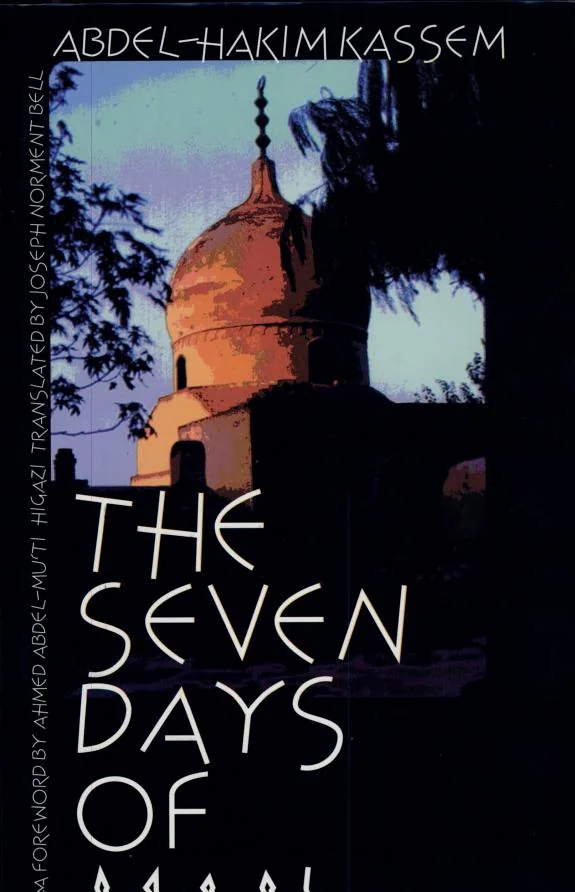
The Seven Days of Man
 75
75

The Seven Days of Man
ʻAbd al-Ḥakīm Qāsim's 'The Seven Days of Man' presents a curious dichotomy. Its initial framing as a research methods primer for social sciences is almost jarringly pragmatic, offering exercises and bibliographies for neophytes. Yet, the very structure it proposes—a seven-day framework for human experience—hints at a deeper, perhaps esoteric, application. The strength lies in its methodical approach; the exercises, if recontextualized, can serve as potent tools for self-inquiry. A particularly striking element is the concept of distinct 'days' representing phases of being, which, though presented academically, can be interpreted through a spiritual lens. The limitation, however, is its almost apologetic academic tone, which can obscure the profound potential for personal transformation. The book's initial blurb, focused on Portland, OR annotation copyrights, feels like a misplaced anchor for a work that yearns for a more mystical interpretation. Ultimately, 'The Seven Days of Man' is a methodological skeleton waiting for a soul to inhabit it.
📝 Description
75
ʻAbd al-Ḥakīm Qāsim's 'The Seven Days of Man' was first published in 1996.
ʻAbd al-Ḥakīm Qāsim's 'The Seven Days of Man', published in 1996, offers a structured approach to understanding the human condition. While initially intended for academic audiences, particularly in social science research methods, its principles extend to personal development and spiritual inquiry. The book includes practical exercises and bibliographies designed to guide readers through systematic self-analysis. Its original framing as a tool for small research projects at educational institutions or workplaces does not diminish its broader potential for introspection.
This work appeals to individuals seeking a methodical path to self-understanding, especially those drawn to spiritual disciplines that value introspection and structured practice. It is particularly useful for beginners who prefer clear direction and actionable steps in their personal or academic pursuits. The book's publication in 1996 coincided with a growing emphasis on empirical research methodologies, where standardized approaches aimed for replicability and measurable outcomes.
While framed within social science research, 'The Seven Days of Man' engages with spiritual development through a structured, almost ritualistic, seven-day cycle. This methodical progression mirrors certain contemplative traditions that divide spiritual advancement into distinct stages. The emphasis on guided practice and self-analysis aligns with schools of thought that posit a systematic path to inner transformation, rather than relying solely on spontaneous insight. It offers a framework for individuals to consciously engage with their inner lives, seeking to understand and refine their being through disciplined observation over a defined period.
💡 Why Read This Book?
• Gain a structured seven-day framework for personal introspection, directly applicable to understanding your own life phases as outlined by the book's core concept of "days." • Learn practical techniques for self-analysis, mirroring the research methods presented, to meticulously examine your experiences and development. • Discover how academic research principles, as detailed in chapters on research stages and practical hints, can be adapted for spiritual or esoteric self-discovery.
⭐ Reader Reviews
Honest opinions from readers who have explored this book.
❓ Frequently Asked Questions
What is the original purpose of 'The Seven Days of Man'?
Originally published in 1996, 'The Seven Days of Man' was designed as a core text for undergraduate and graduate courses on research methods in social sciences, education, business, health, and social care.
Who is the primary intended audience for the book's original design?
The book primarily addresses neophytes, individuals engaged in small-scale research projects at colleges or work, aiming to provide them with practical guidance.
What practical elements does the book offer to its readers?
It provides exercises, examples, annotated bibliographies for each chapter, and practical hints intended to assist users through all stages of research.
Does 'The Seven Days of Man' offer a spiritual or esoteric perspective?
While initially framed academically, its structure of 'seven days' can be interpreted as a framework for understanding human experience and development from a spiritual or esoteric viewpoint.
When was 'The Seven Days of Man' first published?
The book was first published in 1996.
What academic fields does the book initially cater to?
It caters to social sciences and related fields such as education, business, health, and social care.
🔮 Key Themes & Symbolism
Methodical Self-Inquiry
The work posits a structured approach to understanding the self, borrowing from academic research methodologies. By presenting exercises and practical hints, it encourages systematic introspection. The seven-day framework acts as a conceptual map, guiding the practitioner through distinct phases or aspects of their being. This methodical application allows for a dissection of personal experience, much like a researcher dissects data, aiming for clarity and deeper comprehension of one's internal landscape.
The Seven-Day Cycle
Central to the text is the concept of seven distinct 'days' that represent a cycle of human experience. This structure can be viewed as an esoteric map, potentially aligning with various spiritual traditions that utilize cyclical time or developmental stages. Each day offers a unique lens through which to examine one's existence, encouraging a holistic understanding of personal progression and the many-sided nature of the human journey.
Neophyte Guidance
The book is explicitly designed for beginners, or 'neophytes,' in the field of research and, by extension, self-exploration. It clarifies complex processes by breaking them down into manageable steps, complete with practical examples and annotated bibliographies. This focus ensures that individuals new to disciplined inquiry, whether academic or spiritual, receive clear, actionable guidance to begin their path effectively.
Application Beyond Academia
While rooted in social science research methods, the book's inherent structure and focus on personal development lend themselves to broader applications. The principles of methodical investigation and staged progression can be readily adapted to esoteric studies, spiritual practices, and personal growth initiatives. It offers a blueprint for disciplined self-analysis that transcends its original academic context.
💬 Memorable Quotes
Direct passages from the work, attributed to the author.
“A core text for undergraduate and graduate courses on research methods.”
— This phrase highlights the book's academic origins, suggesting a rigorous and systematic foundation upon which its principles are built, even when applied to esoteric study.
“Addressed primarily to neophytes who are engaged in small-scale research projects.”
— This indicates the book's accessibility for beginners, emphasizing its role in providing foundational knowledge and practical guidance for those new to structured inquiry.
“Provides exercises, examples, annotated bibliographies for each chapter.”
— These elements underscore the book's pedagogical design, offering concrete tools and resources that facilitate learning and application of its concepts.
“Practical hints for all the stages of research.”
— This suggests a comprehensive approach, covering the entire process of investigation, ensuring that readers are equipped with actionable advice at every step.
“Annotation copyright by Book News, Inc., Portland, OR.”
— This detail firmly grounds the book's original publication context within the academic and publishing industry standards of its time, reflecting its initial scholarly intent.
🌙 Esoteric Significance
Tradition
While presented through the lens of social science research, the seven-day structure of 'The Seven Days of Man' can be interpreted within esoteric traditions that utilize cyclical frameworks and developmental stages. It echoes Gnostic ideas of stages of spiritual ascent or Hermetic principles of correspondence and cycles. The methodical approach, however, departs from purely intuitive or divinatory methods, offering a mix of academic rigor and potential spiritual application.
Symbolism
The primary symbol is the 'seven days,' representing a complete cycle or a structured progression of human experience. This number is deeply symbolic across many esoteric traditions, often relating to creation cycles, stages of consciousness, or cosmic order. The 'neophyte' serves as another symbolic figure, representing the seeker at the threshold of knowledge, guided by structured learning toward a deeper understanding.
Modern Relevance
Contemporary practitioners of self-development, mindfulness, and comparative spirituality might find value in adapting Qāsim's methodical framework. Thinkers exploring the intersection of psychology and spirituality, or those seeking structured personal growth plans, can repurpose the book's research-oriented exercises. Its emphasis on stages and systematic inquiry appeals to modern therapeutic and coaching techniques that seek to clarify personal transformation.
👥 Who Should Read This Book
['• Beginning students of comparative spirituality: Those exploring different traditions will find the seven-day structure a useful comparative tool for understanding cyclical concepts.', "• Aspiring esoteric researchers: Individuals seeking to apply disciplined, analytical methods to esoteric subjects can leverage the book's research-focused exercises.", '• Self-inquiry practitioners: Anyone looking for a structured, step-by-step approach to personal development and understanding their own life stages will benefit from its methodical guidance.']
📜 Historical Context
Published in 1996, 'The Seven Days of Man' emerged from a late 20th-century academic milieu that emphasized rigorous, empirical research methods across the social sciences. This era saw a proliferation of textbooks designed to standardize research training for students entering fields like sociology, psychology, and education. Qāsim's work aligns with this trend by providing a practical, step-by-step guide for neophytes. It contrasts with more abstract philosophical treatises on human nature or experiential guides to spirituality that were also available. The book's specific inclusion of exercises and annotated bibliographies reflects an educational philosophy prioritizing tangible skills and structured learning. While not a major intellectual movement itself, its publication signifies the ongoing academic demand for accessible methodological training, differentiating it from the more humanistic or critical research approaches that also gained traction during this period.
📔 Journal Prompts
The seven-day framework as a personal map.
Applying research hints to spiritual practice.
The role of the neophyte in esoteric study.
Interpreting each 'day' of man's experience.
Structuring small-scale spiritual inquiries.
🗂️ Glossary
Neophyte
An individual who is new to a particular subject, practice, or belief system. In this context, it refers to beginners in research methods or esoteric self-study.
Research Methods
Systematic procedures and techniques used to conduct investigations and gather information within academic or scientific disciplines. The book adapts these for personal analysis.
Small-scale research projects
Investigations or studies conducted on a limited scope, often undertaken by individuals for academic coursework or initial exploration of a topic.
Annotated Bibliographies
Lists of references that include brief descriptions or evaluations of each source, providing context and relevance for further study.
Stages of research
The distinct phases involved in conducting a research project, typically including planning, data collection, analysis, and reporting.
Seven Days of Man
The central conceptual framework of the book, positing a seven-part structure or cycle for understanding human existence and development.
Practical Hints
Actionable advice and tips designed to assist readers in reading through the practical challenges of research or self-analysis.
This book appears in 1 collection
🔮 Readers Also Liked
Browse all →








From the “Sufism” Collection
View all →








More Free Occult Philosophy Books
View all →