Archaeological Approaches to Shamanism
 72
72

Archaeological Approaches to Shamanism
The sheer scope of Archaeological Approaches to Shamanism is commendable, attempting to bridge the gap between ethnographic accounts of shamanism and the often-elusive material evidence found in archaeological sites. The division into sections addressing the mind-body, nature, and culture provides a useful framework for considering the multifaceted nature of shamanic engagement. However, the book occasionally struggles under the weight of its own ambition. While the editors highlight the "longevity and spatial distribution" of shamanism, the archaeological evidence presented for very deep time, such as the Palaeolithic, feels speculative rather than conclusive. The discussion of specific findings, for example, the potential interpretations of cave art or early burial practices, demonstrates the inherent difficulties in definitively labeling such phenomena as shamanic without direct ethnographic parallels. Despite this limitation, the work offers a valuable, albeit cautious, examination of how we might approach the study of ancient ritual through the lens of material remains. It serves as a critical inventory of methods and challenges, rather than a definitive answer.
📝 Description
72
Published in 2017, Archaeological Approaches to Shamanism examines material traces of ancient ritual practices.
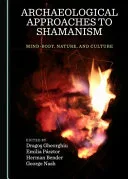
This 2017 volume by Dragos Gheorghiu, Emília Pásztor, and Herman Bender investigates how archaeological evidence can reveal shamanic practices across different times and places. It moves beyond ethnographic descriptions to analyze artifacts, settlement patterns, and other material remains. The book confronts the difficulties of reconstructing belief systems from incomplete archaeological data.
It is written for academics, researchers, and students in archaeology, anthropology, religious studies, and comparative mythology. Serious enthusiasts of shamanism who want a detailed, evidence-based perspective on its history and spread will also find it valuable. The work is particularly relevant for those studying the connection between material culture and altered states of consciousness.
The book engages with ongoing discussions in archaeology and anthropology about interpreting prehistoric ritual and belief. It builds on earlier studies, such as those by Mircea Eliade, and incorporates recent archaeological theories focusing on the social and cultural contexts of ritual. Its 2017 publication reflects a growing academic interest in non-Western knowledge systems and the deep history of human spirituality.
This book situates the study of shamanism within archaeological inquiry, seeking tangible evidence for practices previously understood primarily through ethnographic or historical accounts. It engages with a tradition of scholarship that traces shamanic phenomena across cultures and deep time, acknowledging the challenges in recovering such ephemeral aspects of human experience from the material record. By focusing on archaeological methodologies, it contributes to understanding shamanism not just as a belief system but as a historically situated practice with material consequences.
💡 Why Read This Book?
• Gain a structured understanding of how archaeological findings, such as specific artifact typologies or site layouts discussed in Chapters 4-7, can be interpreted as evidence for shamanic practices, moving beyond purely speculative claims. • Explore the historical debates surrounding shamanism, appreciating how this 2017 publication engages with earlier scholars like Mircea Eliade and contemporary archaeological methodologies. • Learn to critically evaluate the fragmentary nature of the archaeological record when assessing ancient ritual, understanding the challenges of reconstructing belief systems from material culture.
⭐ Reader Reviews
Honest opinions from readers who have explored this book.
❓ Frequently Asked Questions
What is "archaeological shamanism" as discussed in the book?
Archaeological shamanism refers to the methodological approach explored in the book, which attempts to identify and interpret tangible evidence for shamanic practices within the archaeological record, distinct from purely ethnographic descriptions.
What time periods does the book cover regarding shamanism?
The book covers both ancient and modern shamanism, examining evidence from deep prehistory through to more recent ethnographic parallels, demonstrating its perceived longevity.
How does the book address the fragmented nature of archaeological evidence?
It acknowledges the challenges posed by fragmentary records and discusses the methodologies needed to extract meaningful interpretations, particularly regarding ritualized practices and belief systems.
What are the main sections of the book?
The book is organized into three main sections: mind-body, nature, and culture, each exploring different facets of shamanism and its material correlates.
Who are the primary authors of Archaeological Approaches to Shamanism?
The primary authors are Dragos Gheorghiu, Emília Pásztor, and Herman Bender, with the book first published in 2017.
Does the book offer definitive proof of ancient shamanism?
No, the book critically examines the evidence and methodologies, highlighting the difficulties in extracting definitive proof from the archaeological record, rather than claiming absolute certainty.
🔮 Key Themes & Symbolism
Material Traces of Ritual
This theme focuses on the critical task of identifying and interpreting physical remnants of shamanic activities within archaeological contexts. It moves beyond oral traditions or ethnographic accounts to analyze artifacts, iconography, and settlement patterns that may indicate altered states of consciousness, spirit journeys, or healing rituals. The challenge lies in distinguishing these specific traces from general ritual behavior or other cultural expressions, especially when dealing with fragmented evidence from deep prehistory.
Mind-Body-Nature Interplay
The book explores how shamanism fundamentally links the practitioner's internal experience (mind-body) with the external environment (nature). It examines how archaeological evidence might reflect this connection, such as through offerings to natural elements, representations of spirit helpers found in the natural world, or sites chosen for their perceived energetic qualities. This section questions how ancient peoples perceived their place within the cosmos and their ability to influence it through shamanic means.
Cultural Diffusion of Shamanism
A significant aspect is understanding the historical spread and adaptation of shamanic practices across diverse cultures and geographical regions. By analyzing archaeological data, the contributors trace the longevity and spatial distribution of shamanism, demonstrating its persistence and evolution over vast stretches of time. This theme grapples with how similar ritualistic elements might appear in seemingly disparate archaeological records, suggesting shared human impulses or direct cultural transmission.
Methodological Challenges in Reconstruction
This theme directly addresses the inherent difficulties in reconstructing shamanic traditions from archaeological findings. It critiques various methodologies, acknowledging that direct evidence is rare and interpretations are often inferential. The book emphasizes the need for careful, critical analysis, recognizing the limitations of the fragmentary record and the potential for anachronistic projections when attempting to understand the belief systems of past societies.
💬 Memorable Quotes
Direct passages from the work, attributed to the author.
“The book discusses the clear associations with this sometimes little-understood ritualised practice.”
— This highlights the central aim: to clarify the nature of shamanism by examining its historical manifestations and the evidence left behind, acknowledging its often-obscure character.
“asking what shamanism is and if tangible evidence can be extracted from a largely fragmentary archaeological record.”
— This frames the core academic inquiry: defining shamanism through archaeological means and confronting the limitations imposed by incomplete historical data.
“demonstrating its longevity and spatial distribution.”
— This points to the book's ambition to establish shamanism not as a localized or fleeting phenomenon, but as a widespread and enduring aspect of human culture across time.
“The book is divided into eleven thought-provoking chapters that are organised into three sections: mind-body, nature, and culture.”
— This outlines the structural approach, indicating a comprehensive examination of shamanism through its psychological, ecological, and societal dimensions.
“offers a novel portrayal”
— Suggests that the book provides a fresh perspective or methodology for understanding shamanism, likely through its archaeological focus.
🌙 Esoteric Significance
Tradition
While not strictly within a single esoteric lineage like Hermeticism or Theosophy, this work engages with the perennialist and comparative religion streams of esoteric thought that posit universal spiritual experiences across cultures. It attempts to provide an archaeological grounding for phenomena often explored through subjective experience or channeled knowledge in esoteric circles, bridging empirical study with the investigation of altered states.
Symbolism
The book implicitly examines symbols related to animal spirit guides (e.g., bear, bird imagery in cave art), shamanic tools (e.g., drums, rattles, staffs inferred from contexts), and cosmological maps (e.g., vertical axis representations or cave structures suggesting underworld/upperworld journeys). These symbols, when found archaeologically, are interpreted as indicators of shamanic cosmology and practice.
Modern Relevance
Contemporary neo-shamanic practitioners, contemporary animist researchers, and scholars of altered states of consciousness draw upon archaeological interpretations to lend historical depth and legitimacy to their practices. The work informs discussions on the ancient roots of ecstatic traditions and the possibility of recovering ancestral spiritual technologies through material culture analysis.
👥 Who Should Read This Book
• Researchers in archaeology and anthropology seeking to understand methodologies for identifying ritualistic behavior in the material record. • Students of comparative religion and mythology interested in the historical depth and cross-cultural presence of shamanic phenomena. • Esoteric practitioners and scholars looking for an evidence-based perspective on the ancient origins and historical manifestations of altered states and spirit work.
📜 Historical Context
Published in 2017, Archaeological Approaches to Shamanism emerged within a scholarly landscape increasingly interested in the deep history of human consciousness and ritual. It engages with the legacy of scholars like Mircea Eliade, whose foundational work "Shamanism: Archaic Techniques of Ecstasy" (published in 1951) provided a comparative framework but was often criticized for its perceived lack of empirical rigor regarding prehistory. This volume seeks to rectify that by focusing specifically on material evidence. It also responds to broader trends in archaeological theory that emphasize the importance of interpreting ritual and belief systems through tangible remains, moving beyond functionalist or purely symbolic interpretations. While not directly engaging with competing schools in the same way one might see in debates about Paleolithic art interpretation (e.g., cognitive archaeology vs. symbolic archaeology), the book implicitly positions itself as a more empirically grounded alternative to purely theoretical or ethnographic approaches to shamanism.
📔 Journal Prompts
The archaeological evidence for shamanic practices discussed in Chapter 5.
The distinction between mind-body dualism and interconnectedness in shamanic worldviews.
The role of nature as both a source of power and a symbolic landscape in shamanism.
The challenges of interpreting ritual from fragmented archaeological records.
The concept of longevity and spatial distribution of shamanism across cultures.
🗂️ Glossary
Archaeological Shamanism
The methodological approach focused on identifying and interpreting material evidence within archaeological sites that suggests the practice of shamanism.
Altered States of Consciousness (ASCs)
Non-ordinary states of consciousness, often induced through drumming, chanting, or psychoactive substances, typically associated with shamanic practices.
Material Culture
The physical objects, resources, and spaces that people use to define their culture and that mark their identity.
Iconography
The visual images and symbols used in the study or identification of the subjects treated in a work of art or visual culture.
Ethnographic Analogy
The practice of using information gathered from the study of contemporary or recent societies to interpret archaeological remains from past societies.
Ritualized Practice
A set of actions, often symbolic and performed in a prescribed order, that reflects a community's beliefs and values, particularly in religious or ceremonial contexts.
Spatial Distribution
The geographical arrangement or pattern of archaeological sites, features, or artifacts related to a specific cultural phenomenon, such as shamanism.











![Ten Great Mysteries [10 stories, 5 poems]](/img/thumb/ten-great-mysteries-10-stories-5-poems-edgar-allan-poe-433440.webp)