The Seeker's Guide to the Hidden Path
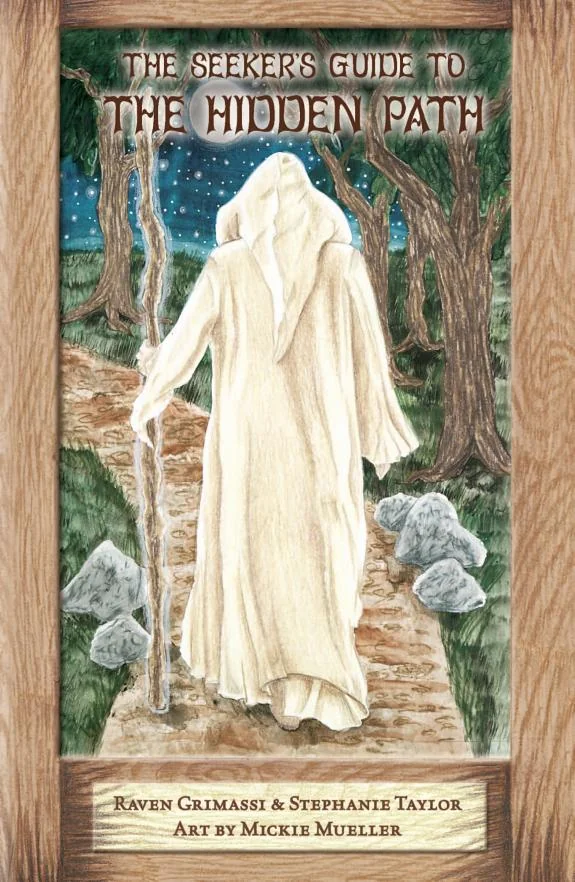
 82
82

The Seeker's Guide to the Hidden Path
Raven Grimassi's "The Seeker's Guide to the Hidden Path" offers a clear, no-nonsense framework for those serious about advancing their esoteric studies. Grimassi avoids the flamboyant prose that often characterizes such works, opting instead for direct instruction. His discussion of the "Inner Sanctum" as a vital space for magical work is particularly strong, grounding abstract concepts in a tangible internal locus. However, the book's dense, instructional style, while a strength for some, might feel overly academic for readers seeking more narrative or experiential accounts. A potential limitation is the lack of extensive historical citations for some of the more specific practices described, which can leave the reader wanting more context. Nevertheless, Grimassi provides a solid, actionable blueprint for personal magical development. It’s a workmanlike guide for the dedicated student.
📝 Description
82
Raven Grimassi's 2007 book, The Seeker's Guide to the Hidden Path, structures esoteric study beyond beginner levels.
Published in 2007, The Seeker's Guide to the Hidden Path offers a systematic method for magical practice and personal growth. Grimassi moves past introductory occult ideas, grounding his techniques in historical esoteric frameworks. The book aims to give readers the knowledge and practical skills for understanding deeper magical principles. It emphasizes self-awareness and the internal work necessary to grasp external magical forces.
This guide is for practitioners who have finished basic occult reading and want a more disciplined, structured path. It suits those interested in a clear curriculum for magical development, especially those drawn to Western esoteric traditions. Readers seeking concrete exercises and a solid philosophical basis for their studies will find this book useful. It also interests students of comparative religion and occult history who wish to see esoteric concepts applied practically.
Raven Grimassi's 2007 work appeared when witchcraft and neo-paganism saw renewed popular interest. However, it focused on a more traditional, often solitary, style of magic. This contrasted with the community-oriented Wiccan traditions prominent in the late 20th century. Grimassi's approach favors solitary practice and a rigorous engagement with historical magical currents, contributing to ongoing discussions among traditional witchcraft, ceremonial magic, and folk magic.
💡 Why Read This Book?
• Gain a structured methodology for solitary magical practice, moving beyond basic spellcasting by understanding the principles behind the "Inner Sanctum" as a dedicated spiritual workspace. • Develop a deeper comprehension of energetic mechanics and psychic perception, learning techniques for cultivating personal will and working with subtle energies, as outlined in the book's exercises. • Understand the foundational elements of traditional Western magical disciplines, providing a clear roadmap for personal spiritual progression that distinguishes itself from more contemporary, often group-focused, traditions.
⭐ Reader Reviews
Honest opinions from readers who have explored this book.
❓ Frequently Asked Questions
What is the "Inner Sanctum" according to Raven Grimassi?
Grimassi describes the "Inner Sanctum" as a personalized, sacred space within the practitioner's mind or imagination, used for focused meditation, spiritual communion, and the performance of inner magical work.
When was "The Seeker's Guide to the Hidden Path" first published?
The book was first published in 2007, placing it within a period of renewed interest in solitary and traditional witchcraft practices.
Does Grimassi discuss specific symbols in the book?
Yes, the work explores various symbolic elements crucial to esoteric understanding, including those related to the soul, energy, and the astral plane, offering interpretations within a traditional framework.
Is this book suitable for complete beginners in witchcraft?
While it offers foundational principles, the book is generally more suited for those who have already engaged with introductory occult concepts and are seeking a more structured, advanced path.
What is the "Astral Body" concept in Grimassi's work?
Grimassi discusses the "Astral Body" as a non-physical vehicle for consciousness, enabling exploration and experience beyond the physical realm, central to many esoteric traditions.
What distinguishes Grimassi's approach from modern Wicca?
Grimassi's work often emphasizes solitary practice and a more direct engagement with historical magical currents, differing from the often coven-based and syncretic nature of some modern Wiccan traditions.
🔮 Key Themes & Symbolism
The Inner Sanctum
Grimassi presents the "Inner Sanctum" not merely as a metaphor but as a vital, workable internal space for the magician. This concept underscores the importance of cultivating a private, sacred mental environment for focused practice, meditation, and communion with deeper aspects of the self or divine forces. It serves as a locus for developing concentration and personal magical power, distinguishing solitary practice from external ritual alone. The book details methods for constructing and utilizing this internal space effectively.
Mechanics of Magic
The work examines the underlying principles of how magic functions, moving beyond simple spell components. It explores the nature of psychic energy, its manipulation through will and intention, and the energetic dynamics of the universe. Grimassi's approach seeks to provide a logical framework for understanding magical forces, emphasizing that effective practice requires a comprehension of these fundamental mechanics, akin to understanding physics before attempting engineering.
Cultivation of Will
A central pillar of Grimassi's teaching is the development of personal will, often referred to as the "magical will." This is presented as the primary engine for manifesting change in both the inner and outer worlds. The book offers exercises and philosophical perspectives aimed at strengthening this faculty, enabling practitioners to direct their energy and intentions with greater precision and effectiveness in their magical endeavors.
Astral Projection and Perception
The concept of the "Astral Body" and its role in consciousness is a significant theme. Grimassi discusses the potential for astral travel and heightened perception beyond the physical senses. This involves understanding the subtle realms and developing the capacity to perceive and interact with them, a key component in many esoteric traditions for gaining knowledge and spiritual insight through direct experience.
💬 Memorable Quotes
Direct passages from the work, attributed to the author.
“The Inner Sanctum is the crucible where the true work is forged.”
— This statement highlights the centrality of internal work in Grimassi's system. The 'Inner Sanctum' acts as the private, sacred space where a magician's will and focus are honed, leading to the refinement and manifestation of magical intent.
“Without directed will, energy disperses aimlessly.”
— This emphasizes the necessity of focused intention in magical practice. It suggests that raw magical energy or psychic force is ineffective unless guided by a disciplined and purposeful will.
“Understanding the mechanics is as vital as the ritual itself.”
— This points to Grimassi's belief in a systematic, principle-based approach to magic. It suggests that knowledge of how magical forces operate underpins the effectiveness of any ritualistic act.
“The Astral Body is the vehicle of soul-consciousness.”
— This defines the 'Astral Body' as the non-physical component of a being that carries consciousness and allows for experiences and travel beyond the physical plane.
“Seek the path within before charting the paths without.”
— This advises prioritizing introspection and inner development as the foundation for external magical work or spiritual exploration.
🌙 Esoteric Significance
Tradition
Grimassi's work is firmly situated within the Western Esoteric Tradition, particularly drawing from historical witchcraft, folk magic, and elements of ceremonial magic. It departs from more overtly religious or syncretic neo-pagan paths by emphasizing a solitary, disciplined approach focused on personal gnosis and the cultivation of magical skill. It aligns with traditions that view magic as a practical art and a path to spiritual development through personal effort and understanding of universal laws.
Symbolism
Key symbols include the "Inner Sanctum," representing the sacred space within the mind for focused magical work and introspection, and the "Astral Body," the non-physical vehicle of consciousness essential for exploring subtle realms. The concept of "directed will" itself functions symbolically, representing the active, potent force that shapes magical outcomes, akin to the divine will in more theological systems.
Modern Relevance
Contemporary practitioners of solitary witchcraft, and those interested in the mechanics of magic and energy work, continue to draw on Grimassi's structured approach. His emphasis on internal development and practical application appeals to modern spiritual seekers looking for effective techniques outside of organized groups. Thinkers in the field of comparative occultism also reference his work when examining the evolution of witchcraft and esoteric practices in the late 20th and early 21st centuries.
👥 Who Should Read This Book
• Solitary practitioners seeking a structured curriculum for advancing their magical studies beyond introductory texts, offering a clear framework for personal development. • Students of Western Esotericism interested in the practical application of concepts like the "Inner Sanctum" and the cultivation of magical will, distinct from more group-oriented traditions. • Aspiring occultists who wish to understand the fundamental mechanics of energy and consciousness as presented within a traditional magical context, providing a foundation for deeper exploration.
📜 Historical Context
Raven Grimassi's "The Seeker's Guide to the Hidden Path," published in 2007, emerged during a vibrant period for esoteric literature, yet it carved a distinct niche. While the preceding decades saw a surge in neo-paganism and Wicca, often with a focus on coven structures and nature-based spirituality, Grimassi's work consistently pointed towards solitary practice and a more rigorous, often historically informed, approach to witchcraft and magic. This period also saw authors like Doreen Valiente, whose earlier works laid groundwork for modern witchcraft, and ongoing dialogues with ceremonial magic traditions. Grimassi's emphasis on internal discipline and the mechanics of magic offered an alternative to more ritualistic or devotional paths, contributing to the diverse range of Western Esotericism that was actively exploring its roots and practical applications.
📔 Journal Prompts
The nature of your personal "Inner Sanctum": what elements define its sacredness?
Reflect on instances where your "directed will" was most potent.
Consider the "Astral Body" as a vehicle for perception. What might it reveal?
How can the "mechanics of magic" be applied to mundane challenges?
Identify symbols that represent your personal spiritual path.
🗂️ Glossary
Inner Sanctum
A personalized, sacred mental space created by the practitioner for focused meditation, spiritual communion, and the execution of inner magical work. It serves as a locus for developing personal power and intent.
Astral Body
The non-physical vehicle of consciousness, often associated with emotions and subtle perceptions, believed to be capable of experiencing realms beyond the physical body. It is central to astral projection and esoteric exploration.
Directed Will
The focused and intentional application of personal will to achieve a specific magical or spiritual outcome. It is presented as the primary force for manifesting change in the magical arts.
Mechanics of Magic
The underlying principles and energetic dynamics that govern how magical operations function. Understanding these mechanics is crucial for effective and purposeful practice.
Psychic Energy
The subtle, vital force that permeates all things and can be consciously manipulated by the practitioner for magical purposes. It is distinct from physical energy and is often influenced by will and emotion.
Solitary Practice
Magical or spiritual work undertaken independently by an individual, without the direct guidance or participation of a group or coven. This approach emphasizes self-reliance and personal discovery.
Esoteric Study
The pursuit of hidden or secret knowledge concerning spiritual truths, the nature of reality, and the cosmos, typically involving symbolic interpretation and direct experience rather than empirical observation.
This book appears in 1 collection
🔮 Readers Also Liked
Browse all →









From the “Neopaganism” Collection
View all →






More Free Divination & Tarot Books
View all →