Fortune-telling by Playing Cards

 82
82

Fortune-telling by Playing Cards
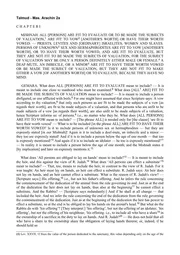
Nerys Dee’s Fortune-telling by Playing Cards, first appearing in 1982, grounds itself in a practical, no-nonsense approach to cartomancy. Unlike treatises that obscure simple methods with excessive jargon, Dee presents a clear exposition of how to read a standard deck. The strength of this work lies in its directness; it doesn't shy away from the mechanics of card interpretation and layout. A notable passage details the Court Cards, assigning them specific personality archetypes that are both memorable and useful for beginners. However, the book occasionally leans into a somewhat dated tone, reflecting the specific milieu of esoteric publishing from its era. A limitation is the lack of extensive historical sourcing for some of its claims regarding card origins, which could be more robustly supported. Despite this, Dee offers a reliable manual for anyone wishing to learn a tangible divinatory skill.
📝 Description
82
Nerys Dee's 1982 book Fortune-telling by Playing Cards teaches cartomancy with a standard 52-card deck.
Published in 1982, Fortune-telling by Playing Cards by Nerys Dee provides a thorough guide to using a standard 52-card deck for divination. The book goes beyond simple predictions, examining the historical development and inherent symbolic language of playing cards. Dee details various traditional layouts and interpretations, giving readers practical methods for forecasting the future and gaining self-insight.
This text is for anyone interested in applying divination with common playing cards. It will appeal to amateur fortune-tellers, students of esoteric traditions, and those seeking to understand the symbolic meaning of everyday objects. Readers curious about the history of card games and how they evolved into divinatory tools will also find this book valuable. Dee's work is situated within a period of increased interest in esoteric studies, following the Theosophical movement and the rise of new age thought. While Tarot was extensively documented by figures like A.E. Waite, Dee concentrates on the more accessible playing card system. This era saw a spread of occult knowledge, making books like this important for practitioners outside academic circles.
Nerys Dee's book emerged during a late 20th-century resurgence of interest in esoteric studies. While A.E. Waite had already published extensively on Tarot, Dee focused on the everyday playing card deck. This period witnessed a broader accessibility of occult knowledge, making Dee's work significant for those engaging with divination outside formal academic study. The book connects playing card meanings to elements, planets, and astrological signs, suggesting a broader occult framework.
💡 Why Read This Book?
• Learn to interpret a standard 52-card deck for divination, a skill accessible with everyday objects, as detailed in Nerys Dee's exploration of card symbolism. • Gain practical forecasting techniques by studying traditional layouts, such as the adapted Celtic Cross spread described in the book. • Understand the historical lineage of playing cards as divinatory tools, appreciating their evolution from games to esoteric instruments as presented by Dee.
⭐ Reader Reviews
Honest opinions from readers who have explored this book.
❓ Frequently Asked Questions
What is the historical origin of playing cards discussed in Nerys Dee's book?
Nerys Dee's work explores potential origins of playing cards, tracing their lineage back to games played in the Mamluk Empire or possibly ancient Egypt, highlighting their transition into divinatory tools.
Does Fortune-telling by Playing Cards require a special deck?
No, the book specifically guides readers on using an ordinary 52-card playing card deck, making the practice of cartomancy widely accessible.
What kind of layouts are taught in this book?
The book describes traditional divinatory layouts, including adaptations of well-known spreads like the Celtic Cross, tailored for use with playing cards.
What is the significance of the Court Cards in Nerys Dee's system?
Dee assigns specific personality archetypes and symbolic meanings to the Court Cards (King, Queen, Jack), making them crucial elements for interpreting readings.
When was Fortune-telling by Playing Cards first published?
Nerys Dee's Fortune-telling by Playing Cards was first published in 1982, placing it within the late 20th-century surge of interest in esoteric studies.
Can I use this book to predict specific future events?
Yes, the book details traditional methods for forecasting the future using playing cards, focusing on interpretation and practical application of card symbolism.
🔮 Key Themes & Symbolism
Cartomancy Fundamentals
This section focuses on the practical application of a standard 52-card deck for divination. It breaks down the core principles of reading cards, including the elemental associations and numerical significations. Dee emphasizes understanding the inherent symbolism within each card, from the Aces to the Kings, and how their positions within a spread contribute to the overall narrative of a reading. The goal is to equip the reader with a foundational understanding of card meanings independent of Tarot, highlighting the unique language of playing cards.
Historical Evolution of Cards
Dee looks at the historical trajectory of playing cards, exploring their origins and evolution from simple games into sophisticated divinatory instruments. The work discusses theories linking their development to ancient civilizations and medieval trade routes, underscoring how their cultural journey imbued them with symbolic weight. This context provides a deeper appreciation for the layers of meaning embedded in the cards, suggesting their use in fortune-telling is as old as their creation.
Divinatory Spreads and Interpretations
A significant focus is placed on practical divination, detailing various spreads and methods for interpreting card combinations. The book describes traditional layouts, including adaptations of popular spreads like the Celtic Cross, specifically for a deck of playing cards. Readers are guided on how to synthesize card meanings, consider reversals, and derive coherent insights into questions about love, career, and personal development.
Symbolism of Court Cards
The Court Cards—King, Queen, and Jack—are given special attention, presented as archetypal figures representing people, personality traits, or significant influences in a reading. Dee offers detailed interpretations for each Court Card, associating them with specific characteristics and roles. Understanding these figures is crucial for grasping the human element within a divination, providing context for the dynamics at play in the querent's life.
💬 Memorable Quotes
Direct passages from the work, attributed to the author.
“The Queen of Hearts often signifies emotional maturity and nurturing.”
— This interpretation highlights the symbolic role of the Queen of Hearts, suggesting she represents a mature, caring influence or aspect of the querent's emotional landscape.
“Court cards represent specific individuals or personality types influencing the situation.”
— This emphasizes the personification aspect of the Court Cards, directing the reader to identify them as literal people or dominant character traits present in the divinatory context.
“Elemental associations provide a framework for understanding card groups.”
— This interpretation explains that understanding the connection of card suits to elements (Fire, Water, Air, Earth) is fundamental to decoding their broader meanings.
“Traditional layouts offer structure for interpreting a spread of cards.”
— This highlights the importance of the arrangement of cards, noting that established patterns like the Celtic Cross provide a framework for coherent interpretation.
💡 Key Ideas
Editorial paraphrase of the work's core concepts — not direct quotes.
The Ace of Spades can indicate a beginning, often involving challenge or transformation.
This quote points to the dual nature of the Ace of Spades, signifying new starts while acknowledging the potential for difficulty or significant change inherent in such beginnings.
🌙 Esoteric Significance
Tradition
This work fits within the Western Esoteric tradition, specifically drawing from cartomancy practices that have historically paralleled or been integrated with Tarot studies. It aligns with Hermetic principles by seeking to understand hidden correspondences and symbolic languages that reveal universal truths. While not explicitly Kabbalistic or Gnostic, it shares the Hermetic aim of using symbolic systems for spiritual insight and divination, grounding esoteric practice in tangible objects.
Symbolism
Key symbols include the four suits (Wands/Clubs, Cups/Hearts, Swords/Spades, Pentacles/Diamonds) representing elemental forces and different life domains. The Ace cards signify potent beginnings or core energies, while the Court Cards (King, Queen, Jack) embody archetypal personalities and social roles. The numerical progression from Ace to Ten reflects cycles of manifestation and experience within these elemental frameworks.
Modern Relevance
Contemporary practitioners of divination, particularly those interested in accessible and portable methods, continue to draw upon Dee's foundational work. Modern cartomancy blogs and online courses often reference the basic principles of interpretation and spreads she detailed. Her clear approach makes it a valuable starting point for individuals exploring divination outside of more complex systems like Tarot or Runes, resonating with a desire for practical, everyday magic.
👥 Who Should Read This Book
['• Beginning cartomancers seeking a straightforward introduction to reading playing cards for divination.', '• Individuals interested in the historical development of divination tools and their symbolic meanings.', '• Esoteric students looking to expand their divinatory repertoire beyond Tarot with a common household item.']
📜 Historical Context
Published in 1982, Nerys Dee's "Fortune-telling by Playing Cards" emerged during a period of significant revival for esoteric arts. Following the foundational work of figures like A.E. Waite in the early 20th century, who had already established extensive systems for Tarot, Dee's focus on the more commonplace playing card deck democratized divinatory practice. This era saw a surge in New Age literature and a broader public engagement with occultism, moving beyond the more academic or elitist circles of earlier decades. While contemporary authors like Rachel Pollack were beginning to explore Tarot with deep psychological and historical analysis, Dee's contribution offered a practical, accessible manual for a widely available tool. The reception of such works was generally positive within burgeoning occult communities, though mainstream academic circles often remained skeptical.
📔 Journal Prompts
The symbolic role of the Queen of Hearts in your current emotional landscape.
Interpreting the Ace of Spades as a catalyst for transformation in your life.
How the archetypes of the Court Cards manifest in your daily interactions.
Connecting the elemental associations of the suits to recent events.
The narrative potential of a three-card spread using playing cards.
🗂️ Glossary
Cartomancy
The practice of divination using a deck of cards, typically playing cards or Tarot cards, to gain insight into the past, present, or future.
Spread
A specific arrangement of cards laid out in a pattern, with each position in the spread holding a particular significance or question to be answered.
Court Cards
The King, Queen, and Jack cards within a standard playing card deck, often interpreted as representing specific people, personalities, or archetypal influences.
Elemental Associations
The assignment of suits (Clubs, Hearts, Spades, Diamonds) to the classical elements (Earth, Water, Air, Fire), providing a framework for deeper symbolic interpretation.
Querent
The person for whom a divination reading is being performed; the individual seeking answers or guidance from the cards.
Mamluk Empire
A historical state that existed in Egypt and Syria from the mid-13th to the early 16th century, often cited as a potential origin point for playing cards.
Divination
The practice of seeking knowledge of the future or the unknown by supernatural means, often through symbolic interpretation.
This book appears in 1 collection
🔮 Readers Also Liked
Browse all →








From the “Cartomancy” Collection
View all →






More Free Divination & Tarot Books
View all →