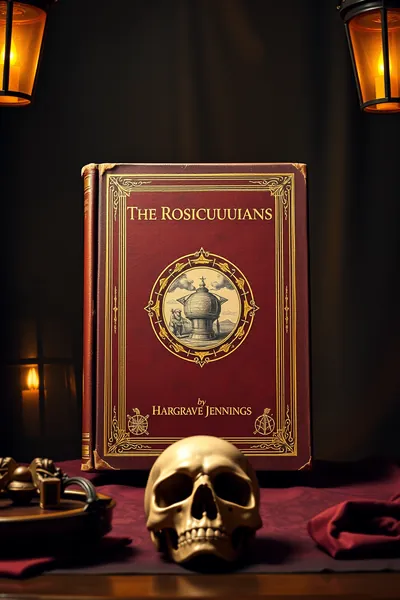
The Rosicrucians, their rites and mysteries

 83
83

The Rosicrucians, their rites and mysteries
Hargrave Jennings' exploration of the Rosicrucians is less a narrative and more a dense, symbolic exegesis. The strength lies in its sheer volume of compiled lore and its relentless pursuit of symbolic meaning behind every alleged rite and mystery. Jennings' dedication to uncovering hidden connections, particularly his detailed analysis of the Rose and Cross symbolism, offers a unique perspective for dedicated students. However, the book's primary limitation is its often labyrinthine prose and the lack of clear demarcation between historical fact and speculative interpretation. For instance, the lengthy passages dedicated to dissecting the symbolic implications of architectural features in supposed Rosicrucian meeting places, while rich in esoteric detail, can become challenging to follow without a deep prior knowledge of alchemical and Masonic iconography. The work demands significant reader effort to extract its core arguments. It is a formidable, if occasionally opaque, resource for those committed to understanding the symbolic underpinnings of Western esotericism.
📝 Description
83
First published in 1976, Hargrave Jennings' "The Rosicrucians, their rites and mysteries" examines a secretive order.
Hargrave Jennings' book, originally published in 1976, investigates the Rosicrucian order. It details their historical roots, core beliefs, and ritualistic customs. Jennings gathered extensive information from various historical accounts and symbolic analyses. He aimed to provide a thorough overview of a society that has long captured the attention of those seeking hidden knowledge.
The work carefully breaks down the symbolic language and allegorical stories central to Rosicrucian teachings. The author's goal was to clarify their supposed rites and mysteries. This text is for dedicated students of Western esotericism, comparative religion, and secret societies. It will appeal to those who want to go beyond surface-level information and understand the symbolic systems and historical foundations of groups like Rosicrucianism. Readers interested in Hermeticism, alchemy, or Masonic symbolism will find Jennings' detailed discussions and his links between different esoteric traditions especially valuable.
Jennings' study appeared during a period of growing interest in occultism and esoteric thought, especially in the late 19th and early 20th centuries. Its 1976 publication date places it within a revival of such academic pursuits, building on earlier works by authors like Helena Blavatsky and Manly P. Hall. The book engages with historical accounts of the Rosicrucian manifestos from the early 17th century, such as the Fama Fraternitatis (1614) and the Confessio Fraternitatis (1615). Jennings attempts to trace their impact through the following centuries, contributing to scholarship that sought to organize and validate esoteric knowledge.
💡 Why Read This Book?
• Gain a deep understanding of the symbolic language of the Rosicrucians, particularly the multi-layered meanings of the Rose and Cross, as detailed in the text's extensive analyses. • Explore the historical threads connecting Rosicrucianism to earlier esoteric traditions, as Jennings traces influences from texts like the *Fama Fraternitatis* (1614) and alchemical symbolism. • Grasp the concept of the 'Adeptus' and the symbolic journey of initiation, a core tenet Jennings elucidates through ritual and allegorical interpretation.
⭐ Reader Reviews
Honest opinions from readers who have explored this book.
❓ Frequently Asked Questions
When was Hargrave Jennings' 'The Rosicrucians, their rites and mysteries' originally published?
Hargrave Jennings' comprehensive work on the Rosicrucians was first published in 1976. This edition made his extensive research and symbolic interpretations available to a wider audience interested in esoteric traditions.
What are the core Rosicrucian manifestos mentioned in the book?
The book references the early 17th-century Rosicrucian manifestos, primarily the *Fama Fraternitatis* (1614) and the *Confessio Fraternitatis* (1615). These foundational documents are discussed for their historical significance and their role in shaping the legend of the Rosicrucian Order.
Does the book explain Rosicrucian initiation rituals?
Yes, Jennings meticulously attempts to unpack and interpret the supposed rites and mysteries of the Rosicrucians. He focuses on the symbolic architecture and allegorical narratives used in their initiations to convey spiritual truths.
Is 'The Rosicrucians, their rites and mysteries' suitable for beginners?
While rich in information, the book's dense prose and reliance on symbolic interpretation make it more suitable for intermediate to advanced students of Western esotericism who have some familiarity with related concepts.
What is the significance of the Rose and Cross in Jennings' work?
Jennings dedicates significant attention to the Rose and Cross as central symbols. He interprets them as representing complex metaphysical ideas, encompassing divine love, spiritual aspiration, and the human journey through earthly trials.
What esoteric tradition does this book primarily explore?
The book primarily explores the Western esoteric tradition, with a specific focus on Rosicrucianism. It connects this to related currents such as Hermeticism, alchemy, and Masonic symbolism.
🔮 Key Themes & Symbolism
Symbolic Interpretation of Rites
Jennings' central thesis revolves around the esoteric interpretation of Rosicrucian rites and symbols. He argues that these practices are not mere historical curiosities but encoded vehicles for transmitting profound metaphysical and spiritual knowledge. The work dissects allegorical narratives, symbolic architecture, and ritualistic actions, presenting them as keys to unlocking deeper understandings of the cosmos and the human soul. This approach emphasizes the Gnostic and Hermetic principle that true wisdom is veiled and requires diligent study to reveal its hidden meanings, positioning Rosicrucianism as a system of profound, symbolic pedagogy.
The Adeptus and Spiritual Attainment
A significant theme is the concept of the 'Adeptus,' the enlightened individual who has successfully navigated the Rosicrucian path of initiation and self-transformation. Jennings details the symbolic journey involved, often drawing parallels with alchemical processes of purification and transmutation. This attainment is not merely intellectual but a profound spiritual realization, achieved through disciplined study, symbolic understanding, and the integration of cosmic principles. The book frames Rosicrucianism as a structured system designed to guide the aspirant towards this elevated state of consciousness.
Historical Lineage and Esoteric Connections
Jennings meticulously traces the historical lineage of the Rosicrucians, attempting to connect them to ancient mystery schools and subsequent esoteric movements. He explores the influence of early 17th-century manifestos, such as the *Fama Fraternitatis* (1614), and examines how Rosicrucian ideas permeated Freemasonry and other fraternal orders. This theme highlights the interconnectedness of esoteric traditions, suggesting a continuous stream of hidden wisdom passed down through various secret societies across centuries, albeit often in veiled or symbolic forms.
The Rose and Cross Symbolism
The duality and synthesis represented by the Rose and the Cross are a recurring motif throughout Jennings' work. He dedicates extensive analysis to these symbols, interpreting the Rose as representing divine love, spiritual blossoming, and the feminine principle, while the Cross signifies earthly existence, material form, and the trials of the human condition. Their union, he posits, symbolizes the integration of spirit and matter, the divine and the human, and the ultimate goal of Rosicrucian spiritual development: achieving harmony and balance within oneself and the cosmos.
💬 Memorable Quotes
Direct passages from the work, attributed to the author.
“The Rosicrucians have always been known for their mysterious rites and secret doctrines.”
— This statement underscores the enigmatic reputation of the Rosicrucian order, highlighting that its allure lies precisely in the hidden nature of its practices and teachings, which Jennings seeks to illuminate.
“The symbolism of the Rose and the Cross is central to understanding their philosophy.”
— Jennings emphasizes that a deep comprehension of Rosicrucianism hinges on deciphering the profound, many-sided meanings embedded within the iconic symbols of the Rose and the Cross.
“The Fama Fraternitatis is a key text in understanding the Order's origins.”
— Jennings acknowledges the historical importance of the *Fama Fraternitatis* (1614) as a foundational document that provides crucial context for the establishment and early narrative of the Rosicrucian Brotherhood.
“True wisdom is often veiled in allegory and symbol.”
— This reflects a core esoteric principle Jennings applies, suggesting that the profound truths of Rosicrucianism are not conveyed directly but are encoded within symbolic language and allegorical narratives, requiring careful study.
💡 Key Ideas
Editorial paraphrase of the work's core concepts — not direct quotes.
Initiation involves a symbolic journey of transformation.
This paraphrased concept reflects Jennings' view that the rituals and teachings within the Rosicrucian system are designed to guide the aspirant through a process of profound personal and spiritual change.
🌙 Esoteric Significance
Tradition
This work firmly belongs to the Western Esoteric Tradition, specifically focusing on the Rosicrucian lineage. It draws heavily upon Hermeticism, alchemy, and Kabbalah, interpreting Rosicrucianism not as a historical institution alone, but as a living stream of Gnostic and Hermetic wisdom aimed at spiritual perfection. Jennings presents Rosicrucianism as a distinct but interconnected branch of this broader esoteric tree, emphasizing its role in preserving and transmitting ancient doctrines concerning the nature of reality, the human soul, and the path to spiritual enlightenment.
Symbolism
Central to Jennings' analysis are the symbols of the Rose and the Cross. The Rose is interpreted as representing divine love, spiritual unfolding, and the feminine principle, while the Cross embodies the material world, earthly suffering, and the structured framework of existence. Their combination symbolizes the integration of spirit and matter, the union of opposites, and the alchemical process of spiritual transformation. Other key symbols explored include the symbolic architecture of temples and the allegorical figures encountered in Rosicrucian narratives, all understood as keys to unlocking metaphysical truths.
Modern Relevance
Jennings' detailed examination of Rosicrucian symbolism and its historical context continues to inform contemporary esoteric studies. Modern practitioners of Hermeticism, Western ritual magic, and comparative occultism often refer to his work for foundational insights into the symbolic language and philosophical underpinnings of the Rosicrucian tradition. Thinkers and groups seeking to understand the historical development and symbolic richness of secret societies find his comprehensive approach valuable for contextualizing their own practices and beliefs within a larger esoteric framework.
👥 Who Should Read This Book
• Students of Western Esotericism seeking a detailed historical and symbolic analysis of Rosicrucianism, particularly those interested in the connections between alchemy, Hermeticism, and early modern manifestos. • Comparative Religion scholars interested in the development of secret societies and their unique philosophical and ritualistic systems, offering insights beyond mainstream religious narratives. • Dedicated seekers of hidden knowledge who appreciate dense, symbolic interpretations and are prepared to engage with the intricate lore surrounding one of history's most enigmatic orders.
📜 Historical Context
Hargrave Jennings' exploration of the Rosicrucians emerged in the context of late 19th and early 20th-century occult revivalism, a period marked by intense interest in secret societies and esoteric philosophies. The work engages directly with the historical impact of the Rosicrucian manifestos, particularly the *Fama Fraternitatis* (1614) and the *Confessio Fraternitatis* (1615), which sparked considerable debate and influenced subsequent esoteric movements. Jennings' research situates itself within a scholarly landscape that sought to legitimize and systemize occult knowledge, often in parallel with the rise of Theosophy, founded by Helena Blavatsky in 1875. While not a direct contemporary, figures like Manly P. Hall, publishing his own influential works on secret societies later, would build upon the kind of detailed symbolic analysis Jennings undertook. The reception of such works often involved skepticism from mainstream academia, yet they resonated deeply with a growing readership seeking alternative spiritual and philosophical frameworks.
📔 Journal Prompts
The symbolic architecture of Rosicrucian lodges as described by Jennings.
The dual meaning of the Rose and Cross in Rosicrucian philosophy.
The concept of the Adeptus and the path to spiritual attainment.
Connections between Rosicrucian symbolism and alchemical processes.
The historical significance attributed to the Fama Fraternitatis (1614).
🗂️ Glossary
Adeptus
An enlightened individual within the Rosicrucian hierarchy, signifying one who has attained a high level of spiritual knowledge and understanding through initiation and study.
Rosicrucian Manifestos
A series of influential pamphlets published in the early 17th century, including the *Fama Fraternitatis* (1614) and the *Confessio Fraternitatis* (1615), which announced the existence of a secret Rosicrucian Brotherhood.
Hermeticism
A philosophical and religious tradition based primarily upon writings attributed to Hermes Trismegistus, emphasizing divine wisdom, cosmic principles, and the interconnectedness of all things.
Alchemy
An ancient practice involving the transformation of matter, often interpreted as a spiritual or psychological process of purification and enlightenment, symbolized by the transmutation of base metals into gold.
Symbolic Architecture
The use of specific designs, layouts, and decorative elements in buildings (such as temples or lodges) to represent metaphysical concepts, divine principles, or esoteric teachings.
Gnosticism
A diverse set of religious and philosophical movements that emphasize knowledge (gnosis) of the divine for salvation, often positing a transcendent God and a flawed material world created by a lesser deity.
Initiation
A formal ceremony or ritual marking admission into a group or society, often involving symbolic actions and teachings designed to impart knowledge and transform the candidate's understanding.
🔮 Readers Also Liked
Browse all →







More by Hargrave Jennings
All books →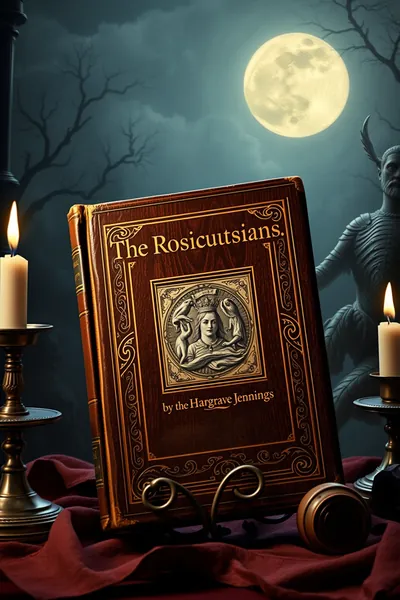




More Free Occult Philosophy Books
View all →