The Rosicrucians

 82
82

The Rosicrucians
Hargrave Jennings's 1907 treatise on the Rosicrucians offers a comprehensive, if sometimes overly enthusiastic, account of the fraternity's alleged history and doctrines. Jennings dedicates significant space to dissecting the symbolism of the rose and cross, positing it as a central emblem of esoteric knowledge. His strength lies in synthesizing a vast array of historical accounts and symbolic interpretations, attempting to connect the Rosicrucians to ancient mystery schools and alchemical traditions. However, the work occasionally suffers from a lack of critical distance, presenting speculative connections as established fact. For instance, his interpretation of the Fama Fraternitatis as a direct historical account, rather than a foundational myth, illustrates this tendency. Despite this, the sheer breadth of Jennings's research makes it a valuable, if challenging, resource for understanding how Rosicrucianism was perceived and presented at the turn of the 20th century. It serves as a vital, albeit biased, window into the esoteric landscape of its time.
📝 Description
82
Hargrave Jennings's 1907 book investigates the elusive Rosicrucian Order's historical and mystical claims.
First published in 1907, Hargrave Jennings's book examines the historical and mystical claims associated with the Rosicrucian Order. Writing during a time of considerable interest in occult societies, Jennings sought to chart the lineage and philosophical basis of this secretive brotherhood. The text works through a complex network of symbolism, reported initiations, and hidden doctrines. Jennings portrays the Rosicrucians as more than just a historical group; he sees them as a continuous channel of concealed knowledge.
This work is for dedicated students of Western esotericism, particularly those interested in key texts that influenced modern occultism. Readers who appreciate detailed historical analysis, even when it is speculative, and can engage with complex symbolic language will find value. It suits individuals aiming to grasp the supposed origins and lasting impact of one of Western history's most private fraternities.
Jennings's text appeared during an era of broad fascination with secret societies and ancient mysteries, influenced by movements such as Theosophy and the Hermetic Order of the Golden Dawn. The early 20th century saw a surge in books attempting to clarify or reinterpret historical esoteric traditions. Jennings's contribution to this intellectual climate offers a distinct, though debated, perspective on Rosicrucian history and its supposed links to earlier mystical and alchemical streams.
💡 Why Read This Book?
• Gain a foundational understanding of the symbolic language associated with the Rosicrucians, particularly the rose and cross motif, as presented in early 20th-century occult literature. • Explore Jennings's detailed examination of the *Fama Fraternitatis* and *Confessio Fraternitatis*, understanding their significance in the historical narrative of the Order. • Appreciate the historical context of occult scholarship around 1907, seeing how Jennings situates the Rosicrucians within a lineage of Hermetic and alchemical thought.
⭐ Reader Reviews
Honest opinions from readers who have explored this book.
❓ Frequently Asked Questions
When was Hargrave Jennings's The Rosicrucians first published?
Hargrave Jennings's seminal work, The Rosicrucians, was first published in 1907, reflecting the intense interest in esoteric societies during the early 20th century.
What are the main Rosicrucian documents discussed by Jennings?
Jennings extensively discusses the foundational Rosicrucian manifestos, primarily the 'Fama Fraternitatis' and the 'Confessio Fraternitatis,' which are central to understanding the Order's purported origins.
What symbolism does Jennings focus on regarding the Rosicrucians?
A central symbol explored by Jennings is the combination of the rose and the cross, which he interprets as representing profound esoteric knowledge and spiritual attainment.
Does Jennings present a historical or mythical view of the Rosicrucians?
Jennings attempts to present a historical lineage, often interpreting the Rosicrucian manifestos and legends as factual accounts of the Order's activities and initiations.
Is this book suitable for beginners in esotericism?
While informative, Jennings's dense prose and speculative approach make it more suitable for intermediate or advanced students of Western esotericism interested in historical interpretations.
What era does Jennings's work reflect regarding Rosicrucian studies?
Published in 1907, the book reflects the esoteric revival and scholarly interest in secret societies prevalent in the late Victorian and Edwardian periods.
🔮 Key Themes & Symbolism
The Rosicrucian Manifestos
Jennings dedicates significant attention to the 'Fama Fraternitatis' (1614) and 'Confessio Fraternitatis' (1615), viewing them as historical documents revealing the secret society's origins and objectives. He analyzes their allegorical content, seeking to extract literal truths about the Brotherhood's supposed early activities and its mission to reform European knowledge and religion. The interpretation hinges on understanding these texts not just as literature but as coded historical records of a hidden tradition.
Symbolism of the Rose and Cross
The intertwined symbolism of the rose and cross is central to Jennings's thesis. He posits this emblem as a key to Rosicrucian teachings, representing the union of spiritual and material realms, or the transformation of the adept. Jennings meticulously traces its appearance across various cultures and historical periods, suggesting it signifies an ancient, continuous stream of esoteric wisdom that the Rosicrucians inherited and preserved.
Alchemy and Spiritual Transformation
Jennings links Rosicrucianism intrinsically with alchemy, viewing its practices and philosophy as a sophisticated form of spiritual alchemy. The book explores alchemical symbolism and processes not just as literal gold-making but as metaphors for the purification and elevation of the human soul. This connection positions the Rosicrucians as custodians of a transformative art aimed at spiritual enlightenment and perfection.
Hidden History of Western Esotericism
Jennings constructs a narrative of a hidden, unbroken lineage of wise individuals and secret societies that have shaped Western civilization. The Rosicrucians are presented as a key element in this clandestine history, influencing philosophy, science, and religion from the shadows. His work aims to reveal this concealed current of knowledge, challenging conventional historical accounts.
💬 Memorable Quotes
Direct passages from the work, attributed to the author.
“The Rosicrucian Society is presented as a continuation of ancient wisdom.”
— This highlights Jennings's core argument that the Rosicrucians are not a novel invention but inheritors of a long, unbroken tradition of esoteric knowledge stretching back to antiquity.
“The symbolism of the rose and cross is a key to understanding their teachings.”
— Jennings emphasizes this iconic emblem as the central cipher through which the Rosicrucians communicate their complex philosophical and spiritual doctrines to initiates.
“The Fama Fraternitatis and Confessio Fraternitatis are treated as historical accounts.”
— This reflects Jennings's approach of interpreting the Rosicrucian manifestos literally, seeking historical facts within their allegorical and symbolic narratives.
“Alchemy is viewed as a spiritual discipline for the soul's transformation.”
— Jennings connects Rosicrucianism directly to alchemy, not merely as a chemical art but as a profound method for achieving spiritual perfection and enlightenment.
“The Brotherhood operates through a hidden lineage of adepts.”
— This emphasizes the secretive nature of the Order as described by Jennings, suggesting a continuous chain of transmission of knowledge among select, enlightened individuals.
🌙 Esoteric Significance
Tradition
Jennings's work is deeply rooted in the Western Esoteric Tradition, particularly its Hermetic, alchemical, and Kabbalistic streams. He seeks to place the Rosicrucians within this lineage, portraying them as guardians and disseminators of ancient wisdom. The book aligns with a historical current that views Rosicrucianism not as a singular historical event but as a persistent spiritual force manifesting through various historical periods and secret societies.
Symbolism
Central to the book is the symbolism of the rose and the cross, which Jennings interprets as representing the union of divine love (rose) and sacrifice/materiality (cross), or the perfected human soul. He also explores alchemical symbols, such as the Ouroboros, as representations of cyclical processes, eternity, and the Great Work of spiritual transformation, linking them to Rosicrucian initiatory paths.
Modern Relevance
Contemporary esoteric practitioners and scholars of Western mysticism continue to reference Jennings's work for its comprehensive synthesis of historical claims and symbolic interpretations. His detailed exploration of Rosicrucian symbolism, particularly the rose and cross, remains influential in occult circles. Modern Rosicrucian organizations and individual students of esotericism often engage with Jennings's text to understand the historical discourse surrounding their tradition.
👥 Who Should Read This Book
• Students of Western Esotericism seeking foundational texts on the history and symbolism of Rosicrucianism. • Researchers interested in occult literature and secret societies from the early 20th century, particularly the era of occult revival. • Individuals drawn to symbolic analysis and the study of Hermetic and alchemical traditions within a historical context.
📜 Historical Context
Hargrave Jennings's *The Rosicrucians*, published in 1907, emerged during a period of fervent occult revival in Europe and America. The late 19th and early 20th centuries witnessed a surge of interest in secret societies, mysticism, and alternative spiritualities, partly as a reaction against materialism and rationalism. Movements like Theosophy, founded by Helena Blavatsky in 1875, and organizations such as the Hermetic Order of the Golden Dawn, established in 1888, fueled this intellectual climate. Jennings's work contributed to this milieu by offering a detailed, albeit often speculative, historical and symbolic analysis of one of the most enigmatic fraternities. His approach can be seen as part of a broader trend to excavate and interpret the hidden currents of Western esotericism, often drawing parallels with Hermeticism, Kabbalah, and Gnosticism. While scholars like A.E. Waite would later critically examine the historical basis of Rosicrucian claims, Jennings's text represents the enthusiastic exploration characteristic of the era.
📔 Journal Prompts
The symbolism of the rose and cross: What personal associations does this emblem evoke?
Reflect on the historical claims made about the *Fama Fraternitatis* and *Confessio Fraternitatis*.
Consider the concept of a hidden lineage of wisdom as presented by Jennings.
Explore the connection Jennings draws between alchemy and spiritual transformation.
Analyze the influence of early 20th-century esoteric thought on Jennings's interpretation.
🗂️ Glossary
Fama Fraternitatis
One of the foundational manifestos attributed to the Rosicrucians, first published in Kassel in 1614. It details the supposed history and aims of the Order.
Confessio Fraternitatis
A second Rosicrucian manifesto, published in 1615, which further elaborates on the Order's philosophical and religious doctrines, calling for a spiritual and scientific reformation.
Rose Cross
The central symbol of Rosicrucianism, typically depicted as a cross with a rose at its center, representing spiritual enlightenment, love, and the union of opposites.
Alchemy
An ancient tradition focused on the transformation of base metals into noble ones (gold), often interpreted allegorically as the purification and perfection of the human soul.
Hermeticism
A philosophical and religious tradition based on writings attributed to Hermes Trismegistus, emphasizing divine knowledge, cosmic unity, and the interconnectedness of all things.
Adepts
Individuals believed to have attained a high level of spiritual knowledge or mastery, particularly within esoteric traditions.
Esotericism
Teachings or practices concerned with hidden knowledge, often reserved for initiates, focusing on spiritual truths and mystical experiences.
🔮 Readers Also Liked
Browse all →









More by Hargrave Jennings
All books →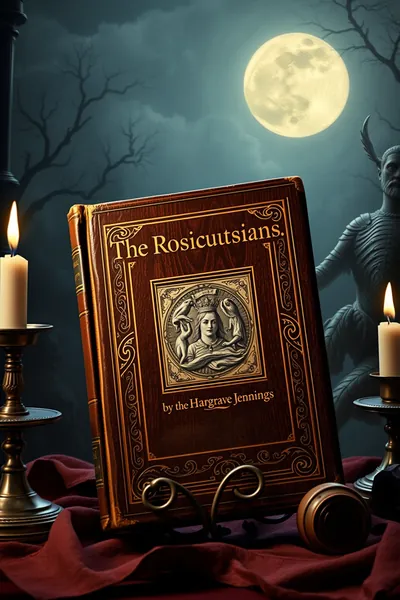




More Free Occult Philosophy Books
View all →