The rhetoric of immediacy
 81
81

The rhetoric of immediacy
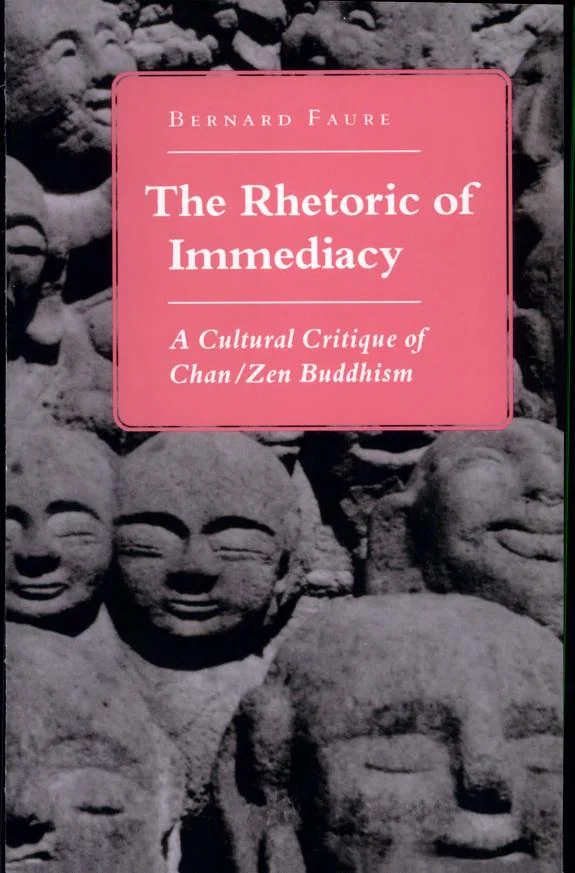
Bernard Faure’s "The Rhetoric of Immediacy" is a rigorous, albeit dense, examination of how spiritual traditions, particularly Buddhism, construct their claims to direct experience. Faure’s central argument—that the very notion of "immediacy" is a rhetorical device—is powerfully made, particularly when he dissects the ways in which concepts like śūnyatā are presented as self-evident. A notable strength lies in his meticulous deconstruction of how language and cultural frameworks shape the perception of enlightenment. However, the book’s academic density can be a significant hurdle for readers unfamiliar with post-structuralist theory, sometimes obscuring the core arguments beneath layers of complex terminology. The discussion around the "non-duality" of subject and object, for instance, is intellectually stimulating but requires considerable readerly effort. Ultimately, Faure offers a vital, critical lens for understanding spiritual discourse, though it demands a dedicated engagement.
📝 Description
81
Bernard Faure argued in 1994 that claims of spiritual immediacy are rhetorical constructions.
Bernard Faure's 1994 book challenges the idea that spiritual discourse achieves a direct connection with reality. He contends that claims of "immediacy," often found in mystical or esoteric traditions, are rhetorical devices shaped by historical and cultural factors. Faure scrutinizes concepts like "emptiness" (śūnyatā), viewing them not as unmediated experiences but as linguistic frameworks.
The work also examines the role of the body, ritual, and the master-disciple relationship. Faure suggests these elements are not direct paths to enlightenment but rather sites where spiritual meaning is constructed. This book emerged during a time of increased scholarly focus on postmodern critiques of language and religious experience, moving beyond solely phenomenological studies. Faure's analysis offers a critical perspective on Buddhist thought, distinct from earlier Orientalist views.
This book engages with the study of esoteric traditions, particularly Buddhism, by questioning the very nature of claims to direct spiritual experience. Instead of accepting claims of "immediacy" at face value, Faure analyzes them as rhetorical strategies embedded within specific historical and cultural contexts. This approach situates the work within critical scholarship on mysticism, moving beyond devotional or purely phenomenological accounts to examine the linguistic and social construction of spiritual authority and authenticity.
💡 Why Read This Book?
• Gain a critical understanding of how claims to direct spiritual experience are rhetorically constructed, particularly within Buddhist traditions, moving beyond simplistic notions of "enlightenment." • Analyze the role of language and cultural context in shaping spiritual authority, learning how concepts like śūnyatā are presented as immediate truths. • Appreciate a rigorous academic critique that challenges conventional interpretations of mysticism, offering a framework for deconstructing spiritual claims encountered in contemporary thought.
⭐ Reader Reviews
Honest opinions from readers who have explored this book.
❓ Frequently Asked Questions
What is the central argument of Bernard Faure's "The Rhetoric of Immediacy"?
The book argues that claims of "immediacy" in spiritual traditions, especially Buddhism, are not direct experiences but rather rhetorical strategies shaped by language and cultural context.
When was "The Rhetoric of Immediacy" first published?
Bernard Faure's "The Rhetoric of Immediacy" was first published in 1994, a period marked by increasing critical engagement with religious discourse.
Which specific Buddhist concept does Faure analyze extensively?
Faure extensively analyzes the Buddhist concept of "emptiness" (śūnyatā), examining how it is presented as an immediate realization rather than a constructed understanding.
What kind of reader would benefit most from this book?
Scholars of religious studies, Buddhism, philosophy of language, and cultural theorists interested in deconstructing spiritual discourse would find this book particularly beneficial.
Does the book offer practical advice for spiritual practice?
No, "The Rhetoric of Immediacy" is a theoretical and critical work focused on the academic analysis of religious language and concepts, not a guide to spiritual practice.
How does Faure challenge traditional views of Buddhist enlightenment?
Faure challenges traditional views by demonstrating that the experience of enlightenment, often presented as an immediate breakthrough, is mediated by language, rhetoric, and cultural frameworks.
🔮 Key Themes & Symbolism
The Construction of Immediacy
Faure argues that the very idea of a direct, unmediated spiritual experience is a rhetorical construct. He meticulously unpacks how language, metaphor, and philosophical frameworks within traditions like Buddhism create the illusion of bypassing conventional understanding. This theme challenges readers to question how claims of "seeing reality as it is" are produced and maintained, often through sophisticated linguistic and conceptual strategies that paradoxically create the very distance they claim to overcome.
Śūnyatā as Rhetorical Device
The concept of emptiness (śūnyatā) in Mahayana Buddhism is a focal point. Faure demonstrates that its presentation as a direct realization or a self-evident truth is a rhetorical strategy. He explores how the discourse surrounding śūnyatā functions to dissolve conceptual elaborations, yet in doing so, it creates its own conceptual edifice. This analysis reveals the intricate interplay between negation and affirmation in articulating ultimate reality within esoteric Buddhist thought.
The Role of the Body and Ritual
Faure examines how the physical body and ritual practices are often presented as direct pathways to spiritual insight, bypassing intellectualization. However, he argues that these too are mediated experiences, subject to interpretation and cultural framing. The master-disciple relationship, the performance of rituals, and the physical discipline are analyzed not as shortcuts to immediacy but as sites where the rhetoric of direct experience is enacted and reinforced.
Critique of Essentialism in Mysticism
A core concern is the critique of essentialist views of mysticism, which tend to posit a universal, ahistorical core to spiritual experience. Faure contends that such views ignore the specific socio-historical and linguistic conditions that shape religious discourse. By focusing on "rhetoric," he emphasizes the contingent, constructed nature of spiritual claims, urging a more nuanced and historically informed approach to understanding esoteric traditions.
💬 Memorable Quotes
Direct passages from the work, attributed to the author.
“Immediacy is not a direct experience but a rhetorical effect.”
— This statement captures Faure's central thesis: the feeling of direct, unmediated access to truth or reality is itself a product of language and persuasive strategy, not a pure, unadulterated experience.
“The discourse on emptiness creates its own conceptual universe.”
— Faure suggests that even the most abstract concepts, like śūnyatā, which aim to negate conceptualization, paradoxically form a complex intellectual framework that shapes how emptiness is understood and articulated.
“The body is not a shortcut to enlightenment, but a site of mediation.”
— This highlights Faure's view that physical practices and somatic experiences in spiritual traditions are not inherently more direct than intellectual ones; they are interpreted and framed by cultural and linguistic norms.
“Authenticity is performative.”
— This concept implies that the feeling of spiritual authenticity is not an inherent quality but something that is actively demonstrated or enacted through discourse, ritual, and behavior.
“The master-disciple relationship is a locus of rhetorical power.”
— Faure points out that the authority attributed to a spiritual teacher and the dynamic of discipleship are crucial in establishing and reinforcing the rhetoric of immediate spiritual transmission or realization.
🌙 Esoteric Significance
Tradition
Faure's work critically engages with traditions often categorized under "esoteric" or "mystical," with a particular focus on Mahayana Buddhism. While not a practitioner's guide, it deconstructs the very language and conceptual frameworks used in these traditions to describe ultimate reality or enlightenment. It departs from more devotional or experiential analyses by applying rigorous theoretical tools, questioning the authenticity of "direct experience" as it is commonly understood within these lineages.
Symbolism
The book scrutinizes symbols and concepts central to Buddhist thought, such as "emptiness" (śūnyatā) and the "Buddha-nature." Faure analyzes how these terms are employed rhetorically to signify a state beyond conceptualization. He examines how the purported "non-duality" of subject and object, often a goal in esoteric practice, is itself a linguistic construct that mediates, rather than eliminates, the gap between phenomena and ultimate reality.
Modern Relevance
Contemporary scholars of religion, particularly those examining Buddhist philosophy, critical theory, and the study of mysticism, continue to draw on Faure's work. His deconstructive approach to "immediacy" is relevant to current discussions about mindfulness, neuroscience and meditation, and the commodification of spiritual experiences in Western contexts. Thinkers exploring the limits of language in articulating spiritual truths find his analysis indispensable.
👥 Who Should Read This Book
• Academic researchers in religious studies, comparative philosophy, and Buddhist studies who need to critically analyze claims of spiritual experience. • Theorists of language and semiotics interested in how "truth" and "authenticity" are constructed in discourse, especially within non-Western philosophical traditions. • Advanced students of esoteric traditions seeking a rigorous intellectual framework to understand the mediated nature of spiritual authority and realization.
📜 Historical Context
Bernard Faure's "The Rhetoric of Immediacy" was published in 1994, a significant period for critical theory and religious studies. The late 20th century saw a growing application of post-structuralist thought, particularly from thinkers like Jacques Derrida and Michel Foucault, to the study of religion. This intellectual climate encouraged scholars to question foundational assumptions about truth, experience, and authority within religious traditions. Faure's work emerged in dialogue with scholars like Mircea Eliade, whose earlier phenomenological approaches often emphasized the "sacred" as a direct, self-evident reality. Faure's deconstructive methodology offered a counterpoint, analyzing how such experiences are linguistically and culturally constructed. While not subject to overt censorship, the book contributed to a broader academic shift away from essentialist interpretations of mysticism and towards historically situated, critical analyses of religious discourse.
📔 Journal Prompts
The rhetoric of immediacy: how does the book's critique apply to your own perceived spiritual insights?
Analyze the construction of "emptiness" (śūnyatā) as a rhetorical strategy in the text.
Consider the role of the body in spiritual traditions as presented by Faure.
Reflect on the concept of "authenticity" as performative in a spiritual context.
Examine the power dynamics inherent in the master-disciple relationship discussed.
🗂️ Glossary
Immediacy
In the context of the book, "immediacy" refers to the purported direct, unmediated experience of spiritual truth or ultimate reality, which Faure argues is a rhetorical construct rather than a pure, unfiltered perception.
Śūnyatā
A central concept in Mahayana Buddhism, often translated as "emptiness" or "voidness." Faure analyzes its function not as a direct experience of nothingness, but as a sophisticated rhetorical tool to negate conceptual elaborations.
Rhetoric
The art of persuasion. Faure uses "rhetoric" to describe the linguistic and cultural strategies employed by spiritual traditions to construct and convey meaning, particularly claims of direct spiritual insight.
Deconstruction
A philosophical approach, associated with Jacques Derrida, that involves analyzing the underlying assumptions and contradictions within texts and concepts to reveal how meaning is constructed and de-stabilized.
Non-duality
A philosophical or spiritual concept suggesting the absence of a fundamental separation between subject and object, or between reality and appearance. Faure examines how this concept is rhetorically deployed.
Phenomenology
A philosophical approach that focuses on the structures of consciousness and experience as they appear to the subject. Faure's work offers a critique of purely phenomenological accounts of religious experience.
Essentialism
The belief that phenomena have an essential, unchanging nature. Faure critiques essentialist views of mysticism that posit a universal core to spiritual experience, independent of context.
🔮 Readers Also Liked
Browse all →
![[ T. W. C. Moriarty], Seven Aphorisms of Creation, Seven Cosmic Principles](/img/thumb/t-w-c-moriarty-seven-aphorisms-of-creation-seven-cosmic-principles.webp)








More by Bernard Faure
All books →

More Free Occult Philosophy Books
View all →