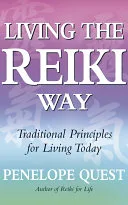
Living The Reiki Way
 71
71

Living The Reiki Way
Penelope Quest's Living The Reiki Way offers a refreshing perspective on a practice often reduced to its physical application. Instead of merely detailing hand positions, Quest grounds the reader in the ethical and mindful underpinnings of Reiki, presenting its six core precepts as a practical life philosophy. The strength lies in its accessible distillation of complex spiritual ideas into daily actionable steps. For instance, the section on 'Living without anger' provides concrete mental reframing techniques that feel immediately applicable. However, the work occasionally leans towards a generalized self-help tone, which might underwhelm seasoned practitioners seeking deeper esoteric discourse. The book's clear articulation of the 'Work honestly and diligently' principle is a notable highlight, connecting spiritual practice to worldly responsibility. Ultimately, Living The Reiki Way serves as an effective primer for integrating spiritual awareness into the fabric of everyday life.
📝 Description
71
Penelope Quest's 2012 book, Living The Reiki Way, integrates Reiki principles into daily life.
Living The Reiki Way, by Penelope Quest, published in 2012, presents a practical approach to incorporating the core principles of Reiki into everyday existence. It moves beyond viewing Reiki solely as an external healing method, instead highlighting its importance for personal spiritual growth and self-healing. Quest systematically examines the six foundational principles of Reiki, framing them as actionable guides for daily living rather than abstract ideals. Her method encourages readers to actively practice these tenets, fostering a more mindful and compassionate life. This work is suited for individuals aiming to deepen their existing Reiki practice or to understand its philosophical foundations beyond hands-on techniques. It appeals to those wishing to apply spiritual principles to common challenges, such as managing stress or cultivating gratitude. The book also serves those on a spiritual path seeking concrete methods for increased self-awareness and personal development through consistent ethical and mindful application.
Published in 2012, Living The Reiki Way appeared during a time of growing interest in holistic health and spirituality. While Reiki had gained popularity in the West, many books focused primarily on its healing techniques. Quest's work emerged when the spiritual market saw increased demand for practical, philosophy-driven applications of established practices. It contrasted with technique-focused manuals, aligning with a broader trend toward embodied spirituality and mindfulness, a movement also seen in the work of authors like Eckhart Tolle.
💡 Why Read This Book?
• Gain practical methods for embodying the six Reiki principles, such as specific techniques for 'Living without worry,' allowing you to manage daily anxieties more effectively. • Understand the spiritual dimension of Reiki beyond healing touch, as explored in the chapter on 'Living with gratitude,' fostering a deeper personal practice. • Learn how to apply the principle of 'Work honestly and diligently' to your professional life, transforming your career into an extension of your spiritual path.
⭐ Reader Reviews
Honest opinions from readers who have explored this book.
❓ Frequently Asked Questions
When was Living The Reiki Way first published?
Living The Reiki Way by Penelope Quest was first published on February 2, 2012. This initial release established its place in the contemporary exploration of spiritual practices.
What are the six key Reiki principles discussed in the book?
The six key principles are: Live in the now, Live without anger, Live without worry, Live with gratitude, Live with kindness, and Work honestly and diligently. Quest uses these as a framework for daily spiritual practice.
Does Penelope Quest's book focus only on healing others?
No, the book emphasizes that practicing Reiki is also about self-healing and personal spiritual growth. It guides readers on how to integrate the principles into their own lives for inner transformation.
Is Living The Reiki Way suitable for beginners in Reiki?
Yes, the book is well-suited for beginners and those looking to deepen their understanding. It provides practical guidance on applying the core principles in everyday situations, making Reiki philosophy accessible.
How does the book connect Reiki principles to daily life?
Penelope Quest provides practical and spiritual guidance on absorbing the six key Reiki principles into daily routines. The book encourages conscious application of these tenets to foster a more mindful and compassionate existence.
What is the primary message of Living The Reiki Way?
The primary message is that Reiki is a path to spiritual growth and self-healing, achieved by integrating its core principles into everyday actions and attitudes for a more peaceful and ethical life.
🔮 Key Themes & Symbolism
Embodied Spiritual Principles
The core of Living The Reiki Way lies in transforming abstract spiritual concepts into tangible daily practices. Quest meticulously details how the six Reiki principles—living in the present, without anger or worry, with gratitude and kindness, and working diligently—are not merely ideals but actionable directives. The book advocates for an embodied spirituality where ethical conduct and mindful awareness permeate every aspect of existence, moving beyond ritualistic application to a lived philosophy. This approach encourages readers to see their daily interactions and responsibilities as opportunities for spiritual practice and self-refinement.
Self-Healing Through Mindfulness
Living The Reiki Way posits that true healing encompasses personal well-being and spiritual advancement. Penelope Quest argues that by consciously applying the Reiki principles, individuals can cultivate inner peace and resilience. The emphasis on 'living without anger' and 'living without worry,' for instance, offers a pathway to emotional regulation and mental clarity. This focus on internal transformation suggests that external circumstances can be navigated more effectively when one's inner state is cultivated through consistent application of these mindful principles. The book frames self-healing as an ongoing process deeply intertwined with ethical living.
Ethical Conduct as Spiritual Practice
A significant theme in Living The Reiki Way is the integration of ethical behavior into spiritual discipline. The principle of 'Work honestly and diligently' serves as a prime example, illustrating how professional and daily responsibilities can be a form of spiritual practice. Quest encourages readers to view their efforts and interactions through a lens of integrity and conscious contribution. This perspective elevates mundane tasks and interpersonal dealings into opportunities for growth, demonstrating that spiritual development is not confined to meditation or specific rituals but is woven into the fabric of one's commitments and actions.
The Present Moment as Sacred
Central to Penelope Quest's teachings in Living The Reiki Way is the concept of 'living in the now.' The book positions the present moment as the primary arena for spiritual engagement and personal transformation. By urging readers to release anxieties about the future and regrets of the past, Quest highlights the power available in immediate experience. This focus on present-moment awareness is presented as foundational to cultivating other principles, such as gratitude and kindness, enabling a more focused and impactful approach to daily life and spiritual development.
💬 Memorable Quotes
Direct passages from the work, attributed to the author.
“Practising Reiki is not simply about healing others - it is also about healing yourself and growing spiritually.”
— This foundational statement reframes Reiki from a purely external service to an internal path of development. It underscores the book's focus on personal transformation through the consistent application of its core principles.
“Live in the now.”
— This principle emphasizes the importance of present-moment awareness. It suggests that true peace and effectiveness are found not in dwelling on the past or future, but in fully engaging with current experience.
“Live without anger.”
— This precept guides the reader toward emotional regulation and inner peace. It encourages conscious choices in responding to challenging situations, rather than reacting impulsively from a place of anger.
“Live with gratitude.”
— This principle focuses on appreciating the present and acknowledging the good in one's life. Cultivating gratitude is presented as a key element in fostering a positive outlook and spiritual well-being.
“Work honestly and diligently.”
— This principle integrates ethical conduct into daily life and work. It suggests that integrity and dedicated effort in one's responsibilities are themselves spiritual practices contributing to personal growth.
🌙 Esoteric Significance
Tradition
While Reiki itself has roots in Japanese spiritual practices, Living The Reiki Way frames its principles within a broadly accessible esoteric framework focused on personal transformation. It aligns with Western esoteric traditions that emphasize ethical living and mindfulness as pathways to spiritual development, such as certain interpretations of Buddhist meditation or New Age philosophies. The book adapts these universal principles into a digestible format, making them relevant to a contemporary audience seeking practical spiritual application without necessarily adhering to a specific, rigid lineage.
Symbolism
The six principles themselves function as symbolic directives for a balanced life. 'Living in the now' symbolizes presence and awareness, counteracting the dispersal of energy into past regrets or future anxieties. 'Living without anger' and 'Living without worry' symbolize emotional mastery and inner peace, akin to the Stoic ideal of controlling one's internal reactions. 'Living with gratitude' and 'Living with kindness' symbolize an outward-facing compassion and appreciation, fostering harmonious relationships. 'Working honestly and diligently' symbolizes integrity and purposeful action in the world.
Modern Relevance
The work's emphasis on mindfulness, emotional regulation, and ethical conduct continues to resonate strongly in contemporary spiritual and wellness circles. Thinkers and practitioners in fields like positive psychology, secular mindfulness movements (e.g., MBSR), and conscious leadership draw parallels with Quest's teachings. The book's practical, non-dogmatic approach makes its principles applicable to a wide audience seeking grounded methods for personal growth and stress reduction in a fast-paced modern world.
👥 Who Should Read This Book
• Individuals new to Reiki seeking to understand its philosophical depth beyond mere technique, providing a foundational understanding of its ethical tenets. • Existing Reiki practitioners looking to deepen their personal practice by integrating the core principles into their daily lives for enhanced self-healing. • Seekers of personal growth interested in practical, actionable methods for cultivating mindfulness, emotional balance, and ethical awareness in everyday situations.
📜 Historical Context
Living The Reiki Way emerged in 2012, a period when the spiritual marketplace was increasingly saturated with books focusing on healing techniques. While Usui Reiki Ryoho had been introduced to the West in the mid-20th century, and gained significant popularity through figures like Phyllis Furumoto and the International Association of Reiki Professionals, many texts concentrated on the practical transmission of attunements and hands-on methods. Penelope Quest's work arrived as a counterpoint, emphasizing the philosophical and ethical underpinnings often overlooked in technique-driven manuals. It tapped into a growing contemporary interest in embodied spirituality and mindfulness, a trend also explored by authors like Eckhart Tolle, who advocated for living in the present moment. Quest's approach positioned Reiki not just as a healing art, but as a comprehensive life philosophy, aligning with a broader societal shift towards integrating spiritual awareness into mundane activities.
📔 Journal Prompts
Reflection on 'Living in the now' during a challenging moment.
Identify one instance of anger and reframe it using the 'Live without anger' principle.
List five things you are grateful for today, applying the 'Live with gratitude' concept.
Consider a recent work task and how you embodied 'Work honestly and diligently.'
Explore how 'Living with kindness' could manifest in an interaction today.
🗂️ Glossary
Reiki Principles
The six core tenets presented by Penelope Quest: Live in the now, Live without anger, Live without worry, Live with gratitude, Live with kindness, Work honestly and diligently. These form the ethical and mindful foundation of the practice.
Self-Healing
The process of improving one's own physical, emotional, and spiritual well-being. In Living The Reiki Way, this is achieved through the conscious application of the Reiki principles to one's internal state and daily life.
Spiritual Growth
The ongoing development of one's spiritual understanding, awareness, and connection. The book posits that applying the Reiki principles is a direct path to achieving this growth.
Living in the now
A core Reiki principle emphasizing present-moment awareness. It involves focusing attention on the current experience, releasing attachment to past events or future anxieties.
Living without anger
A principle focused on managing and releasing anger. It encourages conscious responses rather than impulsive reactions, promoting inner peace and emotional equilibrium.
Work honestly and diligently
A principle that integrates ethical conduct and dedicated effort into one's professional or daily tasks, viewing them as integral parts of spiritual practice.
Gratitude
The quality of being thankful; a readiness to show appreciation for and to return kindness. In the book, it's a principle for cultivating a positive outlook.