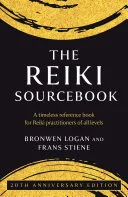
The Reiki Sourcebook
 78
78

The Reiki Sourcebook
Bronwen Logan and Frans Stiene's The Reiki Sourcebook serves as a crucial corrective to the often-simplified Western narrative of Reiki. Its strength lies in its rigorous historical research, meticulously piecing together the system's development from Mikao Usui's original teachings in Japan to its global propagation. The authors skillfully unpack the nuances of early 20th-century Japanese spiritual and healing practices, providing context often lost in translation and adaptation. A particularly illuminating section discusses the philosophical underpinnings of *shoden* and *okuden*, early levels of training, revealing a depth beyond mere energetic transmission. While the comprehensive historical detail is invaluable, some readers might find the sheer volume of information overwhelming; a more concise summary of key historical shifts could have enhanced accessibility. Nevertheless, Logan and Stiene have produced an essential reference for anyone seeking an authentic, historically grounded understanding of Reiki, moving beyond anecdotal claims to offer scholarly rigor.
📝 Description
78
The Reiki Sourcebook, published in 2024, traces the system of Reiki from its 20th-century Japanese origins to its global dissemination.
Bronwen Logan and Frans Stiene's The Reiki Sourcebook offers a thorough look at the system of Reiki. It follows the practice from its beginnings in early 20th-century Japan, through its spread to the West, and its later re-examination within Japan. The book details the history, core practices, and underlying philosophy of Reiki, presenting it as a complete system for spiritual development and well-being.
This text is for serious students and practitioners of Reiki, whether they are beginners wanting a solid foundation or experienced teachers seeking a deeper understanding of the system's roots. It will also interest scholars of comparative religion, esoteric studies, and anyone curious about how spiritual practices move between cultures. Readers interested in the historical and social changes in healing methods will find much of value here.
The book examines the original Japanese understanding of Reiki, contrasting it with later Western ideas. It highlights the spiritual and meditative elements that were central to Mikao Usui's teachings. The authors emphasize Reiki as a path for personal growth and enlightenment, not solely a hands-on healing method. The meaning of 'Reiki,' often translated as 'universal life force energy,' is discussed in its original Japanese context.
This book examines Reiki within the broader context of modern spiritual and healing traditions that emerged from Japan in the early 20th century. It situates Reiki not merely as a therapeutic technique but as a spiritual discipline, akin to other practices that emphasize energetic principles and personal transformation. The work addresses the historical tendency to secularize or de-spiritualize such practices in Western contexts, seeking to restore a more complete understanding of their original intent and philosophical depth.
💡 Why Read This Book?
• Gain an authentic understanding of Reiki's origins by exploring its development in early 1900s Japan, a period of significant spiritual inquiry. • Understand the difference between the original Japanese system and its Western adaptations, as detailed in the book's comparative analysis. • Grasp the spiritual and meditative dimensions of Reiki, beyond mere energetic healing, as presented in the discussions on *shoden* and *okuden*.
⭐ Reader Reviews
Honest opinions from readers who have explored this book.
❓ Frequently Asked Questions
What is the original meaning of 'Reiki' as explored in the book?
The Reiki Sourcebook explains that 'Reiki' in its original Japanese context refers to 'universal life force energy,' emphasizing its spiritual and meditative dimensions rather than solely a healing technique.
When was The Reiki Sourcebook first published, and who are the authors?
The Reiki Sourcebook was first published on November 26, 2024, authored by Bronwen Logan and Frans Stiene, building upon decades of research into the system of Reiki.
How does this book differ from other Reiki literature?
This book distinguishes itself by meticulously tracing Reiki's history from its inception in early 1900s Japan to its Western dissemination and back, offering a scholarly approach to its origins and philosophy.
Does The Reiki Sourcebook discuss Mikao Usui?
Yes, the work extensively discusses Mikao Usui, the founder of the system of Reiki, contextualizing his teachings within the spiritual landscape of early 20th-century Japan.
What is the significance of Japan in the book's exploration of Reiki?
Japan is central, as the book tracks Reiki's development from its origins there in the early 1900s, examining how the system evolved both within Japan and after its transmission to the West.
Can this book help me understand different Reiki levels?
Yes, the book explores the foundational practices and philosophy of Reiki, touching upon concepts like *shoden* and *okuden*, which represent early stages of training in the system.
🔮 Key Themes & Symbolism
Usui's Original System
The book meticulously reconstructs the system of Reiki as founded by Mikao Usui in early 1900s Japan. It details the spiritual practices, meditative techniques, and philosophical underpinnings that formed the core of Usui's teachings, often distinguishing them from later adaptations. The focus is on understanding Reiki as a path for self-development and enlightenment, rooted in Japanese spiritual traditions of the era.
Western Transmission and Adaptation
A significant portion of the work addresses how Reiki traveled from Japan to the West, examining the individuals and processes involved in its dissemination. It critically analyzes how the practice and philosophy were interpreted, modified, and sometimes simplified to fit Western cultural and spiritual contexts, leading to divergences from the original Japanese form.
Reiki's Spiritual Roots
Contrary to popular views that often emphasize only the healing aspect, this sourcebook strongly reiterates Reiki's profound spiritual and meditative foundations. It explores how the practice was intended to foster inner peace, ethical conduct, and personal growth, linking it to broader Japanese spiritual and philosophical movements of the early 20th century.
Comparative Practice Analysis
The authors engage in a detailed comparative analysis of different Reiki lineages and practices that emerged over time. By referencing historical documents and primary sources, they aim to provide clarity on the evolution of techniques and philosophies, helping practitioners understand the historical development and variations within the Reiki tradition.
💬 Memorable Quotes
Direct passages from the work, attributed to the author.
“The system of Reiki originated in Japan in the early 1900s.”
— This statement anchors the book's foundational premise, emphasizing the historical and geographical specificity of Reiki's inception and setting the stage for a detailed exploration of its origins.
“Understanding Reiki requires examining its philosophical and spiritual context.”
— This highlights the book's core argument: that Reiki is more than a mere energy healing technique; it is a comprehensive system deeply embedded in Japanese spiritual thought and practice.
“Mikao Usui developed Reiki as a path for personal and spiritual growth.”
— This interpretation underscores the book's focus on Usui's intention, presenting Reiki not just as a therapeutic modality but as a holistic discipline for self-cultivation and enlightenment.
💡 Key Ideas
Editorial paraphrase of the work's core concepts — not direct quotes.
Western adaptations sometimes altered the original intent.
This paraphrased concept points to the critical examination within the book regarding how Reiki evolved as it spread globally, suggesting a divergence from its initial Japanese formulation.
The book traces Reiki's journey from Japan to the West and back.
This summarizes the book's narrative arc, indicating a comprehensive historical investigation that includes the re-examination of practices within Japan itself after their global spread.
🌙 Esoteric Significance
Tradition
While not strictly adhering to a single Western esoteric lineage like Hermeticism or Kabbalah, The Reiki Sourcebook fits within the broader category of esoteric studies focusing on mind-body-spirit integration and subtle energy systems. It draws parallels with Eastern meditative and healing practices, offering a bridge between traditional Japanese spirituality and global esoteric interests in universal life force and energetic healing.
Symbolism
The work likely explores symbols associated with Reiki, such as the Kanji characters representing 'Reiki' (霊気). These symbols are traditionally imbued with energetic and philosophical meaning, relating to concepts of spirit, energy, and the connection between the physical and non-physical realms. The book may also touch upon the symbolism inherent in the hand positions and the energetic flow they facilitate.
Modern Relevance
The Reiki Sourcebook's emphasis on historical accuracy and the spiritual depth of Reiki appeals to contemporary movements seeking authenticity in spiritual practices. It informs modern practitioners, teachers, and scholars interested in understanding the roots of energy healing modalities and their integration into holistic wellness and personal development frameworks.
👥 Who Should Read This Book
• Dedicated Reiki practitioners seeking to deepen their understanding of the system's origins and philosophy beyond basic techniques. • Students of Japanese spiritual traditions and comparative religion interested in the historical development and cultural transmission of healing practices. • Esoteric scholars and researchers examining the evolution of energy work and mind-body disciplines in the 20th and 21st centuries.
📜 Historical Context
The Reiki Sourcebook emerges from a landscape where Reiki, popularized in the West from the mid-20th century, was often presented without deep historical context. Developed by Mikao Usui in Japan around the 1920s, the system initially flourished within Japanese spiritual and healing traditions, influenced by movements like Shinto and Buddhist meditation. Its transmission to the West, notably through Hawayo Takata, led to significant adaptations, often emphasizing its therapeutic applications over its spiritual roots. This book revisits that history, engaging with contemporary scholarship and primary Japanese sources to offer a more accurate portrayal. It implicitly engages with the broader esoteric revival of the late 19th and early 20th centuries, which saw increased interest in Eastern philosophies and practices in the West, while seeking to ground Reiki's narrative in its specific Japanese origins.
📔 Journal Prompts
Mikao Usui's development of Reiki in early 1900s Japan: what context is most striking?
The concept of 'universal life force energy' (Reiki): how does its Japanese origin inform its meaning?
Western adaptations of Reiki: identify one shift and its potential impact.
The spiritual versus therapeutic emphasis in Reiki: reflect on the balance.
*Shoden* and *Okuden* concepts: what do these early levels signify about the system's structure?
🗂️ Glossary
Reiki
Literally 'universal life force energy' in Japanese. In the context of the book, it refers to the system of spiritual healing and personal development developed by Mikao Usui.
Mikao Usui
The Japanese founder of the system of Reiki, credited with developing its principles and practices in the early 20th century.
Shoden
The Japanese term for the first level of Reiki training, typically focusing on foundational concepts and initial practices.
Okuden
The Japanese term for the second level of Reiki training, usually involving deeper teachings and more advanced techniques than Shoden.
Kanji
The Japanese system of writing using Chinese characters, often employed to represent specific concepts or words within Reiki teachings.
Esoteric
Relating to or accessible only by a select group of people initiated into special knowledge; concerning hidden or mysterious knowledge.
Lineage
In spiritual or esoteric traditions, refers to the chain of transmission of teachings and practices from master to student over time.