Crop Circles
 75
75

Crop Circles
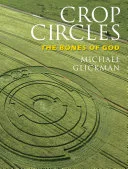
Michael Glickman’s *Crop Circles* bypasses the usual sensationalism, presenting a methodical, almost anthropological, study of these aerial enigmas. Glickman’s strength lies in his consistent, decade-long engagement with the phenomenon in its most prolific region, the English countryside, beginning his investigations in 1990. He brings a critical eye to the patterns, noting their increasing complexity and the subtle shifts in their appearance over time. A particularly compelling aspect is his discussion on how society processes such inexplicable events, moving from initial wonder to skepticism and attempts at rationalization. However, the book sometimes feels overly focused on the minutiae of individual formations, which, while thorough, can occasionally slow the narrative for readers seeking broader theoretical connections. Glickman's personal journey through witnessing these events provides a unique, grounded perspective on a subject ripe for flights of fancy. It’s a valuable, if at times dense, study for anyone serious about understanding the crop circle phenomenon from an observer’s viewpoint.
📝 Description
75
Michael Glickman began investigating crop circles in 1990, detailed in his personal examination of the phenomenon.
Michael Glickman's book offers a detailed look at crop circles, formations that have appeared in fields, particularly in England, since the late 20th century. Glickman started his own investigation in 1990 and moves past simple descriptions to share his firsthand perspective. The book covers his years of observation and analysis, seeking to understand the nature and origin of these complex geometric patterns. It is written for anyone interested in unexplained aerial phenomena, unusual natural patterns, and human reactions to the extraordinary. Researchers of crop circles, ufology fans, and those curious about consciousness and perception will find it appealing. Readers who want a practical, evidence-based approach to a topic often filled with speculation will appreciate Glickman's systematic study.
The phenomenon of crop circles gained public notice in the late 1980s and 1990s, a time of renewed interest in New Age ideas and alternative theories for unexplained events. Glickman's work appeared when many formations were still attributed to unknown causes, although hoaxes were also frequently discussed. His studies in the English countryside, a frequent site for these appearances, position the book within the ongoing discussion of Earth mysteries. Glickman's analysis focuses on the precise documentation of individual crop circles, examining their geometric accuracy, size, and repeating designs. He addresses how humans understand and process events that do not fit standard explanations.
This book sits within a tradition of exploring Earth mysteries and unexplained phenomena that gained traction in the late 20th century. It connects to a broader interest in alternative explanations for events that defy conventional scientific understanding, often overlapping with New Age philosophies and ufology. The focus on geometric patterns in nature and their potential symbolic or communicative aspects aligns with esoteric inquiries into consciousness, perception, and hidden orders within the natural world. Glickman's work contributes to a body of literature that questions accepted realities and seeks meaning in the anomalous.
💡 Why Read This Book?
• Understand the evolution of crop circle patterns and their geometric intricacies, as meticulously documented by Glickman’s personal observations beginning in 1990. • Gain insight into the psychological and societal challenges of confronting inexplicable phenomena, a core question Glickman addresses throughout his years of study. • Explore the English countryside's unique role as a nexus for crop circle appearances, offering a geographically focused perspective on the mystery.
⭐ Reader Reviews
Honest opinions from readers who have explored this book.
❓ Frequently Asked Questions
When did Michael Glickman start investigating crop circles?
Michael Glickman began his intensive investigation into the crop circle phenomenon in 1990, a year that marked a significant period for these appearances.
What is the primary geographical focus of Glickman's research in the book?
The book primarily focuses on the English countryside, which is noted as the region where the most significant and complex crop circle appearances have been documented.
Does the book present evidence for the origin of crop circles?
The book explores the phenomenon through firsthand observation and analysis, focusing on the patterns themselves and the human response to their mystery, rather than definitively proving a single origin.
What is the author's approach to the crop circle phenomenon?
Michael Glickman takes a personal, observational, and analytical approach, moving beyond secondhand reports to provide his own detailed insights gained from years of direct investigation.
What year was Michael Glickman's 'Crop Circles' first published?
Michael Glickman's book 'Crop Circles' was first published on May 12, 2009.
How does Glickman's work differ from typical crop circle literature?
Glickman's work distinguishes itself through its extensive personal investigation and a focus on the empirical details of the formations, moving away from purely speculative or anecdotal accounts.
🔮 Key Themes & Symbolism
The Nature of Miracles
Glickman confronts the fundamental question of how humanity processes events that defy rational explanation. His years of witnessing crop circles, starting in 1990, have given him a unique vantage point on this ongoing interaction between the inexplicable and the human psyche. The book examines how we acknowledge, interpret, and integrate phenomena that challenge our established worldview, moving beyond simple categorization into hoax or genuine mystery.
Geometric Precision and Meaning
The intricate geometric designs found in crop circles are central to Glickman's analysis. He meticulously documents their scale, complexity, and recurring motifs, suggesting a level of intelligence or design that warrants serious consideration. The work explores whether these patterns hold inherent meaning or serve as a form of communication, prompting deeper thought about the geometry of nature and consciousness.
Empirical Investigation
Unlike many accounts that rely on speculation, Glickman's approach is grounded in years of direct, personal observation and investigation in the English countryside. He emphasizes a methodical, fact-based approach to understanding the phenomenon, moving from secondhand reports to firsthand analysis. This commitment to empirical study provides a solid foundation for exploring the mysteries presented by the circles.
Human Perception and Response
A significant theme is how individuals and society react to the crop circle phenomenon. Glickman studies the psychological impact of encountering such anomalies, the spectrum of belief and skepticism, and the attempts to rationalize or dismiss them. The book offers a reflection on our capacity to accept the unknown and the ways in which mysteries shape our understanding of reality.
💬 Memorable Quotes
Direct passages from the work, attributed to the author.
“An intensive study of the crop-circle phenomenon in the region of its most important appearances—the English countryside—has given Glickman extraordinary personal insight.”
— This highlights Glickman's unique position as an investigator who has spent years directly observing crop circles in their primary locations, moving beyond theoretical discussions to practical, on-the-ground analysis.
“How does mankind deal with miracles?”
— This central question frames Glickman's exploration, suggesting that the book is not just about the physical formations but about humanity's psychological and philosophical response to phenomena that challenge our understanding of the natural world.
“Michael Glickman... has been witnessing the miraculous on a regular basis since he investigated his first crop circle in 1990.”
— This emphasizes the long-term, consistent nature of Glickman's engagement with the phenomenon, positioning him as a seasoned observer rather than a casual commentator on the crop circle mystery.
“Glickman's investigation... has given him extraordinary personal insight into a subject usually known only through secondhand reports.”
— This underscores the book's value as a primary source, offering the author's direct experiences and interpretations, which are presented as more authentic than commonly circulated information.
“The English countryside has been the site of the most important appearances of crop circles.”
— This factual statement grounds the discussion in a specific geographical context, identifying the primary 'hotspot' for the phenomenon and indicating the book's focus on this key area for investigation.
🌙 Esoteric Significance
Tradition
While not explicitly tied to a single esoteric lineage, Glickman's work speaks to traditions that explore sacred geometry and earth mysteries. It aligns with a modern esoteric current that seeks meaning in natural formations and unexplained phenomena, viewing them as potential indicators of consciousness or information from non-ordinary sources. This approach echoes theosophical interests in hidden natural laws and theosophical ideas about earth energies, though Glickman's method is more empirical.
Symbolism
The primary symbolism lies within the crop circles themselves: their geometric precision (circles, fractals, complex mandalas) can be interpreted as expressions of universal mathematical principles or conscious design. The act of their appearance in agricultural fields, often overnight, symbolizes the intrusion of the extraordinary into the mundane, challenging human perception and inviting contemplation on hidden intelligence within nature.
Modern Relevance
Glickman's meticulous documentation and his questioning of how we perceive the miraculous are relevant to contemporary discussions in consciousness studies, ufology, and the growing interest in archaeoastronomy and geomythology. Thinkers and researchers exploring the intersection of consciousness, pattern, and unexplained phenomena continue to find value in detailed case studies like Glickman's, seeking objective data to inform their understanding.
👥 Who Should Read This Book
• Researchers of unexplained phenomena and aerial anomalies, who will find Glickman's firsthand, decade-long investigation valuable for its detailed observations and analytical approach. • Students of sacred geometry and earth mysteries, interested in the complex patterns and potential symbolic meanings embedded within the crop circles documented since 1990. • Skeptics and open-minded individuals grappling with the question of how humanity confronts and processes events that defy conventional explanation, offering a grounded perspective.
📜 Historical Context
Michael Glickman's *Crop Circles*, first published in 2009, emerged during a period when the phenomenon had moved from fringe fascination to a subject of serious, albeit often polarized, investigation. The late 20th century, particularly the 1980s and 1990s, saw an explosion in crop circle appearances, especially in Britain, fueling debates between those attributing them to paranormal or extraterrestrial origins and those advocating for human hoaxes. Glickman's work situates itself within this ongoing dialogue, offering a grounded, empirical perspective that contrasts with more speculative New Age interpretations. While authors like Colin Andrews were also documenting the phenomenon, Glickman's focus appears to be on a deeply personal, analytical journey. The book implicitly engages with the skepticism prevalent in academic and mainstream circles, which often dismissed crop circles as mere pranks, exemplified by figures like the infamous Doug Bower and Dave Chorley. Glickman’s methodical approach, developed over nearly two decades of observation starting in 1990, seeks to understand the patterns themselves and the implications of their existence, rather than immediately assigning blame or cause.
📔 Journal Prompts
The emergence of crop circles as geometric patterns.
Your personal framework for accepting the inexplicable.
The significance of Glickman's intensive study in the English countryside.
How the concept of 'miracles' is processed by society.
The analysis of intricate designs observed since 1990.
🗂️ Glossary
Crop Circle Phenomenon
The appearance of intricate geometric patterns formed by the flattening of crops, primarily grain, in agricultural fields, often occurring overnight.
Geometric Precision
Refers to the exactness and complexity of the mathematical shapes and designs found within crop formations, suggesting a deliberate and skilled creation.
English Countryside
The geographical region, particularly in southern England, noted for the highest concentration and complexity of crop circle appearances since the late 20th century.
Firsthand Investigation
Glickman's method of studying crop circles involves direct personal observation, documentation, and analysis, rather than relying solely on reports or media accounts.
Human Perception of Miracles
The psychological and societal process through which people encounter, interpret, and respond to events that appear to defy natural laws or scientific understanding.
Secondhand Reports
Information about crop circles that is not directly observed by the person reporting it, often gathered from media, hearsay, or other intermediaries.
1990
The year Michael Glickman began his personal investigation into crop circles, marking the start of his extensive observational period.