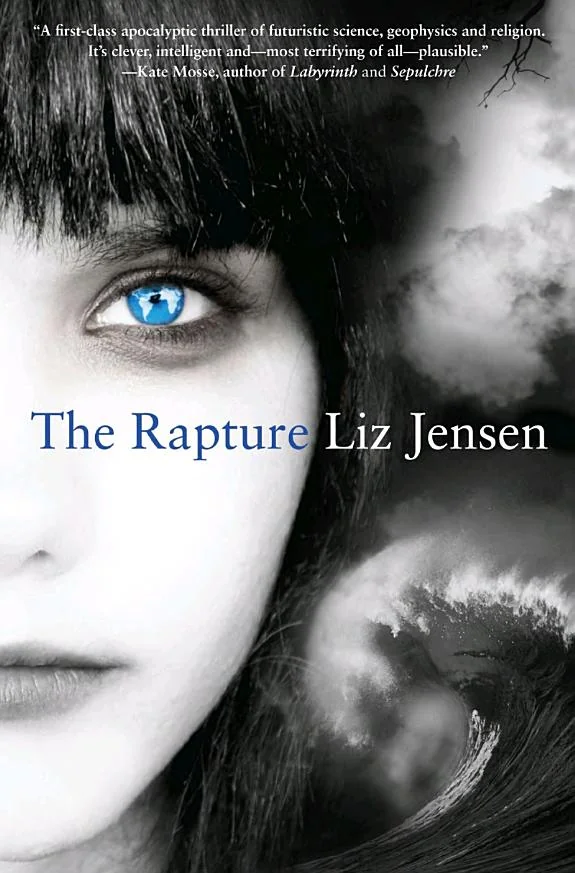
The Rapture
 71
71

The Rapture
Liz Jensen's *The Rapture* is a grimly effective piece of speculative fiction that uses the framework of end-times prophecy to dissect modern anxieties. The novel’s greatest strength lies in its unflinching depiction of a world teetering on the brink, where the boundaries between genuine faith, mass delusion, and technological manipulation blur. Jensen avoids easy answers, presenting a narrative that feels disturbingly plausible in its descent into chaos. A particular passage detailing the protagonist's disassociation during a public event serves as a stark illustration of the psychological toll of impending societal collapse. However, the relentless bleakness, while purposeful, can become overwhelming, occasionally overshadowing the nuanced character development that might otherwise deepen the reader's engagement. Despite this, *The Rapture* offers a potent, unsettling exploration of belief and desperation in the face of perceived oblivion.
📝 Description
71
Liz Jensen's 2009 novel, *The Rapture*, imagines a convergence of religious prophecy, technology, and personal crisis.
Published in 2009, *The Rapture* by Liz Jensen weaves together religious prophecy, rapid technological advancement, and individual struggles. The narrative, while fictional, taps into contemporary anxieties about the future, the nature of belief, and humanity's capacity for both salvation and self-destruction in a world undergoing constant change. Jensen avoids offering simple answers, instead constructing a complex scenario that encourages contemplation on societal paths and how individuals confront existential threats.
This novel appeals to readers of speculative fiction who engage with philosophical and theological questions. It will resonate with those interested in how modern anxieties about technology, environmental issues, and the resurgence of religious fervor find expression in storytelling. Readers who prefer a dark, often disturbing, narrative with a focus on introspection over easy resolutions will find this work particularly engaging.
Jensen's novel engages with the concept of 'The Rapture' not merely as a literal biblical event, but as a metaphor for profound societal or personal upheaval and transformation. It examines the friction between faith-based end-times narratives and the perceived inevitability of technological progress. The book's thematic concerns align with esoteric traditions that contemplate humanity's ultimate fate, the potential for radical change, and the spiritual implications of scientific and social trajectories. It places these ideas within a late-modern context, reflecting anxieties about civilization's future.
💡 Why Read This Book?
• Gain insight into the intersection of religious prophecy and technological anxieties as explored through the narrative's depiction of a near-future societal breakdown. • Understand the psychological impact of existential threats by examining how characters cope with the potential end of the world, drawing parallels to contemporary fears. • Analyze the multifaceted interpretation of 'The Rapture' as presented in the book, moving beyond a singular religious event to encompass themes of societal collapse and personal transformation.
⭐ Reader Reviews
Honest opinions from readers who have explored this book.
❓ Frequently Asked Questions
When was Liz Jensen's novel 'The Rapture' first published?
Liz Jensen's novel 'The Rapture' was first published in 2009, placing it within a period of heightened global anxiety regarding technological futures and environmental concerns.
What are the main themes explored in 'The Rapture' by Liz Jensen?
The novel explores themes of religious prophecy, technological advancement, societal collapse, mass delusion, and the psychological impact of existential threats.
Is 'The Rapture' based on a specific religious doctrine?
While the title and concept are drawn from Christian eschatology concerning 'The Rapture', Jensen uses it as a narrative springboard to explore broader anxieties about the future and belief.
What kind of tone does 'The Rapture' have?
The novel adopts a dark, often disturbing, and unsettling tone, reflecting the grim subject matter of societal breakdown and impending catastrophe.
Who is the author Liz Jensen?
Liz Jensen is a British author known for her speculative fiction that often tackles dark or controversial themes. 'The Rapture' is one of her notable works, first published in 2009.
Does 'The Rapture' offer a hopeful outlook on the future?
Generally, the novel presents a bleak and cautionary outlook, focusing on the descent into chaos and the complexities of belief and survival rather than offering simple hope.
🔮 Key Themes & Symbolism
Apocalyptic Anxieties
The novel taps into widespread fears surrounding societal collapse, environmental degradation, and the potential for large-scale disaster. It presents a near-future scenario where these anxieties manifest, exploring how individuals and communities react when confronted with the perceived end of their world. Jensen examines the psychological impact of living under the shadow of imminent catastrophe, blurring the lines between genuine belief, mass hysteria, and the human need for meaning in the face of oblivion.
Faith vs. Technology
A central tension in *The Rapture* is the conflict and convergence between traditional religious eschatology and the accelerating pace of technological development. The book questions whether technology offers salvation or an equally devastating form of apocalypse. It explores how belief systems are challenged or reinterpreted in an age of scientific advancement and digital interconnectedness, prompting reflection on humanity's reliance on both faith and innovation.
The Nature of Belief
Jensen probes the complex nature of belief itself, questioning what drives individuals to adopt certain doctrines or follow charismatic figures, especially during times of crisis. The novel examines how belief can be a source of comfort, a tool for manipulation, or a catalyst for delusion. It scrutinizes the fine line between fervent faith and outright madness, and how collective belief can shape societal outcomes.
Societal Fragmentation
The narrative illustrates the breakdown of social order and the fragmentation of communities under extreme pressure. As the world appears to unravel, the novel depicts how established structures dissolve, and individuals are left to navigate a chaotic landscape. This theme explores the fragility of civilization and the primal instincts that emerge when survival becomes paramount, questioning the resilience of human society.
💬 Memorable Quotes
Direct passages from the work, attributed to the author.
“Faith was a drug, and everyone was desperate for a fix.”
— This interpretation suggests that the book portrays religious belief, particularly in times of crisis, as a powerful, almost addictive force that people cling to for solace or escape, regardless of its objective truth.
“He saw the future not as a destination, but as a glitch in the system.”
— This concept points to the novel's engagement with technological determinism and the anxiety that progress itself might be flawed or lead to unforeseen catastrophic outcomes, rather than a smooth, intended evolution.
“The silence after the sermon was more terrifying than the words themselves.”
— This sentiment captures the pervasive sense of unease and dread in the novel, implying that the true horror lies not in the pronouncements of doom, but in the chilling emptiness and uncertainty that follow, leaving characters adrift.
“We were all waiting for something, though none of us knew what.”
— This reflects a core theme of existential anticipation and collective unease pervading the narrative, where characters are caught in a state of waiting for an event or revelation that remains undefined and deeply unsettling.
💡 Key Ideas
Editorial paraphrase of the work's core concepts — not direct quotes.
The world was ending, not with a bang, but with a whisper of digital static.
This paraphrased concept highlights the novel's modern take on apocalypse, suggesting that destruction might come not through dramatic, overt conflict, but through the insidious, pervasive influence of technology and information decay.
🌙 Esoteric Significance
Tradition
While not explicitly rooted in a single esoteric lineage like Kabbalah or Gnosticism, *The Rapture* engages with themes common to apocalyptic and millenarian traditions found across Western esotericism. It reflects a modern interpretation of end-times prophecy, exploring how ancient fears of divine judgment or cosmic upheaval are refracted through the lens of contemporary technological and environmental crises. The work speaks to an undercurrent of Gnostic dualism, where the material world is seen as flawed or corrupt, and salvation is sought through a radical break or transcendence.
Symbolism
The novel utilizes the concept of 'The Rapture' itself as a potent symbol, representing not just a religious event but a profound, often violent, societal or personal transformation—an escape from or obliteration of the current world order. Digital technology, particularly the internet and its pervasive data streams, functions as a modern symbol of omnipresence and potential control, mirroring older ideas of divine omniscience but framed within a secular, technological context. The pervasive sense of 'waiting' or anticipation acts as a symbol for humanity's collective existential dread and yearning for resolution.
Modern Relevance
In contemporary discourse, *The Rapture* finds relevance in discussions surrounding existential risk, digital eschatology, and the psychological impact of climate change. Thinkers and practitioners concerned with the intersection of technology, belief, and societal futures—such as those exploring transhumanism's darker implications or the influence of online prophecy communities—can find parallels in Jensen's narrative. Its depiction of mass delusion and the manipulation of belief systems also speaks to concerns about misinformation and the fragmentation of shared reality in the digital age.
👥 Who Should Read This Book
• Readers interested in speculative fiction that grapples with religious eschatology and contemporary anxieties about technology, seeking a narrative that probes societal breakdown. • Students of comparative religion or cultural studies who wish to examine modern interpretations of apocalyptic themes and their manifestation in contemporary literature. • Individuals drawn to psychological thrillers and dystopian narratives that explore the darker aspects of human nature and belief under extreme duress, offering a cautionary perspective.
📜 Historical Context
Liz Jensen's *The Rapture*, published in 2009, arrived at a moment of significant global introspection. The preceding decade had been marked by the September 11th attacks, escalating concerns about climate change, and the rapid integration of digital technologies into daily life, fostering a pervasive sense of unease about the future. Jensen’s novel engaged directly with these anxieties, particularly the resurgence of apocalyptic narratives in popular culture and the growing influence of evangelical movements. It can be seen as a literary response to a cultural milieu that was increasingly contemplating humanity’s self-destructive potential, a theme echoed in works like Margaret Atwood’s *The Handmaid’s Tale* (1985) or contemporary discussions on technological singularity. The book's reception highlighted its ability to tap into a collective zeitgeist of apprehension, positioning it as a commentary on the late-modern condition.
📔 Journal Prompts
The protagonist's response to the perceived end of the world.
The symbolic meaning of digital static in the narrative.
The tension between faith-based prophecy and technological advancement.
Moments of collective delusion versus individual discernment.
The portrayal of 'waiting' as a state of being.
🗂️ Glossary
The Rapture
A concept, primarily from Christian eschatology, referring to the belief that believers will be divinely removed from Earth before or during a period of great tribulation, often interpreted as an end-times event.
Eschatology
The branch of theology concerned with death, judgment, and the final destiny of the soul and of humankind; the study of ‘end times’.
Digital Static
A metaphor used in the novel to represent the pervasive, often overwhelming, and potentially corrupting presence of digital information and technological noise in modern life.
Mass Delusion
A phenomenon where a large group of people collectively believes in something that is not based on reality, often fueled by fear, suggestion, or charismatic leadership.
Existential Threat
A danger that threatens the very existence or survival of humanity, society, or a particular way of life, often stemming from large-scale technological, environmental, or social factors.
Technological Determinism
The theory that technology is the primary driver of social and cultural change, shaping human society and its values.
Millenarianism
A belief that a period of 1,000 years (a millennium) of peace and happiness will come upon Earth, often involving a cataclysmic event preceding it.
🔮 Readers Also Liked
Browse all →









More by Liz Jensen
All books →
More Free Occult Philosophy Books
View all →