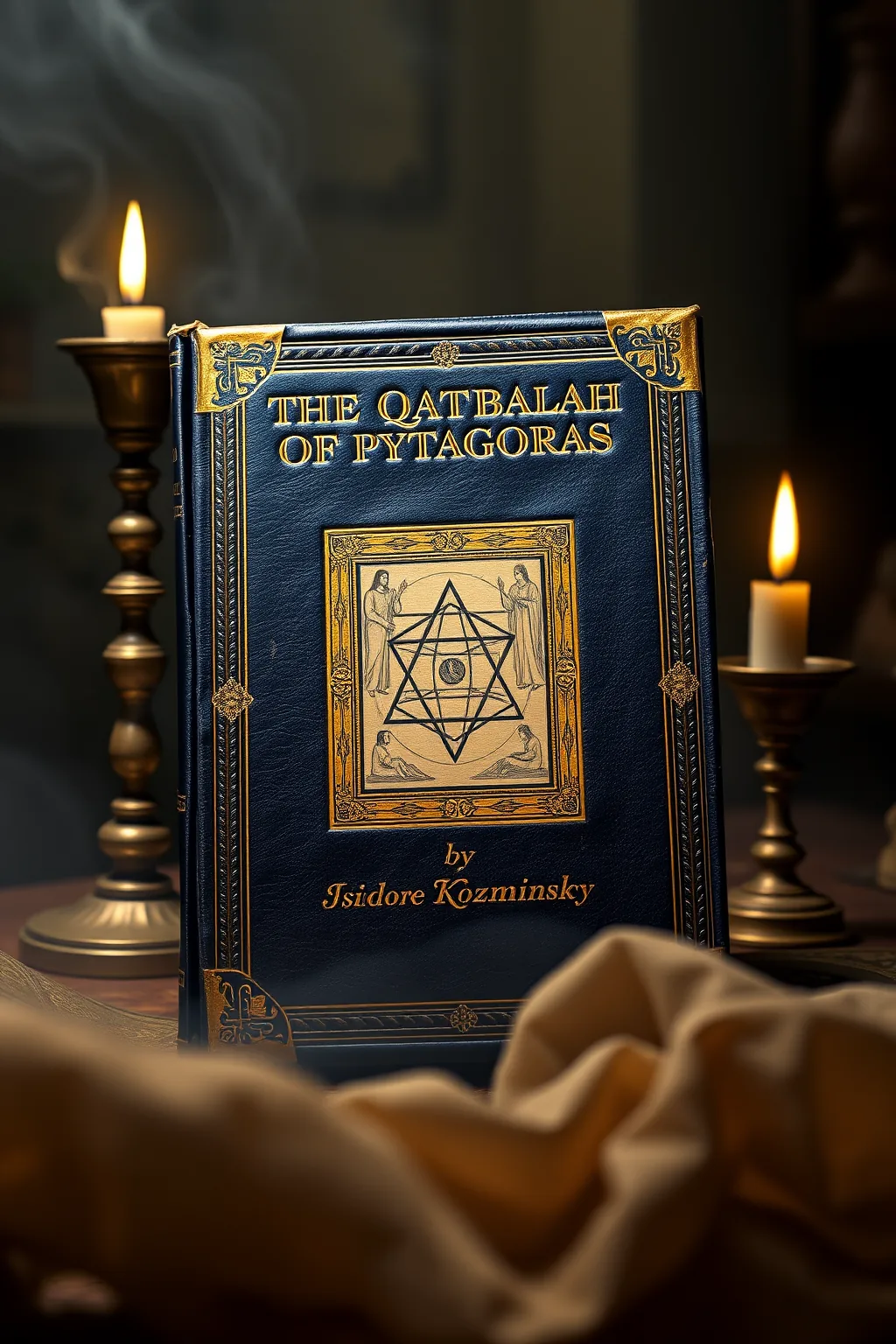
The Qabalah Of Pythagoras - Pamphlet
 61
61

The Qabalah Of Pythagoras - Pamphlet

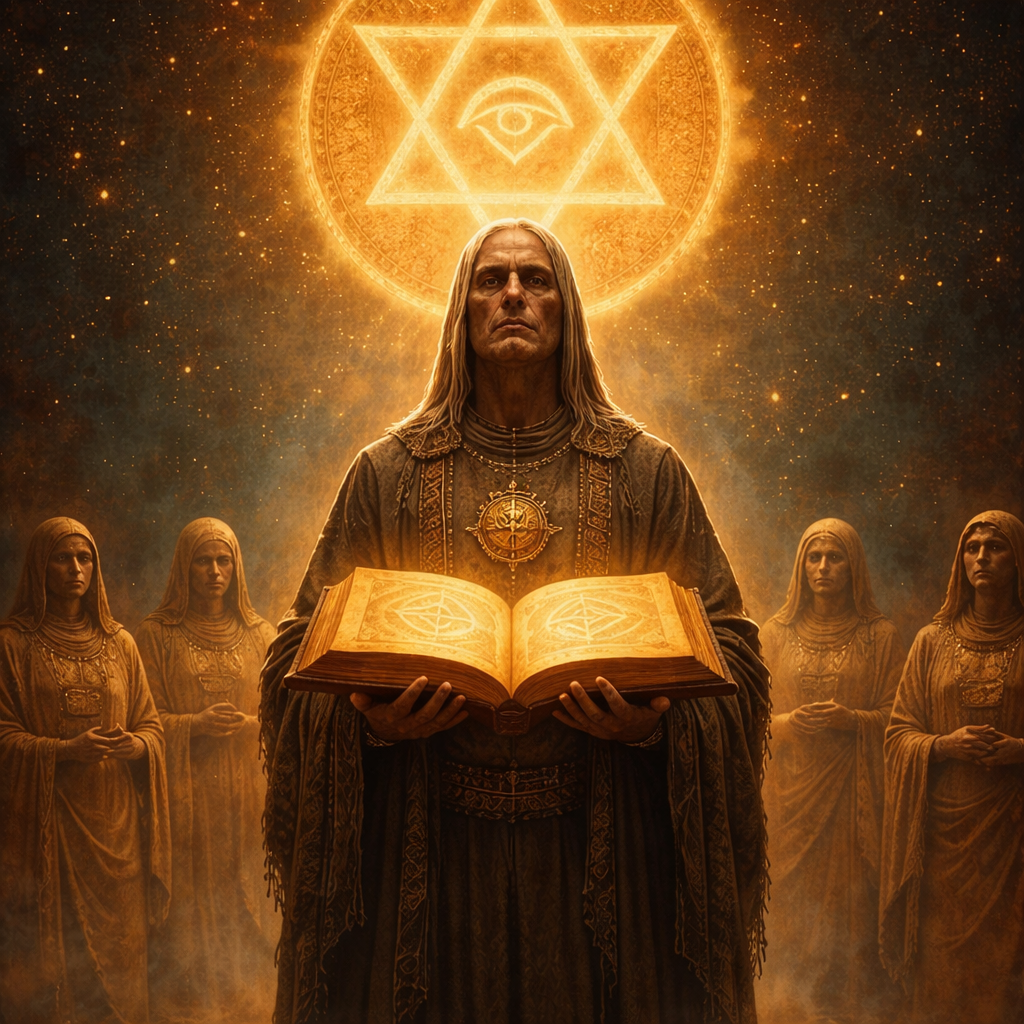

Aurelia Blackwood (Occult Philosophy Critic) — "The Qabalah of Pythagoras" by Isidore Kozminsky is a gem of concise esoteric scholarship. Kozminsky brilliantly synthesizes Pythagorean numerology and cosmology with the intricate tapestry of Kabbalistic thought. This pamphlet offers a rare glimpse into the shared symbolic language and philosophical underpinnings of these ancient traditions. Its strength lies in its clarity and directness, making profound concepts accessible without sacrificing their inherent mystery. Ideal for students of comparative mysticism and those seeking to deepen their understanding of sacred geometry and its spiritual implications. A valuable addition to any occultist's library.
📝 Description
61
Isidore Kozminsky published "The Qabalah of Pythagoras" to connect Pythagorean thought with Kabbalistic ideas.
In "The Qabalah of Pythagoras," Isidore Kozminsky draws parallels between the numerical and symbolic systems of ancient Greek philosophy and Jewish mysticism. The pamphlet examines how Pythagorean concepts, particularly those related to numbers and geometry, can be understood through the framework of the Kabbalistic Tree of Life and its Sephiroth. Kozminsky bridges the Hellenistic and Hebraic mystical traditions, suggesting a shared underlying structure in their esoteric teachings.
The work focuses on sacred geometry and the harmony found in numbers as keys to understanding the cosmos. It aims to illuminate the path toward inner spiritual understanding by examining these two distinct yet related systems of thought. Kozminsky's pamphlet seeks to make abstract metaphysical principles more accessible to the serious student of occult knowledge.
This pamphlet situates itself within the Western esoteric tradition, specifically focusing on syncretic approaches that blend classical Greek philosophy with Kabbalistic mysticism. It follows a lineage of thinkers who sought to find universal patterns and correspondences across different religious and philosophical systems. The work engages with the idea that fundamental spiritual truths are expressed through mathematical relationships and symbolic structures, a common theme in Hermeticism and Qabalistic studies.
💡 Why Read This Book?
Embark on a journey to discover the profound synthesis of Pythagorean numerology and Kabbalistic wisdom. This pamphlet reveals the universal language of symbols and numbers that connects seemingly disparate mystical traditions. It's an ideal read for seekers of hidden knowledge, students of comparative esotericism, and practitioners looking to enrich their understanding of cosmic order and spiritual ascent through foundational occult principles.
⭐ Reader Reviews
Honest opinions from readers who have explored this book.
❓ Frequently Asked Questions
What is the primary aim of 'The Qabalah of Pythagoras'?
The pamphlet aims to demonstrate the harmonious convergence between Pythagorean philosophy, particularly its emphasis on numbers and geometry, and the mystical teachings of Kabbalah, revealing shared esoteric principles.
Is this book suitable for beginners in Kabbalah?
Yes, while it assumes some interest in esoteric concepts, Kozminsky's lucid writing makes the complex interplay between these traditions accessible to earnest beginners eager to explore foundational links.
What kind of knowledge does it offer?
It offers insights into the symbolic language of numbers, sacred geometry, cosmic harmony, and the principles of spiritual development as understood through both Pythagorean and Kabbalistic frameworks.
How does it connect Pythagoras and Kabbalah?
It explores how Pythagorean concepts of number, proportion, and cosmic order find echoes and parallel expressions within the structure and symbolism of the Kabbalistic Tree of Life and its associated teachings.
What is the philosophical significance of this work?
Its significance lies in highlighting the universality of certain spiritual and philosophical truths, suggesting that profound wisdom traditions often share common roots and underlying archetypes.
🔮 Key Themes & Symbolism
The Harmony of Numbers
This theme studies the Pythagorean reverence for numbers as the fundamental building blocks of the universe and the divine. Kozminsky illuminates how these numerical principles are mirrored in Kabbalistic systems, particularly the Sephiroth, demonstrating that numbers are not mere quantities but potent symbolic keys to understanding creation, consciousness, and the divine order. It explores how sacred geometry and numerical ratios create the very fabric of existence, a concept central to both ancient Greek philosophy and Jewish mysticism. The exploration encourages readers to perceive the world through a lens of mathematical and symbolic harmony.
Bridging Hellenistic and Hebraic Mysticism
This section focuses on Kozminsky's masterful synthesis of two seemingly distinct yet deeply interconnected esoteric traditions. It highlights how the rational, geometric, and musical aspects of Pythagorean thought find profound resonance within the symbolic, meditative, and theological framework of Kabbalah. The pamphlet acts as a conduit, revealing the shared archetypal patterns and spiritual aspirations that transcend cultural and historical boundaries, offering a unified perspective on ancient wisdom and its enduring relevance for the modern seeker of truth. It emphasizes the universality of spiritual principles.
The Path of Inner Illumination
Fundamentally, , 'The Qabalah of Pythagoras' guides the reader towards self-discovery and spiritual awakening. By understanding the symbolic language and philosophical underpinnings of both traditions, individuals can begin a study of inner transformation. The pamphlet suggests that aligning one's consciousness with the cosmic order, as revealed through numbers and sacred structures, leads to greater wisdom, clarity, and spiritual evolution. It presents these ancient systems not just as theoretical frameworks but as practical tools for achieving a higher state of being and understanding one's place in the universe.
💬 Memorable Quotes
Direct passages from the work, attributed to the author.
“The Tree of Life mirrors the harmony of the spheres.”
— This suggests a profound connection between the Kabbalistic diagram of creation and the Pythagorean concept of cosmic music, implying universal order.
“Geometry is the divine blueprint.”
— Highlighting the sacredness of form and proportion, this implies that geometrical principles are not arbitrary but divinely ordained and integral to creation.
“Seek the hidden ratios within the manifest.”
— An exhortation to look beyond the superficial appearance of things to discover the underlying numerical and symbolic structures that govern reality.
“Wisdom flows from the union of distinct streams.”
— Emphasizes the value of comparative study and synthesis in esoteric traditions, suggesting that greater understanding arises from integrating different branches of knowledge.
💡 Key Ideas
Editorial paraphrase of the work's core concepts — not direct quotes.
Number is the essence of all things.
This quote expresses the Pythagorean worldview, positing numbers as the fundamental reality from which all phenomena manifest and derive their order.
🌙 Esoteric Significance
Tradition
This work is deeply rooted in Western Esotericism, specifically drawing from Pythagoreanism and Kabbalah. It bridges the Hellenistic philosophical tradition, with its emphasis on numbers and cosmic harmony, and the Jewish mystical tradition of Kabbalah, with its intricate symbolic system of the Tree of Life. The pamphlet serves as a proof of the perennial philosophy, suggesting universal archetypes and principles that unite these distinct yet complementary paths to spiritual understanding and gnosis.
Symbolism
The primary symbolism revolves around numbers, geometry, and their correspondence to spiritual realities. Pythagorean 'tetraktys' and geometric forms are implicitly linked to the Sephiroth and the structure of the Kabbalistic Tree of Life. The pamphlet invites readers to perceive numbers not merely as mathematical entities but as potent symbols of divine attributes, cosmic forces, and stages of spiritual development, revealing the hidden language of creation.
Modern Relevance
In an age often characterized by fragmentation and materialism, 'The Qabalah of Pythagoras' offers a compelling argument for the enduring power of ancient wisdom and the interconnectedness of all things. Its exploration of numerical symbolism and cosmic harmony provides a framework for understanding underlying order and meaning. For contemporary seekers, it illuminates pathways to spiritual growth by revealing how seemingly disparate traditions can offer complementary insights into the nature of reality and the human soul's journey.
👥 Who Should Read This Book
This pamphlet is ideally suited for the curious mind and the earnest seeker. Beginners in Kabbalah or Pythagorean philosophy will find it an accessible introduction to the profound parallels between these systems. Scholars of comparative mysticism and religious studies will appreciate its concise synthesis of complex ideas. Practitioners of occult arts, particularly those interested in numerology, sacred geometry, or symbolic interpretation, will discover valuable insights to enrich their understanding and practice. Ultimately, anyone drawn to the underlying unity of spiritual traditions and the hidden order of the cosmos will find profound value within its pages.
📜 Historical Context
Written during a period of burgeoning interest in comparative religion and occult philosophy, Isidore Kozminsky's 'The Qabalah of Pythagoras' emerged as a concise yet potent exploration of interweaving esoteric traditions. The late 19th and early 20th centuries saw a revival of Hermeticism, Kabbalah, and Neoplatonism, fueled by scholars and mystics seeking universal truths across diverse spiritual lineages. Kozminsky, himself a figure within these circles, contributed to this intellectual milieu by demonstrating the latent connections between the rationalist, mathematical universe of Pythagoras and the symbolic, spiritual cosmology of Kabbalah. This pamphlet reflects a broader trend of seeking underlying unity in ancient wisdom, offering a bridge between classical Greek thought and Jewish mysticism for a generation eager to explore the occult dimensions of reality.
📔 Journal Prompts
How does the concept of 'number is the essence of all things' resonate with your personal understanding of reality?
Identify a numerical pattern in your daily life and explore its potential symbolic meaning.
Reflect on the Seven Liberal Arts of the Pythagorean tradition and consider their Kabbalistic equivalents or correspondences.
How might the principles of sacred geometry inform your approach to problem-solving or creative endeavors?
Consider a time you experienced a sense of cosmic harmony; how did it feel, and what might have contributed to it?
🗂️ Glossary
Kabbalah
A complex system of Jewish mysticism that explores the nature of God, creation, and the relationship between the divine and humanity, often represented by the Sephiroth on the Tree of Life.
Pythagoreanism
An ancient Greek philosophical and religious movement founded by Pythagoras, emphasizing the study of numbers, geometry, music, and cosmology as keys to understanding the universe and achieving spiritual purification.
Sephiroth
The ten divine emanations or attributes of God in Kabbalistic cosmology, forming the structure of the Tree of Life and representing stages of creation and divine manifestation.
Tetraktys
A triangular arrangement of ten dots in four rows (1, 2, 3, 4), considered a sacred symbol by the Pythagoreans, representing cosmic harmony and the fundamental principles of the universe.
Esotericism
A broad category of spiritual traditions and practices that aim to understand the hidden meanings and spiritual significance behind religious and philosophical doctrines, often emphasizing direct experience and inner knowledge.
This book appears in 1 collection
🔮 Readers Also Liked
Browse all →








More by Isidore Kozminsky
All books →

From the “Kabbalah” Collection
View all →



More Free Kabbalah & Jewish Mysticism Books
View all →