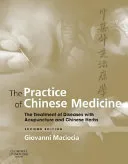
The Practice of Chinese Medicine
 72
72

The Practice of Chinese Medicine
Giovanni Maciocia's "The Practice of Chinese Medicine" offers a meticulously organized guide to applying TCM principles to clinical conditions. Its strength lies in the systematic breakdown of 48 diseases, presenting diagnostic patterns and treatment strategies with commendable clarity. The 2008 edition's inclusion of 14 new conditions demonstrates a commitment to keeping the text relevant to contemporary clinical practice. However, for readers entirely new to TCM theory, the density of information and reliance on established terminology might present a steep initial learning curve. A particularly effective section is the detailed exploration of the differential diagnosis for conditions like 'Dampness' accumulation, illustrating the nuanced diagnostic process. The work is a valuable resource for those already conversant with TCM fundamentals, providing a solid reference for clinical application.
📝 Description
72
Giovanni Maciocia's 2008 edition details TCM diagnosis and treatment for 48 distinct conditions.
Giovanni Maciocia's "The Practice of Chinese Medicine" provides a clinical framework for understanding and treating various ailments using Traditional Chinese Medicine (TCM). The 2008 edition expands on earlier versions, detailing how core TCM theories apply to diagnosing and treating 48 specific diseases and disorders. This text aims to connect historical principles with contemporary clinical practice.
The book is intended for practitioners and students of Chinese medicine, such as acupuncturists and herbalists, who wish to improve their knowledge of disease patterns and treatment methods. It also assists physicians and other healthcare professionals interested in comparing or integrating TCM with Western medicine, offering a structured approach to TCM concepts.
Maciocia's work draws from a long history of Chinese medical scholarship. Published in 2008, it reflects a growing global interest in complementary medicine, especially TCM, which saw increased integration into Western medical education in the late 20th century. The book is grounded in foundational texts like the *Huangdi Neijing*, which established many of the theoretical concepts still used today. Its focus on practical application distinguishes it from more theoretical historical texts.
This book engages with the long tradition of Chinese medical scholarship, which has been practiced for millennia. Its theoretical underpinnings are rooted in classical texts such as the *Huangdi Neijing* (Yellow Emperor's Inner Canon), a foundational work that articulated concepts like Qi, Blood, Yin and Yang, and the Five Elements. Maciocia's approach details how these ancient philosophical and energetic concepts translate into practical diagnostic methods and therapeutic strategies for specific health conditions, bridging historical medical thought with contemporary clinical application.
💡 Why Read This Book?
• Gain a structured understanding of how Qi stagnation manifests in conditions like migraines, a core concept in TCM diagnostics as detailed in Maciocia's disease chapters. • Learn specific acupuncture point prescriptions and herbal formula principles for treating 48 distinct conditions, directly applying knowledge from the book's clinical sections. • Explore the diagnostic process for pathologies such as 'Liver Blood Deficiency' (a specific pattern discussed), enhancing your ability to discern complex presentations within the TCM framework.
⭐ Reader Reviews
Honest opinions from readers who have explored this book.
❓ Frequently Asked Questions
What is the primary focus of Giovanni Maciocia's "The Practice of Chinese Medicine"?
The book focuses on applying Traditional Chinese Medicine (TCM) theory to the diagnosis and treatment of 48 specific diseases and conditions, providing clinical protocols for practitioners and students.
How many conditions are covered in the 2008 edition of "The Practice of Chinese Medicine"?
The 2008 edition covers 48 diseases, conditions, and disorders, an increase from the 34 detailed in the first edition.
What are the core theoretical components of TCM discussed in the book?
The book explores fundamental TCM concepts such as Qi, Blood, Yin and Yang, and the Five Elements, demonstrating their application in diagnosing and treating various ailments.
Is "The Practice of Chinese Medicine" suitable for beginners in TCM?
While comprehensive, the book is best suited for those with foundational knowledge of TCM. Beginners might benefit from introductory texts before diving into its clinical depth.
What diagnostic methods are emphasized in Maciocia's clinical approach?
Maciocia emphasizes traditional TCM diagnostic methods, including detailed observation of the pulse and tongue, alongside symptom analysis, to establish TCM patterns.
What types of treatment are discussed for the conditions presented?
The book outlines treatment strategies that include acupuncture, moxibustion, and the prescription of Chinese herbal formulas, all based on TCM diagnostic patterns.
🔮 Key Themes & Symbolism
Qi and Blood Dynamics
The book meticulously details the role of Qi (vital energy) and Blood in maintaining health and their dysfunction in disease. Maciocia explains how imbalances, such as Qi stagnation or Blood deficiency, manifest symptomatically and how these are diagnosed through pulse and tongue examination. The interconnectedness of Qi and Blood is a recurring theme, underscoring how disruptions in one inevitably affect the other, forming the basis for many treatment strategies discussed for the 48 conditions.
Yin, Yang, and the Five Elements
Central to Maciocia's clinical approach is the application of Yin and Yang theory and the Five Element (Wu Xing) framework. The text demonstrates how these fundamental concepts provide a systematic way to categorize physiological functions, pathological changes, and organ system relationships. Understanding the interactions and balance between Yin and Yang, and the generative and controlling cycles of the Five Elements, is presented as crucial for accurate diagnosis and effective therapeutic intervention in specific diseases.
Syndromic Differentiation in Practice
A core part of the book is its emphasis on 'syndromic differentiation' (Bian Zheng Lun Zhi), the process of identifying the underlying TCM pattern of disharmony. Maciocia guides the reader through differentiating between similar-looking conditions by analyzing subtle signs and symptoms according to TCM principles. This approach allows for individualized treatment, moving beyond mere symptom management to address the root cause of illness as understood within the TCM paradigm.
Integrated Treatment Modalities
The practice of Chinese medicine, as presented by Maciocia, involves a multi-faceted approach. The book details how acupuncture, moxibustion, and herbal medicine are employed synergistically. It provides specific acupuncture point combinations and herbal formulas tailored to the diagnosed TCM pattern for each condition, illustrating the integrated nature of classical Chinese therapeutic interventions.
💬 Memorable Quotes
Direct passages from the work, attributed to the author.
“The diagnosis of a disease in Chinese medicine is based on the identification of a pattern of disharmony.”
— This statement expresses the fundamental difference between Western and Chinese medical diagnostic paradigms. Maciocia emphasizes that TCM seeks to understand the underlying imbalance or pattern rather than solely focusing on the name of a disease or its isolated symptoms.
“Qi is the vital energy that animates all life.”
— This concise definition highlights the foundational concept of Qi in TCM. It's presented not just as energy, but as the animating force, crucial for all physiological processes and the essence of vitality.
“The Five Elements govern the relationships between the different organ systems.”
— This highlights the systemic view of the body in TCM. Maciocia uses the Five Element theory to explain how seemingly disparate organ functions are interconnected and influence each other.
“Treatment must address the root cause of the disharmony.”
— This principle, central to the book's approach, stresses that effective therapy in TCM involves rectifying the fundamental imbalance (the 'root') rather than just alleviating the outward manifestations (the 'branches').
💡 Key Ideas
Editorial paraphrase of the work's core concepts — not direct quotes.
Pulse and tongue are the windows to the internal condition.
This paraphrase underscores the diagnostic significance Maciocia places on the pulse and tongue examinations. These external observations are presented as direct indicators of the internal state of Qi, Blood, and organ systems.
🌙 Esoteric Significance
Tradition
While primarily a clinical textbook, Maciocia's work draws from the deep wellspring of Taoist philosophy that underpins Traditional Chinese Medicine. The emphasis on balance (Yin/Yang), vital energy (Qi), and the interconnectedness of all phenomena (Five Elements) aligns with broader Hermetic principles of correspondence and unity. It represents a practical application of ancient cosmological views to the microcosm of the human body, fitting within a tradition that sees medicine as intrinsically linked to understanding universal laws.
Symbolism
The core concepts of Qi and the Five Elements are profoundly symbolic. Qi represents the dynamic, animating principle of the universe, the invisible force that flows through all things, including the meridians of the body. The Five Elements (Wood, Fire, Earth, Metal, Water) symbolize not just material substances but also phases, energies, and relationships, providing a symbolic map of physiological and psychological processes and their interconnectedness.
Modern Relevance
Contemporary practitioners of integrative medicine and acupuncture continue to rely heavily on Maciocia's systematic approach. Thinkers and schools focusing on psychosomatic medicine and holistic health often reference TCM principles, as articulated by Maciocia, to understand the energetic and systemic dimensions of illness that Western biomedicine may overlook. His work remains a standard reference for evidence-based TCM practice in the West.
👥 Who Should Read This Book
["• Acupuncturists and herbalists seeking to refine their diagnostic skills and treatment protocols for a broad spectrum of conditions, referencing Maciocia's detailed syndromic differentiation.", '• Students of Traditional Chinese Medicine requiring a comprehensive clinical textbook that systematically links theory to practice, providing a foundation for their future careers.', '• Western medical practitioners interested in understanding the theoretical framework and clinical applications of TCM, enabling cross-disciplinary comparison and potential integration.']
📜 Historical Context
Giovanni Maciocia's "The Practice of Chinese Medicine" (first published 2008) emerged during a period of significant international engagement with Traditional Chinese Medicine (TCM). Following its introduction into Western academic and clinical settings in the mid-to-late 20th century, TCM scholarship saw a surge. Maciocia's work builds upon the theoretical foundations laid down in ancient texts like the *Huangdi Neijing* (Yellow Emperor's Inner Canon), which originated over two millennia ago. This text sought to bridge the gap between classical theory and modern clinical application, contrasting with earlier Western scholarship that sometimes viewed TCM through a purely historical or anthropological lens, rather than as a viable medical system. Maciocia's detailed clinical approach positioned his work as a practical manual for practitioners, distinct from more philosophical or theoretical explorations of TCM that were also prevalent.
📔 Journal Prompts
The diagnostic patterns for Dampness accumulation, as detailed in the text.
The relationship between Qi stagnation and specific symptoms discussed.
The application of the Five Element cycles to organ system pathology.
The diagnostic significance of tongue presentation for a given condition.
The rationale behind specific acupuncture point selections for a listed ailment.
🗂️ Glossary
Qi (Chi)
The fundamental vital energy or life force that animates all living beings and permeates the universe. In TCM, imbalances in Qi flow or quality are central to disease.
Blood (Xue)
In TCM, Blood is more than just the circulatory fluid; it is a denser, more nourishing substance derived from Qi, responsible for moistening tissues and housing the Shen (spirit).
Yin and Yang
The fundamental concept of complementary opposites and interdependent forces that govern all phenomena in the universe, including the human body. Health is seen as a balance between Yin and Yang.
Five Elements (Wu Xing)
A classical Chinese philosophical concept describing the dynamic relationships and cycles (generating and controlling) between five fundamental elements: Wood, Fire, Earth, Metal, and Water, used to categorize natural phenomena and physiological processes.
Syndromic Differentiation (Bian Zheng)
The process of identifying the underlying pattern of disharmony or imbalance within the body according to TCM principles, distinct from naming a Western disease.
Meridians
Channels or pathways through which Qi and Blood circulate within the body, connecting acupuncture points and organ systems. They form the basis for acupuncture treatment.
Shen
Often translated as 'spirit' or 'mind', Shen is considered to reside in the Heart in TCM. It encompasses consciousness, mental activity, emotions, and vitality.