Holy dissent
 62
62

Holy dissent


Evander Ashcroft (Alchemy & Hermeticism Editor) — Glenn Dynner's 'Holy Dissent' is a monumental achievement, meticulously charting the clandestine spiritual cartography between Jewish mystics and the Catholic Church. Eschewing superficialities, Dynner excavates the profound, often perilous, esoteric dialogues that shaped these traditions. His analysis of shared symbolic language and mystical practices, particularly within Hasidism and its engagement with Christian contemplative thought, is nothing short of revelatory. This work is essential for serious scholars and practitioners of Kabbalah, comparative mysticism, and anyone seeking to understand the hidden arteries of spiritual evolution. A true gem of esoteric scholarship.
📝 Description
62
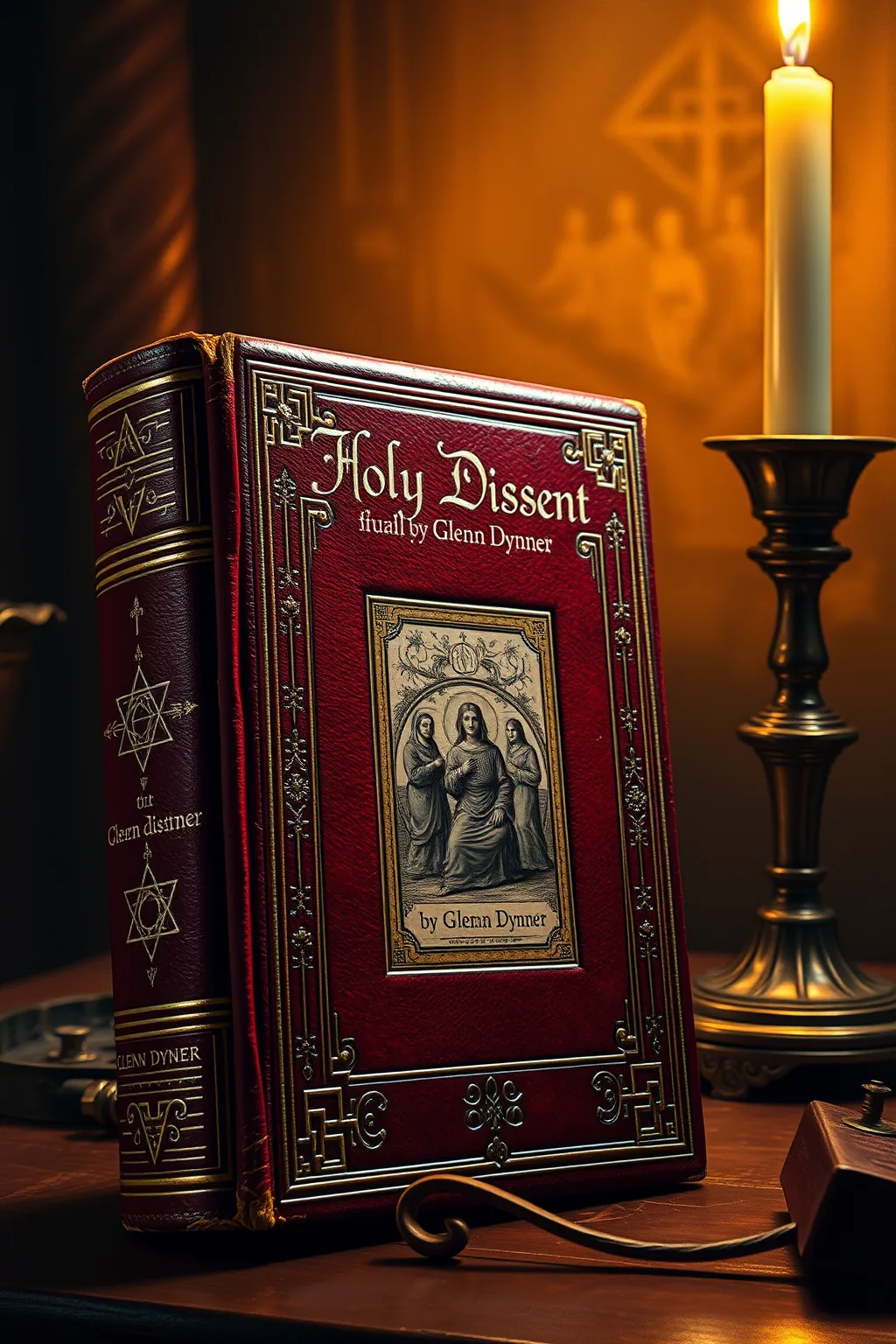
Glenn Dynner's 'Holy Dissent' examines the secret dialogues between Jewish mystics and the Catholic Church.
In 'Holy Dissent,' Glenn Dynner investigates the clandestine connections between Hasidic Jewish mysticism and the Catholic Church. The book details the esoteric exchanges, hidden symbols, and forbidden knowledge that marked these often secretive encounters. Dynner reconstructs a history of spiritual dialogue that occurred in places like hushed synagogues and cloistered monasteries, where mystics pursued divine communion.
The work appeals to readers interested in the complex history of interfaith spiritual interactions. It highlights the shared contemplative practices and the pursuit of spiritual connection across distinct religious traditions. 'Holy Dissent' reveals how mystics from different backgrounds found common ground in their spiritual quests, transcending dogma to explore universal themes of the illuminated heart and the courage required for spiritual transcendence.
This book situates itself within the study of comparative mysticism, specifically examining the historical and conceptual intersections between Hasidism, a form of Jewish mysticism, and elements within Catholicism. It moves beyond surface-level comparisons to uncover actual, albeit often hidden, dialogues and shared symbolic language. The focus is on the clandestine nature of these exchanges, suggesting a hidden current of spiritual seeking that bypassed official religious boundaries. This approach aligns with scholarship that looks for common threads in mystical experience, regardless of doctrinal differences.
💡 Why Read This Book?
Uncover hidden spiritual convergences and the courage of mystics who dared to bridge divides. 'Holy Dissent' reveals esoteric dialogues between Jewish and Catholic traditions, illuminating shared symbols and forbidden knowledge. Ideal for seekers of interfaith wisdom, scholars of Kabbalah and mysticism, and practitioners fascinated by the universal language of the spirit.
⭐ Reader Reviews
Honest opinions from readers who have explored this book.
❓ Frequently Asked Questions
What is the primary focus of 'Holy Dissent'?
The book meticulously explores the often-secret spiritual and intellectual exchanges between Jewish mystics, particularly within Hasidism, and the Catholic Church during specific historical periods, revealing shared esoteric understandings and influences.
Who were the 'Sabbathaians' mentioned?
The Sabbathaians, also known as Frankists, were a messianic Jewish movement led by Jacob Frank in the 18th century, who claimed messianic status and engaged in complex theological negotiations and syncretism with Christianity.
What kind of 'dissent' is discussed in the book?
The dissent refers to the spiritual and theological challenges posed by these mystical interactions, where boundaries between traditions were blurred, and orthodoxies were questioned through shared esoteric exploration and revelation.
Are there any practical Kabbalistic exercises in this book?
While the book focuses on historical and theological analysis of mystical traditions, its insights into esoteric symbolism and contemplative practices can inspire personal spiritual growth and deeper understanding for practitioners.
What is the main takeaway regarding the relationship between Judaism and Christianity presented in this work?
'Holy Dissent' suggests a far more complex and interconnected spiritual landscape than commonly understood, highlighting moments of profound, albeit often clandestine, mutual influence and shared mystical questing.
🔮 Key Themes & Symbolism
Esoteric Intersections of Faith
This theme looks at the clandestine spiritual dialogues that occurred between distinct religious traditions. It highlights how mystics from both Jewish and Catholic backgrounds engaged with parallel esoteric concepts, shared symbolic language, and complementary contemplative techniques, revealing a deeper unity beneath outward doctrinal differences. The focus is on the hidden knowledge and intuitive understanding that transcended formal religious structures, fostering a secret communion of souls.
The Courage of Spiritual Mavericks
The book celebrates the bravery of individuals who challenged religious boundaries and orthodoxies through their mystical experiences and intellectual curiosity. It examines the risks undertaken by figures who sought truth beyond prescribed doctrines, engaging in dialogues that were often deemed heretical or dangerous. This theme underscores the profound personal conviction and spiritual fortitude required to explore uncharted territories of faith and consciousness, often in defiance of societal and religious norms.
Symbolism and Hidden Meanings
A central pillar of 'Holy Dissent' is the exploration of shared and transmuted symbolism across Jewish mysticism and Christian esoteric traditions. It illuminates how ancient symbols, numerology, and allegorical interpretations served as a universal language for mystics, allowing them to convey profound spiritual truths. The book reveals how these symbols were not merely decorative but integral to the transmission of hidden knowledge and the evocation of altered states of consciousness, connecting the terrestrial with the divine.
💬 Memorable Quotes
Direct passages from the work, attributed to the author.
“The veil between worlds is thinnest for the fervent heart.”
— This suggests that intense spiritual longing and devotion can thin the perceived separation between the physical and spiritual realms, allowing for direct experience of the divine or hidden truths.
“Where dogma erects walls, mysticism builds bridges.”
— This highlights the contrast between rigid religious doctrines that can divide people and the universal, connective nature of mystical experience which seeks common ground and understanding.
“Hidden in plain sight, the sacred whispers its secrets.”
— This speaks to the idea that profound spiritual wisdom is often accessible to those who look beyond the obvious, finding the divine in the mundane through attentive observation and intuition.
“The seeker's path is often walked in solitary contemplation.”
— This emphasizes the introspective and often isolated nature of deep spiritual inquiry, where personal reflection and inner dialogue are crucial for progress and enlightenment.
“Truth is a mosaic, pieced from diverse illuminations.”
— This conveys that ultimate truth is not found in a single perspective but is a composite understanding formed from the insights and revelations of various spiritual paths and traditions.
🌙 Esoteric Significance
Tradition
This work is deeply rooted in the traditions of Kabbalah and Hasidism, exploring their intricate symbolic systems, meditative practices, and mystical philosophies. It also examines the points of convergence and divergence with Christian esoteric traditions, including contemplative prayer and mystical theology. The esoteric significance lies in revealing the underlying unity of spiritual seeking across these seemingly disparate paths, highlighting universal principles of divine apprehension and spiritual evolution.
Symbolism
The book meticulously deciphers the rich symbolic language employed by Jewish mystics and their Christian counterparts. This includes the interpretation of divine names, gematria (numerical values of Hebrew letters), the Tree of Life (Sephirot), and allegorical narratives. These symbols served as keys to unlocking hidden spiritual realities, facilitating communion with the divine, and transmitting esoteric knowledge across generations and cultural divides, pointing to a shared cosmic order.
Modern Relevance
In an age increasingly characterized by both globalization and religious polarization, 'Holy Dissent' offers a crucial historical perspective on the potential for interfaith understanding and shared spiritual exploration. It demonstrates that beneath doctrinal differences lie universal human aspirations for transcendence and connection. The book's insights into contemplative practices and symbolic language remain relevant for contemporary seekers and scholars looking to deepen their spiritual practice and foster greater empathy and dialogue between diverse traditions.
👥 Who Should Read This Book
This compelling volume is essential for scholars of Kabbalah, Jewish mysticism, and comparative religion, offering groundbreaking research into interfaith esoteric connections. Seekers of spiritual wisdom will find inspiration in the courage of mystics who transcended boundaries, while practitioners of contemplative arts can glean insights into shared meditative techniques and symbolic interpretation. Beginners to these subjects will find the accessible prose and clear explanations a valuable introduction to the complex world of mystical dialogue and hidden spiritual currents.
📜 Historical Context
During the periods explored in 'Holy Dissent,' Europe was a complex range of religious tension and spiritual ferment. The Catholic Church, while dominant, faced internal reform movements and external challenges, including the lingering impact of the Reformation and the rise of Enlightenment rationalism. Simultaneously, various branches of Jewish mysticism, most notably Hasidism in Eastern Europe, were experiencing profound spiritual awakenings, emphasizing ecstatic prayer, divine immanence, and the cultivation of a personal relationship with God. This era also witnessed periods of intense interfaith curiosity and, at times, persecution. The clandestine nature of many of these mystical exchanges was a direct response to the precarious social and religious climate, where deviations from established norms could lead to ostracization or worse. The historical context is thus one of both deep-seated division and surprising, often hidden, currents of spiritual resonance and intellectual exchange.
📔 Journal Prompts
Reflect on a time when you felt a spiritual connection with someone from a different background. What facilitated this connection?
Explore a symbol that holds deep personal meaning for you. What are its hidden layers of significance?
Consider a religious or spiritual practice you find challenging. How might a different esoteric perspective illuminate it?
What does 'holy dissent' mean to you in your own spiritual journey?
Imagine writing a secret letter to a mystic from another tradition. What spiritual questions would you ask and what insights would you share?
🗂️ Glossary
Kabbalah
A complex system of Jewish mysticism that explores the relationship between the divine, the universe, and humanity, often through symbolic interpretation of scripture and esoteric teachings.
Hasidism
A spiritual movement within Orthodox Judaism that arose in 18th-century Eastern Europe, emphasizing ecstatic prayer, joyful worship, and the immanence of God in all aspects of life.
Sabbataianism
A messianic Jewish movement founded by Shabbetai Zevi in the 17th century, which later evolved into Frankism, characterized by radical interpretations and syncretic tendencies.
Sephirot
The ten divine emanations or attributes through which God, in Kabbalistic cosmology, creates and sustains the universe, often visualized as the Tree of Life.
Gematria
A Kabbalistic interpretive method that assigns numerical values to Hebrew letters, used to find hidden meanings and connections within sacred texts.
This book appears in 1 collection
🔮 Readers Also Liked
Browse all →








From the “Kabbalah” Collection
View all →







More Free Kabbalah & Jewish Mysticism Books
View all →