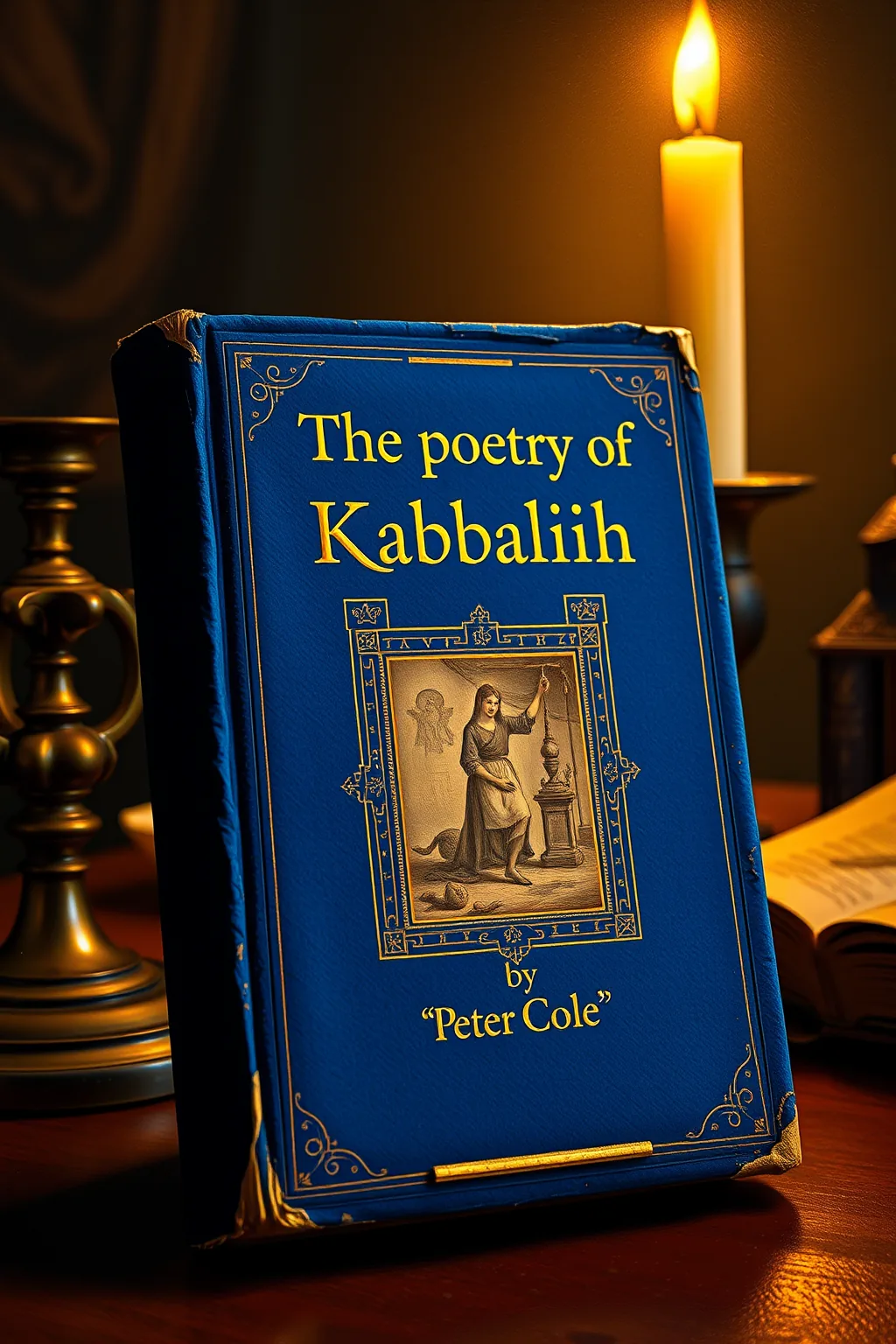
The poetry of Kabbalah
 61
61

The poetry of Kabbalah


By Balthazar Finch (Senior Critic, Occult Philosophy) — Peter Cole's 'The Poetry of Kabbalah' is a seminal work for any serious student of esoteric traditions. It brilliantly bridges the chasm between academic study and lived mystical experience, offering a profound exploration of Kabbalistic themes through the lyrical power of ancient Hebrew poetry. Cole's translations and insightful commentary reveal the hidden symbolic language and the profound spiritual aspirations embedded within these sacred verses. This volume is a treasure trove for scholars seeking historical context and practitioners yearning for deeper meditative material. Its strength lies in its ability to distill complex mystical concepts into accessible, yet potent, poetic forms, making the esoteric tangible and deeply resonant for the dedicated reader.
📝 Description
61
Peter Cole's 2006 collection presents the devotional poetry of Kabbalah, known as Piyutim.
This volume gathers Piyutim, the devotional poetry central to Jewish mysticism. It moves beyond academic study to immerse readers in verses that underpin Kabbalistic reflection. The collection addresses themes like divine emanation, the symbolic structure of existence, and the desire for divine connection. Cole highlights the coded knowledge within these texts, aimed at earnest spiritual seekers.
Readers will find discussions on the mystical aspects of Judaism, the traditions surrounding the sephiroth, and the philosophical foundations of spiritual growth. The book encourages both intellectual and spiritual engagement, fostering a greater awareness of the universe and our place within it. It aims to guide the reader toward understanding the core of divine mystery.
This book sits within the tradition of Kabbalah, a Jewish mystical practice that developed in the Middle Ages. Kabbalah focuses on understanding the divine nature and the relationship between the eternal God and the created world through esoteric interpretations of scripture and symbolic lore. The Piyutim collected here are not merely religious songs but are understood as vehicles for divine revelation and contemplation, embodying core Kabbalistic concepts in poetic form.
💡 Why Read This Book?
Unravel the esoteric symbolism and hidden knowledge of Kabbalah through the evocative power of its ancient poetry. 'The Poetry of Kabbalah' offers a unique gateway into Jewish mysticism, revealing profound spiritual insights and philosophical depth. Ideal for seekers of divine wisdom, scholars of religious texts, and practitioners of contemplative traditions who wish to deepen their understanding of the mystical path.
⭐ Reader Reviews
Honest opinions from readers who have explored this book.
❓ Frequently Asked Questions
What is Kabbalah and what does this book explore?
Kabbalah is a mystical tradition within Judaism that explores the divine nature of God and the creation of the universe. This book delves into its esoteric themes through the rich and symbolic poetry of Hebrew devotional literature, known as Piyutim.
Who is Peter Cole and what is his expertise?
Peter Cole is a renowned poet and translator celebrated for his insightful interpretations of Hebrew poetry. His expertise lies in bringing ancient texts to life for a modern audience, particularly those with an interest in mystical and spiritual traditions.
What are Piyutim and why are they significant?
Piyutim are liturgical poems that have been central to Jewish worship for centuries. They are significant in Kabbalah for their intricate symbolism, allegorical narratives, and ability to convey complex mystical concepts in a deeply evocative and devotional manner.
Is this book suitable for beginners in Kabbalah?
Yes, while it offers depth for scholars, the accessible nature of Cole's translations and commentary makes it an excellent starting point for those new to Kabbalah, providing a beautiful and engaging introduction to its core ideas.
What kind of esoteric knowledge can be found in this book?
Readers can expect to find insights into the nature of the Divine, the structure of the cosmos (the Sephiroth), the soul's journey, the use of divine names, and the path towards spiritual unification, all expressed through symbolic and allegorical poetry.
🔮 Key Themes & Symbolism
The Tree of Life and Divine Emanation
Central to Kabbalistic cosmology is the Tree of Life (Etz Chaim), a symbolic map of divine emanation and creation. This collection illuminates how the verses within Piyutim poetically describe the ten Sephiroth – the divine attributes and vessels through which God manifests in the world. Readers will encounter profound expressions of the interconnectedness of all existence, the flow of divine energy, and the intricate relationships between the spiritual and material realms, offering a symbolic blueprint for understanding the universe and one's place within it.
The Ascent of the Soul and Mystical Union
These poems serve as a evidence of the soul's yearning for connection with the Divine. The 'Poetry of Kabbalah' explores the arduous yet transformative journey of the soul's ascent, often depicted through metaphors of pilgrimage, divine marriage, or ecstatic rapture. The verses articulate the various stages of mystical experience, the purification of the self, and the ultimate goal of achieving gnosis or unification with the Infinite. This theme appeals to seekers across traditions, offering a poetic framework for spiritual growth and transcendence.
Symbolic Language and Hidden Meanings
Kabbalah is renowned for its collection of symbolism, and the poetry within this volume is a prime example. Peter Cole expertly guides readers through the layers of meaning embedded in Hebrew letters, divine names, biblical allusions, and allegorical narratives. The poems act as keys, unlocking esoteric truths about creation, redemption, and the nature of reality. Understanding this symbolic language is paramount to appreciating the depth of Kabbalistic thought and its intricate hermeneutics, revealing a universe of coded wisdom for the initiated.
💬 Memorable Quotes
Direct passages from the work, attributed to the author.
“Through broken vessels, light is poured.”
— A core Kabbalistic concept, this suggests that imperfections and limitations in the material world are precisely the means through which divine light can manifest and be perceived.
“The letters sing the world into being.”
— This highlights the belief in the creative power of Hebrew letters, suggesting they are not merely symbols but fundamental building blocks of reality, imbued with divine energy.
“Silence reflects the unuttered name.”
— This points to the ineffable nature of God, suggesting that true understanding of the Divine is often found not in words, but in profound stillness and contemplation.
“The path is paved with longing.”
— This emphasizes the role of desire and yearning in the spiritual journey, indicating that the pursuit of the Divine is driven by an intense and persistent longing for connection.
💡 Key Ideas
Editorial paraphrase of the work's core concepts — not direct quotes.
The divine spark trembles in the dust.
This quote speaks to the inherent holiness within all creation, even the seemingly mundane or base aspects of existence, suggesting a divine presence waiting to be recognized.
🌙 Esoteric Significance
Tradition
This work is deeply rooted in the Kabbalistic tradition, a mystical interpretive branch of Judaism that seeks to understand the divine nature, the creation of the universe, and the relationship between God and humanity. It explores concepts such as the Sefirot (divine emanations), the Gevurah (divine judgment), Chesed (divine loving-kindness), and the ultimate goal of Tikkun (rectification or restoration of the cosmic order).
Symbolism
The poetry is replete with detailed symbolism, employing Hebrew letters, gematria (numerical values of letters), biblical narratives, and allegorical imagery to convey profound esoteric truths. The Tree of Life, divine names, celestial bodies, and natural phenomena are all utilized as symbolic keys to unlock hidden dimensions of reality and spiritual ascent, offering a coded language for divine mysteries.
Modern Relevance
In an age often characterized by material pursuits and existential questioning, the esoteric wisdom contained within Kabbalistic poetry offers a timeless path to spiritual insight and self-discovery. It provides a framework for understanding the interconnectedness of all things, the pursuit of inner peace, and the yearning for a deeper meaning. For contemporary seekers, these verses offer a powerful means of contemplative practice and a source of inspiration for working through the complexities of modern life with greater spiritual awareness.
👥 Who Should Read This Book
This volume is a treasure for a diverse readership. **Beginners** seeking an accessible yet profound introduction to Jewish mysticism will find Peter Cole's translations informative. **Scholars** of religion and comparative mysticism will appreciate the historical context and meticulous scholarship. **Spiritual seekers** drawn to esoteric traditions will discover rich material for meditation and contemplation. **Practitioners** of contemplative arts and those interested in the intersection of poetry and spirituality will find a unique and deeply rewarding exploration of the Kabbalistic path.
📜 Historical Context
The poetry collected and translated in 'The Poetry of Kabbalah' emerges from centuries of Jewish mystical development, primarily flourishing from the medieval period onwards, particularly in Spain and Safed. This era witnessed a profound intellectual and spiritual awakening within Judaism, driven by a desire to understand the deeper, hidden meanings of Torah and the nature of God. The expulsion from Spain in 1492, while devastating, also led to the migration of Kabbalists to new centers, fostering further innovation and dissemination of these esoteric ideas. The Piyutim themselves, often dating back even earlier, were adapted and reinterpreted through the lens of Kabbalistic philosophy, becoming potent vehicles for conveying complex theological concepts and ecstatic mystical experiences to a wider community.
📔 Journal Prompts
Reflect on a time you felt a 'divine spark' in an unexpected place. How did this experience alter your perception?
Consider the concept of 'broken vessels' in your own life. How have challenges or imperfections led to unexpected growth or revelation?
What 'letters' or symbols in your life hold significant meaning or creative power for you?
Explore a moment of profound stillness. What did you 'hear' or understand in that silence?
Describe a personal 'longing' that has guided your spiritual journey. How has this yearning shaped your path?
🗂️ Glossary
Kabbalah
A mystical tradition within Judaism that seeks to understand the divine nature of God and the creation of the universe through symbolic interpretation of religious texts.
Piyutim
Liturgical poems that form a significant part of Jewish prayer services, often rich in symbolism and devotional content, central to Kabbalistic expression.
Sephiroth
The ten divine emanations or attributes of God, forming the Kabbalistic Tree of Life, representing the stages of divine revelation and creation.
Gematria
A method of interpreting Hebrew scriptures by assigning numerical values to Hebrew letters and finding meaning in the numerical relationships between words.
Tikkun Olam
A Hebrew phrase meaning 'repair of the world,' referring to the concept of restoring cosmic harmony and wholeness, often seen as humanity's spiritual task.
This book appears in 1 collection
🔮 Readers Also Liked
Browse all →







More by Peter Cole
All books →
From the “Kabbalah” Collection
View all →





More Free Kabbalah & Jewish Mysticism Books
View all →