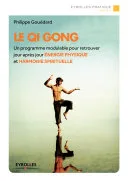
Le Qi Gong
 78
78

Le Qi Gong
Philippe Gouédard’s "Le Qi Gong" presents a structured entry into the practice of Chinese energetic gymnastics. Its primary strength lies in its methodical, week-by-week approach, which effectively breaks down potentially intimidating exercises into manageable daily tasks. This pedagogical clarity is essential for beginners. The abundance of illustrations, as hinted at in the original blurb, is crucial for demonstrating the precise postures and movements required. A potential limitation, however, might be the depth of exploration into the philosophical underpinnings of Qi; while practical instruction is strong, the deeper esoteric context might feel slightly underdeveloped for advanced practitioners seeking extensive historical or philosophical discourse. One particularly useful section outlines the foundational movements for cultivating 'grounding' energy, a concept vital for anyone starting their Qi Gong path. The book ultimately serves as a competent, if introductory, manual for cultivating personal energy through disciplined practice.
📝 Description
78
Philippe Gouédard's Le Qi Gong offers a structured approach to Chinese energy cultivation, published in 2003.
This book introduces Qi Gong, a Chinese system of mindful movement and energy cultivation, presenting techniques progressively for daily integration. Gouédard focuses on harmonizing internal energies through gentle exercises, aiming to simplify practices often seen as complex. The instructional method stresses clarity and steady advancement, making Qi Gong accessible for individuals seeking to improve physical well-being and mental calm.
Le Qi Gong is designed for beginners with no prior experience in Qi Gong or similar disciplines. It is also relevant for those interested in Chinese philosophy and traditional healing. Practitioners of other somatic arts may find it useful for expanding their understanding of energy work. The book addresses the core concept of cultivating and circulating Qi, or vital energy, within the body through specific postures, breathing, and focused intention.
Qi Gong's roots are ancient within Chinese culture, deeply connected to Taoist philosophy and Traditional Chinese Medicine. Its principles center on the cultivation and circulation of 'Qi,' or vital energy, believed to be fundamental to health and vitality. This practice, alongside related disciplines like Tai Chi, has been formalized and gained wider recognition in the West over recent decades. Gouédard's work aligns with a broader interest in traditional Eastern practices that complement conventional health approaches, emphasizing the interplay of physical movement, breath, and mental focus.
💡 Why Read This Book?
• Learn a week-by-week, day-by-day method for practicing Qi Gong, directly from Philippe Gouédard's pedagogical structure, allowing for gradual integration of energy cultivation exercises. • Understand the core concept of harmonizing your internal energies through gentle movements and focused breathing, as detailed in the practical guidance provided. • Benefit from an abundantly illustrated guide, ensuring clear comprehension of the specific postures and techniques for practicing Chinese gymnastics safely and effectively.
⭐ Reader Reviews
Honest opinions from readers who have explored this book.
❓ Frequently Asked Questions
What is the primary goal of Qi Gong as presented in Philippe Gouédard's book?
The primary goal is to harmonize one's internal energies (Qi) through gentle, systematic exercises. The book guides practitioners to cultivate vitality and balance through mindful movement and breathwork.
Is "Le Qi Gong" suitable for absolute beginners?
Yes, the book is designed as an initiation, offering a week-by-week, day-by-day approach. It aims to make the practice accessible, breaking down techniques into simple, manageable steps.
What kind of exercises does the book cover?
It covers gentle Chinese gymnastics (Qi Gong) focusing on postures, breathing techniques, and intention to guide the flow of vital energy within the body.
How does the book facilitate learning?
The book uses a structured, progressive method, breaking down learning week by week and day by day. It is also described as abundantly illustrated to aid understanding of the movements.
When was "Le Qi Gong" first published?
The book "Le Qi Gong" by Philippe Gouédard was first published on July 10, 2014.
What is the central philosophy behind Qi Gong?
The central philosophy revolves around the concept of Qi, or vital energy, and its cultivation and circulation within the body for health and balance, drawing from ancient Chinese traditions.
🔮 Key Themes & Symbolism
Energy Cultivation (Qi)
The book centers on the concept of Qi, the vital life force in Traditional Chinese Medicine. It guides readers to become aware of their internal Qi and learn methods to cultivate, circulate, and balance it. This involves specific breathing patterns and mindful movements designed to enhance vitality and promote a sense of well-being. The practical exercises aim to make this subtle energy tangible, fostering a deeper connection between mind, body, and spirit.
Structured Practice Progression
A defining feature is its pedagogical structure, dividing the learning process into weekly and daily segments. This systematic approach ensures that practitioners can gradually build their skills and understanding without feeling overwhelmed. Each stage builds upon the last, creating a solid foundation for consistent practice and long-term benefits. This method is ideal for those who prefer clear guidance and measurable progress in their learning journey.
Mind-Body Harmony
The practice of Qi Gong, as presented, emphasizes the interconnectedness of the physical body, breath, and mental state. By engaging in gentle movements coordinated with breath and focused intention, practitioners aim to achieve a state of harmony. This integration is seen as crucial for releasing tension, improving circulation, and fostering mental clarity and emotional equilibrium, leading to overall health.
Gentle Movement as Therapy
The book advocates for the therapeutic benefits of gentle, flowing movements characteristic of Chinese gymnastics. Unlike strenuous physical activity, Qi Gong focuses on relaxation, suppleness, and the smooth flow of energy. The illustrated guide ensures correct form, allowing readers to access the restorative and healing potential of these practices for both physical ailments and mental stress.
💬 Memorable Quotes
Direct passages from the work, attributed to the author.
“Harmonize our energies.”
— This concise phrase expresses the fundamental aim of Qi Gong as presented in the book: to bring the body's vital forces into a state of balance and flow, promoting health and well-being.
“Initiation pratique au Qi gong.”
— Signifying a practical introduction, this highlights the book's accessible, hands-on approach designed to guide newcomers into the practice of Qi Gong without requiring prior knowledge.
“Semaine par semaine, jour après jour.”
— This emphasizes the book's structured, progressive teaching method, suggesting a steady, incremental learning process that allows users to build skills gradually and integrate the practice into their daily lives.
“Apprendrez à l'exercer en douceur.”
— This highlights the gentle nature of the exercises taught, assuring readers that the practice is designed to be performed with ease and without strain, making it suitable for a wide range of physical abilities.
“Abondamment illustré, cet ouvrage pédagogique.”
— This points to the visual learning aids within the book, indicating that detailed illustrations are provided to clarify the postures and movements, enhancing the educational and practical value for the reader.
🌙 Esoteric Significance
Tradition
While Qi Gong is fundamentally a Taoist practice, Gouédard's approach frames it within a broader context of energy cultivation relevant to various esoteric traditions focused on internal alchemy and vital force manipulation. It aligns with Hermetic principles of 'as above, so below' by linking internal energetic states to external physical expression and well-being. The emphasis on harmonizing energies can be seen as a practical application of principles found in systems aiming for spiritual and physical integration.
Symbolism
The primary symbolism revolves around the concept of Qi itself – the invisible, vital current that animates all things. Specific postures often symbolize natural elements or states of being, such as 'standing like a tree' (rootedness, stability) or movements that mimic the flow of water (adaptability, cleansing). The act of breathing is itself symbolic, representing the exchange between the individual and the universal life force, a core tenet in many esoteric paths.
Modern Relevance
Contemporary thinkers and practitioners in fields like somatic psychology, mindfulness-based stress reduction (MBSR), and integrative medicine draw heavily on principles exemplified by Qi Gong. Its focus on embodied awareness, gentle movement for therapeutic benefit, and energy regulation appeals to modern scientific research into the mind-body connection. Schools focusing on internal martial arts and Taoist internal alchemy also continue to explore and adapt these foundational practices.
👥 Who Should Read This Book
• Individuals new to Qi Gong seeking a structured, step-by-step introduction with clear visual guidance, as provided by Philippe Gouédard's pedagogical method. • Practitioners of other mind-body disciplines (e.g., yoga, Tai Chi) interested in exploring the unique principles and techniques of Chinese energetic gymnastics. • Those experiencing stress or seeking gentle methods for physical rejuvenation and mental calm, who will benefit from the book's focus on harmonizing vital energies.
📜 Historical Context
Philippe Gouédard's "Le Qi Gong" enters the field of somatic practices at a time when interest in Eastern philosophies and health systems was well-established in the West. Published in 2014, it follows decades of popularization for practices like Tai Chi and Qi Gong, which gained significant traction from the mid-20th century onwards. These disciplines are rooted in ancient Chinese Taoist principles and Traditional Chinese Medicine, focusing on the cultivation and circulation of 'Qi' (vital energy). Gouédard’s work is part of a broader movement that sought to integrate these traditional methods into modern lifestyles for health and well-being. While not a direct engagement with a specific contemporary school, it represents a modern pedagogical approach to ancient practices, contrasting with earlier, more academic or purely traditional transmissions. The book’s structured, illustrated format reflects a contemporary didactic style common in Western self-help and wellness literature, making it accessible beyond traditional lineage holders.
📔 Journal Prompts
The cultivation of Qi: How does the book's approach to energy awareness differ from your current understanding?
Gentle exercise: Reflect on the benefits of practicing 'en douceur' (with gentleness) as described in the text.
Progressive learning: Consider the impact of the week-by-week structure on your potential practice.
Mind-body connection: Explore the integration of breath, movement, and intention as outlined.
Harmonizing energies: What does achieving energetic balance signify for your personal well-being?
🗂️ Glossary
Qi
The fundamental concept of vital life force or energy in Chinese philosophy and medicine. It is believed to animate all living things and can be cultivated and balanced through practices like Qi Gong.
Qi Gong
Literally 'energy work,' a system of coordinated body posture and movement, breathing, and meditation used for health, spirituality, and martial arts training. It aims to cultivate and balance Qi.
Harmonize
To bring into accord or agreement; to bring into balance. In the context of Qi Gong, it refers to aligning the body's energies for optimal health and well-being.
Gymnastique chinoise
Chinese gymnastics, a direct translation often used for Qi Gong, emphasizing the physical movements and exercises involved in the practice.
Initiation
The process of being formally introduced to something; in this context, the beginning steps and foundational knowledge required to start practicing Qi Gong.
Pédagogique
Relating to teaching or education; systematic and designed for learning. Highlights the instructional nature and method of the book.
Douceur
Gentleness, softness. Refers to the mild, non-strenuous nature of the Qi Gong exercises presented in the book.