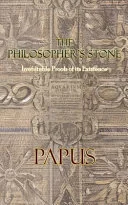
The Philosopher's Stone
 75
75

The Philosopher's Stone
Papus’s The Philosopher's Stone, first appearing in 1925, offers a surprisingly cogent defense of alchemical pursuits, grounded in a synthesis of historical texts and early 20th-century scientific thought. The author avoids sensationalism, instead presenting a reasoned, albeit biased, case for the Stone's reality. A particular strength lies in his detailed examination of historical alchemical literature, tracing lineage and purported evidence. However, the book's limitation is its inherent faith in the premises of Hermeticism; it argues for the Stone’s efficacy within its own framework, offering little to convince a staunch materialist. The section detailing the 'Prima Materia' provides a fascinating glimpse into the alchemical worldview, highlighting the concept of a primordial substance from which all else derives. This work serves as a valuable primary source for understanding a specific iteration of alchemical theory from its time.
📝 Description
75
Papus's 1925 work, The Philosopher's Stone, argues for the tangible reality of the legendary alchemical substance.
First published in 1925, Papus's The Philosopher's Stone presents a detailed case for the existence and operative power of the legendary alchemical substance. Papus builds his argument by drawing on historical accounts, contemporary scientific observations, and the principles of Hermetic philosophy. The book posits that the Stone is more than a mere symbol; it is a real agent capable of transforming all natural kingdoms, from minerals to the human spirit.
This text is suitable for students of alchemy, Hermeticism, and the history of esoteric thought. Readers interested in the development of occult sciences and the philosophical bases of alchemy will find considerable material. It caters to those who desire a thorough, scholarly approach to mystical traditions, moving past symbolic interpretations to consider potential material and spiritual effects.
The Philosopher's Stone appeared in the early 20th century, a time of heightened interest in occultism and spiritualism, seen in movements like Theosophy and the Hermetic Order of the Golden Dawn. Papus, a significant figure in French occultism, was active within an intellectual environment that included figures such as Eliphas Lévi and Stanislas de Guaita. His book aimed to lend legitimacy to alchemical traditions amidst the rise of scientific rationalism and earlier criticisms.
💡 Why Read This Book?
• Gain a structured understanding of the alchemical 'Great Work' as presented by Papus, moving beyond symbolic interpretation to explore the purported operative processes detailed in chapters on the Prima Materia. • Comprehend the historical dialogue between esoteric traditions and early 20th-century science, specifically how Papus integrates observations from that era to support Hermetic principles. • Examine the concept of universal transmutation, learning how Papus argues for the Philosopher's Stone's capacity to affect change across natural kingdoms, as outlined in his defense of the Stone's reality.
⭐ Reader Reviews
Honest opinions from readers who have explored this book.
❓ Frequently Asked Questions
When was Papus's The Philosopher's Stone first published?
The Philosopher's Stone by Papus was first published on September 23, 1925. This date places it within the early 20th-century occult revival.
What is the primary argument of The Philosopher's Stone?
The book makes a compelling defense for the reality and transformative power of the Philosopher's Stone, arguing it can transmute matter and influence natural processes.
What disciplines does Papus blend in his defense of the Stone?
Papus integrates history, early 20th-century science, and Hermetic philosophy to build his case for the Philosopher's Stone's existence and efficacy.
Is The Philosopher's Stone a practical guide to creating the Stone?
No, while it discusses alchemical processes and concepts, it is primarily a theoretical and philosophical defense of the Stone's reality rather than a step-by-step manual.
Who was Papus and why is his perspective significant?
Papus (Gérard Encausse) was a highly influential French occultist and physician in the late 19th and early 20th centuries, a key figure in the revival of Hermeticism.
Does the book discuss the Stone's effect on spiritual transformation?
Yes, Papus argues that the Stone's transformative power extends beyond the material to influence spiritual and vital principles across nature's kingdoms.
🔮 Key Themes & Symbolism
The Great Work
Papus frames the creation and application of the Philosopher's Stone as the ultimate alchemical endeavor, the Great Work. This isn't merely about producing gold but achieving a fundamental perfection and transmutation within nature. The text details the stages and principles involved, emphasizing the interconnectedness of material and spiritual progress. It explores the concept of 'solve et coagula' – dissolve and coagulate – as central to the process of breaking down and reforming substances, mirroring cycles of death and rebirth integral to esoteric understanding.
Prima Materia
Central to Papus's argument is the concept of the Prima Materia, or First Matter, the primordial, undifferentiated substance from which all things are created. The Philosopher's Stone is seen as the perfected form of this matter, holding the key to unlocking its potential. The book explores the philosophical and potentially material nature of this substance, suggesting it is the underlying substrate of the universe, accessible through specific alchemical operations. This foundational element is crucial for understanding the Stone's universal applicability.
Transmutation and Efficacy
Papus vigorously defends the efficacy of alchemical transmutation, positing that the Philosopher's Stone possesses the power to transform base metals into noble ones, and more significantly, to act as a universal medicine or elixir. This transformative power is argued to operate across all levels of existence, from the mineral to the human. The work meticulously presents historical accounts and philosophical reasoning to support the idea that the Stone is not a mere myth but a potent agent of change, capable of restoring vitality and perfection.
Hermetic Synthesis
The Philosopher's Stone exemplifies Papus's approach to synthesizing various esoteric traditions with contemporary scientific and philosophical thought. He draws heavily on Hermetic principles, such as the axiom 'As Above, So Below,' to explain the interconnectedness of the cosmos and the human being. By integrating historical alchemical texts with his understanding of biology and chemistry from the early 20th century, Papus attempts to provide a coherent, rational framework for understanding what was often considered purely mystical knowledge.
💬 Memorable Quotes
Direct passages from the work, attributed to the author.
“The Stone is the perfected product of the Great Work.”
— This statement captures the alchemical goal: achieving the Philosopher's Stone is the culmination and ultimate objective of the entire alchemical process, signifying perfection and mastery.
“Nature's kingdoms are subject to the same fundamental laws of transformation.”
— Papus suggests that the principles governing change in minerals, plants, and animals are unified, and the Philosopher's Stone acts as a catalyst that can influence these universal processes.
“The Prima Materia is the universal solvent and the universal agent.”
— This highlights the dual nature of the foundational substance in alchemy: it can break down existing forms and is also the active principle that facilitates new creation and transformation.
“Hermetic philosophy provides the key to understanding the operations of the Stone.”
— This emphasizes Papus's belief that the ancient wisdom tradition of Hermeticism offers the essential framework and interpretive lens through which the reality and function of the Philosopher's Stone can be understood.
“Alchemy is the science of perfection.”
— This concise definition elevates alchemy beyond simple metallurgy, positioning it as a discipline focused on achieving the highest possible state of being or form, both materially and spiritually.
🌙 Esoteric Significance
Tradition
This work firmly belongs within the Western Hermetic tradition, building upon centuries of alchemical literature and philosophy. Papus synthesizes elements from Rosicrucianism, Kabbalah, and Neoplatonism, common threads in Hermetic thought. He positions alchemy not merely as a symbolic system but as a tangible science capable of physical realization, aligning with the more operative branches of Hermeticism that sought practical manipulation of substances. The book functions as a bridge, attempting to connect ancient esoteric doctrines with the scientific and philosophical field of the early 20th century.
Symbolism
Key symbols in the book include the Philosopher's Stone itself, representing perfection, purification, and ultimate transformation. The Serpent (Ouroboros) often symbolizes eternity, the cyclical nature of creation and destruction, and the unity of all things – a concept fundamental to the Prima Materia. Mercury, in its alchemical sense, represents the volatile, transformative agent, the 'spirit' within matter that facilitates the Great Work, embodying fluidity and adaptability essential for transmutation.
Modern Relevance
Papus's synthesis continues to influence contemporary practitioners and scholars of Hermeticism and Western esotericism. Modern alchemists and occultists often reference his work for its detailed historical context and theoretical framework. Thinkers exploring the intersection of consciousness, matter, and spiritual evolution find value in his arguments for the Stone's universal efficacy. His approach encourages a holistic view, integrating spiritual aspirations with potential material manifestations, which appeals to current trends in consciousness studies and integral philosophy.
👥 Who Should Read This Book
• Students of Hermeticism and Alchemy: Those seeking a foundational text that bridges historical alchemical theory with early 20th-century scientific perspectives, offering Papus's reasoned defense of the Stone. • Researchers of Esoteric History: Individuals interested in the occult revival of the late 19th and early 20th centuries will find Papus's contribution significant to understanding the period's intellectual currents. • Philosophers of Science: Readers who enjoy exploring the historical relationship between mystical traditions and scientific inquiry will appreciate Papus's attempt to integrate the two.
📜 Historical Context
The Philosopher's Stone, authored by the prominent French occultist Papus (Gérard Encausse), emerged in 1925, a period marked by a fervent interest in spiritualism and esoteric traditions following World War I. This era saw the flourishing of movements like Theosophy and the Hermetic Order of the Golden Dawn, which sought to revive and reinterpret ancient mystical systems. Papus, a central figure in this revival, aimed to legitimize alchemical pursuits by grounding them in historical scholarship and contemporary scientific understanding. His work was part of a broader intellectual current attempting to reconcile occult philosophy with emerging scientific paradigms, often in dialogue with, or reaction against, purely materialistic philosophies. Contemporary figures like Aleister Crowley were also active in the occult scene, though their approaches often differed. Papus's detailed defense of the Stone's reality can be seen as a direct response to skepticism and a scholarly effort to preserve and transmit alchemical knowledge.
📔 Journal Prompts
The concept of the Prima Materia as a universal agent: How might this foundational substance relate to modern scientific theories of quantum fields?
Papus's argument for the Stone's efficacy across nature's kingdoms: Reflect on the interconnectedness implied by this universal transformative power.
The 'Great Work' as a process of perfection: Consider the parallels between alchemical perfection and personal spiritual development.
The integration of history and science in Papus's argument: Analyze how historical accounts are used to support philosophical claims.
The Philosopher's Stone as a symbol of ultimate realization: What does ultimate realization mean within your own understanding of existence?
🗂️ Glossary
Philosopher's Stone
A legendary alchemical substance believed to be capable of transmuting base metals into gold or silver, and sometimes to confer immortality or act as a universal cure.
Great Work (Major work)
The entire alchemical process, encompassing the creation of the Philosopher's Stone and the subsequent perfection or transmutation of matter and spirit.
Prima Materia
The fundamental, undifferentiated substance from which all matter is believed to originate in alchemical philosophy; the starting point of the Great Work.
Transmutation
The alchemical process of changing one element or substance into another, most famously the transformation of base metals into noble metals like gold.
Hermetic Philosophy
A body of esoteric knowledge and spiritual philosophy originating from the teachings attributed to Hermes Trismegistus, emphasizing principles like 'As Above, So Below'.
Elixir of Life
A mythical potion believed to grant longevity, eternal youth, or cure all diseases, often associated with or produced by the Philosopher's Stone.
Solve et Coagula
Latin for 'dissolve and coagulate,' representing the fundamental alchemical process of breaking down matter (dissolution) and then reforming it into a higher state (coagulation).
This book appears in 1 collection
🔮 Readers Also Liked
Browse all →









From the “Philosopher's Stone” Collection
View all →






More Free Occult Philosophy Books
View all →