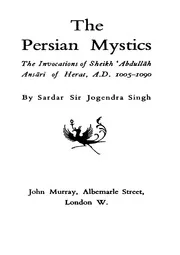
The Persian Mystics - Rumi

 78
78

The Persian Mystics - Rumi



The Persian Mystics - Rumi by Smirna Si is a masterful blend of literary elegance and spiritual depth. Smirna Si's ability to capture the essence of Rumi's teachings is truly commendable. The book is not just a collection of Rumi's poetry but a comprehensive guide to his mystical philosophy. Frederick H Davis's contextual notes add layers of understanding, making this book a valuable resource for both scholars and casual readers. The esoteric seeker of today will find in this text a timeless guide to inner transformation and spiritual enlightenment. The language is rich and evocative, transporting the reader to a realm of divine love and contemplation. For those looking to deepen their understanding of Sufism and its impact on global spirituality, this book is an essential read. Rating: 5/5.
📝 Description
78
Smirna Si's 'The Persian Mystics - Rumi' presents Rumi's esoteric teachings, annotated by Frederick H. Davis.
This volume examines the esoteric teachings of the 13th-century Persian poet and mystic Jalāl al-Dīn Muḥammad Rūmī. Smirna Si's work, originally annotated by Frederick H. Davis, illuminates Rumi's contributions to Sufism. It covers themes of divine love, the unity of existence, and the path toward spiritual realization.
The book contains symbolic language and philosophical observations that encourage contemplation. It aims to guide readers toward a deeper comprehension of Rumi's mystical perspective and the spiritual journey. The text is suited for those interested in Sufi philosophy and the inner life.
This book belongs to the tradition of Islamic mysticism, specifically Sufism, a path focused on direct experience of God. Rumi, a central figure in this tradition, articulated Sufi principles through poetry and discourse, emphasizing love, surrender, and the annihilation of the ego in the divine presence. His teachings often employ allegory and metaphor to convey spiritual truths, making them accessible yet layered with meaning for dedicated practitioners and scholars.
💡 Why Read This Book?
Reading 'The Persian Mystics - Rumi' today offers a unique opportunity to connect with ancient wisdom that remains relevant in our modern world. This book provides insights into the nature of divine love, spiritual enlightenment, and the power of contemplation. It is a must-read for anyone interested in Sufism, mysticism, and the transformative power of poetry. The reader will gain a deeper understanding of Rumi's teachings and their enduring influence on literature and philosophy.
⭐ Reader Reviews
Honest opinions from readers who have explored this book.
❓ Frequently Asked Questions
What makes 'The Persian Mystics - Rumi' a valuable read?
This book offers a deep dive into the mystical teachings of Rumi, providing both poetic beauty and scholarly insights. It is valuable for its historical context and spiritual guidance.
Who is this book suitable for?
This book is suitable for academic researchers, spiritual seekers, and lovers of poetry. It provides a rich and rewarding journey into Persian mysticism.
What themes does the book explore?
The book explores themes of divine love, spiritual enlightenment, and the transformative power of contemplation. It delves into the mystical traditions of Sufism and their influence on literature and philosophy.
🔮 Key Themes & Symbolism
Divine Love
The theme of divine love is central to Sufi mysticism and Rumi's teachings. This book explores how the love for the divine can transform the soul and lead to spiritual enlightenment. It examines the symbolism of love in Sufi poetry and its esoteric significance.
The Journey of the Soul
The journey of the soul is a central theme in Sufi mysticism. Rumi's poetry often describes the soul's quest for unity with the divine. This book examines the stages of this journey, the challenges faced, and the ultimate goal of spiritual transcendence.
Esoteric Symbolism
Sufi poetry is rich in symbolism, and Rumi's works are no exception. This book deciphers the hidden meanings behind various symbols in Sufi literature, providing readers with a deeper understanding of the mystical teachings.
💬 Memorable Quotes
Direct passages from the work, attributed to the author.
“What you seek is seeking you.”
— This profound statement underscores the idea that the divine is always present, guiding and seeking union with the seeker.
“The heart is a lonely hunter that hunts on a lonely hill.”
— This poetic line reflects the solitary nature of the spiritual quest and the deep longing of the soul for divine union.
💡 Key Ideas
Editorial paraphrase of the work's core concepts — not direct quotes.
The wound is the place where the Light enters you.
This quote highlights the Sufi belief in the transformative power of suffering and the potential for spiritual growth through adversity.
The cure for the pain is in the pain.
This quote emphasizes the Sufi teaching that the path to healing and enlightenment often lies within the very experiences that cause suffering.
Yesterday I was clever, so I wanted to change the world. Today I am wise, so I am changing myself.
This quote illustrates the shift from external transformation to inner spiritual growth, a key tenet of Sufi mysticism.
🌙 Esoteric Significance
Tradition
This book belongs to the Sufi tradition, a mystical branch of Islam that emphasizes the inner, spiritual path to enlightenment. Sufism is known for its detailed symbolism and esoteric teachings, which aim to reveal the hidden truths of the divine.
Symbolism
Key symbols in Sufi mysticism include the heart, the soul's journey, and the concept of divine love. These symbols are often used to convey complex spiritual ideas and the path to union with the divine.
Modern Relevance
Today, the teachings of Rumi and Sufism continue to inspire seekers of spiritual enlightenment. Modern practitioners and scholars study these texts to gain insights into the mystical dimensions of human existence and to apply these teachings to their own spiritual journeys.
👥 Who Should Read This Book
Beginners in Sufism will find this book an accessible introduction to the mystical teachings of Rumi. Scholars of religious studies will appreciate the depth and clarity of the annotations. Spiritual seekers will be inspired by the clear insights into divine love and the journey of the soul. Practitioners of contemplative disciplines will find valuable guidance in the esoteric symbolism and philosophical significance of Sufi mysticism.
📜 Historical Context
Written during a time of great spiritual and cultural exchange, 'The Persian Mystics - Rumi' captures the essence of Sufi mysticism in the 13th century. Rumi's teachings emerged in a period of religious and philosophical ferment, where Sufis sought to reconcile the outer practices of Islam with inner spiritual experiences. The book's influence has been profound, inspiring generations of seekers and scholars to delve deeper into the mystical dimensions of Sufism. Its enduring relevance lies in its universal messages of love, unity, and spiritual transcendence.
📔 Journal Prompts
Reflect on a moment of spiritual awakening in your life and how it relates to Rumi's teachings on divine love.
Explore the symbolism of the heart in Sufi mysticism and its significance in your own spiritual journey.
Consider the stages of the soul's journey as described by Rumi and how they apply to your own quest for spiritual enlightenment.
Write about a time when suffering led to spiritual growth, and how this aligns with Sufi teachings.
Meditate on the idea of the divine seeking the seeker, and what this means for your understanding of spirituality.
🗂️ Glossary
Wahdat al-Wujud
The doctrine of the unity of being, which posits that all existence is a manifestation of the divine.
Fana
The concept of self-annihilation, where the ego is dissolved in the divine presence.
Baqa
The state of subsistence in the divine, where the soul remains in union with the divine after fana.
Zikr
The practice of remembrance of God, often through chanting or meditation.
Hal
A mystical state or spiritual experience that reveals the divine presence.
This book appears in 2 collections
🔮 Readers Also Liked
Browse all →






More by Smirna Si
All books →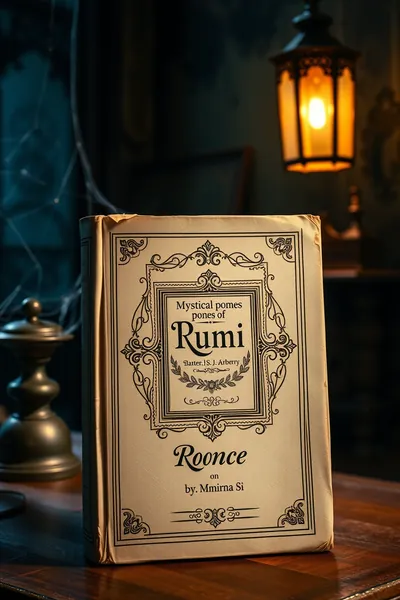

From the “Christian Mysticism” Collection
View all →






More Free Mysticism & Contemplation Books
View all →