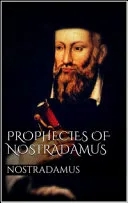
Prophecies of Nostradamus
 80
80

Prophecies of Nostradamus
The enduring mystique of Nostradamus's quatrains is undeniable, and this edition allows a direct confrontation with the source. The strength lies in its presentation of the original French alongside translations, a crucial step for anyone serious about dissecting the ambiguities. However, the sheer opacity of the verses, even with scholarly apparatus, remains a significant hurdle. A passage describing "the great plague" feels particularly resonant, hinting at the visceral fear of contagion that permeated Nostradamus's era and echoes in our own. The limitation is the inherent subjectivity of interpretation; no edition can definitively unlock the intended meaning. It’s a historical artifact demanding rigorous engagement, not a crystal ball.
📝 Description
80
Michel de Nostredame's 1555 'Les Propheties' comprises cryptic quatrains interpreted as future predictions.
This volume contains the quatrains of Michel de Nostredame, a 16th-century French apothecary also known as Nostradamus. First published in 1555, the work is a collection of four-line verses arranged into centuries. For generations, these verses have been read as forecasts of future events, including natural disasters and the rise and fall of nations. This edition presents the original French text alongside various translations and commentaries. The goal is to clarify the obscure language and enigmatic imagery that characterize Nostradamus's prophecies.
This book is suited for dedicated students of esotericism, historical prophecy, and Renaissance thought. It will appeal to those who prefer engaging directly with primary source material over relying solely on secondary interpretations. Individuals interested in the history of divination, the influence of classical and biblical texts on prophetic traditions, and the lasting impact of one figure on Western speculative thought will find this volume worthwhile. It is not intended for readers seeking simple answers or straightforward predictions.
Nostradamus composed his prophecies in 16th-century Europe, a time of significant religious and political change. As a physician and scholar, he worked within the intellectual currents of Renaissance humanism and occultism. His writings drew upon astrological lore, numerology, and classical texts. This tradition often sought to blend empirical observation with mystical inquiry, a practice seen in contemporaries like Paracelsus. The reception of his work was varied, with some viewing him as a genuine prophet and others as a charlatan.
💡 Why Read This Book?
• Gain direct insight into the original 16th-century French quatrains, understanding the linguistic nuances lost in translation that are crucial for accurate interpretation of prophetic verses. • Explore the historical milieu of 1555 Lyon, the specific sociopolitical climate that influenced Nostradamus's writing and the reception of his work during the Renaissance. • Analyze the symbolic language of the quatrains, such as the "brass tripod" mentioned in the initial verses, to understand their potential connection to Renaissance divinatory practices.
⭐ Reader Reviews
Honest opinions from readers who have explored this book.
❓ Frequently Asked Questions
When was the first edition of Nostradamus's prophecies published?
The first edition of 'Les Propheties' by Michel de Nostredame was published in 1555 in Lyon, France, containing an initial collection of his quatrains.
What is a quatrain in the context of Nostradamus's work?
A quatrain is a four-line verse, the primary format used by Nostradamus to record his prophecies. These verses are known for their cryptic and often allegorical nature.
Who was Nostradamus?
Michel de Nostredame, known as Nostradamus, was a 16th-century French apothecary, astrologer, and reputed seer, famous for his book of prophecies.
What historical events are attributed to Nostradamus's prophecies?
Interpretations have linked his quatrains to major events like the French Revolution, the rise of Napoleon, World Wars I and II, and even the 9/11 attacks, though these connections are debated.
Are Nostradamus's prophecies considered accurate?
The accuracy is highly debated. Supporters point to specific interpretations of events, while skeptics argue the prophecies are vague enough to be retroactively applied to various occurrences.
What kind of language does Nostradamus use?
Nostradamus employed a complex mix of French, Latin, Greek, and Occitan, often using anagrams, obscure allusions, and symbolic language, making precise interpretation challenging.
🔮 Key Themes & Symbolism
The Art of Divination
The text itself hints at the methods of prophecy, describing a figure using a "brass tripod" and "water" for scrying. This points to ancient forms of divination, such as pyromancy (fire divination) and hydromancy (water divination), suggesting Nostradamus sought divine inspiration through ritualistic means. The work explores how these practices were integrated into a scholarly, albeit occult, framework during the Renaissance, blending empirical observation with mystical pursuit.
Celestial Influences
Astrology is a foundational element in the understanding of Nostradamus's prophecies. The quatrains often allude to specific astrological conjunctions, eclipses, and planetary alignments, implying that the movements of the heavens hold clues to terrestrial events. This perspective aligns with the Hermetic principle 'As Above, So Below,' suggesting a cosmic order that dictates human history. The work examines how these celestial timings were believed to preordain significant historical moments.
Political and Social Upheaval
Many quatrains are interpreted as foretelling major shifts in political power, wars, and societal transformations. The text references figures of authority, "new republics," and widespread conflict, reflecting the turbulent period in which Nostradamus lived. These prophecies tapped into a deep-seated anxiety about the future and the perceived cyclical nature of history, offering a framework for understanding chaos through foresight, however obscure.
Symbolic Language and Ambiguity
The prophecies are characterized by their dense, allegorical language, utilizing anagrams, coded names, and symbolic imagery. This deliberate ambiguity allows for multiple layers of interpretation, making the text adaptable to various historical contexts. The work investigates how this symbolic encoding served both to protect the seer from persecution and to create a lasting enigma that continues to fascinate interpreters centuries later.
💬 Memorable Quotes
Direct passages from the work, attributed to the author.
“A slight flame comes out of the emptiness and makes successful that which should not be believed in vain.”
— This opening passage describes the mystical experience of receiving prophecy. The "emptiness" suggests a void from which inspiration arises, illuminated by a "slight flame," possibly representing divine insight or the light of knowledge.
“The wand in the hand is placed in the middle of the tripod's legs. With water he sprinkles both the hem of his garment and his foot.”
— This verse details a ritualistic act, likely involving divination. The "wand" and "tripod" are traditional tools, while the sprinkling of "water" could symbolize purification or the invocation of elemental forces in the prophetic process.
“Divine splendor; the God sits nearby.”
— This phrase conveys the awe and divine presence experienced during a prophetic trance. It suggests that the seer feels a direct connection to a higher power, perceiving the proximity of the divine during the act of foretelling.
“When the litters are overturned by the whirlwind and faces are covered by cloaks, the new republic wil”
— This is an interpretation of a fragmented quatrain. It evokes imagery of chaos and societal disruption, suggesting the violent overthrow of existing structures and the emergence of a new political order, possibly a republic.
“The wand in the hand is placed in the middle of the tripod's legs. With water he sprinkles both the hem of his garment and his foot.”
— This verse details a ritualistic act, likely involving divination. The "wand" and "tripod" are traditional tools, while the sprinkling of "water" could symbolize purification or the invocation of elemental forces in the prophetic process.
🌙 Esoteric Significance
Tradition
Nostradamus's work sits within the broader tradition of Western esotericism, particularly drawing from Hermeticism and Renaissance Neoplatonism. His belief in celestial influences on earthly events aligns with the Hermetic maxim 'As Above, So Below.' The methods hinted at in the early verses—using a tripod and water—connect to ancient divinatory practices like scrying, which were often integrated into magical and alchemical traditions aimed at uncovering hidden knowledge and divine will.
Symbolism
Key symbols include the "brass tripod," often associated with oracular sites like Delphi, representing a platform for divine communication. The "flame" and "water" mentioned are elemental symbols central to many divinatory rituals, signifying purification, inspiration, and the medium through which visions are perceived. The "wand" is a common symbol of authority, channeling, and magical power, used here to direct the divinatory process.
Modern Relevance
Contemporary practitioners of occultism, particularly those interested in historical prophecy and astrological interpretation, still engage with Nostradamus's quatrains. The work continues to be referenced in discussions of predictive techniques and the history of divination within modern esoteric circles, including some branches of ceremonial magic and astrological studies that seek historical precedents for their practices.
👥 Who Should Read This Book
• Students of Renaissance history interested in the intersection of science, religion, and occultism during a period of significant societal change. • Aspiring diviners and practitioners of esoteric arts seeking to understand historical methods of prophecy and scrying, as hinted at in the text's ritualistic descriptions. • Comparative religion scholars examining the evolution of prophetic traditions and their cultural impact across different eras and societies.
📜 Historical Context
Michel de Nostredame's 'Les Propheties,' first published in 1555, emerged during a period of intense religious and political ferment in Europe. The continent was fractured by the Protestant Reformation, and France itself was experiencing internal strife and the threat of foreign intervention. Nostradamus, a trained physician and scholar, operated within the intellectual currents of Renaissance humanism, which saw a renewed interest in classical learning, astrology, and esoteric philosophy. His work drew heavily on astrological lore, biblical prophecy, and classical texts, placing him alongside contemporaries like Paracelsus, who also sought to integrate mystical and empirical knowledge. While some contemporaries viewed Nostradamus with awe, labeling him a seer, others were more skeptical, contributing to a complex reception that saw the book both celebrated and cautiously regarded throughout the 16th century.
📔 Journal Prompts
The "brass tripod" as a locus of prophecy: how might its symbolic form relate to the stability or foundation of the visions received?
Consider the "slight flame" emanating from "emptiness." What does this imagery suggest about the source and nature of prophetic inspiration?
Analyze the description of trembling and fear when "divine splendor" is perceived. What does this reveal about the human response to the numinous?
How does the mention of "whirlwind" and "litters overturned" contribute to the sense of impending societal change?
Reflect on the combination of "wand" and "water" in the ritualistic verse. What specific divinatory practice might this evoke?
🗂️ Glossary
Quatrain
A four-line stanza of poetry. In Nostradamus's work, these verses are the primary format for his prophecies, known for their cryptic and often allegorical content.
Brass Tripod
A three-legged stand, often made of metal. Historically, tripods were associated with sacred sites and oracles, serving as a base for ritualistic objects used in divination, such as bowls or flames.
Scrying
A form of divination involving gazing into a reflective surface, such as water, a mirror, or a crystal ball, to receive visions or insights. The text alludes to this practice.
An anagram
A word or phrase formed by rearranging the letters of another word or phrase. Nostradamus is known to have used anagrams within his prophecies to disguise names or meanings.
Pyromancy
A method of divination that involves observing flames, smoke, or ashes. The "slight flame" mentioned in the text could relate to this ancient practice.
Hydromancy
Divination by means of water. The use of "water" in the ritualistic verses suggests this form of prophecy, where visions are seen within a water surface.
Les Propheties
The original French title of Nostradamus's collection of prophecies, first published in 1555. It translates to 'The Prophecies'.