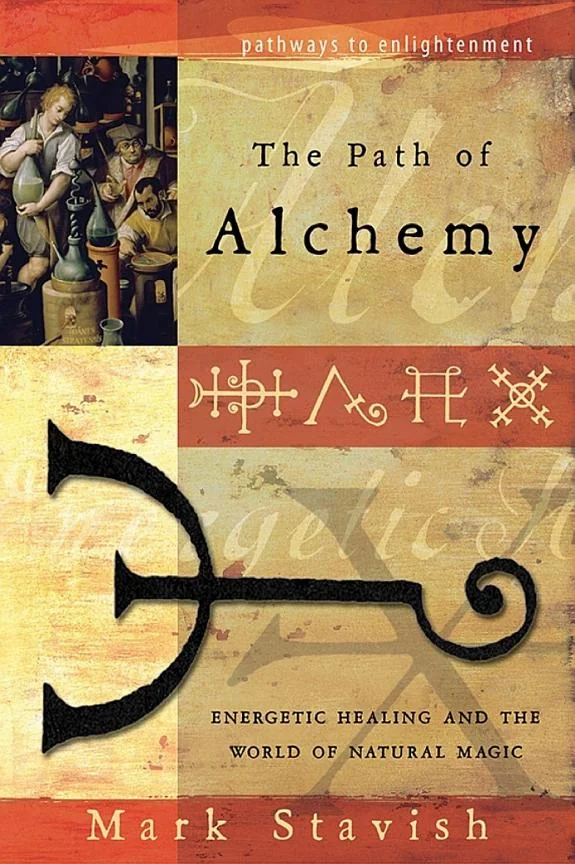
The Path of Alchemy
 78
78

The Path of Alchemy
Mark Stavish’s "The Path of Alchemy" approaches its subject with a rare blend of scholarly rigor and practical intent. Rather than rehashing worn-out tropes, Stavish grounds the esoteric practice of alchemy in tangible applications, particularly through the lens of spagyrics. The book's strength lies in its clear exposition of how alchemical principles can be applied to create "medicines for the soul," bridging the gap between the symbolic and the material. A potential limitation for absolute beginners might be the assumed familiarity with Qabala and astrology, as these are presented as integral, not introductory, components. The detailed explanation of creating plant medicines, moving from the initial separation to purification and finally reintegration (the three stages of spagyrics), stands out as a particularly informative passage. Stavish effectively clarifies a complex art, making it accessible without sacrificing its depth. It’s a valuable contribution for those serious about practical esoteric work.
📝 Description
78
Mark Stavish's 2025 book, The Path of Alchemy, frames the art as a method for personal transformation.
The Path of Alchemy by Mark Stavish moves past common ideas of alchemy as simple metal turning. Instead, it focuses on esoteric uses for understanding consciousness and making remedies from plants and minerals. Stavish explains the basic rules of this old art, seeing it as a way to develop the soul and create medicines. The book is for people interested in deeper knowledge of hidden sciences and how they can be used. It connects with practices like Qabala, astrology, and the study of the four elements, showing how they relate to alchemy. Students of alternative healing, new medicine, and those who look into the mind through metaphysical ideas will find it valuable.
Stavish places alchemy in a long history beginning in Hellenistic Egypt, a time of mixed philosophies. The practice grew over centuries, affecting people like Paracelsus, who developed spagyrics, a plant based alchemy. This book ties these historical points to modern esoteric thinking, showing how alchemy is still relevant. The main ideas include how to work with the four elements and their links to Qabala and astrology. It covers making alchemical preparations using safe, modern spagyric methods. The book also discusses the philosophical side, viewing alchemy as a symbol for spiritual growth and self improvement.
Alchemy's roots trace back to Hellenistic Egypt, a period of combined philosophical and religious thought. Over centuries, it evolved, influencing key figures such as Paracelsus and his development of spagyrics. This tradition connects ancient practices with modern esoteric thought, highlighting alchemy's role in understanding consciousness and developing potent remedies. The book bridges historical practices with contemporary metaphysical perspectives.
⭐ Reader Reviews
Honest opinions from readers who have explored this book.
❓ Frequently Asked Questions
What is spagyrics, and how does "The Path of Alchemy" explain it?
Spagyrics is a branch of alchemy focused on plant and mineral medicines. Mark Stavish's book details modern, safe spagyric techniques, explaining the process of separating, purifying, and reintegrating plant constituents to create potent "medicines for the soul."
How does the book connect alchemy to Qabala and astrology?
The book illustrates how alchemical principles align with Qabalistic concepts and astrological influences, presenting a unified esoteric framework. It explores the correlation of the four elements within these interconnected systems.
Is "The Path of Alchemy" suitable for someone new to esoteric studies?
While it introduces basic laws, the book assumes some familiarity with Qabala and astrology. It is most suitable for those with an existing interest in esoteric sciences looking to deepen their understanding of alchemy.
What kind of "medicines" does alchemy create according to this book?
The book focuses on "medicines for the soul" – preparations derived from plants and minerals using alchemical processes. These are not necessarily pharmacological drugs but potent substances intended for spiritual and energetic well-being.
When was Mark Stavish's "The Path of Alchemy" first published?
Mark Stavish's "The Path of Alchemy" was first published on August 5, 2025.
Does the book cover the historical aspects of alchemy?
Yes, the book examines the historical context of alchemy, tracing its lineage from Hellenistic Egypt and discussing key figures like Paracelsus and his contributions to spagyrics.
🔮 Key Themes & Symbolism
Spagyrics and Plant Alchemy
The work centers on spagyrics, the practical application of alchemy to plants. Stavish outlines the process of extracting, purifying, and recombining plant essences to create potent "medicines for the soul." This involves understanding the three principles – salt, sulfur, and mercury – as applied to botanical materials, moving beyond simple herbalism to energetic and spiritual therapeutics.
The Interconnection of Esoteric Systems
Stavish demonstrates how alchemy is not an isolated discipline but is deeply interwoven with other esoteric traditions. The book elucidates the connections between alchemical work and the four elements, Qabala, and astrology, presenting a holistic view of the cosmos and the individual's place within it.
Alchemy as Spiritual Transformation
Beyond material transformation, "The Path of Alchemy" emphasizes the inner work. Alchemical processes serve as metaphors for the refinement of the human psyche, the purification of consciousness, and the integration of the self. The "medicines" created are thus not only for the body but also for the spiritual and mental aspects of being.
Foundational Alchemical Laws
The book lays out the basic laws and principles that govern alchemical operations. This includes understanding the fundamental forces at play, the role of intention, and the cyclical nature of transformation. Stavish provides a clear framework for grasping the theoretical underpinnings before exploring practical applications.
💬 Memorable Quotes
Direct passages from the work, attributed to the author.
“Alchemy offers tremendous insight into alternative therapies, new medicines, and the depths of the human mind.”
— This statement frames alchemy not as an archaic pursuit but as a vital field of study relevant to contemporary health, consciousness exploration, and the development of novel therapeutic approaches.
“Mark Stavish reveals how to create and apply 'medicines for the soul' in this remarkable guide to plant and mineral alchemy.”
— This highlights the book's core promise: practical instruction in preparing potent substances from natural sources, aimed at healing and enhancing one's inner life and spiritual well-being.
“The Path of Alchemy introduces the history and basic laws of this ancient practice.”
— This indicates the book's foundational nature, providing essential historical context and theoretical grounding in alchemical principles for those new to the subject.
“Safe, modern techniques—based on spagyrics (plant alchemy)—form a key part of this guide.”
— This reassures the reader that the book offers contemporary, safe methodologies rooted in spagyrics, making the ancient art accessible and applicable today.
“The book explains how it ties into Qabala, tarot, astrology, and the four elements.”
— This points to the book's integrative approach, showing how alchemy is connected to other major esoteric systems, offering a broader, more unified understanding of mystical principles.
🌙 Esoteric Significance
Tradition
This work firmly sits within the Western Esoteric Tradition, particularly drawing from Hermeticism and Paracelsianism. It extends the Hermetic principle of "As Above, So Below" by applying it to the practical creation of medicines from the mineral and plant kingdoms. Stavish's approach departs from purely philosophical or symbolic interpretations by offering concrete methodologies rooted in spagyrics, bridging the gap between theoretical mysticism and applied occult science.
Symbolism
Key symbols include the four elements (Earth, Air, Fire, Water), representing fundamental states of matter and energy, and their integration within alchemical processes. The concept of "medicines for the soul" itself is symbolic, representing the alchemical goal of perfecting consciousness and spirit through material manipulation, mirroring the purification and refinement of base metals into gold.
Modern Relevance
Contemporary practitioners of Western herbalism, consciousness studies, and practical magic find value in Stavish's work. Thinkers and groups exploring integrative medicine, ecological spirituality, and applied Hermeticism often draw upon spagyric principles and the holistic worldview presented in "The Path of Alchemy."
👥 Who Should Read This Book
['• Students of Hermeticism and Paracelsianism seeking practical, hands-on applications of alchemical theory, particularly in the creation of potent plant and mineral remedies.', '• Practitioners of Qabala and astrology interested in understanding the material and energetic correlations between these systems and the alchemical arts as detailed by Stavish.', '• Individuals exploring alternative therapies and the profound connection between the physical world and consciousness, looking for methods to create "medicines for the soul."']
📜 Historical Context
Published in 2025, "The Path of Alchemy" enters a modern landscape where interest in esoteric practices has seen a resurgence. Stavish's work engages with a lineage stretching back to Hellenistic Egypt, a period of immense philosophical syncretism. He specifically highlights the contributions of figures like Paracelsus, whose work in the 16th century significantly advanced spagyrics, a key focus of the book. This modern exploration of plant and mineral alchemy builds upon centuries of Hermetic tradition, which often contrasted with purely materialistic scientific approaches emerging in parallel from the Renaissance onward. Unlike contemporary occultists who might focus solely on ceremonial magic or theosophy, Stavish anchors his work in a tangible, practical application of alchemical principles, drawing connections to systems like Qabala and astrology that were themselves evolving through figures like Eliphas Lévi in the 19th century.
📔 Journal Prompts
Reflect on the four elements as they manifest in your personal "Great Work."
Consider the concept of "medicines for the soul" in the context of your own spiritual development.
Analyze the relationship between plant alchemy (spagyrics) and the Qabalistic Tree of Life.
Explore how the principles of separation, purification, and reintegration apply to a personal challenge.
Identify astrological correspondences that might inform the selection of plants for alchemical work.
🗂️ Glossary
Alchemy
An ancient esoteric practice focused on the transformation of matter and spirit, often involving the transmutation of base metals into gold and the creation of elixirs for longevity and spiritual perfection.
Spagyrics
A branch of alchemy specifically focused on preparing medicines from plants and minerals, involving processes of separation, purification, and reintegration of their constituent parts.
Medicines for the Soul
A concept referring to alchemical preparations designed not just for physical health but also for the spiritual, mental, and emotional well-being and transformation of the individual.
Qabala
A system of Jewish mysticism that explores the divine nature and the creation of the universe through a symbolic framework, often represented by the Tree of Life.
Four Elements
The classical components (Earth, Air, Fire, Water) used in ancient and esoteric traditions to describe the fundamental constituents of the material world and their associated qualities.
Paracelsus
A 16th-century Swiss physician, alchemist, and astrologer who pioneered spagyrics and emphasized the use of specific remedies and the importance of observation in medicine.
Great Work
The overarching alchemical process, often understood as both the material transmutation (e.g., creating gold) and the spiritual purification and perfection of the alchemist.
This book appears in 1 collection
🔮 Readers Also Liked
Browse all →









From the “Western Esotericism” Collection
View all →



More Free Occult Philosophy Books
View all →