The palmistry workbook
 61
61

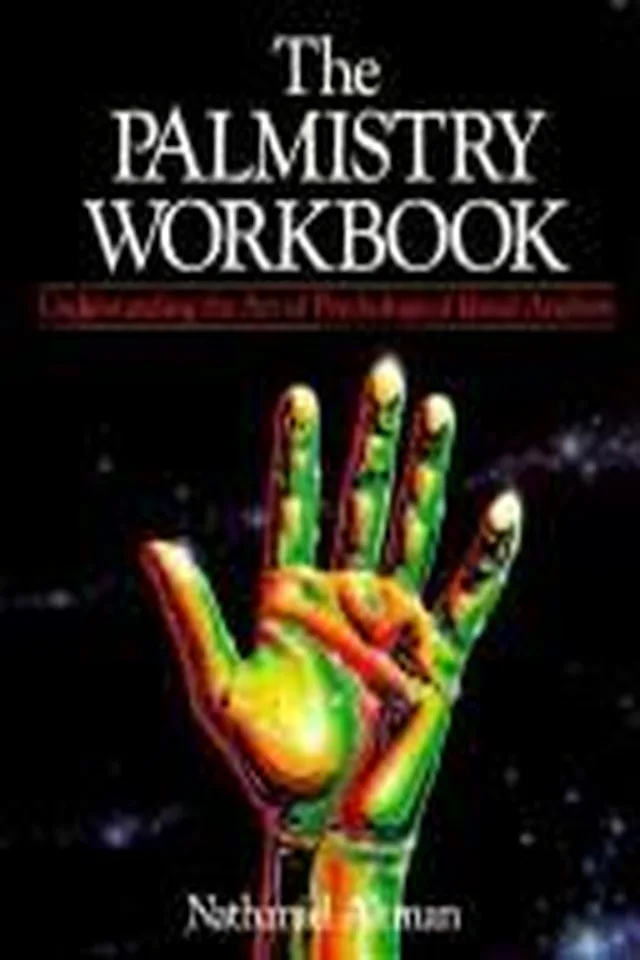
The palmistry workbook



Aurelia Blackwood (Occult Philosophy Critic) — Nathaniel Altman's 'The Palmistry Workbook' is a triumph of accessible esoteric scholarship. It transcends the typical fortune-telling primer, delving into the profound philosophical and spiritual dimensions of chiromancy. Altman’s approach is both rigorous and intuitive, demystifying complex concepts while retaining the inherent mystery of the practice. He skillfully bridges ancient wisdom with practical application, making this an invaluable resource for serious students of divination. This workbook is essential for anyone seeking to understand the hand not just as a physical appendage, but as a sacred text containing the echoes of soul and destiny.
📝 Description
61
Nathaniel Altman's 'The Palmistry Workbook' was first published to explain hand reading.
Nathaniel Altman's workbook presents a detailed approach to palmistry. It guides readers through understanding the lines, mounts, and other features of the hand. The book aims to connect these physical characteristics to aspects of personality, past experiences, and future possibilities. Altman's method focuses on interpreting the hand as a map of an individual's life. It moves beyond simple predictions to explore philosophical ideas behind the practice. This text is intended for those who want a thorough grounding in palmistry, from beginners to those with some experience.
It covers the symbolism of major and minor hand lines, the meaning of different hand shapes, and the significance of the finger and palm mounts. Readers learn how to interpret the texture and color of the skin, as well as the nails. The author emphasizes that palmistry is a tool for self-understanding. It is about recognizing patterns and potential rather than a fixed destiny. The workbook encourages a contemplative practice for deeper insight.
Palmistry, or chiromancy, has a long history within Western esoteric traditions, dating back to ancient Greece and Rome. It was often integrated with astrology and other forms of divination, viewed as a way to read divine will or natural patterns. During the Renaissance, it saw a resurgence, appearing in popular and scholarly texts. While sometimes dismissed, palmistry persisted as a method for self-knowledge and understanding human nature within various occult circles. Altman's work situates itself within this lineage, offering a practical method for engaging with this ancient art.
💡 Why Read This Book?
Unlock the ancient wisdom concealed within your own hands. 'The Palmistry Workbook' offers a clear, insightful, and spiritually resonant path to understanding personal destiny, character, and potential. Ideal for seekers of self-knowledge, aspiring diviners, and those fascinated by the metaphysical connection between the physical and the spiritual. Learn to read the lines of your life with clarity and purpose.
⭐ Reader Reviews
Honest opinions from readers who have explored this book.
❓ Frequently Asked Questions
Is prior knowledge of palmistry required to use this workbook?
No, 'The Palmistry Workbook' is designed for both absolute beginners and those with some familiarity. Altman's clear explanations and structured exercises guide you from foundational concepts to more nuanced interpretations.
What makes this workbook different from other palmistry guides?
Altman emphasizes the philosophical and symbolic depth of palmistry, connecting it to broader esoteric traditions and the human psyche, rather than just rote memorization of line meanings.
How can I best utilize the exercises in this workbook?
Engage with each exercise thoughtfully. Practice on your own hands and those of friends or family, observing patterns and reflecting on the interpretations provided by Altman.
Does this workbook cover advanced palmistry techniques?
While it builds a strong foundation, the workbook gradually introduces more complex concepts and interpretations, preparing the dedicated student for further exploration into advanced palmistry.
Can palmistry truly predict the future?
Palmistry is understood not as rigid prediction, but as an interpretation of potentials and tendencies based on energetic patterns. It offers insight into character and life paths, empowering informed choices.
🔮 Key Themes & Symbolism
The Hand as a Cosmic Map
This theme explores the profound belief that the lines, mounts, and shape of the human hand are not random but are divinely inscribed patterns reflecting the individual's soul journey, karmic predispositions, and potential life paths. Altman studies how each mark serves as a symbolic representation of cosmic energies influencing our character, relationships, and destiny, transforming the hand into a living blueprint of the self. This perspective invites a deeper reverence for the physical form as a vessel of hidden knowledge.
Symbolic Language of the Lines and Mounts
Central to the workbook is the deciphering of the intricate symbolic language embedded within the palm. Altman meticulously unpacks the meanings of the major and minor lines, as well as the various mounts, revealing their archetypal significance. He illustrates how these features translate into insights about our emotional landscape, intellectual capacities, spiritual aspirations, and life's challenges and triumphs. This section offers a comprehensive lexicon for understanding the hand's silent, yet eloquent, narrative.
Palmistry as a Tool for Self-Discovery and Empowerment
Beyond mere fortune-telling, Altman positions palmistry as a potent instrument for profound self-awareness and personal growth. By understanding the messages conveyed by their palms, individuals can gain clarity on their strengths, weaknesses, and inherent talents. This knowledge empowers them to navigate life's complexities with greater wisdom, make conscious choices aligned with their true nature, and actively shape their destiny rather than passively accepting it. The workbook fosters a sense of agency and spiritual evolution through self-understanding.
💬 Memorable Quotes
Direct passages from the work, attributed to the author.
“Each line, a whisper from the soul's ancient journey.”
— Suggests that the lines on the palm are not mere physical marks but spiritual imprints, carrying traces of past lives and the soul's evolutionary path.
“To read the hand is to commune with the silent wisdom of the universe.”
— Highlights the contemplative and spiritual aspect of palmistry, portraying it as a practice that connects the reader to universal truths and cosmic consciousness.
“The mounts are the cradles of our innate potentials.”
— This emphasizes that the raised areas of the palm (mounts) represent the core energies and inherent talents we possess, serving as the foundation for our life's expression.
“Understanding your palm is understanding the map of your becoming.”
— Positions palmistry as a forward-looking practice, guiding individuals to recognize their potential and actively participate in their own personal evolution and future development.
💡 Key Ideas
Editorial paraphrase of the work's core concepts — not direct quotes.
The hand is a living manuscript, penned by fate itself.
This quote captures the core esoteric belief that the palm is not static but a dynamic text, imbued with meaning by higher forces, holding the narrative of one's life and destiny.
🌙 Esoteric Significance
Tradition
This workbook is deeply rooted in the Western esoteric tradition, drawing from Hermeticism, Neoplatonism, and ancient divinatory practices. It views the hand as a microcosm reflecting the macrocosm, aligning with the principle of 'As Above, So Below.' The practice is understood as a form of sympathetic magic, where the physical form mirrors cosmic influences and the individual's spiritual blueprint, offering a path to self-realization and alignment with universal laws.
Symbolism
The palm is rich with symbolism, with lines representing life currents and destiny's path, and mounts embodying planetary influences and human archetypes (e.g., Venus for love, Jupiter for ambition). The fingers can symbolize different aspects of selfhood and external forces. Altman deciphers this intricate visual language, revealing how the interplay of these symbols offers clear insights into psychological makeup, karmic patterns, and the unfolding of one's unique life purpose.
Modern Relevance
In an age of rapid technological advancement and often superficial connections, 'The Palmistry Workbook' offers a grounding and deeply personal approach to self-discovery. It provides tools for introspection, fostering mindfulness and a greater appreciation for the subtle energies that shape our lives. The insights gained from palmistry can empower individuals to navigate personal challenges, cultivate self-awareness, and make choices that are more aligned with their authentic selves, contributing to overall well-being and spiritual growth.
👥 Who Should Read This Book
This workbook is a treasure for the dedicated seeker of esoteric knowledge. Beginners will find a clear and supportive entry point into the art of palmistry, guided by Altman's accessible explanations. Scholars of occultism and ancient wisdom traditions will appreciate the depth of symbolic interpretation and its connection to broader metaphysical concepts. Practicing diviners can refine their skills and gain a more profound understanding of the philosophical underpinnings of their craft. Ultimately, anyone yearning for deeper self-awareness, a richer understanding of destiny, and a tangible connection to ancient wisdom will find immense value within these pages.
📜 Historical Context
Written during an era of burgeoning interest in esoteric studies and occult revival, Nathaniel Altman's 'The Palmistry Workbook' emerged as a significant contribution to the popularization of chiromancy. The late 20th century saw a renewed curiosity in ancient wisdom traditions, seeking deeper meaning beyond materialistic paradigms. This book tapped into that zeitgeist, offering a structured yet mystical approach to a practice with roots stretching back to ancient India, Greece, and Rome. It provided a much-needed bridge between scholarly exploration of occult arts and practical, personal application, resonating with individuals seeking spiritual guidance and self-understanding in a rapidly changing world.
📔 Journal Prompts
Reflect on a prominent line in your palm. How does its perceived meaning align with your life experiences?
Consider the dominant mount on your palm. How does this energy manifest in your personality and actions?
What is one aspect of your character that you believe your palm clearly illustrates?
If your palm is a map, what journey does it suggest you are currently on?
How can the insights gained from reading your palm empower you to make more conscious choices moving forward?
🗂️ Glossary
Chiromancy
The ancient practice of palm reading, also known as palmistry, which involves interpreting the lines, mounts, and other features of the hand to gain insight into a person's character, destiny, and potential.
Mounts
The fleshy, raised pads on the palm located at the base of the fingers and along the sides of the hand. Each mount is associated with a planetary influence and specific human traits or potentials.
Heart Line
The line that typically runs horizontally across the palm below the fingers. It is traditionally interpreted as representing one's emotional nature, relationships, and capacity for love.
Head Line
The line that often starts near the thumb and runs across the palm. It is associated with one's intellect, mental processes, communication style, and approach to learning.
Life Line
The curved line that generally begins between the thumb and index finger and arcs around the base of the thumb. It is interpreted as reflecting vitality, physical health, and significant life events.
This book appears in 2 collections
🔮 Readers Also Liked
Browse all →









More by Nathaniel Altman
All books →





From the “Transcendental Meditation” Collection
View all →





More Free Divination & Tarot Books
View all →