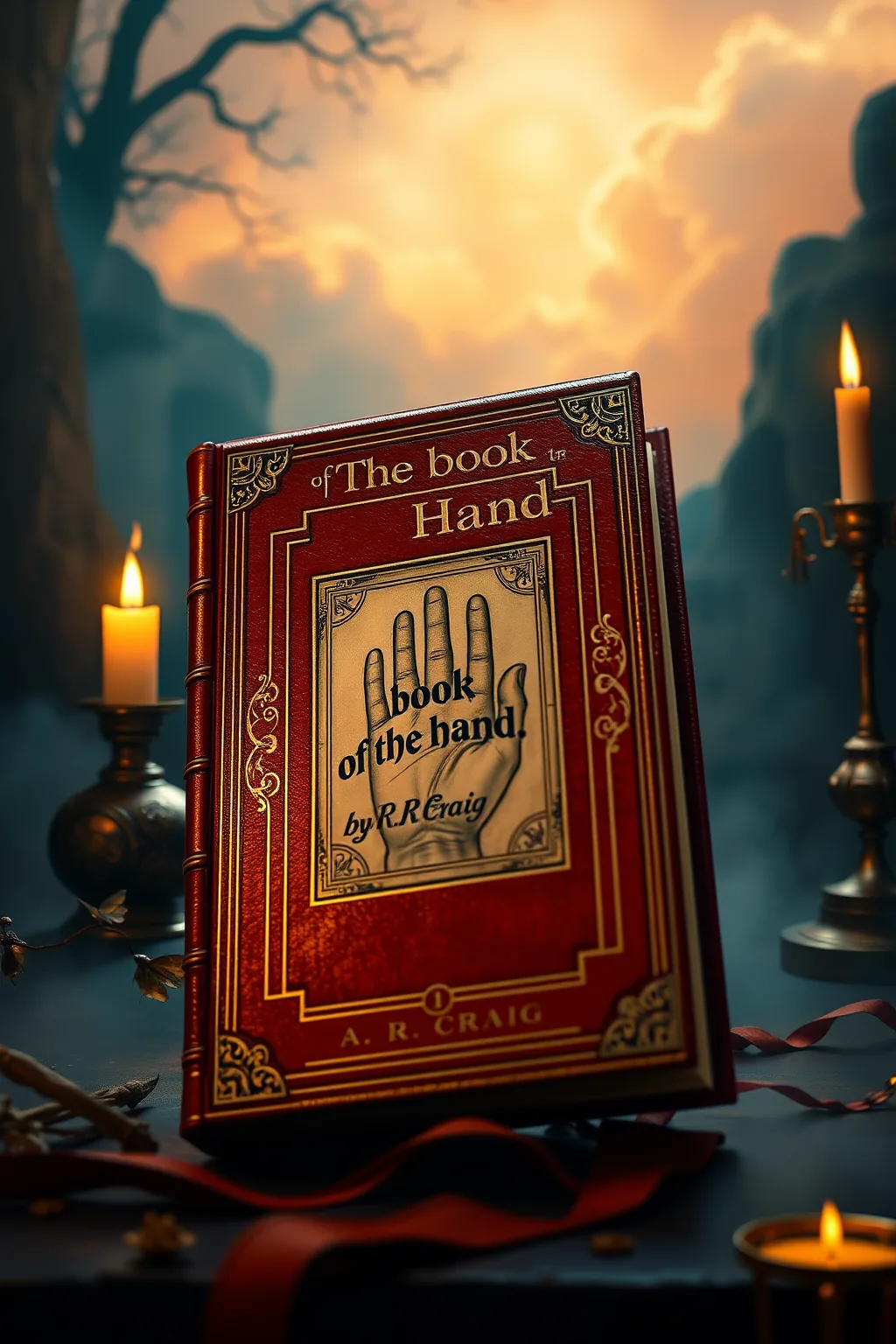
The book of the hand
 61
61

The book of the hand



Marcus Thorne (Esoteric Sciences Reviewer) — A. R. Craig's 'The Book of the Hand' is a seminal work for anyone serious about understanding the profound depths of palmistry. Craig's authoritative prose illuminates the complex iconography of the hand, treating it not as a mere biological appendage, but as a living scroll of esoteric knowledge. He adeptly bridges the gap between ancient traditions and practical application, offering insights that are both intellectually stimulating and spiritually resonant. This book is indispensable for practitioners seeking to deepen their craft and for scholars wishing to explore a cornerstone of divinatory arts. Its scholarly yet accessible approach makes it a treasure for the discerning reader.
📝 Description
61
A. R. Craig's 'The Book of the Hand' was published in 1926.
A. R. Craig's 'The Book of the Hand' examines the practice of cheiromancy, or palmistry. The book details how the lines, mounts, and shapes of the hand are understood to represent aspects of a person's character, destiny, and spiritual capacities. Craig presents these elements as a form of symbolic language, linking them to broader cosmic energies and philosophical ideas. It is not solely a predictive system but a method for self-understanding.
The work is structured to guide the reader through the various interpretations within palmistry. It moves beyond simple fortune-telling to consider the deeper meanings associated with hand analysis. The aim is to help individuals engage with the philosophical and symbolic dimensions of this tradition, fostering a connection between the physical hand and inner self. The book encourages a thoughtful approach to reading the hand's markings.
Published in 1926, 'The Book of the Hand' falls within the broader Western esoteric tradition that saw renewed interest in divination and occult sciences in the early 20th century. Cheiromancy, with its roots stretching back to antiquity, was often studied alongside other divinatory arts like astrology and Tarot. This book contributes to that lineage, viewing the hand as a micro-representation of macrocosmic principles, a common theme in esoteric thought. It connects the physical form to unseen forces and personal fate.
💡 Why Read This Book?
Unlock the ancient secrets held within your own hands. 'The Book of the Hand' offers a profound and accessible journey into palmistry, revealing your character, destiny, and spiritual path. Ideal for seekers of self-knowledge, tarot practitioners, and anyone fascinated by the mystical connection between the physical and the metaphysical. Discover the language of fate etched into your very being.
⭐ Reader Reviews
Honest opinions from readers who have explored this book.
❓ Frequently Asked Questions
What is palmistry's historical significance?
Palmistry, or cheiromancy, boasts a rich history spanning millennia, with roots in ancient India, China, and Greece. It was considered a respected form of divination and character analysis, often studied alongside astrology and other esoteric arts.
How does 'The Book of the Hand' differ from other palmistry guides?
This work distinguishes itself through its profound philosophical depth and meticulous attention to esoteric symbolism, moving beyond mere prediction to explore the hand as a microcosm of universal energies and personal destiny.
Can beginners understand this book?
Absolutely. While rich in esoteric detail, Craig's writing is clear and structured, making it accessible to dedicated beginners while offering advanced insights for seasoned practitioners and scholars.
What are the main types of lines discussed?
The book meticulously details the 'Major Lines' (Life, Head, Heart), the 'Minor Lines' (Sun, Fate, Mercury), and various other markings like 'Minor' lines, 'Accessory' lines, and 'Rascettes,' each holding unique significance.
Is palmistry considered a science or an art?
Traditionally, palmistry is viewed as an esoteric art and a form of divination, rooted in observation, intuition, and ancient symbolic systems rather than empirical scientific methodology.
🔮 Key Themes & Symbolism
The Hand as a Microcosm
'The Book of the Hand' posits the human hand as a profound microcosm, reflecting the vast energies of the cosmos and the intricate blueprint of an individual's life. Each line, mount, and contour is viewed not in isolation, but as an interconnected element within a larger, divinely orchestrated pattern. This perspective elevates palmistry from simple fortune-telling to a philosophical exploration of self and universe, suggesting that our physical form carries imprints of spiritual truths and karmic trajectories. The book invites readers to perceive their hands as sacred texts, waiting to be deciphered for profound self-awareness and spiritual growth.
Symbolism and Archetypes
Craig masterfully decodes the body of symbolism embedded within palmistry. He links the formations on the hand to ancient archetypes, planetary influences, and elemental forces, revealing a universal language that transcends time and culture. The major and minor lines, the varying shapes of fingers, and the prominence of the palm's mounts are all presented as potent symbols, offering insights into personality traits, life lessons, potential challenges, and inherent strengths. This approach transforms the study of palmistry into an engagement with deep psychological and spiritual truths, inviting readers to connect with the archetypal currents that shape human experience.
Destiny, Free Will, and Self-Awareness
A central tenet explored in 'The Book of the Hand' is the delicate interplay between destiny and free will. The book suggests that while our palms may reveal predispositions and potential paths, they do not dictate an unchangeable fate. Instead, they serve as a guide, useful areas for conscious development and personal agency. By understanding the messages within their hands, individuals are empowered to navigate their life's journey with greater awareness, making informed choices and actively participating in the co-creation of their reality. This perspective fosters a sense of empowerment and personal responsibility, encouraging a proactive approach to life's unfolding narrative.
💬 Memorable Quotes
Direct passages from the work, attributed to the author.
“To read the hand is to read the soul's silent prayer.”
— This suggests that palmistry offers a deep, intuitive insight into an individual's inner desires, spiritual aspirations, and the unspoken yearnings of their being.
“Every crease, a story; every mount, a mountain of possibility.”
— This poetic phrasing highlights the narrative potential of palmistry, where even the smallest details on the hand can reveal significant life events or inherent strengths and challenges.
“Know thyself, the palm declares, and the universe shall unfold.”
— This captures the transformative power of self-knowledge gained through palmistry, implying that true understanding of oneself unlocks a deeper comprehension of the wider world.
💡 Key Ideas
Editorial paraphrase of the work's core concepts — not direct quotes.
The lines on your palm are not chains, but maps.
This quote emphasizes that the markings on the hand represent potential paths and guidance, not fixed destinies, encouraging an active and informed approach to life.
The hand is a mirror reflecting the heavens within.
This quote beautifully illustrates the esoteric connection between the microcosm (the hand) and the macrocosm (the cosmos), suggesting that our physical form holds celestial truths.
🌙 Esoteric Significance
Tradition
This work is deeply rooted in the Western Esoteric Tradition, drawing from Hermeticism, Kabbalah, and ancient divinatory practices. It aligns with the Hermetic principle of 'As Above, So Below,' viewing the hand as a direct reflection of celestial influences and the divine order. The exploration of planetary correspondences and elemental connections further anchors it within established esoteric frameworks, offering a holistic understanding of human potential through the lens of universal energies.
Symbolism
The symbolism within 'The Book of the Hand' is rich and multi-layered. Key lines like the Heart Line represent emotional life and relationships, the Head Line signifies intellect and thought processes, and the Life Line indicates vitality and physical well-being. The mounts (Venus, Jupiter, Saturn, Apollo, Mercury, Mars, Luna) symbolize different facets of personality and potential. Hand shapes (e.g., Earth, Air, Fire, Water hands) are interpreted as fundamental character types. These symbols are not arbitrary but are believed to be ancient archetypes that communicate profound truths about the human condition.
Modern Relevance
In an age increasingly focused on self-awareness, mindfulness, and personal growth, 'The Book of the Hand' offers a timeless and profound tool. Palmistry, as presented here, transcends mere prediction; it serves as a sophisticated method for self-exploration, helping individuals understand their inherent strengths, challenges, and life patterns. The book's emphasis on the hand as a dynamic map rather than a fixed destiny speaks to modern psychological insights, empowering readers to navigate their lives with greater intention and self-understanding.
👥 Who Should Read This Book
This important work is indispensable for a diverse audience. **Beginners** seeking an authentic and profound introduction to palmistry will find Craig's clear exposition and detailed symbolism an excellent starting point. **Occult scholars** and **esoteric practitioners** will appreciate its depth, historical context, and detailed analysis, which enriches their understanding of traditional divinatory arts. **Seekers of self-knowledge** will discover a unique and insightful pathway to understanding their own character, potential, and life's trajectory. Even **skeptics** curious about the enduring power of ancient wisdom traditions will find 'The Book of the Hand' a compelling and thought-provoking read.
📜 Historical Context
Written during an era when interest in esoteric knowledge and occult sciences experienced a resurgence, 'The Book of the Hand' emerged from a fertile intellectual landscape. The late 19th and early 20th centuries saw a renewed fascination with ancient wisdom traditions, spiritualism, and the hidden arts, fueled by a desire to explore beyond the materialist philosophies of the preceding age. Authors like A. R. Craig were instrumental in cataloging, interpreting, and disseminating these often-guarded practices. This period witnessed the systematization of many divinatory arts, including palmistry, astrology, and Tarot, often presented with a blend of scholarly rigor and mystical reverence. 'The Book of the Hand' stands as a evidence of this movement, offering a comprehensive and accessible guide that sought to clarify and elevate the practice of cheiromancy for a curious and spiritually seeking public.
📔 Journal Prompts
Reflect on the primary lines on your dominant hand. What initial impressions do they give you about your core nature?
Examine the mounts on your palm. Which ones are most prominent, and how do you see those qualities manifesting in your daily life?
Consider the shape of your hand and fingers. Does it align with any of the classical element classifications, and what does this suggest about your approach to the world?
Trace the major lines on your palm. Are there any unusual markings or breaks, and what intuitive feelings do they evoke about your life's journey?
How does the knowledge gained from 'The Book of the Hand' empower you to approach your future with greater intention and self-awareness?
🗂️ Glossary
Cheiromancy
The practice of divination and character analysis through the examination of the palm of the hand, often referred to as palmistry.
Mounts
The fleshy, raised areas on the palm, named after classical planets (e.g., Mount of Venus, Mount of Jupiter), each associated with specific personality traits and potentials.
Major Lines
The prominent, deeply etched lines on the palm, typically including the Life Line, Head Line, and Heart Line, which are considered foundational to understanding an individual's core disposition and life path.
Minor Lines
Less prominent lines such as the Sun Line, Fate Line, and Mercury Line, which offer supplementary insights into specific talents, career paths, or communication styles.
Hand Shapes
The overall form of the palm and fingers, often categorized by classical elements (Earth, Air, Fire, Water), providing a broad overview of an individual's fundamental temperament and life approach.
This book appears in 1 collection
🔮 Readers Also Liked
Browse all →









More by A. R. Craig
All books →


From the “Palmistry” Collection
View all →







More Free Divination & Tarot Books
View all →