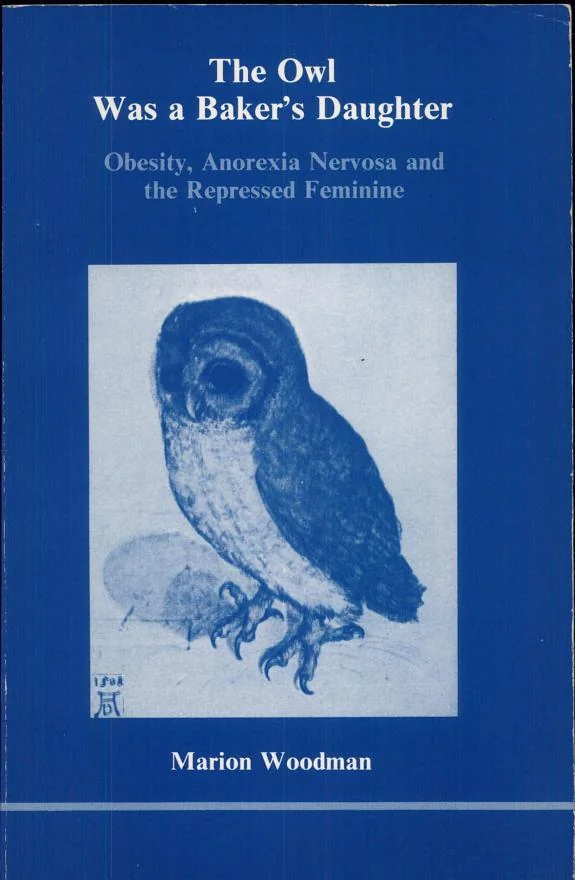
The Owl was a Baker's Daughter
 73
73

The Owl was a Baker's Daughter
Marion Woodman's "The Owl Was a Baker's Daughter" is a seminal text that dared to confront the psychological and spiritual dimensions of eating disorders when such discussions were often confined to clinical, behavioral terms. Woodman’s genius lies in her ability to weave together Jungian analytical psychology with rich mythological symbolism, presenting anorexia and obesity not as mere failures of willpower but as profound psychic crises stemming from a severed connection to the authentic feminine. She posits, quite compellingly, that the denial of the Great Mother archetype and the internalization of patriarchal devaluation leads women to wage war on their own bodies. A notable strength is the exploration of the "shadow" of the feminine, revealing how repressed energies can manifest destructively. However, the dense Jungian framework, while illuminating, can occasionally make the text challenging for readers unfamiliar with its terminology, requiring a dedicated engagement. The central metaphor of the owl and the baker's daughter, while potent, demands careful unpacking. Ultimately, this work remains a vital, if demanding, exploration of the soul's hunger when the body becomes its battleground.
📝 Description
73
Marion Woodman's 1980 book connects eating disorders to the repressed feminine psyche.
First published in 1980, "The Owl Was a Baker's Daughter" examines obesity and anorexia nervosa not as simple physical issues but as signs of a suppressed feminine nature. Woodman, using Jungian psychology, argues that women have become disconnected from their core feminine identity due to societal pressures and patriarchal structures. This disconnect, she suggests, leads to harmful relationships with their bodies. The book aims to clarify the unconscious forces behind these psychological and spiritual struggles.
This work is suitable for people dealing with the psychological roots of disordered eating, including those affected by obesity and anorexia nervosa. It will also interest students and practitioners of depth psychology, particularly Jungian analysis, who study the archetypal aspects of the mind and the feminine. Scholars of mythology, women's studies, and cultural criticism will find its perspective on how society shapes femininity and its effect on well-being valuable. It offers a different way to look at body image concerns, going beyond medical or behavioral explanations.
Published in 1980, this book emerged when Jungian thought was gaining traction beyond academic circles, particularly in relation to women's experiences. Woodman's work taps into a tradition of psychological and spiritual inquiry that seeks to understand the symbolic language of the unconscious. It connects deeply personal psychological struggles, like eating disorders, to broader cultural narratives and archetypal patterns, suggesting that individual healing is linked to reclaiming a lost connection to the feminine principle.
💡 Why Read This Book?
• Gain an understanding of eating disorders beyond medical diagnoses, specifically through the lens of Jungian psychology and the repressed feminine, as explored in Woodman's analysis of the "shadow" feminine. • Discover the symbolic language of the body as a site of psychic conflict, learning how societal pressures on femininity can manifest as destructive eating patterns, referencing the owl and baker's daughter metaphor. • Engage with a foundational text in the psychology of women and the feminine psyche, appreciating its original contribution to understanding psychosomatic illness in the context of archetypal psychology and its publication in 1980.
⭐ Reader Reviews
Honest opinions from readers who have explored this book.
❓ Frequently Asked Questions
What is the primary psychological framework used in 'The Owl Was a Baker's Daughter'?
The book primarily utilizes the framework of Jungian analytical psychology. Marion Woodman draws heavily on concepts like archetypes, the shadow, anima, and the collective unconscious to interpret the psychological dynamics behind eating disorders.
What does Marion Woodman mean by 'the repressed feminine' in this book?
Woodman refers to the disowned, devalued, and suppressed aspects of the feminine principle within both individuals and patriarchal societies. She argues that this repression leads to a profound disconnection from one's authentic self and can manifest as destructive behaviors like disordered eating.
How does the book relate to Jungian concepts like the shadow?
The book explores the 'shadow' of the feminine, which encompasses the rejected, negative, or unacknowledged feminine qualities. Woodman suggests that these repressed energies can surface destructively, contributing to the complex psychological landscape of eating disorders.
When was 'The Owl Was a Baker's Daughter' first published?
The book was first published in 1980, marking a significant contribution to the psychological literature of its time concerning eating disorders and the feminine psyche.
Is this book suitable for someone new to Jungian psychology?
While accessible to those with some background, the book delves deeply into Jungian concepts. Readers new to the field might benefit from familiarizing themselves with basic Jungian terminology beforehand, though the symbolic language offers its own entry point.
What is the significance of the title 'The Owl Was a Baker's Daughter'?
The title alludes to a transformation or inversion of natural feminine roles and power. The owl often symbolizes wisdom or the nocturnal, while the baker's daughter represents a more domestic, perhaps constrained, feminine role, suggesting a complex interplay of these energies.
🔮 Key Themes & Symbolism
The Repressed Feminine
Woodman posits that Western society has systematically devalued and repressed the authentic feminine principle. This is not merely about societal roles but a deep psychic wounding. When this vital energy is denied, it can surface in destructive ways, particularly within the female psyche. The book argues that disordered eating is a manifestation of this profound disconnect, a desperate attempt to control or express what cannot be integrated. The archetypal feminine, associated with the Great Mother and instinctual wisdom, is obscured, leading to a crisis of identity and embodiment for women.
Body as Psychic Battlefield
The physical body becomes the arena where internal conflicts are enacted. For Woodman, the obsession with weight, food, and body shape in conditions like anorexia and obesity is a symbolic language for deeper psychological and spiritual struggles. The body is either starved, purged, or overcompensated for, reflecting a profound alienation from oneself. This theme explores how societal pressures and internalized patriarchal judgments turn the natural relationship between soul and body into a site of war, obscuring essential needs and desires.
Jungian Archetypes and Symbolism
Drawing heavily on Carl Jung's theories, the book interprets eating disorders through the lens of universal archetypes. Concepts such as the Shadow, the Anima, and the Great Mother are employed to understand the unconscious dynamics at play. The specific symbols within the book, like the owl and the baker's daughter, are not arbitrary but carry deep psychological meaning, representing distorted or emerging feminine powers. This symbolic language provides a framework for understanding the mythic dimensions of personal suffering.
The Crisis of Meaning
Beyond the physical symptoms, Woodman addresses the existential and spiritual void that often accompanies disordered eating. When the connection to the authentic feminine—associated with intuition, creativity, and life-giving forces—is broken, individuals can experience a profound crisis of meaning. The book suggests that the intense focus on food and body is a substitute for a more fundamental hunger for spiritual connection and self-realization, highlighting the soul's desperate search for wholeness in a world that often denies its deeper needs.
💬 Memorable Quotes
Direct passages from the work, attributed to the author.
“The soul's hunger must be met.”
— This concise statement captures Woodman's central thesis: that eating disorders are not merely physical but stem from a deeper, unmet spiritual or psychological need. It implies that addressing the symptoms without understanding the root cause is insufficient.
“The body is the psyche's messenger.”
— This interpretation highlights Woodman's view that physical manifestations, such as those seen in eating disorders, are symbolic expressions of internal psychological states. The body communicates distress or unacknowledged truths that the conscious mind may be ignoring.
“Anorexia is a denial of the instinctual life.”
— This concept reflects Woodman's analysis of anorexia nervosa as a rejection of fundamental life urges and bodily wisdom. It suggests a profound disconnect from the natural rhythms and instincts that guide human existence.
“The shadow of the feminine must be faced.”
— This represents the idea that the unacknowledged, often negative, aspects of the feminine within individuals and society must be brought into conscious awareness. Ignoring these 'shadow' elements prevents psychological wholeness and contributes to internal conflict.
💡 Key Ideas
Editorial paraphrase of the work's core concepts — not direct quotes.
We must reclaim the lost feminine.
This paraphrased concept underscores Woodman's call for the integration of the repressed feminine principle. She argues that its suppression leads to psychic imbalance and destructive behaviors, necessitating its conscious acknowledgment and reclamation.
🌙 Esoteric Significance
Tradition
Woodman's work is deeply rooted in the Jungian tradition of analytical psychology, which itself draws from Gnostic, Hermetic, and alchemical symbolism. While not strictly a practitioner of a specific esoteric lineage, her method of exploring the unconscious through archetypes and symbols aligns with the symbolic language found in many esoteric paths. She reinterprets these ancient symbolic systems to address modern psychological and psychosomatic ailments, particularly those affecting women, positioning her work as a bridge between depth psychology and a broader spiritual understanding of the human condition.
Symbolism
The central symbols in "The Owl Was a Baker's Daughter" include the owl, often representing wisdom, mystery, and the nocturnal/unconscious aspects of the psyche, and the baker's daughter, suggesting a more grounded, perhaps constrained, feminine role. Their juxtaposition hints at a transformation or inversion of feminine power. The book also implicitly engages with the symbolism of the Great Mother archetype, exploring its distortion and repression. The body itself functions as a potent symbol of the soul's state, with disordered eating patterns acting as a coded language for spiritual and psychological crisis.
Modern Relevance
Woodman's insights into the repressed feminine and the symbolic language of the body remain highly relevant today. Contemporary somatic psychology, trauma-informed therapy, and ecofeminist thought echo her concerns about the disconnection from instinctual wisdom and the natural world. Thinkers and practitioners in fields like depth psychology, archetypal astrology, and spiritual counseling continue to draw upon her work to understand the psychological roots of modern ailments, particularly those impacting women's relationship with themselves and their bodies.
👥 Who Should Read This Book
• Individuals exploring the psychological and spiritual dimensions of eating disorders, seeking a depth-oriented approach beyond conventional therapy, will find Woodman's Jungian framework particularly useful. • Students and practitioners of Jungian psychology, mythology, and archetypal studies will benefit from her application of these concepts to contemporary psychosomatic issues. • Women seeking to understand their relationship with their bodies, societal pressures, and the concept of the 'repressed feminine' will find a powerful, symbolic exploration of these themes.
📜 Historical Context
Marion Woodman's "The Owl Was a Baker's Daughter," released in 1980, entered a cultural landscape increasingly attentive to psychological well-being and feminist theory, yet still grappling with the complexities of eating disorders. While the 1970s had seen significant strides in understanding women's psychological experiences, often through feminist consciousness-raising groups and the rise of humanistic psychology, Woodman’s approach was distinct. She integrated the burgeoning interest in Jungian psychology—particularly the work of Marie-Louise von Franz—with a focus on the feminine psyche, offering a mythological and symbolic interpretation of anorexia and obesity. This contrasted with more purely medical or behavioral models being developed. Her work resonated with a growing transpersonal psychology movement seeking spiritual dimensions in psychological healing. While not facing overt censorship, the depth and symbolic nature of her analysis offered a counterpoint to prevailing clinical discourse, establishing her as a significant voice in the dialogue around the feminine and psychological distress, alongside contemporaries like Jean Shinoda Bolen.
📔 Journal Prompts
The symbolic meaning of the owl and the baker's daughter in your own psyche.
Reflect on the concept of the 'repressed feminine' and its potential manifestations.
Explore the body as a messenger for unmet soul hunger.
Analyze the influence of societal pressures on your relationship with your body.
Consider the archetypal dimensions of your personal struggles with embodiment.
🗂️ Glossary
Anorexia Nervosa
A serious eating disorder characterized by self-starvation and excessive weight loss, often stemming from a distorted body image and an intense fear of gaining weight. Woodman interprets it as a psychic crisis.
Obesity
A condition characterized by excessive body weight. In Woodman's context, it can represent an unconscious attempt to 'stuff' or contain repressed emotions or an overcompensation for a lack of psychic nourishment.
Repressed Feminine
The disowned, devalued, and suppressed aspects of the feminine principle within individuals and patriarchal societies. Woodman argues its repression is a root cause of psychological distress and disordered eating.
Jungian Psychology
A school of depth psychology founded by Carl Jung, focusing on archetypes, the collective unconscious, individuation, and the symbolic interpretation of dreams and psyche.
Archetype
Universal, archaic patterns and images that derive from the collective unconscious and are the psychic counterpart of instinct. Examples include the Great Mother, the Shadow, and the Anima.
Shadow
In Jungian psychology, the 'shadow' represents the unconscious aspects of the personality that the conscious ego does not identify in itself. It contains repressed desires, weaknesses, and instincts.
Anima
The unconscious feminine aspect of a man's psyche, or the unconscious masculine aspect of a woman's psyche (which Jung termed the 'animus').
This book appears in 1 collection
🔮 Readers Also Liked
Browse all →









From the “Jungian Psychology” Collection
View all →






More Free Occult Philosophy Books
View all →