The tao is silent
 75
75

The tao is silent
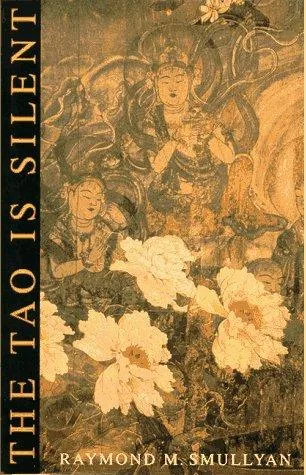
Raymond M. Smullyan's "The Tao Is Silent" is less a book about the Tao and more a book that uses logical puzzles to embody Taoist principles. The initial premise, that the Tao is silent, is expertly demonstrated not through pronouncements but through the very structure of Smullyan's paradoxes. His strength lies in his unparalleled ability to craft seemingly simple questions that unravel the knots of conventional thought. A particular passage involving a traveler encountering a sign that contradicts itself perfectly illustrates the book's core method. However, the work's limitation is its indirectness; readers seeking a direct explication of Taoist philosophy might find the reliance on logical constructs occasionally distancing. While the puzzles are intellectually stimulating, their connection to the Tao can feel implicit rather than explicit for those unfamiliar with the underlying philosophical parallels. Smullyan's "The Tao Is Silent" offers a unique, logic-driven contemplation of Eastern thought.
📝 Description
75
Raymond M. Smullyan published "The Tao Is Silent" in 1992, using logic puzzles to explore Eastern thought.
Raymond M. Smullyan's 1992 book, "The Tao Is Silent," uses logical paradoxes and puzzles to engage readers with Eastern philosophical ideas, particularly Taoism. Instead of direct explanation, Smullyan constructs intellectual exercises that illuminate concepts such as emptiness, non-duality, and the boundaries of rational thought. Smullyan, a renowned logician, applies his signature clarity and wit to create a space for contemplation. The book does not offer instruction but rather a method for discovery through mental challenges.
This work is suited for those who enjoy philosophical questions framed as logical problems. Readers drawn to paradoxes, puzzles, and an examination of the mind's capabilities will find it rewarding. It also appeals to those interested in comparing philosophical systems, especially in how Western logic can indirectly approach Eastern concepts. Students of logic, mathematics enthusiasts, and individuals seeking contemplative thought outside of didactic approaches will appreciate Smullyan's distinctive style.
Published in 1992, "The Tao Is Silent" arrived as Western interest in Eastern philosophies like Taoism was substantial. Smullyan's unique approach uses the tools of Western formal logic and puzzle construction, fields he advanced, to touch upon themes resonant with Taoist thought. This differs from popularizers of Eastern wisdom by employing rigorous logical structures rather than direct exposition or metaphor. The book's method engages with ideas of spontaneity, the nature of reality, and the limitations of conceptualization through problem-solving.
💡 Why Read This Book?
• You will learn to recognize the limitations of dualistic thinking by grappling with Smullyan's paradoxes, mirroring the Taoist concept of non-duality. • You will experience how formal logic can be used to illustrate ineffable concepts, offering a unique cognitive exercise distinct from traditional philosophical exegesis. • You will gain an appreciation for the Taoist idea of `wu wei` (non-action) through Smullyan's puzzles, which demonstrate how forcing a logical resolution can sometimes obscure a simpler, more fundamental truth.
⭐ Reader Reviews
Honest opinions from readers who have explored this book.
❓ Frequently Asked Questions
Is 'The Tao Is Silent' a book of Taoist philosophy or logic puzzles?
It's a fusion. While Smullyan is renowned for logic puzzles, this 1992 work uses them to indirectly explore themes akin to Taoist thought, such as emptiness and non-duality.
Who was Raymond M. Smullyan and what is he known for?
Raymond M. Smullyan (1931-2017) was an American mathematician, logician, and concert pianist, celebrated for his creation of intricate logic puzzles and his clear explanations of Gödel's incompleteness theorems.
Does 'The Tao Is Silent' require prior knowledge of logic or Taoism?
While familiarity enhances appreciation, Smullyan's explanations are generally accessible. The book's strength lies in its ability to introduce complex ideas through engaging, self-contained puzzles, making it approachable for newcomers.
What kind of puzzles can I expect in 'The Tao Is Silent'?
Expect paradoxes, riddles, and self-referential problems that challenge conventional assumptions. These are designed not just for entertainment but to provoke contemplation on the nature of truth and understanding.
How does Smullyan connect his puzzles to the Tao?
He does so implicitly. By creating logical dead ends or situations where opposites coexist, Smullyan's puzzles mirror the ineffable and paradoxical nature of the Tao, suggesting that ultimate reality transcends simple logical frameworks.
What is the significance of the title 'The Tao Is Silent'?
The title reflects the idea that the fundamental nature of reality, as described by Taoism, cannot be fully captured or expressed through words or rational thought, much like the silence that underlies all sound.
🔮 Key Themes & Symbolism
Paradox as a Tool
Smullyan masterfully employs paradox, not as an end in itself, but as a critical instrument for dissecting conventional understanding. The book presents numerous logical quandaries that, upon initial inspection, seem irresolvable within standard binary frameworks. This method mirrors the Taoist approach to truth, which often acknowledges that ultimate reality is paradoxical and cannot be fully contained by rigid definitions or linear logic. By forcing the reader into intellectual impasses, Smullyan encourages a re-evaluation of assumptions, hinting that a different mode of apprehension, one less reliant on strict logic, might be necessary to approach concepts like emptiness or the interconnectedness of all things.
The Limits of Language
A central concern in "The Tao Is Silent" is the inadequacy of language and formal logic to express fundamental truths. Smullyan's puzzles often highlight how precise definitions can lead to self-contradiction or circular reasoning, suggesting that the Tao, or the ultimate nature of reality, is by definition ineffable. This aligns with classical Taoist thought, which emphasizes that the Tao that can be named is not the eternal Tao. The book implicitly argues that an over-reliance on linguistic constructs can create barriers to understanding, leading readers to contemplate states of knowing that exist beyond verbal articulation or conceptualization.
Emptiness and Non-Being
The concept of emptiness, central to Taoism and Buddhism, is explored through Smullyan's logical constructions. The book doesn't define emptiness directly but creates scenarios where the absence of something, or the state of potentiality, becomes crucial. This can be seen as analogous to `wu wei` (non-action) or the Tao's generative void. By presenting puzzles where the solution arises from recognizing what is *not* there, or from a state of not actively imposing a solution, Smullyan guides the reader towards an appreciation of `xu` (emptiness) as a fundamental, potent aspect of existence, rather than mere nothingness.
The Illusion of Separation
Smullyan's puzzles often blur the lines between observer and observed, or between seemingly distinct categories, hinting at the Taoist principle of non-duality. By constructing scenarios where dichotomies collapse or where logical systems reveal their inherent interconnectedness, the book encourages a perception of unity underlying apparent differences. This challenges the ego's tendency to create rigid boundaries and separations, suggesting that a more integrated view of reality, where all phenomena arise from a single, undifferentiated source, is closer to the truth.
💬 Memorable Quotes
Direct passages from the work, attributed to the author.
“The Tao is silent.”
— This foundational statement suggests that the ultimate reality or truth, as understood in Taoism, cannot be fully expressed through human language or intellectual constructs, implying that direct experience or intuition is key.
“If you want to know the truth, I'll tell you.”
— This seemingly straightforward offer often precedes a logical paradox or a statement that highlights the limitations of knowing, implying that truth is more complex than a simple declaration.
“What is empty is full, and what is full is empty.”
— This highlights the paradoxical nature of reality where perceived absence can contain potential (fullness) and perceived presence can be superficial or transient (emptiness), a core concept in Eastern thought.
“Can you prove that you are not dreaming?”
— This classic skeptical question, often used in philosophy, serves to destabilize certainty and highlights the subjective nature of reality, inviting contemplation on the foundations of our knowledge.
💡 Key Ideas
Editorial paraphrase of the work's core concepts — not direct quotes.
The solution lies in not trying to find a solution.
This paraphrased concept suggests that for certain problems or philosophical inquiries, the act of striving for a definitive, logical answer can be counterproductive, pointing towards acceptance or surrender.
🌙 Esoteric Significance
Tradition
While not strictly adhering to a single esoteric lineage, "The Tao Is Silent" strongly appeals to Taoist and Chan (Zen) Buddhist traditions. It utilizes the logical paradoxes favored in analytic philosophy to explore concepts of emptiness (`xu`), non-duality, and the ineffability of ultimate reality, which are central to these Eastern schools. Smullyan's work departs from traditional esoteric texts by employing the precise language of Western logic rather than allegory or scripture, offering a unique bridge between rational inquiry and mystical intuition.
Symbolism
The primary 'symbol' in the book is the paradox itself, representing the limitations of conventional thought and language when confronting the nature of the Tao. Another motif is the 'silent' or 'empty' space, which, rather than signifying absence, represents potentiality and the ground of being – akin to the Taoist concept of `wu wei` (non-action). The book also implicitly uses the symbol of the 'liar paradox' or self-referential loops to demonstrate how closed logical systems can break down, mirroring the idea that ultimate truth cannot be contained within conceptual frameworks.
Modern Relevance
Smullyan's work continues to be relevant for contemporary thinkers exploring the intersection of consciousness, logic, and spirituality. His method informs modern approaches to mindfulness and meditation that emphasize observing the mind's patterns and limitations. Researchers in cognitive science and artificial intelligence also find value in his exploration of paradox and Gödelian incompleteness. Furthermore, practitioners seeking to reconcile Western rationalism with Eastern contemplative traditions find "The Tao Is Silent" a valuable resource for intellectual contemplation that complements experiential practices.
👥 Who Should Read This Book
• Students of comparative philosophy and religion: You will gain a novel perspective on how Western logic can be applied to understand Eastern concepts like the Tao and emptiness. • Puzzle enthusiasts and logicians: You will encounter intellectually stimulating paradoxes crafted by a master, presented in a context that encourages deeper philosophical reflection. • Seekers of non-dualistic understanding: You will be challenged to question your assumptions about reality and discover how perceived contradictions can point towards a unified truth, mirroring Taoist principles.
📜 Historical Context
Raymond M. Smullyan's "The Tao Is Silent," published in 1992, arrived at a time when Western engagement with Eastern philosophies was widespread, influenced by figures like Alan Watts and the growing availability of translated texts. Smullyan, a respected logician and mathematician, brought a unique perspective to these themes, employing the rigorous framework of formal logic and puzzle design. His work can be seen as a counterpoint to more overtly spiritual or mystical interpretations of Eastern thought, offering an analytical path toward understanding concepts often considered intuitive or ineffable. The intellectual currents of the late 20th century were increasingly open to cross-cultural philosophical dialogue, yet Smullyan's approach, using Western logical tools to probe Eastern ideas, was distinctive. While not a direct engagement with contemporaries like the popularizers of Zen, his work spoke to a growing segment of the intellectual public interested in the intersection of logic, philosophy, and spirituality, providing a bridge for those who found comfort in structure and proof.
📔 Journal Prompts
The traveler's contradictory signs, what unspoken assumptions do they reveal about seeking truth?
Consider a situation where a strict adherence to rules led to an illogical outcome; how does this relate to the Tao's silence?
Reflect on the concept of 'emptiness' as presented through Smullyan's paradoxes: is it a void or a foundation?
How does the inability to definitively prove one is not dreaming challenge your perception of certainty?
Analyze the function of `wu wei` (non-action) as illustrated by puzzles where active resolution is counterproductive.
🗂️ Glossary
Tao
A fundamental concept in Taoism, referring to the natural order of the universe, the source of all things, and the way of existence, often described as ineffable and beyond rational comprehension.
Wu Wei
Literally 'non-action' or 'effortless action.' It signifies acting in accordance with the natural flow of things, without forcing or striving, achieving results through alignment rather than exertion.
Paradox
A statement, proposition, or situation that, despite apparently sound reasoning from acceptable premises, leads to a conclusion that seems senseless, logically unacceptable, or self-contradictory.
Emptiness (Xu)
In Taoist and Buddhist philosophy, not mere nothingness, but a state of potentiality, receptivity, and spaciousness from which all phenomena arise; a crucial element for understanding the Tao.
Non-Duality
The philosophical or spiritual concept that reality is a unified whole, without fundamental divisions or separations, challenging the perception of distinct selves and objects.
Inneffable
Too great or extreme to be expressed or described in words; referring to truths or experiences that lie beyond the capacity of language to convey fully.
Formal Logic
A system of reasoning that uses precise, symbolic language and rules of inference to analyze the structure of arguments and determine their validity, independent of their content.
🔮 Readers Also Liked
Browse all →








More by Raymond M. Smullyan
All books →
More Free Occult Philosophy Books
View all →