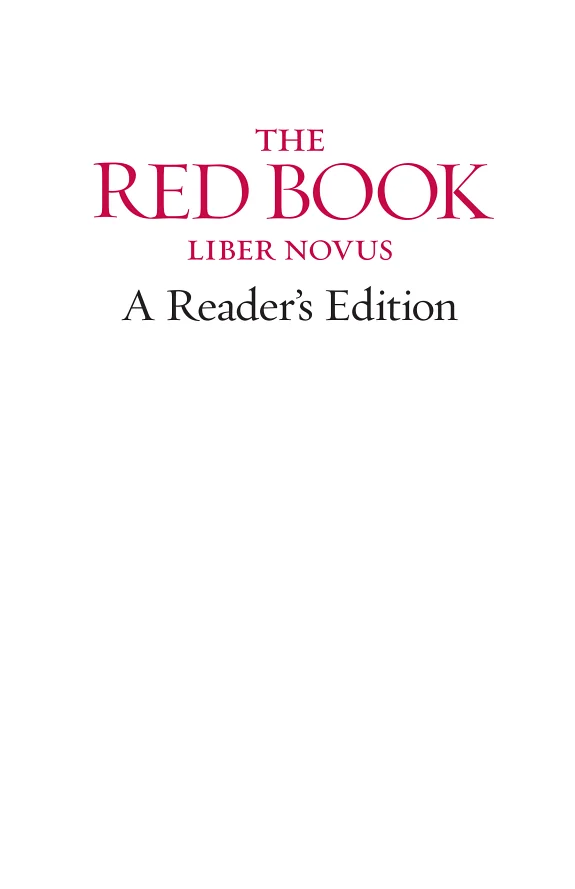
The Red Book
 76
76

The Red Book
Carl Jung's *Liber Novus*, or 'The Red Book,' is less a book and more a psychic excavation rendered in ink and pigment. Its publication in 2009, long after Jung's death in 1961, offered a startlingly direct view into the crucible where his most influential ideas were forged. The book’s strength lies in its raw, unmediated presentation of Jung’s visionary experiences between 1914 and 1930. The sheer visual and textual density, with its elaborate script and vivid illustrations, forces the reader to confront the material on its own terms, bypassing academic filters. However, this very intensity can be a limitation; the lack of conventional structure or explanatory apparatus means the reader is often left adrift in Jung’s symbolic ocean. One particularly striking passage involves Jung's dialogues with his soul, a representation of the inner psychic reality, which starkly illustrates the personal cost and profound depth of his self-analysis. It is an essential, albeit formidable, primary source for understanding the origins of analytical psychology.
📝 Description
76
Carl Jung compiled 'The Red Book,' his *Liber Novus*, between 1914 and 1930.
Carl Jung's *Liber Novus*, known as 'The Red Book,' is a personal record of his engagement with his unconscious mind. Jung created this volume from 1914 to 1930. It is not a standard academic work but a visual and symbolic account of his inner experiences. The book contains elaborate calligraphy, paintings, and narratives that describe visions and conversations Jung had during a turbulent period after World War I.
This work represents the source of many of Jung's later psychological theories. It is meant for serious students of Jungian psychology, comparative mythology, and depth psychology. Readers interested in the symbolic language of the psyche and the origins of concepts like the collective unconscious and individuation will find value here. The book demands a focused reading, offering a deep encounter with the bedrock of Jung's thinking.
Emerging from the intellectual climate of post-WWI Europe, 'The Red Book' was Jung's response to his 'confrontation with the unconscious.' This period of self-exploration diverged from the more empirical methods of contemporaries like Sigmund Freud. While Freud examined neurosis, Jung's self-experimentation turned towards mythic archetypes and the collective unconscious. The deeply personal and visionary character of the book meant it remained largely private for decades, influencing the intellectual landscape only after its full publication in 2009.
💡 Why Read This Book?
• Gain direct insight into the origins of Jung's theories on archetypes and the collective unconscious by examining his personal visions and dialogues during his "confrontation with the unconscious" (1913-1919). • Understand the foundational visual and symbolic language Jung developed, which underpins concepts like individuation, by studying the intricate calligraphy and paintings within the *Liber Novus*. • Appreciate the personal and psychological context of analytical psychology's development by engaging with Jung's intense internal world, a unique exploration absent from his more academic writings.
⭐ Reader Reviews
Honest opinions from readers who have explored this book.
❓ Frequently Asked Questions
When was Carl Jung's 'The Red Book' originally written?
Carl Jung compiled 'The Red Book,' also known as *Liber Novus*, between 1914 and 1930. However, it remained largely unpublished during his lifetime and was not made widely available until 2009.
What are the main psychological theories developed in 'The Red Book'?
The book is the primary source for Jung's development of theories concerning archetypes, the collective unconscious, and the process of individuation. These concepts form the bedrock of analytical psychology.
Is 'The Red Book' a difficult book to read?
Yes, 'The Red Book' is considered challenging due to its dense symbolic language, intricate illustrations, and lack of conventional narrative structure. It requires focused engagement from the reader.
What is the significance of the illustrations in 'The Red Book'?
The elaborate calligraphy and paintings are integral to the text, serving as visual representations of Jung's visions and inner experiences. They are not mere embellishments but part of the symbolic language of the psyche.
Who was Philemon in Carl Jung's 'The Red Book'?
Philemon is a significant figure in 'The Red Book,' appearing as a wise, winged old man who serves as a guide for Jung. He represents a higher spiritual consciousness and plays a crucial role in Jung's dialogue with the unconscious.
How does 'The Red Book' relate to Jung's other works?
'The Red Book' acts as the foundational, personal source material from which many of Jung's later, more systematized theories in works like 'Psychological Types' and 'Man and His Symbols' emerged.
🔮 Key Themes & Symbolism
The Confrontation with the Unconscious
This volume chronicles Jung's deliberate engagement with his own unconscious psyche during a period of profound personal upheaval following World War I. It details his visionary experiences, dreams, and dialogues with internal figures. This self-experimentation, a departure from purely academic inquiry, led to the formulation of core concepts. The book illustrates the often disorienting, yet ultimately generative, process of confronting the hidden aspects of the self, moving beyond rational understanding to embrace symbolic and intuitive knowledge. It highlights the psychological cost and creative potential inherent in such deep introspection.
Archetypes and the Collective Unconscious
Jung's encounters with figures such as Philemon and the serpent Jormungandr in 'The Red Book' provided the experiential basis for his theories on archetypes and the collective unconscious. These universal, archaic patterns of perception and behavior are not derived from personal experience but are inherited psychic structures. The book vividly portrays how these archetypes manifest through symbols, myths, and dreams, influencing individual and collective human behavior. It shows these primordial images emerging from a psychic layer shared by all humanity, a reservoir of inherited experience.
Individuation and the Self
The arduous journey depicted in 'The Red Book' is fundamentally the process of individuation – the psychological development toward becoming a whole, integrated individual. It involves the conscious assimilation of unconscious contents, including archetypal material, and the reconciliation of inner psychic opposites. Jung portrays this not as a linear path but as a complex, often paradoxical, process of differentiating oneself from the collective while also integrating its universal patterns. The ultimate aim is the realization of the Self, the totality of the psyche, a state of psychic wholeness and balance.
Symbolism and Mythic Imagination
Central to 'The Red Book' is its rich symbolic language and the power of mythic imagination. Jung uses intricate calligraphy, vivid paintings, and allegorical narratives to convey experiences that defy ordinary language. The book demonstrates how myths and symbols serve as essential vehicles for understanding the deeper layers of the psyche. By engaging with these primordial images, Jung sought to tap into a universal human experience and to find meaning in the chaos of existence. The work itself becomes a living symbol, a proof of the creative power of the unconscious mind.
💬 Memorable Quotes
Direct passages from the work, attributed to the author.
“The vision which confused me and drove me to my task.”
— This refers to the profound and disorienting inner experiences Jung underwent, which compelled him to document his psychic explorations meticulously in 'The Red Book'.
“I learned to understand that the objective world is the same as the inner world.”
— This highlights Jung's realization of the deep correspondence between external reality and the internal field of the psyche, a core part of his analytical psychology.
“The soul speaks to me.”
— This phrase captures the essence of Jung's direct, personal engagement with his unconscious. He perceived these inner dialogues as communications from the soul, guiding his psychological development.
“Man is now confronted by the fact that he has a soul.”
— This interpretation suggests a rediscovery of the spiritual and psychic dimensions of human existence, emphasizing the importance of inner life alongside the material world.
“The confrontation with the unconscious is the task of the present.”
— This reflects Jung's belief that understanding and integrating one's unconscious is a critical and ongoing challenge for human development and psychological well-being.
🌙 Esoteric Significance
Tradition
While not strictly belonging to a single esoteric lineage, 'The Red Book' draws heavily from Gnostic and Hermetic traditions through its exploration of the soul's journey, inner transformation, and the confrontation with hidden psychic realities. Jung's concept of the collective unconscious and archetypes can be seen as a modern psychological reinterpretation of universal patterns found in alchemical symbolism and ancient mystery traditions. It departs from older esoteric systems by grounding these explorations within a framework of psychological development and empirical observation of the psyche, albeit through a unique subjective lens.
Symbolism
Key symbols in 'The Red Book' include Philemon, the wise, winged guide representing spiritual wisdom and the transcendent function, and the serpent Jormungandr, embodying the primal, destructive yet life-giving forces of the unconscious. The mandala, a recurring motif in Jung's work and present in *Liber Novus*, symbolizes the Self, psychic wholeness, and the ordering of chaos. These symbols are not merely decorative but are active agents within Jung's psychic landscape, representing fundamental psychological dynamics and spiritual potentials.
Modern Relevance
Contemporary thinkers and practitioners in fields ranging from depth psychology and transpersonal psychology to integral theory and even certain strains of modern spirituality draw significantly from the concepts birthed in 'The Red Book.' The emphasis on the integration of the unconscious, the recognition of archetypal influences, and the pursuit of individuation continue to inform therapeutic modalities, contemplative practices, and philosophical inquiries into the nature of consciousness and the human condition.
👥 Who Should Read This Book
• Students of Jungian psychology and analytical psychology seeking the foundational, personal source material for Jung's core concepts like the collective unconscious and individuation. • Scholars of comparative religion and mythology interested in the subjective experience of archetypal patterns and their manifestation in personal vision. • Individuals engaged in deep self-exploration and psychological development who are prepared to grapple with complex symbolism and the integration of challenging inner material.
📜 Historical Context
Carl Jung's *Liber Novus*, or 'The Red Book,' was conceived during a period of immense upheaval, both personally and globally. Written between 1914 and 1930, it emerged from Jung's intense "active imagination" phase following the trauma of World War I and his break with Sigmund Freud. While Freud was developing his psychoanalytic method focusing on repressed sexuality, Jung was exploring what he termed the collective unconscious and archetypes, ideas that seemed radical and unprovable to many contemporaries. The intellectual currents of the time, including the burgeoning fields of anthropology, mythology, and comparative religion, provided a backdrop for Jung's synthesis, but his method of direct confrontation with the unconscious was highly individualistic. The work's intensely personal and visionary nature meant it was kept private for decades, largely excluded from the academic discourse of figures like Alfred Adler or even the later existentialists who were grappling with meaning in a post-war world. Its eventual publication in 2009 revealed the raw, experiential source of much of Jung's later theoretical output.
📔 Journal Prompts
Philemon's counsel and the confrontation with the unconscious.
The symbolic meaning of the serpent Jormungandr in your own psychic landscape.
Reflecting on the process of individuation as depicted through Jung's visions.
Mapping personal archetypal encounters against the figures presented in *Liber Novus*.
The interplay between inner visions and external reality as experienced by Jung.
🗂️ Glossary
Active Imagination
A technique developed by Carl Jung, involving conscious engagement with unconscious contents (images, fantasies, emotions) through dialogue, drawing, or writing, to integrate them into the conscious personality.
Collective Unconscious
A theoretical layer of the human psyche proposed by Jung, containing inherited, universal structures and patterns (archetypes) shared by all humanity, distinct from the personal unconscious.
Individuation
The lifelong psychological process of differentiation and integration, aiming to develop a unified, whole personality by reconciling conscious and unconscious aspects of the self.
Archetype
Universal, archaic patterns and images that derive from the collective unconscious and are the psychic residue of repeated human experience, manifesting in symbols, myths, and dreams.
The Self
In Jungian psychology, the central archetype representing the totality and wholeness of the psyche, encompassing both conscious and unconscious elements; the goal of individuation.
Philemon
A significant figure in Jung's 'The Red Book,' depicted as a wise, winged old man who serves as a guide, representing higher spiritual consciousness and the transcendent function.
*Liber Novus*
The original Latin title for 'The Red Book,' signifying 'New Book,' reflecting its status as a personal, foundational text for Jung's psychological discoveries.
This book appears in 1 collection
🔮 Readers Also Liked
Browse all →








From the “Jungian Psychology” Collection
View all →





More Free Occult Philosophy Books
View all →