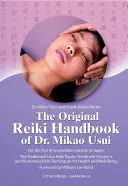
The Original Reiki Handbook of Dr. Mikao Usui
 73
73

The Original Reiki Handbook of Dr. Mikao Usui
The English translation of Dr. Mikao Usui's original handbook offers a stark, unvarnished glimpse into the genesis of Reiki. Unlike the proliferation of contemporary guides, this text presents Usui's methods with a refreshing directness, focusing intently on the practical application of hand positions and the channeling of energy. The clarity with which the original 1999 publication lays out these foundational elements is its primary strength. However, the text's brevity and reliance on the reader's prior understanding of Japanese spiritual concepts can also be a significant hurdle. The section detailing the Five Precepts, while crucial, feels somewhat detached from the purely technical healing instructions, highlighting a potential limitation in its accessibility for newcomers. Still, for dedicated practitioners seeking the source, this handbook is an indispensable, albeit challenging, artifact. It is the authentic blueprint, demanding rigorous personal study.
📝 Description
73
Published in English in 1999, this handbook presents Dr. Mikao Usui's original Reiki teachings.
This volume contains the original teachings of Dr. Mikao Usui, the founder of Reiki. First translated into English in 1999, it provides direct access to Usui's specific hand positions and healing methods. The book focuses on the practical application of Reiki for personal growth and spiritual development, bypassing later interpretations. It is a primary source for understanding the core principles and practices of this energy healing system. Serious students of energy healing, practitioners, and scholars interested in Usui's original intent will find this handbook valuable. It is also useful for those seeking to deepen their personal practice by engaging with the source material. Researchers of comparative spirituality and alternative healing modalities may also benefit from its contents.
Developed in Kyoto around 1922 by Dr. Mikao Usui, a Japanese Buddhist, Reiki emerged within a cultural context that merged traditional spiritual practices like Shinto and Buddhist meditation with emerging scientific ideas. This handbook offers a direct link to Usui's original system, which was previously transmitted through oral tradition or Japanese texts. Its 1999 English publication came decades after Reiki had become popular globally, providing a crucial resource for understanding its roots before widespread adaptations.
💡 Why Read This Book?
• Learn Usui's precise hand positions as originally documented, allowing for a direct understanding of channeling universal life force energy without later modifications. • Understand the Five Precepts as presented by Usui himself, gaining insight into the ethical framework intended to support the healing practice from its inception. • Discover the historical context of Reiki's development around 1922 in Kyoto, providing a unique perspective on its integration with early 20th-century Japanese spiritual currents.
⭐ Reader Reviews
Honest opinions from readers who have explored this book.
❓ Frequently Asked Questions
When was The Original Reiki Handbook of Dr. Mikao Usui first published in English?
The Original Reiki Handbook of Dr. Mikao Usui was first published in English on June 1, 1999, making Usui's original teachings accessible to a global audience for the first time.
What is the primary focus of Dr. Usui's original handbook?
The handbook's primary focus is on Dr. Mikao Usui's original hand positions and healing techniques for channeling universal life force energy, emphasizing direct study of his foundational methods.
Is this book suitable for complete beginners to Reiki?
While it provides the source material, the handbook is best suited for serious students or practitioners who have some foundational knowledge, as it assumes a degree of familiarity with esoteric concepts.
What role do the Five Precepts play in Usui's original teachings?
The Five Precepts are presented as integral to the practice, forming an ethical and spiritual foundation that supports the effective use of Reiki energy for personal growth and healing.
Who is Peter in relation to this publication?
Peter is credited as the translator and publisher of this English edition, bringing Dr. Usui's original work to a wider audience after its initial development in Japan.
Does this handbook explain the spiritual philosophy behind Reiki?
Yes, the handbook touches upon the spiritual philosophy by detailing Usui's specific techniques and the importance of the Five Precepts, framing Reiki as a path to personal harmony and enlightenment.
🔮 Key Themes & Symbolism
Usui's Original Hand Positions
This section details the specific hand placements developed by Dr. Mikao Usui for channeling Reiki energy. It moves beyond generalized descriptions found in later texts, offering a precise guide to where and how hands should be positioned on the body to facilitate healing. The emphasis is on the practical, systematic application of these positions, reflecting Usui's original methodology as taught in early 20th century Japan. Understanding these specific placements is key to grasping the foundational mechanics of the system.
The Five Precepts
Integral to Usui's system are the Five Precepts, a set of ethical guidelines intended to foster spiritual growth and well-being alongside physical healing. This theme explores how Usui integrated principles such as 'Do not anger,' 'Do not worry,' and 'Be grateful' into the daily practice of Reiki. These precepts are presented not as mere suggestions but as foundational components necessary for the practitioner and recipient to achieve true harmony and effectiveness in their energy work.
Universal Life Force Energy
The core concept of Reiki revolves around 'universal life force energy,' often referred to as 'Ki' in Japanese. This theme looks at how Usui understood and taught the channeling of this pervasive energy. The handbook explains that Reiki is not generated by the practitioner but is drawn through them to the recipient. It highlights the natural, innate quality of this energy and its potential to restore balance and promote healing when directed through specific techniques.
Reiki as a Path to Enlightenment
Beyond its application as a physical healing modality, Usui envisioned Reiki as a spiritual path leading to enlightenment and personal transformation. This theme examines how the handbook presents the practice as a means to cultivate inner peace, develop intuition, and achieve a deeper connection with oneself and the universe. It underscores Usui's view of Reiki as a holistic system that addresses the mind, body, and spirit concurrently.
💬 Memorable Quotes
Direct passages from the work, attributed to the author.
“Direct study of Dr. Usui's hand positions and healing techniques.”
— This statement emphasizes the handbook's purpose: to provide unadulterated access to Usui's original methods, allowing practitioners to learn directly from the source without the filter of later interpretations.
“The system is presented as a path to personal harmony and spiritual development.”
— This highlights that Usui's Reiki was intended not solely as a physical therapy but as a comprehensive spiritual discipline aimed at achieving inner balance and higher consciousness.
“Understanding the Five Precepts is integral to the practice.”
— This signifies that the ethical guidelines provided by Usui are not optional extras but fundamental components necessary for the proper and effective application of Reiki.
“Reiki channels universal life force energy.”
— This concise phrase captures the fundamental principle of Reiki: it is a method of accessing and directing the innate energy present throughout all existence for healing purposes.
“The 1999 English translation offers direct access to Usui's original intent.”
— This points to the significance of this specific publication in bridging the gap between Usui's teachings and the English-speaking world, prioritizing authenticity over subsequent modifications.
🌙 Esoteric Significance
Tradition
Reiki, as presented in Usui's original handbook, draws heavily from Japanese esoteric Buddhism and Shinto traditions. It can be seen as a modern synthesis, focusing on the practical application of universal life force energy ('Ki') for healing and spiritual development. While not strictly belonging to Western Hermetic or Kabbalistic lineages, it shares common ground with universal energy work found across many spiritual traditions, emphasizing intention, energetic flow, and ethical conduct as pillars of practice.
Symbolism
The primary 'symbolism' in Usui's original teachings, as conveyed through the handbook, lies in the precise hand positions themselves. Each placement is designed to direct the flow of 'Ki' to specific areas of the body or energy centers. While later Reiki traditions have introduced specific kanji symbols, Usui's original focus was on the tactile and energetic transfer facilitated by the hands, representing the direct, embodied connection between practitioner, recipient, and the universal life force.
Modern Relevance
Contemporary holistic health practitioners, mindfulness coaches, and energy workers frequently draw upon the principles outlined in Usui's original teachings. Schools offering advanced Reiki training often revisit the foundational hand positions and ethical precepts detailed in this handbook. Thinkers exploring the intersection of consciousness, healing, and subtle energies continue to find Usui's direct approach relevant for understanding the core mechanics of energy transfer in therapeutic contexts.
👥 Who Should Read This Book
• Dedicated Reiki practitioners seeking to reconnect with the source teachings of Dr. Mikao Usui and understand the original methodology. • Students of comparative spirituality interested in the origins of modern energy healing systems and their roots in Japanese traditions. • Therapists and healers looking to deepen their understanding of energetic principles and explore foundational techniques outside of contemporary adaptations.
📜 Historical Context
Dr. Mikao Usui developed Reiki in Kyoto, Japan, around 1922, a period of significant cultural and intellectual ferment. Japan was rapidly modernizing, absorbing Western influences while seeking to preserve its traditional spiritual and philosophical heritage. Usui's system emerged within this dynamic context, blending elements of Japanese Buddhism (particularly Tendai), Shinto practices, and traditional healing arts. It gained traction during the Taishō and early Shōwa eras, a time when interest in esoteric practices and alternative healing methods was growing. The first English translation of Usui's handbook in 1999 arrived decades after Reiki had spread globally, often through Japanese immigrants and later through Western practitioners like Hawayo Takata. This translation filled a critical need for primary source material, allowing English speakers to engage directly with Usui's foundational teachings, which had previously been filtered through multiple layers of interpretation or were only available in Japanese.
📔 Journal Prompts
Dr. Usui's original hand positions: Which placement feels most intuitive, and which requires deliberate focus?
Reflecting on the Five Precepts: How does 'Do not worry' manifest in your daily interactions?
The concept of 'universal life force energy': Where do you perceive this energy most strongly in your environment?
Usui's vision of Reiki as a path to enlightenment: What does 'personal harmony' mean to you in practice?
Consider the first English publication year, 1999: How has the understanding and practice of Reiki evolved since then?
🗂️ Glossary
Reiki
A Japanese term often translated as 'universal life force energy.' It refers to the system of natural healing developed by Dr. Mikao Usui, involving channeling this energy through specific hand placements.
Ki
The Japanese word for 'life force energy.' It is the fundamental energy that animates all living beings and permeates the universe, central to the practice of Reiki.
Hand Positions
Specific placements of the practitioner's hands on or over the recipient's body, designed to direct the flow of Reiki energy for healing and balance.
Five Precepts
A set of ethical principles articulated by Dr. Usui, intended to guide practitioners towards spiritual growth and well-being, such as 'Do not anger' and 'Be grateful.'
Usui
Dr. Mikao Usui (1865-1926), the founder of the Reiki system of natural healing, who developed his teachings in Japan in the early 20th century.
Peter
The translator and publisher of the first English edition of Dr. Usui's handbook in 1999, making the original teachings accessible to a non-Japanese audience.
Kyoto
The Japanese city where Dr. Mikao Usui is believed to have developed and first taught the Reiki system around 1922.