The origin of masonic ritual & tradition as manifested by the geometrical design and symbolism ...
 76
76

The origin of masonic ritual & tradition as manifested by the geometrical design and symbolism ...


Ophelia Vance (Mystical Literature Reviewer) — William Rowbottom's 'The Origin of Masonic Ritual & Tradition' is a cornerstone for anyone seeking to decipher the esoteric dimensions of Freemasonry. Rowbottom masterfully connects the physical language of geometry to the abstract realm of spiritual development, revealing ritual not as mere ceremony, but as a profound pedagogical tool. He elucidates how ancient symbols, embedded within Masonic architecture and practice, serve as keys to unlocking higher consciousness and understanding universal truths. This work is essential for serious students of Western esotericism and Masonic philosophy, offering a rare glimpse into the enduring power of symbolic knowledge. Its strength lies in its comprehensive yet accessible exploration of these intricate connections.
📝 Description
76
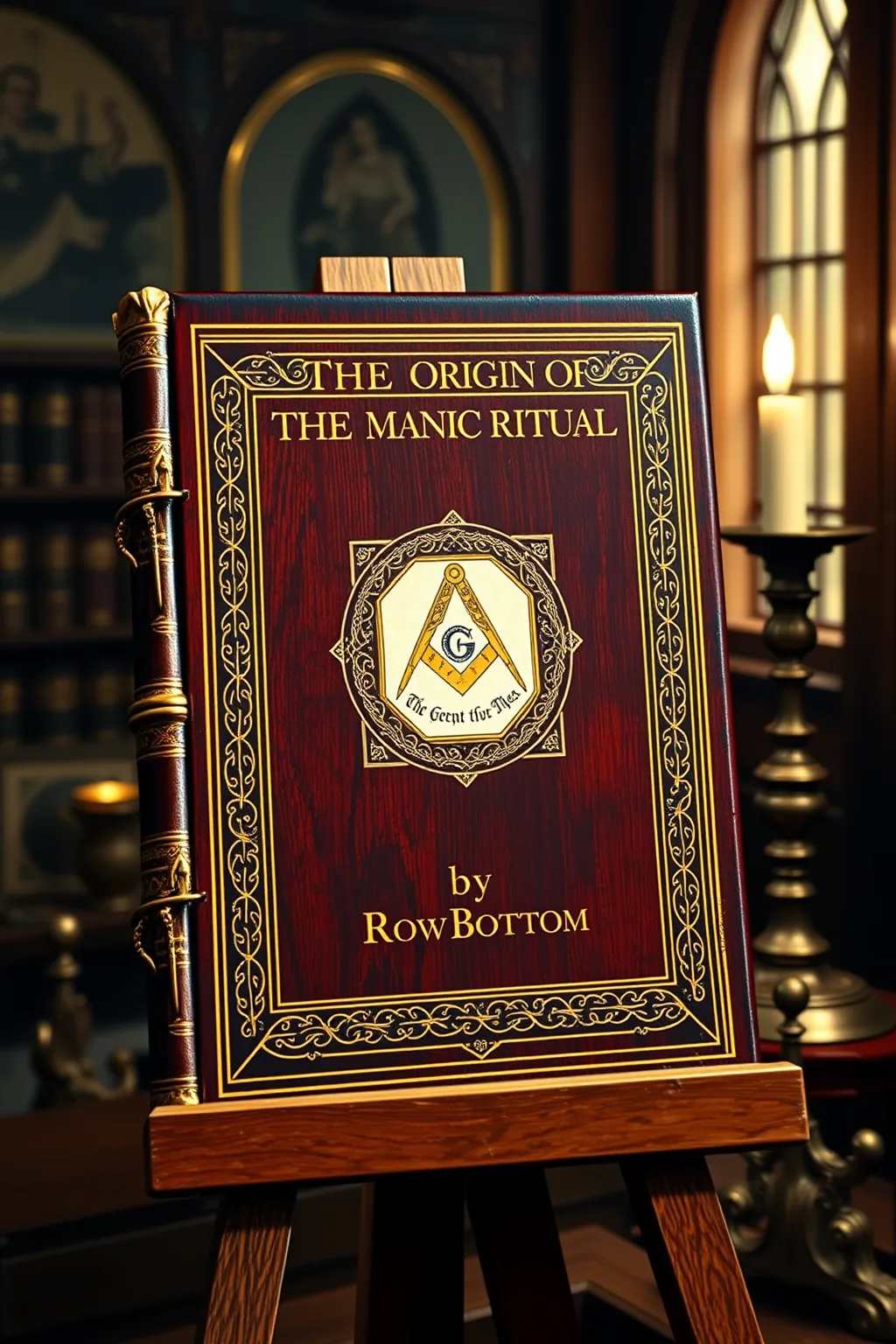
William Rowbottom's 1918 book connects Masonic ritual to geometrical design and symbolism.
This volume examines the roots of Masonic ritual and tradition, focusing on how geometry and symbolism inform its structure. Rowbottom traces the philosophical and spiritual currents that have influenced Freemasonry's practices over centuries. The book suggests that the design elements within Masonic traditions carry specific meanings related to cosmic order and personal development.
It aims to reveal the underlying principles of this fraternity, linking its symbols and geometric forms to a universal language. Readers will find an examination of how these elements can facilitate self-transformation and connect earthly existence with the divine. The work presents a case for understanding Masonic ritual as a system of coded knowledge.
Published in 1918, William Rowbottom's work sits within the tradition of Masonic scholarship that seeks to uncover deeper meanings beyond the exoteric forms of the fraternity. It aligns with esoteric interpretations prevalent in the late 19th and early 20th centuries, which often emphasized the connection between physical structures, symbolic language, and spiritual cosmology. This period saw many authors attempting to synthesize Masonic lore with Hermeticism, Kabbalah, and Neoplatonic philosophy, viewing ritual and symbolism as keys to understanding universal laws and human potential.
💡 Why Read This Book?
Embark on a profound journey into the esoteric heart of Freemasonry. This book unlocks the hidden meanings behind geometrical designs and symbolic language that form the bedrock of Masonic tradition. Ideal for seekers of ancient wisdom, occult scholars, and practitioners wishing to deepen their understanding of ritual's metaphysical significance. Discover the universal principles woven into this venerable fraternity.
⭐ Reader Reviews
Honest opinions from readers who have explored this book.
❓ Frequently Asked Questions
What is the primary focus of this book?
The book primarily focuses on the origin and manifestation of Masonic ritual and tradition, exploring how geometrical design and symbolism are integral to its esoteric meaning and spiritual development.
Who is William Rowbottom?
William Rowbottom was an author and scholar deeply interested in Freemasonry and its esoteric traditions, dedicating his work to uncovering the hidden philosophical and symbolic layers within its rituals.
What kind of symbolism is discussed?
The book delves into symbolic interpretations rooted in geometry, architecture, and ancient philosophical concepts, presenting them as keys to understanding Masonic teachings and their connection to universal principles.
Is this book suitable for beginners in Freemasonry?
While comprehensive, the book's depth may be best appreciated by those with some foundational knowledge or a strong curiosity for esoteric studies. Beginners might find it a rich, albeit challenging, introduction to deeper concepts.
What is the historical context of this work?
Digitized from Oxford University's library, this work reflects scholarly interest in Freemasonry's historical and philosophical roots, contributing to the understanding of esoteric traditions during its publication era.
🔮 Key Themes & Symbolism
Geometric Blueprint of Wisdom
This theme explores how sacred geometry serves as the foundational language of Masonic tradition, translating abstract philosophical concepts into tangible, spatial forms. Rowbottom posits that the precise arrangement of lines, angles, and proportions within Masonic architecture and ritualistic practices are not arbitrary but deliberate expressions of cosmic order and universal laws. Understanding this geometric blueprint is presented as a pathway to comprehending the underlying spiritual and metaphysical truths that Freemasonry seeks to impart, offering a visual and structural key to unlocking deeper esoteric knowledge and the principles of creation.
The Alchemy of Symbolism
Rowbottom studies the body of symbols employed within Masonic ritual, treating them as potent conduits of transformative energy and hidden wisdom. Each symbol is examined not merely for its literal representation but for its allegorical significance, acting as a catalyst for personal growth and spiritual enlightenment. The book elucidates how these symbols function as mnemonic devices and meditative tools, guiding the initiate through stages of inner purification and the 'Great Work' of self-mastery. It reveals symbolism as a profound form of alchemical process, where mundane elements are transmuted into spiritual understanding.
Tradition as Living Architecture
This central theme posits that Masonic tradition is not a static relic but a living, evolving architecture of knowledge, meticulously constructed and maintained through ritual and symbolism. Rowbottom argues that the enduring power of Freemasonry lies in its ability to transmit ancient wisdom across generations, using ritual as the mortar and symbolism as the structural beams. The book emphasizes the dynamic interplay between historical roots and present practice, illustrating how tradition provides a framework for continuous exploration and personal revelation, ensuring the perpetual relevance of its teachings for those who engage with them earnestly.
💬 Memorable Quotes
Direct passages from the work, attributed to the author.
“Ritual breathes life into form, and symbol illuminates the path.”
— It highlights the dynamic relationship between ceremony (ritual) and its underlying meaning (symbolism), emphasizing how they work together to guide spiritual understanding and awakening.
“The Square and Compasses are but tools to measure the soul's true dimensions.”
— This interpretation elevates the iconic Masonic symbols from mere implements to profound instruments for introspection and self-discovery, assessing spiritual integrity and moral character.
“Within the temple of the mind, every design has its sacred purpose.”
— It underscores the internal, mental nature of esoteric exploration, suggesting that one's inner world is a sacred space where symbolic understanding and spiritual growth unfold.
“Tradition is the echo of eternal truths in the halls of time.”
— This poetic phrase defines tradition as the enduring resonance of timeless wisdom, passed down through history, connecting present seekers to ancient insights.
💡 Key Ideas
Editorial paraphrase of the work's core concepts — not direct quotes.
Geometry is the alphabet of the divine.
This quote suggests that the fundamental principles of geometry are the basic building blocks through which the divine mind expresses itself and communicates universal truths.
🌙 Esoteric Significance
Tradition
This work is deeply rooted in the Western Esoteric Tradition, drawing parallels with Hermeticism, Pythagorean philosophy, and Neoplatonism. It positions Masonic ritual and symbolism as a continuation and manifestation of ancient systems of thought that seek to understand the cosmos and humanity's place within it through symbolic language and sacred geometry.
Symbolism
The core symbolism explored revolves around geometrical figures (e.g., the square, compasses, triangle) and architectural elements, which are interpreted as allegorical representations of moral virtues, cosmic order, and stages of spiritual development. These symbols are presented as keys to unlocking hidden knowledge and facilitating inner transformation.
Modern Relevance
In an age often perceived as disconnected from ancient wisdom, Rowbottom's work offers a bridge to understanding enduring truths. The book's exploration of symbolism and geometry as universal languages provides a framework for seeking meaning, order, and personal growth, proving that the principles embedded in ancient traditions remain relevant for contemporary spiritual and philosophical inquiry.
👥 Who Should Read This Book
This book is an indispensable resource for dedicated students of Western Esotericism, Masonic scholars seeking a deeper philosophical understanding, and practitioners of contemplative or ritualistic traditions. It will resonate with seekers of hidden knowledge, individuals interested in the intersection of spirituality and geometry, and those who appreciate a rigorous, symbolic approach to understanding ancient wisdom. Beginners with a strong curiosity for the metaphysical aspects of Freemasonry will find it a challenging yet rewarding exploration.
📜 Historical Context
This work emerges from a period of fervent academic and public interest in the history and philosophy of secret societies, particularly Freemasonry, which experienced significant scholarly attention in the late 19th and early 20th centuries. As an esoteric tradition, Freemasonry's rituals and symbolism were often interpreted through the lens of Hermeticism, Kabbalah, and Neoplatonism, reflecting a broader cultural fascination with ancient mysteries and their potential relevance to modern life. Rowbottom's book contributes to this discourse by seeking to uncover the rational, geometrical, and symbolic foundations of Masonic practice, aligning with a scholarly endeavor to clarify and contextualize these ancient operative and speculative traditions within a framework of universal philosophical principles.
📔 Journal Prompts
Reflect on a symbol in your own life that holds deep personal meaning. How does its form or function convey its significance?
Consider the concept of sacred geometry. How might the 'ideal' shapes or proportions influence your perception of order and beauty in the world?
In what ways can ritual, even in everyday life, serve as a framework for personal growth and deeper understanding?
If tradition is an 'echo of eternal truths,' what ancient truths do you feel are still resonating today?
Explore the idea of the 'temple of the mind.' What elements do you construct within your inner space to foster wisdom and self-awareness?
🗂️ Glossary
Esoteric
Relating to or accessible only by a select group of people initiated into special knowledge or understanding; pertaining to inner, mystical, or spiritual truths.
Ritual
A prescribed form or set of ceremonies, often of a religious or symbolic nature, performed in a specific order to achieve a spiritual or metaphysical purpose.
Symbolism
The use of symbols to represent ideas, qualities, or abstract concepts; a system of symbols that conveys deeper meanings beyond their literal interpretation.
Sacred Geometry
The study of geometric shapes, proportions, and patterns found in nature and considered to have divine or mystical significance, often used in architecture and spiritual traditions.
Allegory
A story, poem, or picture that can be interpreted to reveal a hidden meaning, typically a moral or political one; symbolic representation.
This book appears in 2 collections
🔮 Readers Also Liked
Browse all →






From the “Secret Societies” Collection
View all →



More Free Freemasonry & Secret Societies Books
View all →