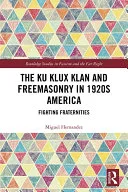
The Ku Klux Klan and Freemasonry in 1920s America
 77
77

The Ku Klux Klan and Freemasonry in 1920s America
Miguel Hernandez’s "The Ku Klux Klan and Freemasonry in 1920s America" offers a sober, if sometimes dry, exploration of a controversial historical nexus. The book’s strength lies in its meticulous examination of organizational structures and membership trends, particularly how the Second Klan, in its bid for mass appeal, may have mirrored or co-opted aspects of established fraternalism. Hernandez avoids easy condemnation, instead focusing on the mechanics of influence and the shared language of brotherhood that could bind such disparate groups. A notable limitation is the occasional dense prose, which can obscure the narrative thrust. The section detailing the Klan's adoption of Masonic-like initiation rituals provides a particularly stark illustration of the book's central thesis. While not a comfortable read, it is a necessary one for understanding the period.
📝 Description
77
Miguel Hernandez's 2023 book examines the surprising overlap between the 1920s Ku Klux Klan and Freemasonry.
Miguel Hernandez's study investigates the complex relationship between the Second Ku Klux Klan and Freemasonry in 1920s America. The book details how these two seemingly different organizations shared structural similarities and ideological commonalities during a period of significant social upheaval. Hernandez analyzes the Klan's 'Invisible Empire' concept, comparing its hierarchical structure and recruitment methods to those found in fraternal orders like Freemasonry.
The work is intended for researchers interested in American fraternalism, early 20th-century political history, and social movements. It appeals to those who study secret societies, large membership organizations, and the ways cultural anxieties shape group behavior. Readers looking for a dispassionate historical analysis will find this book valuable.
The 1920s were a time of rising nativism and widespread social change. The Second Klan gained national influence, often using language that invoked traditional American values. Freemasonry was a prominent institution, and its internal workings and public image were affected by the era's broader cultural trends.
This book fits within the study of Western esotericism by examining how organizational structures and symbolic language, often associated with fraternal orders, can be adopted and adapted by groups with overtly political or social agendas. It looks at the mechanics of group cohesion and identity formation, which are common concerns in esoteric traditions. The analysis of the Klan's 'Invisible Empire' and its parallels with Masonic ritual offers insight into the ways secret societies function and project influence, touching upon themes of hidden power and collective belief.
💡 Why Read This Book?
• Gain an understanding of the organizational strategies and membership recruitment tactics employed by the Second Ku Klux Klan, particularly as detailed in the book's analysis of their structure. • Learn about the historical overlaps and potential influences between Freemasonry and the Klan during the 1920s, a period of significant social upheaval. • Discover how fraternal organizations utilized shared symbolism and ritualistic practices to build community and exert influence, as explored in the book's examination of their public roles.
⭐ Reader Reviews
Honest opinions from readers who have explored this book.
❓ Frequently Asked Questions
What is the primary focus of Miguel Hernandez's book on the KKK and Freemasonry?
The book primarily investigates the organizational similarities, membership overlap, and potential ideological connections between the Second Ku Klux Klan and Freemasonry in the United States during the 1920s.
Does the book argue that Freemasonry directly controlled the KKK?
No, the work explores the *nature of fraternities* and the *overlap* between the groups, rather than asserting direct control. It examines how shared fraternal structures might have facilitated interactions or provided models.
What historical period does the book cover in detail?
The book focuses specifically on the 1920s in America, a period when the Second Ku Klux Klan emerged as a powerful mass movement influencing politics and culture.
What kind of evidence does Hernandez use in his study?
Hernandez draws on various primary sources, including organizational documents and historical accounts, to analyze the characteristics and interactions of these fraternal groups.
Is this book suitable for a general audience or academic researchers?
While accessible, the book is best suited for academic researchers and serious students of history, sociology, and fraternal organizations due to its detailed analytical approach.
What does the 'Second Invisible Empire' refer to in the book?
The 'Second Invisible Empire' is a term used to describe the Second Ku Klux Klan, highlighting its development into a large-scale movement with national influence in the 1920s.
🔮 Key Themes & Symbolism
Fraternal Structures and Ritual
The work scrutinizes the commonalities in organizational architecture and ritualistic practices between the Second Ku Klux Klan and Freemasonry. Hernandez analyzes how both groups, despite their vastly different public images and aims, employed hierarchical structures, initiation ceremonies, and symbolic language to foster a sense of brotherhood and exclusivity. This exploration examines how these shared methods of social cohesion and identity formation could exist within ostensibly separate, yet culturally proximate, organizations during the early 20th century.
Mass Movement Mechanics
A significant theme is the Second Klan's transformation into a mass movement with millions of members. The book examines the strategies employed to achieve this scale, contrasting it with the more established, albeit widespread, presence of Freemasonry. It considers how elements of popular appeal, civic rhetoric, and social anxiety were harnessed by the Klan, and whether these tactics bore any resemblance to the recruitment or social functions of established fraternities.
Cultural Anxiety and Identity
The study implicitly addresses the cultural anxieties of 1920s America, a period of rapid industrialization, immigration, and social change. It explores how organizations like the Klan, and to a lesser extent, established fraternities, served as vehicles for articulating and managing societal fears and desires for belonging. The work investigates the construction of group identity and the mechanisms by which these organizations sought to define themselves against perceived 'outsiders'.
The 'Invisible Empire' Concept
Hernandez unpacks the concept of the 'Invisible Empire' as a self-created mythology and organizational framework for the Second Klan. This theme examines how the Klan presented itself as a hidden, yet powerful, force shaping the nation, drawing on a language of secrecy and tradition. The work explores the rhetorical power of such designations and their relationship to the established, though often less overtly political, 'brotherhoods' of the era.
💬 Memorable Quotes
Direct passages from the work, attributed to the author.
“The Second Invisible Empire developed into a mass movement with millions of members.”
— This highlights the sheer scale and societal penetration of the Klan in the 1920s, a key factor in its historical significance and influence.
“Emerging first as a brotherhood dedicated to paying tribute to the original Southern organization.”
— This points to the Klan's deliberate invocation of historical precedent and a sense of lineage, a common tactic in the formation of groups seeking legitimacy.
“This study explores the nature of fraternities, especially the overlap between the Klan and Freemasonry.”
— This is the core investigative thrust of the book, signaling its focus on comparative organizational analysis and the less-examined connections between secret societies.
“The Second Ku Klux Klan’s success in the 1920s remains one of the order’s most enduring mysteries.”
— This framing emphasizes the enigmatic nature of the Klan's rapid rise and widespread acceptance, posing a central question the book aims to address through its analysis.
“drawing on many pre”
— This fragment suggests the author's reliance on primary source materials to construct the historical narrative and support the analysis of fraternal group dynamics.
🌙 Esoteric Significance
Tradition
While not explicitly aligned with a single esoteric lineage like Hermeticism or Gnosticism, Hernandez's work touches upon themes common in studies of Western Esotericism, particularly those concerning secret societies and hidden knowledge. The exploration of fraternal orders, their rituals, and their societal roles appeals to traditions that often operate outside mainstream religious or philosophical frameworks. The study's focus on organizational secrecy and symbolic language invites comparison with groups that utilize such methods to transmit teachings or build community.
Symbolism
The book implicitly engages with symbolism through its examination of fraternal practices. While specific symbols aren't detailed, the very nature of organizations like the Klan and Freemasonry relies on a shared visual and ritualistic language. Concepts such as the 'Invisible Empire' itself function as a potent, albeit sinister, symbolic construct representing hidden power and national destiny. The analysis of their structures and rituals suggests an underlying symbolic order designed to create identity and enforce group cohesion.
Modern Relevance
Contemporary scholarship on social movements, organizational sociology, and the history of American extremism continues to draw on detailed analyses of groups like the Second Klan. Thinkers interested in the sociology of secret societies, the mechanics of radicalization, and the historical roots of white supremacy find value in Hernandez's methodical approach. The study provides a crucial historical baseline for understanding how fraternal structures can be adapted for both benign and malevolent social and political ends.
👥 Who Should Read This Book
• Researchers of American fraternalism and secret societies: Gain access to a detailed analysis of organizational structures and potential overlaps between the Klan and Freemasonry in the 1920s. • Students of early 20th-century American history: Understand the social and political context that allowed the Second Klan to flourish as a mass movement. • Scholars of sociology and group dynamics: Examine case studies of how organizations build membership, utilize ritual, and exert influence within society.
📜 Historical Context
The 1920s in America were a period of intense social flux, characterized by burgeoning nativism, the Prohibition era, and a widespread cultural debate over tradition versus modernity. It was within this charged atmosphere that the Second Ku Klux Klan experienced its meteoric rise, transforming from a small fraternal group into a national organization with millions of members and significant political leverage. This era also saw Freemasonry as a deeply entrenched institution, a respected pillar of respectable male society. Miguel Hernandez’s work situates itself by examining the potential intersections and structural parallels between these two distinct, yet culturally coexistent, fraternal orders. The study implicitly engages with the broader intellectual currents of the time, including sociological analyses of group behavior and the growing academic interest in secret societies. While direct engagement with contemporaries like the sociologist E.A. Ross or historian Frederick Lewis Allen might be implicit, the book focuses on the internal dynamics and comparative structures rather than explicitly engaging in a historiographical debate. The reception of such a study in its time would likely have been met with caution, given the extreme sensitivity surrounding the KKK.
📔 Journal Prompts
The concept of the 'Invisible Empire' and its rhetorical function.
Parallels between Klan and Masonic organizational structures.
The role of ritual and symbolism in fraternal group cohesion.
Strategies for mass mobilization employed by the Second Klan.
The tension between overt societal roles and hidden organizational practices.
🗂️ Glossary
Second Ku Klux Klan
The revived Ku Klux Klan that emerged in 1915 and achieved widespread national influence and membership during the 1920s, distinct from the post-Civil War Reconstruction-era Klan.
Freemasonry
A fraternal organization with origins tracing back to stonemason guilds, known for its system of morality, allegory, and symbolism, and its structured degrees of membership.
Fraternity
A social organization, typically for men, with communal living arrangements, emphasizing shared values, rituals, and mutual support among members.
Nativism
The policy or belief that indigenous or established inhabitants of a country should be favored over immigrants, often accompanied by hostility towards foreigners.
Reconstruction period
The era in American history following the Civil War (roughly 1865-1877) focused on rebuilding the South and readmitting Confederate states to the Union.
The nature of fraternities
This refers to the fundamental characteristics, structures, principles, and social functions common to fraternal organizations as a class of social groups.
Overlap
In this context, it refers to the areas of similarity, shared membership, or mutual influence between different organizations, such as the Klan and Freemasonry.