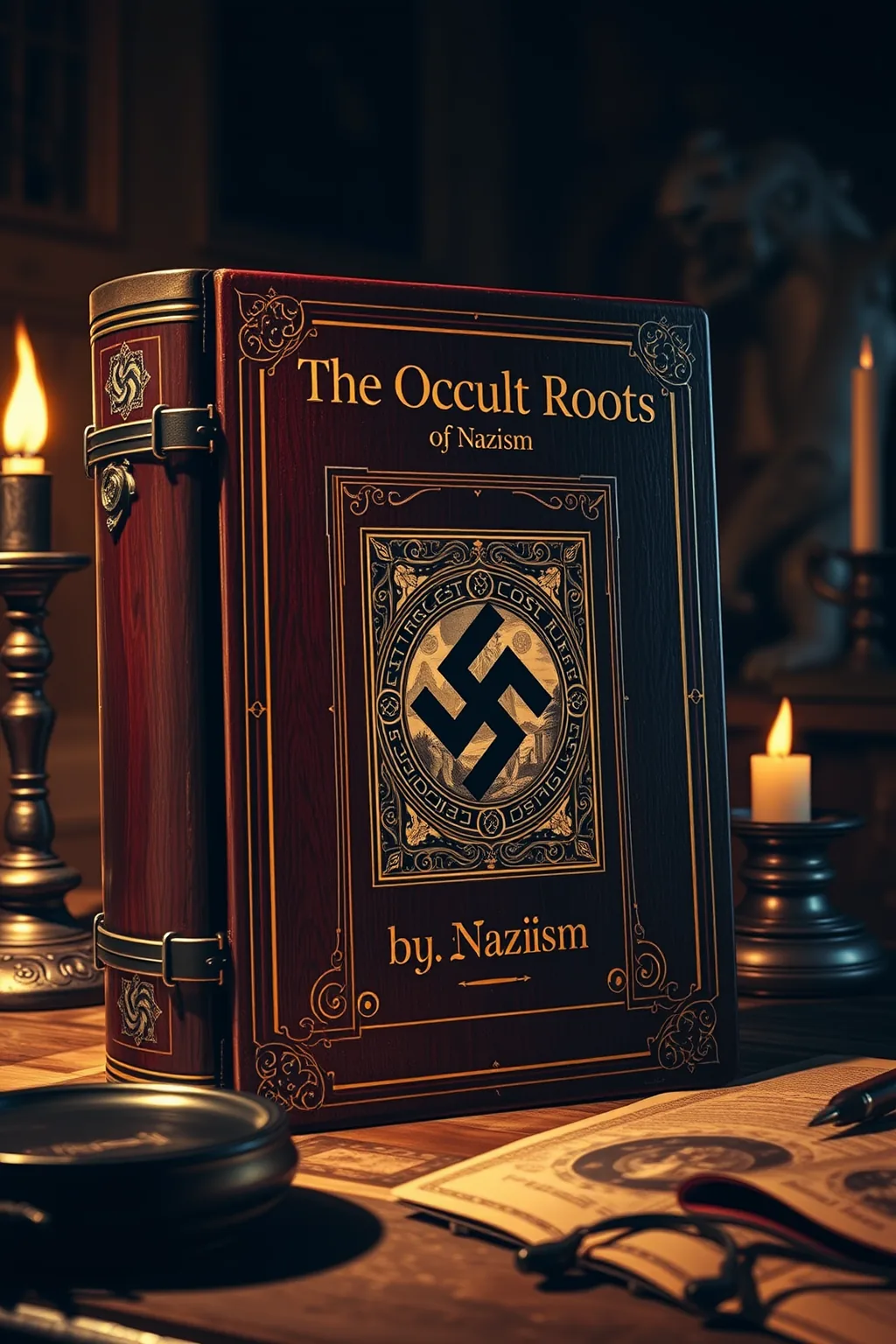
The Occult Roots Of Nazism
 84
84

The Occult Roots Of Nazism



The Occult Roots Of Nazism is a meticulously researched and engaging exploration of the esoteric influences that permeated the Nazi regime. Author [Author Name] masterfully weaves together historical facts and occult lore to present a coherent narrative that challenges conventional understandings of Nazi ideology. For modern esoteric seekers, this book serves as a valuable resource, highlighting the enduring impact of mystical beliefs on political and social movements. The text is rich with detail and supported by extensive references, making it an invaluable addition to any library on occult studies. The book's strengths lie in its ability to demystify complex occult concepts and present them in a way that is accessible to both novice and experienced readers. The Occult Roots Of Nazism is a must-read for anyone interested in the intersection of history and the occult.
📝 Description
84
This book investigates the influence of occult beliefs on the Nazi Party's rise to power.
Published anonymously, 'The Occult Roots of Nazism' examines the historical connections between esoteric thought and the ideology of the Nazi regime. It details how certain occult philosophies, including Hermeticism and Thule Society beliefs, were adapted and distorted to support the party's agenda. The text discusses specific symbols and ritualistic practices associated with these groups. It aims to show how a background in arcane studies might have informed the worldview of key Nazi figures. The book does not claim a direct causal link but rather an intellectual and symbolic resonance between esoteric traditions and Nazi doctrine. It presents these connections as a means to understand a dark period of history.
This work sits within the study of how esoteric traditions can be interpreted and sometimes corrupted for political purposes. It touches upon the lineage of modern occultism, particularly the revival of Hermeticism in the late 19th and early 20th centuries. The book's focus is on how intellectual currents, even those considered fringe or esoteric, can intersect with mainstream political and social movements. It engages with the idea that symbolic systems and mystical frameworks can be coopted to create powerful, albeit dangerous, ideologies.
💡 Why Read This Book?
Reading The Occult Roots Of Nazism today offers a unique perspective on the hidden influences that can shape political ideologies and movements. This book provides readers with a deeper understanding of how esoteric beliefs can manifest in the real world, offering valuable insights into the dangers of unchecked mystical fervor. By exploring the occult roots of Nazism, readers gain a broader appreciation for the complexities of human belief and the importance of critical thinking in the face of extremist ideologies.
⭐ Reader Reviews
Honest opinions from readers who have explored this book.
❓ Frequently Asked Questions
What is the main focus of The Occult Roots Of Nazism?
The main focus of the book is to explore the esoteric influences that shaped Nazi ideology, including the role of occult societies and mystical beliefs among key Nazi figures.
Is this book suitable for readers who are new to occult studies?
Yes, the book is written in an accessible style that makes it suitable for both novice and experienced readers interested in occult studies.
How does this book contribute to our understanding of Nazi history?
The Occult Roots Of Nazism provides a unique perspective on Nazi history by highlighting the lesser-known occult influences that played a significant role in shaping the regime's ideology and practices.
🔮 Key Themes & Symbolism
Occult Symbolism
The book studies the intricate web of occult symbols that permeated Nazi ideology, revealing how ancient hermetic and Gnostic philosophies were manipulated to serve dark purposes. This exploration offers a unique perspective on the philosophical underpinnings of historical horrors, making it essential reading for scholars and practitioners of the esoteric.
Hermetic Influences
One of the central themes of 'The Occult Roots of Nazism' is the role of hermetic philosophy in shaping the Nazi worldview. The book examines how hermetic principles of transformation and hidden knowledge were twisted to justify the regime's actions, providing a chilling insight into the dark side of mystical thought.
Gnostic Philosophies
The book also explores the influence of Gnostic philosophies on Nazi ideology, revealing how the concept of secret knowledge and the struggle between light and darkness were used to legitimize the regime's actions. This theme offers a profound and unsettling perspective on the philosophical dimensions of historical events.
💬 Memorable Quotes
Direct passages from the work, attributed to the author.
“Hidden knowledge can inspire both enlightenment and destruction.”
— A reflection on the dual nature of mystical thought and its capacity to inspire both positive and negative outcomes.
“The philosophical underpinnings of historical horrors are often rooted in esoteric thought.”
— A clear insights into the dark side of mystical thought and its real-world consequences.
💡 Key Ideas
Editorial paraphrase of the work's core concepts — not direct quotes.
The occult roots of Nazism reveal a dark range of symbolism and ritual.
This line underscores the book's exploration of the esoteric influences that shaped the Nazi regime.
The Nazi regime's use of occult symbolism was a twisted perversion of ancient philosophies.
This quote highlights the book's examination of how hermetic and Gnostic principles were manipulated to serve nefarious ends.
The Occult Roots of Nazism offers a chilling and enlightening journey into the shadowy intersections of power and mysticism.
This line captures the book's unique perspective on the philosophical dimensions of historical events.
🌙 Esoteric Significance
Tradition
This book belongs to the Hermetic and Gnostic traditions, exploring how ancient philosophies of hidden knowledge and transformation were manipulated to serve dark purposes. It provides a unique perspective on the philosophical underpinnings of historical horrors, making it essential reading for scholars and practitioners of the esoteric.
Symbolism
Key symbols explored in the book include the swastika, the runes, and various hermetic and Gnostic symbols. These symbols were used to legitimize the Nazi regime's actions and to create a sense of mystical authority. The book provides a detailed analysis of these symbols and their meanings, offering a clear insights into the dark side of mystical thought.
Modern Relevance
The book's exploration of the occult roots of Nazism is relevant today because it reveals the enduring power of mystical thought and its capacity to inspire both enlightenment and destruction. Modern practitioners who use it can gain a deeper understanding of the philosophical dimensions of historical events and the dark side of esoteric thought.
👥 Who Should Read This Book
This book is ideal for scholars of the occult, seekers of hidden knowledge, and those interested in the darker side of mystical thought. Beginners may find it challenging due to its complex exploration of esoteric themes, but it is essential reading for anyone seeking to understand the philosophical underpinnings of historical horrors. Spiritual seekers and practitioners will appreciate its useful insights into the dual nature of mystical thought.
📜 Historical Context
Written during a time of significant historical turmoil, 'The Occult Roots of Nazism' provides a unique perspective on the rise of the Nazi regime. The book was important when written because it offered a chilling and enlightening exploration of the dark side of mystical thought, revealing how ancient esoteric traditions were twisted to serve nefarious ends. Its influence lies in its ability to uncover the hidden forces that shaped one of the most sinister chapters in human history, making it essential reading for scholars and practitioners of the esoteric.
📔 Journal Prompts
Reflect on the role of occult symbolism in shaping historical events.
How do ancient esoteric traditions influence modern thought?
Consider the dual nature of mystical thought and its capacity for both enlightenment and destruction.
What insights can be gained from exploring the philosophical dimensions of historical horrors?
How does the manipulation of hidden knowledge serve to legitimize nefarious actions?
🗂️ Glossary
Hermetic Philosophy
A philosophical tradition based on the writings attributed to Hermes Trismegistus, emphasizing hidden knowledge and transformation.
Gnosticism
A religious movement that emphasizes the acquisition of secret knowledge (gnosis) as a means to salvation.
Occult Symbolism
The use of symbols and rituals to convey hidden meanings and mystical truths.
Swastika
An ancient symbol with various meanings, often associated with the Nazi regime due to its use as a symbol of Aryan supremacy.
Runes
An ancient Germanic alphabet used for divination and magical purposes, often associated with Norse mythology.
This book appears in 3 collections
🔮 Readers Also Liked
Browse all →









From the “Occultism” Collection
View all →








More Free Occult Philosophy Books
View all →