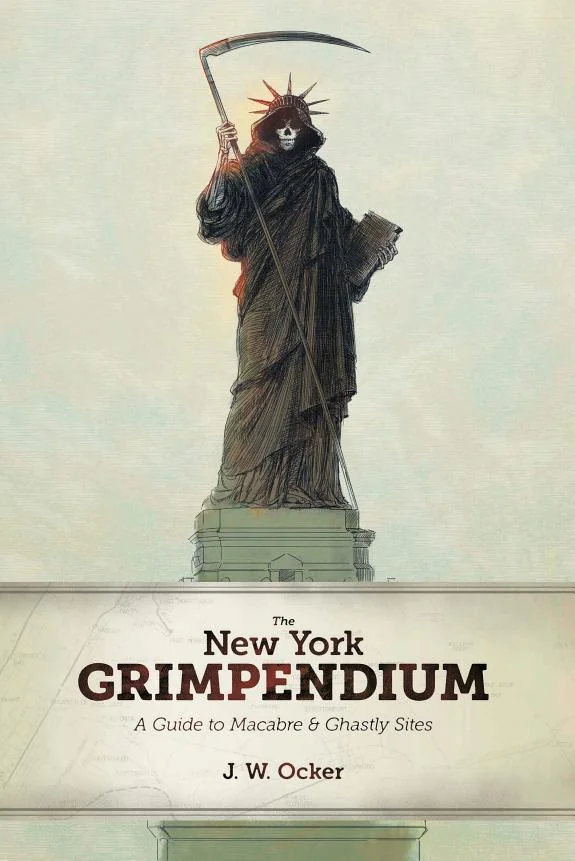
The New York Grimpendium: A Guide to Macabre and Ghastly Sites in New York State
 76
76

The New York Grimpendium: A Guide to Macabre and Ghastly Sites in New York State
J. W. Ocker’s *The New York Grimpendium* offers a compellingly off-kilter exploration of the Empire State. It’s a book that understands the allure of the morbid, presenting a meticulously documented, yet deeply personal, journey through sites most would prefer to forget. Ocker’s strength lies in his palpable enthusiasm for the grim, turning potentially grim facts into engaging narratives. His firsthand accounts, such as his visit to the abandoned Willard Asylum, pulse with an authentic sense of discovery and unease. However, the sheer volume of sites can occasionally lead to a feeling of breadth over depth; some entries, while fascinating, feel like brief sketches. A specific passage detailing the history of the Lizzie Borden House (though located in Massachusetts, its inclusion hints at the broader regional interest Ocker cultivates) showcases his knack for weaving historical fact with atmospheric description. Ultimately, *The New York Grimpendium* is an indispensable guide for anyone seeking the darker, more curious corners of New York State.
📝 Description
76
J. W. Ocker published The New York Grimpendium in 2012, cataloging New York's macabre sites.
This book is not a standard travel guide; it details forgotten, morbid, and unsettling locations across New York State. The author, J. W. Ocker, avoids typical tourist destinations to focus on places with dark histories, local folklore, and genuinely eerie reputations. The sites include abandoned asylums, infamous murder locations, unusual cemeteries, and historically significant death scenes, mapping a hidden geography of the macabre.
The Grimpendium serves as both a practical manual for those willing to visit these spots and a historical record of darker American narratives. It appeals to readers interested in true crime, less-celebrated historical events, and tales of the spectral. The book combines thorough research with the author's personal experiences, appealing to those who enjoy uncovering obscured stories beneath the surface of well-known areas.
Published in 2012, The New York Grimpendium taps into a renewed interest in dark tourism and paranormal investigation, amplified by the internet's accessibility to obscure information. Ocker's method, emphasizing firsthand, on-site investigation, provides a more personal and grounded perspective compared to purely online compilations or academic historical texts. The book aligns with a cultural inclination to examine the fringes of history and folklore, offering a subjective encounter with sites that hold a sense of the uncanny or the spectral.
💡 Why Read This Book?
• You will learn about the specific history and dark folklore surrounding forgotten locations like the abandoned Willard Asylum, gaining a deeper appreciation for the often-overlooked grim narratives embedded in New York’s landscape. • You will discover how firsthand, boots-on-the-ground exploration, as detailed in Ocker's accounts, can reveal layers of history and atmosphere absent in purely academic or online research. • You will encounter detailed guidance on navigating sites associated with events like the 1911 Triangle Shirtwaist Factory fire, understanding the practical and historical considerations for visiting such historically significant, somber locations.
⭐ Reader Reviews
Honest opinions from readers who have explored this book.
❓ Frequently Asked Questions
What kind of macabre sites does J. W. Ocker cover in The New York Grimpendium?
The book covers a wide array of macabre locations, including abandoned asylums like Willard Asylum, infamous murder sites, historically significant death locations, and unsettling cemeteries across New York State.
Is The New York Grimpendium a typical tourist guide?
No, it is not. It focuses specifically on sites of dark history and folklore, offering firsthand accounts and historical context rather than typical tourist attractions.
What is the primary focus of J. W. Ocker's research in this book?
Ocker's primary focus is on firsthand exploration and documenting the personal experience of visiting macabre sites, blending historical research with his own narrative.
When was The New York Grimpendium first published?
The book was first published in October 2012, tapping into a growing interest in dark tourism and historical oddities.
Does the book include practical advice for visiting these sites?
Yes, as a guidebook, it provides practical information and context for those interested in visiting the described locations, often with a focus on historical significance.
What makes this book different from other guides to New York?
Its unique selling proposition is its exclusive focus on the macabre and ghastly, drawing on extensive personal research and firsthand accounts of lesser-known, unsettling places.
🔮 Key Themes & Symbolism
The Geography of Grim
This theme explores how specific locations in New York State become imbued with tales of death, tragedy, and the supernatural. Ocker meticulously maps these sites, demonstrating that the state's history is not solely one of progress and prosperity but also of violence, despair, and unexplained phenomena. He details places like the abandoned Willard Asylum, not just as derelict buildings, but as repositories of human suffering and spectral echoes, suggesting that geography itself can hold a dark memory. The book treats these locations as characters in a larger narrative of American dread.
Firsthand Encounter with the Macabre
Ocker emphasizes the importance of personal experience in understanding these grim sites. His own journeys and documented encounters form the backbone of the book, moving beyond dry historical accounts. This theme highlights the emotional and psychological impact of visiting places associated with death and horror, suggesting that direct engagement with these locations offers a unique form of historical and existential exploration. It’s about feeling the chill in the air, noticing the decay, and contemplating the events that transpired, making the past tangibly present.
Folklore and Historical Memory
The book examines how stories, legends, and folklore attach themselves to physical places, shaping their perceived character and historical significance. Ocker investigates the origins of these tales, distinguishing between documented fact and embellished myth surrounding events like the 1911 Triangle Shirtwaist Factory fire or the lore surrounding certain cemeteries. This theme explores how collective memory, often fueled by the macabre, creates a unique cultural landscape, where spectral accounts and chilling anecdotes become as important as official historical records in understanding a site's legacy.
The Allure of Dark Tourism
This theme addresses the growing interest in visiting sites associated with death and disaster. Ocker caters to this niche by providing a curated list of destinations, framed within the context of historical curiosity and a fascination with the darker aspects of human experience. He implicitly asks why people are drawn to such places, suggesting it's a way to confront mortality, explore the edges of human experience, and connect with historical events on a visceral level. The book acts as an invitation to explore these less-traveled, often unsettling, paths.
💬 Memorable Quotes
Direct passages from the work, attributed to the author.
“This is not a guide for the faint of heart or the easily spooked.”
— This statement directly addresses the reader, setting an immediate expectation for the book's content. It signals that the material will be unsettling and requires a certain constitution, preparing the audience for the grim nature of the sites explored.
“The stories linger long after the buildings crumble.”
— This interpretation highlights the enduring power of narratives associated with places of tragedy. It suggests that even as physical structures decay, the historical events and folklore connected to them retain their potency and influence.
“The true history often lies in the places we'd rather forget.”
— This interpretation emphasizes the book's thesis: that significant historical truths and compelling stories are frequently found in sites associated with death, disaster, or unpleasant events, areas often avoided in mainstream historical discourse.
“I travel so you don't have to, or perhaps, so you know what to expect.”
— This conveys the dual purpose of the book: to serve as a reference for those who wish to visit these sites and to provide a vicarious experience for readers who are curious but may not undertake the journey themselves.
💡 Key Ideas
Editorial paraphrase of the work's core concepts — not direct quotes.
Every town has its secrets; I just look for the ones buried deepest.
This quote captures Ocker's investigative approach. It frames his work as an excavation of hidden histories and forgotten narratives, particularly those that are morbid or unsettling, suggesting a deliberate search for the darker, less-advertised aspects of local lore.
🌙 Esoteric Significance
Tradition
While not explicitly aligning with a single esoteric tradition, *The New York Grimpendium* taps into the Western esoteric interest in liminal spaces, hauntings, and the energetic residue of significant human events. It shares common ground with psychogeography and certain branches of folklore studies that explore the 'genius loci' – the spirit of place – particularly when that spirit is tied to tragedy or death. It departs from more structured magical or divinatory systems by focusing on empirical (though subjective) documentation of locations rather than ritualistic or symbolic interpretation.
Symbolism
The primary symbolism revolves around decay and abandonment, representing the physical manifestation of forgotten histories and societal neglect. Crumbling architecture, overgrown cemeteries, and derelict institutions like the Willard Asylum serve as potent symbols of mortality, the passage of time, and the spectral presence of past inhabitants. The act of visiting these sites themselves becomes a symbolic engagement with confronting death, acknowledging tragedy, and seeking out the 'unseen' layers of reality often obscured by modern life.
Modern Relevance
Contemporary interest in psychogeography, dark tourism, and the exploration of haunted or historically charged locations finds direct resonance with Ocker's work. Thinkers and practitioners involved in urban exploration communities, paranormal investigation circles, and even creative writers seeking atmospheric settings draw inspiration from *The New York Grimpendium*. Its detailed, location-specific approach provides a blueprint for understanding how history, folklore, and personal experience intersect to create uniquely potent and unsettling environments in the modern world.
👥 Who Should Read This Book
• History enthusiasts interested in the lesser-known, darker aspects of New York State's past, particularly those drawn to true crime and local legends. • Aspiring dark tourists and urban explorers seeking practical guidance and historical context for visiting macabre sites across New York. • Readers who appreciate a blend of meticulous research, personal narrative, and a fascination with the uncanny and the historically unsettling.
📜 Historical Context
Published in October 2012, *The New York Grimpendium* emerged in an era marked by the burgeoning popularity of dark tourism and the widespread accessibility of information via the internet. This period saw a growing cultural fascination with the macabre, true crime, and urban exploration, moving these interests from fringe subcultures into more mainstream consciousness. Ocker’s work distinguished itself from many online lists and forums by offering a deeply researched, firsthand account. While authors like Erik Larson were exploring historical mysteries with narrative flair (*The Devil in the White City*, 2003), Ocker focused on a broader spectrum of grim sites across an entire state, providing a guidebook format infused with personal observation. The book's reception likely aligned with a broader trend of engaging with history through its darker, more unsettling manifestations, appealing to readers seeking authenticity and a tangible connection to the past, even its most somber aspects.
📔 Journal Prompts
The abandoned Willard Asylum's history of patient mistreatment.
The folklore surrounding notorious murder sites.
The atmosphere of historically significant cemeteries.
The concept of the 'genius loci' in grim locations.
Personal reflections on sites associated with the 1911 Triangle Shirtwaist Factory fire.
🗂️ Glossary
Grim Tourism
The practice of visiting sites associated with death, disaster, tragedy, or the macabre. It involves seeking out locations with a dark historical or folkloric significance.
Psychogeography
The study of the specific effects of a geographical environment on the emotions and behavior of individuals. In this context, it relates to how macabre sites influence the visitor.
Genius Loci
Latin for 'spirit of place.' Refers to the unique atmosphere, character, or perceived spiritual essence of a particular location, often amplified by its history.
Macabre
A grim, ghastly, or horrific style or subject matter, particularly concerning death and decay.
Folklore
The traditional beliefs, customs, and stories of a community, passed through the generations by word of mouth, often concerning supernatural or historical events.
Derelict
In a state of disrepair or ruin as a result of neglect. Often used to describe abandoned buildings or sites.
Firsthand Account
A report or description based on direct personal experience or observation by the author.
This book appears in 1 collection
🔮 Readers Also Liked
Browse all →






From the “Haunted Places” Collection
View all →





More Free Occult Philosophy Books
View all →