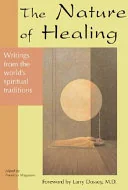
The Nature of Healing
 82
82

The Nature of Healing
Parabola Magazine's *The Nature of Healing* offers a refreshingly broad examination of a subject often confined to clinical discourse. The collection excels in its willingness to juxtapose disparate viewpoints, from ancient shamanic practices to modern bioethics. One particularly striking passage discusses the phenomenology of chronic pain, moving beyond its biological markers to explore its subjective impact on identity. However, the anthology's strength—its diverse voices—occasionally leads to a lack of cohesive argument, with some essays feeling more like standalone meditations than integrated parts of a larger whole. The initial 2004 publication date means some contemporary medical discussions may feel dated, though the philosophical core remains potent. Ultimately, this is a valuable compilation for anyone questioning the conventional boundaries of health.
📝 Description
82
Published in 2004, The Nature of Healing gathers essays that examine healing beyond physical restoration.
This 2004 collection from Parabola Magazine investigates healing in its broadest sense, moving past simple cures to include psychological, spiritual, and cultural aspects of health. The essays draw on a range of sources, from ancient healing traditions and philosophical thought to modern medical science. It considers how we understand illness, the body, and mortality.
The book is for anyone interested in a deeper view of well-being and the human experience. It will particularly engage readers who look at medical systems comparatively and consider the philosophical ideas behind health. Those thinking about life's end and how it fits into a larger picture of existence will also find much to consider.
*The Nature of Healing* was released during a time of rapid medical advancement, but also a period where fundamental questions about health remained. It acts as a counterpoint to purely mechanical views of medicine. The collection reflects a growing interest in complementary and alternative practices and a philosophical return to the body, aligning with early 21st-century trends that favored holistic viewpoints and integrated knowledge systems over strict reductionism.
This collection fits within a long tradition of inquiry into the nature of wholeness and spiritual health, common in many esoteric schools and spiritual philosophies. It echoes the perennial interest in understanding suffering not just as a pathology, but as a potential catalyst for profound inner change and growth. The work engages with the idea that true healing involves a reintegration of the physical, mental, and spiritual aspects of the self, a concept central to various mystical and contemplative paths.
💡 Why Read This Book?
• Gain a comprehensive perspective on healing by examining its cultural, spiritual, and scientific facets, as explored in essays contrasting Eastern and Western medical theories. • Understand illness and disease not just as afflictions but as potential catalysts for personal transformation, a concept central to the book's philosophical inquiry. • Confront the inevitability of death as an integral part of the healing process, drawing insights from the collection's focused discussions on mortality and conscious acceptance.
⭐ Reader Reviews
Honest opinions from readers who have explored this book.
❓ Frequently Asked Questions
What is the primary focus of *The Nature of Healing*?
The primary focus is on the transformative nature of healing, exploring its connection to health, disease, disability, various medical traditions, and the confrontation with mortality, moving beyond a purely physical definition.
When was *The Nature of Healing* first published?
*The Nature of Healing* was first published in 2004 by Parabola Magazine, gathering essays that explore diverse perspectives on health and illness.
Does the book cover both Eastern and Western medical traditions?
Yes, the book explicitly contrasts and explores both Eastern and Western medical theories and treatments, offering a comparative analysis of different approaches to health and healing.
What perspective does the book offer on death?
The book views the conscious confrontation of death as the final, integral step in the healing process, suggesting it holds transformative potential within the human experience of life and well-being.
Who is the author or editor of *The Nature of Healing*?
The collection was assembled and published by Parabola Magazine, drawing contributions from various authors and thinkers on the subject of healing.
What kind of discussions can one expect regarding disability and disease?
Readers can expect discussions that move beyond the purely medical, examining the cultural contexts, philosophical implications, and personal experiences of disability and disease.
🔮 Key Themes & Symbolism
Holistic Health Paradigms
This collection interrogates the very definition of health, moving beyond the absence of disease. It examines how various cultures and scientific disciplines conceptualize well-being, integrating physical, psychological, and spiritual dimensions. The work contrasts the reductionist tendencies of some Western medicine with more holistic approaches found in Eastern traditions, emphasizing the interconnectedness of mind, body, and spirit in the healing process.
Illness as Transformation
Rather than viewing illness and disability solely as negative states, *The Nature of Healing* explores their potential for profound personal growth. It looks at how confronting physical limitations or disease can lead to a re-evaluation of life, a deeper understanding of oneself, and a shift in consciousness. This perspective challenges the conventional goal of merely 'curing' to embrace a more expansive view of integration and evolution.
The Art of Doctoring
The book critically examines the role of the physician and the practice of medicine itself. It explores the ethical, philosophical, and relational aspects of 'doctoring' across different cultural contexts. This includes questioning the authority of medical institutions and considering the patient's active role in their own healing journey, often drawing parallels with traditional healers and their methods.
Confronting Mortality
A significant thread throughout the collection is the exploration of death not as an endpoint to be feared or ignored, but as an intrinsic part of the human experience and the ultimate stage of healing. The essays encourage a conscious engagement with mortality, suggesting that acceptance and understanding of death can profoundly impact how one lives and heals. This philosophical stance is central to a complete understanding of the 'nature of healing'.
💬 Memorable Quotes
Direct passages from the work, attributed to the author.
“The transformative nature of the healing process.”
— This recurring concept suggests that healing is not merely a return to a previous state but an evolution. It implies that experiences of illness, disability, or confronting mortality can fundamentally alter an individual, leading to new insights and a redefined sense of self.
“Consciously confronting the inevitability of death.”
— This highlights a central theme: that acceptance of mortality is a crucial, often overlooked, component of holistic well-being. The work posits that engaging with death's finality can unlock deeper aspects of life and healing.
“Exploring diverse cultures, traditions, and sciences.”
— This indicates the book's broad, comparative approach. It actively seeks to synthesize knowledge from disparate fields—from ancient healing rituals to modern medical science—to form a more complete picture of what healing entails.
“The relationship between doctors and doctoring.”
— This points to a critical examination of the medical profession and its practices. It suggests an inquiry into not just the technical aspects of healing but also the ethical, relational, and societal dimensions of care.
“Parallels between Eastern and Western medical theories.”
— This suggests the book investigates how different global medical systems conceptualize health and disease, seeking common ground and distinct perspectives between traditions like Ayurveda or Traditional Chinese Medicine and modern Western biomedicine.
🌙 Esoteric Significance
Tradition
While not strictly belonging to a single esoteric lineage, *The Nature of Healing* draws heavily from perennialist thought, emphasizing universal truths found across diverse spiritual and philosophical traditions. It aligns with Hermetic principles of 'as above, so below,' by linking the macrocosm of universal laws to the microcosm of individual health and healing. The collection's holistic approach also appeals to Theosophical ideas concerning the interconnectedness of physical, mental, and spiritual planes of existence.
Symbolism
The book likely explores symbols related to the body as a microcosm of the universe, a common esoteric concept. The cycle of life, death, and rebirth, often symbolized by the Ouroboros or the Wheel of Dharma, is implicitly present in its discussion of healing and mortality. Furthermore, symbols associated with specific healing traditions, such as the Caduceus or the Lotus, might be invoked to represent different approaches to restoring balance and wholeness.
Modern Relevance
Contemporary thinkers and practitioners in fields like integral psychology, transpersonal psychology, and somatic experiencing find relevance in this work's emphasis on the mind-body-spirit connection. Its exploration of non-Western healing modalities also informs current trends in integrative and functional medicine. Furthermore, its philosophical engagement with suffering and mortality continues to resonate with existential therapists and those exploring end-of-life care from a less clinical, more humanistic perspective.
👥 Who Should Read This Book
• Students of comparative religion and philosophy: Gain insights into how different belief systems conceptualize health, disease, and the body's role in spiritual development. • Healthcare professionals seeking broader perspectives: Understand the limitations of purely biomedical approaches and explore complementary views on patient care and well-being. • Individuals navigating personal health challenges or contemplating mortality: Find solace and new frameworks for understanding illness, disability, and the end of life as part of a larger, transformative process.
📜 Historical Context
Published in 2004, *The Nature of Healing* emerged during a period of burgeoning interest in holistic health and a growing dissatisfaction with purely biomedical models. The early 21st century saw figures like Andrew Weil popularizing integrative medicine, and academic fields like medical anthropology were increasingly examining cultural variations in illness experience. This collection by Parabola Magazine contributed to this intellectual milieu by directly engaging with diverse traditions, including those often sidelined by Western scientific discourse. It offered a counterpoint to the dominant, often reductionist, approach to health prevalent in mainstream medicine at the time. While not a single academic text, its publication coincided with a broader cultural shift that questioned established medical authority and sought more encompassing understandings of well-being, echoing sentiments found in contemporary works exploring consciousness and alternative therapies.
📔 Journal Prompts
The concept of illness as transformation, as explored in the collection.
Juxtaposing the doctor's role across different traditions discussed.
Integrating the confrontation with death into one's understanding of healing.
Contrasting specific Eastern and Western medical theories presented.
The personal significance of disability and disease narratives.
🗂️ Glossary
Holistic Health
An approach to well-being that considers the interconnectedness of the physical, mental, emotional, social, and spiritual aspects of an individual, rather than focusing solely on the absence of disease.
Perennial Philosophy
The view that all religions and spiritual traditions share a common core of wisdom or truth, often attributed to a divine or transcendent source, which underlies their exoteric differences.
Biomedical Model
A dominant Western approach to health that views disease primarily as a result of biological malfunction, often focusing on physical causes and treatments at the cellular or molecular level.
Doctoring
Beyond the technical practice of medicine, this term encompasses the art, ethics, and relational aspects of a physician's role in caring for patients, including communication and empathy.
Transformative Healing
A perspective where the process of illness or healing leads to fundamental personal change, growth, or spiritual development, rather than simply returning to a previous state of health.
Perennialism
A philosophical and spiritual viewpoint suggesting that all major religions and spiritual traditions share an essential, universal truth or source, often referred to as the Perennial Philosophy.
Mortality Confrontation
The psychological and philosophical process of acknowledging, understanding, and accepting one's own eventual death as an integral part of life.
This book appears in 1 collection
🔮 Readers Also Liked
Browse all →









From the “Sound Healing” Collection
View all →







More Free Occult Philosophy Books
View all →