The natural mind
 81
81

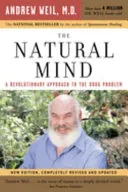
The natural mind
Andrew Weil's "The Natural Mind" attempts to bridge the gap between the scientific understanding of the brain and the subjective experience of altered states of consciousness. Weil’s strength lies in his ability to present complex ideas with clarity, drawing from his medical background to ground discussions of perception in biological terms. He argues convincingly that the mind has a natural capacity for states beyond ordinary waking consciousness, a perspective that was particularly radical in 1986. However, the book sometimes feels more like an academic survey than a deeply personal exploration. While Weil references various methods for inducing altered states, the practical guidance can feel somewhat detached. A passage discussing the role of specific neurotransmitters in altering perception, for instance, is informative but lacks the visceral impact of firsthand accounts. Despite this, the work remains a significant contribution to the discourse on consciousness, offering a biological framework for phenomena often relegated to the mystical or the pathological.
📝 Description
81
Andrew Weil's 1986 book, The Natural Mind, examines the brain's inherent ability to access non-ordinary states of consciousness.
Published in 1986, The Natural Mind by Andrew Weil investigates the human mind's capacity for altered states. Weil argues that these experiences, whether induced by meditation, sensory deprivation, or plant substances, are natural phenomena. He aims to demystify them by grounding them in biological and psychological frameworks, moving away from purely spiritual or pathological interpretations. The book is intended for readers interested in a scientific and integrated view of consciousness, questioning common assumptions about mental states.
Weil, with his background in medicine and ethnobotany, approaches the subject from an interdisciplinary standpoint. He suggests that these non-ordinary states are not deviations but part of a broader spectrum of human awareness. The work analyzes the physiological mechanisms that might support these shifts in perception and consciousness, positing a biological basis for experiences often considered mystical or unusual.
This book is for those who approach complex topics with curiosity and a desire for reasoned explanation. It appeals to readers who seek to understand the mind's full potential through a lens that bridges scientific inquiry and human experience.
Emerging from the counterculture's interest in altered states and subsequent academic inquiry, Weil's work sought to reframe experiences often relegated to mysticism or pathology. It engaged with traditions that explored consciousness beyond ordinary waking awareness, but anchored its discussion in a medical and scientific understanding. This approach aimed to legitimize these subjective states by identifying their potential roots in human biology, rather than solely in spiritual traditions or psychological disturbance.
💡 Why Read This Book?
• You will learn to view altered states of consciousness not as deviations but as inherent human potentials, supported by biological reasoning, as discussed in Weil's exploration of the brain's capacity for non-ordinary perception. • Gain an understanding of how practices like meditation or sensory deprivation can interface with our neurobiology, offering a more grounded perspective than purely spiritual texts, particularly relevant from the 1986 publication context. • Discover a framework for integrating experiences that lie outside everyday awareness, connecting them to natural human functions rather than solely to the supernatural or the abnormal, as Weil posits.
⭐ Reader Reviews
Honest opinions from readers who have explored this book.
❓ Frequently Asked Questions
When was Andrew Weil's "The Natural Mind" first published?
"The Natural Mind" by Andrew Weil was first published in 1986, a period when scientific and public interest in altered states of consciousness was significant.
What is the central thesis of "The Natural Mind"?
The book's central thesis is that the human mind possesses a natural, biological capacity for altered states of consciousness, which are not inherently pathological but represent a spectrum of human experience.
Does "The Natural Mind" advocate for drug use?
While Weil discusses the use of certain plants in relation to altered states, the book primarily focuses on the mind's inherent potential and explores non-pharmacological methods, aiming to demystify these experiences.
What is Weil's background that informs this book?
Andrew Weil is a physician trained at Harvard Medical School, with extensive experience in ethnobotany and the study of traditional healing practices, which heavily influences his interdisciplinary approach in "The Natural Mind."
How does "The Natural Mind" differ from purely spiritual texts on consciousness?
Unlike purely spiritual texts, "The Natural Mind" grounds its discussion of altered states in biological and psychological frameworks, seeking to explain these phenomena through natural human functions rather than exclusively supernatural causes.
What are some of the key concepts explored in "The Natural Mind"?
Key concepts include the natural capacity for altered states, the biological basis of perception shifts, and the integration of non-ordinary experiences into a broader understanding of human consciousness.
🔮 Key Themes & Symbolism
Consciousness as a Spectrum
Weil posits that ordinary waking consciousness is just one point on a broad spectrum of human awareness. He argues that the mind naturally has the capacity to enter other states, which can be accessed through various means, including meditation, sensory deprivation, and certain plant-induced states. This challenges the conventional view of consciousness as a fixed, singular mode of being, suggesting instead a dynamic and expandable range of subjective experience. The work explores the biological underpinnings that allow for these shifts, framing them as integral to human potential rather than mere anomalies.
The Biological Basis of Perception
A core tenet of "The Natural Mind" is that changes in perception and consciousness have a biological correlate. Weil draws on his medical training to discuss how alterations in brain chemistry, sensory input, and neural pathways can lead to profoundly different subjective experiences. He seeks to clarify phenomena often relegated to the mystical or the pathological by grounding them in physiological processes. This perspective offers a scientific lens through which to examine states traditionally explored through spiritual or philosophical inquiry, connecting the inner world to the physical body.
Natural Access to Non-Ordinary States
The book emphasizes that accessing altered states of consciousness is a natural human ability, not an extraordinary feat requiring rare gifts or external intervention. Weil discusses various methods, both ancient and contemporary, that can facilitate these shifts, highlighting practices like deep meditation and fasting. The focus is on understanding the mind's innate mechanisms that, when properly stimulated or balanced, allow for these experiences. This perspective encourages readers to see these states as part of a fuller human experience, accessible through diligent practice and understanding.
Integration of Mind and Body
Weil's work promotes a holistic view where the mind and body are intrinsically linked, particularly concerning consciousness. He suggests that understanding and influencing our mental states requires attention to our physical well-being and biological processes. This contrasts with dualistic philosophies that strictly separate mind from matter. By examining how physiological states affect mental perception and vice-versa, "The Natural Mind" advocates for an integrated approach to understanding human experience, where the body is not merely a vessel but an active participant in shaping consciousness.
💬 Memorable Quotes
Direct passages from the work, attributed to the author.
“The mind has a natural capacity for altered states.”
— This statement expresses Weil's central argument: that experiences beyond ordinary waking consciousness are not aberrations but inherent potentials within the human brain and psyche.
“Altered states are biological phenomena.”
— This highlights Weil's scientific approach, suggesting that changes in perception and awareness can be understood through physiological and neurological processes, rather than solely mystical or psychological explanations.
“We are not limited to one way of perceiving reality.”
— This interpretation points to the idea that human consciousness is flexible and capable of experiencing the world in vastly different ways, challenging the notion of a single, fixed reality.
“The body plays an important role in altered states.”
— This emphasizes the mind-body connection central to Weil's thesis, indicating that physical states and processes are fundamental to accessing and understanding shifts in consciousness.
“Understanding consciousness requires looking at its full spectrum.”
— This suggests that to truly comprehend the human mind, one must consider not just the everyday state but also the range of non-ordinary experiences it can achieve.
🌙 Esoteric Significance
Tradition
While "The Natural Mind" is primarily a work of scientific inquiry, its exploration of consciousness and altered states touches upon themes resonant with various esoteric traditions, particularly those focused on inner transformation and expanded awareness. It can be seen as attempting to provide a rational, biological framework for experiences often described in Gnostic or Hermetic texts, which speak of direct apprehension of higher realities. Weil's work departs from these traditions by grounding its explanations in Western medicine and anthropology, rather than esoteric cosmology or occult philosophy, yet it validates the *experience* that many esoteric paths aim to cultivate.
Symbolism
The book itself doesn't heavily rely on overt esoteric symbolism but rather uses scientific concepts as its symbolic language. The 'natural mind' can be seen as a symbol for humanity's inherent, uncorrupted potential for experience. The brain, explored in its biological function, becomes a symbol of the physical vessel through which consciousness operates and transforms. Altered states themselves function symbolically, representing a departure from the mundane and an opening to a broader understanding of existence, echoing the alchemical concept of transformation.
Modern Relevance
Weil's perspective in "The Natural Mind" has found significant relevance in contemporary fields like neuroscience, psychology, and wellness. Researchers exploring psychedelics for therapeutic purposes often cite the book's early emphasis on the biological basis of altered states. The burgeoning mindfulness and meditation movements also align with Weil's validation of non-ordinary states as natural human capacities. Thinkers and practitioners in transpersonal psychology and consciousness studies continue to draw on Weil's interdisciplinary approach to bridge subjective experience with scientific understanding.
👥 Who Should Read This Book
• Individuals curious about the biological underpinnings of consciousness and altered states, seeking to understand these phenomena from a medical and psychological perspective, will find Weil's grounded approach valuable. • Students of comparative religion and anthropology interested in how different cultures and practices seek to access non-ordinary states of awareness can gain insights into the universal human capacity for such experiences. • Anyone exploring personal development or mindfulness practices who wishes to integrate subjective experiences with a more scientific understanding of the mind will benefit from Weil's integrated viewpoint.
📜 Historical Context
Published in 1986, Andrew Weil's "The Natural Mind" arrived at a time when the scientific community was cautiously beginning to re-engage with the study of consciousness, moving beyond the skepticism that followed the excesses of the 1960s psychedelic research. The era saw figures like Oliver Sacks bringing neurological case studies to a wider audience, and interest in Eastern meditative practices was growing in the West. Weil's work distinguished itself by proposing a biological, rather than purely spiritual or pharmacological, basis for altered states, a perspective that diverged from both New Age mysticism and orthodox clinical psychology. While not directly engaging with contemporaries like Timothy Leary's earlier exploration of psychedelics, Weil's book offered a more integrated, medicalized framework for understanding phenomena that had previously been marginalized or sensationalized. Its reception acknowledged Weil's unique position as a physician examining these states, providing a bridge between different intellectual currents.
📔 Journal Prompts
The mind's capacity for altered states: what personal experiences align with this concept?
Analyze the biological correlates of perception shifts discussed by Weil.
How does the concept of consciousness as a spectrum challenge your current understanding?
Reflect on the role of the body in facilitating or limiting non-ordinary experiences.
Consider the practices Weil mentions for accessing natural states of mind.
🗂️ Glossary
Altered States of Consciousness
Subjective experiences that differ in quality and pattern from normal waking consciousness. This can include changes in perception, thought, emotion, and sense of self, often induced by meditation, sensory deprivation, or other means.
Perception
The process by which sensory stimuli are organized, identified, and interpreted to form a representation of the external world. Weil explores how this process can be naturally altered.
Biological Correlates
The physical and chemical processes in the brain and body that are associated with mental states and experiences. Weil seeks to identify these for altered states.
Ordinary Waking Consciousness
The default state of awareness experienced by most people during their daily activities, characterized by a particular mode of perception and cognition.
Sensory Deprivation
A technique involving the reduction of sensory stimuli to a minimum, often used experimentally to induce altered states of consciousness or for therapeutic purposes.
Ethnobotany
The study of the relationships between people and plants, including how indigenous cultures use plants for medicine, rituals, and other purposes. This informs Weil's background.
Neurobiology
The study of the nervous system, including its structure, function, development, and evolutionary aspects, particularly as they relate to behavior and mental processes.
🔮 Readers Also Liked
Browse all →









More by Andrew Weil
All books →



More Free Occult Philosophy Books
View all →