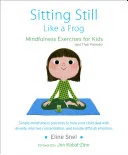
Sitting Still Like a Frog
 73
73

Sitting Still Like a Frog
Eline Snel's "Sitting Still Like a Frog" offers a refreshingly direct path to mindfulness for children. Its strength lies in its uncluttered presentation and the tangible exercises, like the "Body Scan," which effectively guides young readers to notice physical sensations. The accompanying audio CD is a significant asset, providing ready-to-use sessions that bypass parental hesitancy or inexperience. However, the book's simplicity, while a virtue for accessibility, might leave some practitioners seeking deeper theoretical underpinnings or more nuanced explorations of the psychological underpinnings of anxiety in children. The language, while clear, occasionally leans towards a didactic tone that could be softened. Nevertheless, for its intended audience and purpose, it provides a solid, actionable introduction to cultivating inner peace. It's a practical manual, not a philosophical treatise, and excels at being just that.
📝 Description
73
Eline Snel's 2013 book teaches children mindfulness through simple exercises.
Sitting Still Like a Frog presents straightforward mindfulness techniques for children aged 5 to 12. Eline Snel structured the book to help young people understand and manage their internal experiences. It uses easy, repeatable exercises to encourage calm and focus, which can be used by both children and the adults in their lives. The book is designed for parents, teachers, and therapists who need practical methods to support children's development. It aims to help with common issues like anxiety, trouble concentrating, and managing emotions. An included audio CD with guided exercises offers a convenient option for families who learn well through listening or want ready-made meditation sessions.
The book's main ideas are about paying attention to the present moment and accepting what arises. It uses the metaphor of a 'thinking bubble' to show children the difference between a busy mind and an observing mind, helping them distance themselves from intrusive thoughts. Other important concepts include noticing physical sensations, using the breath as a point of focus, and observing emotions without quick judgment.
Published in 2013, this book arrived as secular mindfulness practices gained wider acceptance in Western education and psychology. While mindfulness meditation has ancient roots, its application to child development grew significantly in the early 21st century. This work follows adaptations of established programs like Jon Kabat-Zinn's Mindfulness-Based Stress Reduction for younger audiences. It grounds contemplative practices in accessible language and exercises for children.
💡 Why Read This Book?
• You will learn to guide children through the "Thinking Bubble" exercise, a specific technique from the book that helps them visualize and detach from intrusive thoughts, fostering a sense of mental spaciousness. • You will gain practical methods for using the breath as a calming anchor, a core concept introduced early in the book, enabling children to self-soothe during moments of distress. • You will be able to utilize the 60-minute audio CD, a key component of the 2013 publication, to lead children through guided mindfulness practices, building their capacity for concentration and emotional regulation.
⭐ Reader Reviews
Honest opinions from readers who have explored this book.
❓ Frequently Asked Questions
What age range is Sitting Still Like a Frog designed for?
The book is specifically designed for children aged 5 to 12 years. This age range allows for the introduction of fundamental mindfulness concepts in an accessible and engaging manner.
Does the book include guided meditations?
Yes, Sitting Still Like a Frog comes with a 60-minute audio CD featuring guided mindfulness exercises, making it easy for parents and children to practice together.
What specific benefits does mindfulness offer children according to this book?
The book outlines benefits such as reduced anxiety, improved concentration, and better management of difficult emotions, all stemming from the practice of present-moment awareness.
Who is Eline Snel, the author?
Eline Snel is a mindfulness trainer and author known for her work in bringing mindfulness practices to children and adolescents. She is the founder of the Academy for Mindful Teaching.
Can parents use this book even if they have no prior mindfulness experience?
Absolutely. The book is structured to be very user-friendly for parents and caregivers, providing clear instructions and the supporting audio CD to facilitate practice without prior expertise.
Is this book based on scientific principles?
Yes, the practices in Sitting Still Like a Frog are rooted in mindfulness meditation, a practice recognized by mental health professionals for its efficacy in addressing emotional and cognitive challenges.
🔮 Key Themes & Symbolism
The Observing Mind
A central theme is differentiating between the 'thinking mind' and the 'observing mind.' The book uses the metaphor of a 'thinking bubble' to help children understand that thoughts are transient events, not necessarily facts, and that they can learn to observe these thoughts without being overwhelmed. This concept is crucial for developing self-awareness and emotional detachment, foundational elements in many contemplative traditions.
Anchoring with the Breath
The breath is presented as a consistent anchor for present-moment awareness. The book guides children to notice the physical sensations of breathing, using it as a tool to return their attention when the mind wanders. This practice mirrors ancient yogic and Buddhist techniques that utilize breath awareness for calming the nervous system and cultivating focus.
Acceptance of Experience
Sitting Still Like a Frog gently introduces the concept of accepting experiences as they are, without immediate judgment or reaction. This includes acknowledging difficult emotions and physical sensations. This principle of non-judgmental awareness is a core part of mindfulness, encouraging resilience and a less reactive approach to life's challenges.
Mindfulness for Young Minds
The book's unique contribution is adapting sophisticated mindfulness principles for children aged 5-12. It translates complex psychological concepts into child-friendly language and exercises, making contemplative practices accessible and relevant to their developmental stage. This focus on early intervention aims to build lifelong skills for emotional well-being.
💬 Memorable Quotes
Direct passages from the work, attributed to the author.
“The thinking bubble”
— This metaphor helps children visualize their thoughts as separate entities that float by, reducing identification with and distress caused by anxious or repetitive thinking.
“Feeling your breath”
— This phrase points to the core practice of using the physical sensation of inhalation and exhalation as a stable point of focus, grounding the child in the present moment.
“Noticing your body”
— This encourages children to develop interoception, the awareness of internal bodily sensations, which is key to recognizing emotional states and physical tension.
“Difficult emotions”
— The book addresses how to acknowledge and sit with challenging feelings, framing them as temporary states rather than insurmountable problems.
“Paying attention on purpose”
— This simple definition captures the essence of mindfulness as a deliberate act of directing one's awareness.
🌙 Esoteric Significance
Tradition
While not explicitly tied to a single esoteric lineage, "Sitting Still Like a Frog" draws heavily from Buddhist Vipassanā (insight) meditation traditions, particularly in its emphasis on breath awareness, non-judgmental observation of thoughts and feelings, and the concept of the 'observing mind.' It secularizes these practices, making them palatable within a modern psychological framework, thus bridging contemplative wisdom with contemporary therapeutic approaches.
Symbolism
The primary 'symbol' is the 'thinking bubble,' a conceptual device rather than a traditional icon. It functions symbolically to represent the ephemeral and often uncontrollable nature of thoughts, allowing the child to mentally 'release' or observe them. The breath itself acts as a potent natural symbol of life and presence, serving as the consistent anchor to the present moment, a recurring motif in various spiritual disciplines.
Modern Relevance
This work is highly relevant today, influencing numerous modern mindfulness programs for children and schools. Contemporary approaches in positive psychology, educational mindfulness initiatives (like Mindful Schools), and therapeutic interventions for anxiety disorders often echo Snel's foundational techniques. Thinkers and practitioners focusing on emotional intelligence and mental resilience in youth continue to build upon the principles introduced in accessible formats like this book.
👥 Who Should Read This Book
• Parents and caregivers seeking practical, screen-free tools to help children aged 5-12 manage stress and improve focus. • Educators and school counselors looking for simple, implementable mindfulness exercises to integrate into classroom routines or support services. • Therapists and child psychologists wanting a resource to supplement traditional therapies with accessible contemplative techniques for young clients.
📜 Historical Context
Eline Snel's "Sitting Still Like a Frog," first published in December 2013, arrived amidst a significant surge in the popularization and academic study of mindfulness. This period saw the widespread adoption of secular contemplative practices, heavily influenced by programs like Jon Kabat-Zinn's Mindfulness-Based Stress Reduction (MBSR), which originated in the 1970s. Snel's work tapped into a growing movement within psychology and education to apply these techniques to youth, addressing concerns about rising childhood anxiety and attention deficits. While mindfulness meditation itself has ancient roots, its formal integration into Western child psychology was a relatively recent phenomenon in the early 2010s. The book emerged as a counterpoint to more spiritually-oriented contemplative traditions, offering a secular, practical toolkit. Its reception was generally positive among educators and parents seeking accessible methods, contrasting with the sometimes more philosophical or religiously-aligned texts available.
📔 Journal Prompts
The thinking bubble's journey
Anchor points of the breath
Noticing bodily sensations during challenging emotions
The observing mind's perspective
How the practice of acceptance feels
🗂️ Glossary
Mindfulness
The practice of paying attention to the present moment, on purpose, non-judgmentally. It involves awareness of thoughts, feelings, bodily sensations, and the surrounding environment.
Thinking Bubble
A metaphorical concept used in the book to help children visualize their thoughts as passing clouds or bubbles, distinct from their core self, aiding in detachment.
Observing Mind
The part of awareness that notices thoughts and feelings without getting carried away by them. It is the capacity to witness one's mental and emotional landscape.
Anchor
A point of focus, such as the breath or bodily sensations, used to keep attention grounded in the present moment and return focus when the mind wanders.
Anxiety
A feeling of worry, nervousness, or unease, typically about an imminent event or something with an uncertain outcome. The book offers tools to manage these feelings.
Concentration
The ability to focus one's attention on a particular task or subject for a sustained period. Mindfulness practices aim to improve this capacity.
Difficult Emotions
Feelings such as anger, sadness, fear, or frustration that can be challenging to experience or manage. The book teaches acceptance and non-reactive observation of these emotions.