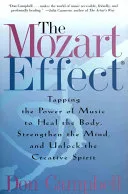
The Mozart Effect
 72
72

The Mozart Effect
Don Campbell's "The Mozart Effect" attempts to bridge the gap between anecdotal musical healing and scientific validation, a commendable, if ambitious, endeavor. Campbell's strength lies in his accessible synthesis of esoteric musical lore and contemporary research. He effectively conveys the ancient wisdom that music acts as a potent force for mind, body, and soul. However, the book occasionally falters by presenting correlational findings as definitive causal links, particularly concerning the specific cognitive enhancements attributed solely to Mozart's compositions. The section detailing the "Mozart Effect" on spatial-temporal reasoning, while intriguing, is presented with an authority that sometimes overlooks the nuances and replicability issues debated in the scientific community. Despite this, Campbell's enthusiasm and the book's foundational exploration of music's therapeutic potential remain its significant contribution.
📝 Description
72
Don Campbell's 2009 book, The Mozart Effect, links specific music to consciousness.
First published in 2009, Don Campbell's The Mozart Effect examines the relationship between music, especially Mozart's compositions, and human consciousness. The book combines older musical traditions with recent scientific studies. Campbell suggests certain sound frequencies and patterns can improve cognitive function, emotional states, and physical health. This work is for people interested in music's therapeutic uses, consciousness studies, or ways to boost mental clarity and emotional calm. It connects with anyone who has felt music's effect on their mood and wants to understand why.
The book appeared as interest in mind-body links and alternative therapies grew. Campbell draws on a long history of believing music heals, referencing historical figures and philosophies that saw music's spiritual and physical impact. He also uses scientific research from the late 20th and early 21st centuries that started to examine these ideas closely. Campbell presents ideas like "listening programs" to aid focus and memory, and "musical entrainment," where brainwaves align with external rhythms. He explains how Mozart's music, with its specific tones and harmonies, might activate brain pathways, leading to relaxation, creativity, and greater awareness.
Campbell's work is situated within a long tradition that views music as a conduit for spiritual and physiological transformation. For centuries, various cultures have employed music in rituals and healing practices, attributing to it the power to alter states of consciousness and promote well-being. This book echoes those ancient beliefs, suggesting that specific sonic structures, like those found in Mozart's music, can resonate with the human body and mind on a deep level. It bridges historical reverence for music's sacred qualities with modern inquiries into its effects on brain function and emotional states, aligning with esoteric thought that music is more than mere entertainment.
💡 Why Read This Book?
• Understand the scientific and historical basis for music as a therapeutic tool, learning about early 21st-century research into sonic influences on cognition. • Explore the concept of "musical entrainment" as detailed in the book, gaining insight into how external rhythms may synchronize with internal brainwave states. • Discover specific listening strategies and compositions, such as those by Mozart, that Campbell suggests can foster states of relaxation and enhanced focus.
⭐ Reader Reviews
Honest opinions from readers who have explored this book.
❓ Frequently Asked Questions
What is the primary claim of Don Campbell's "The Mozart Effect"?
The book's central thesis is that music, particularly the works of Mozart, possesses therapeutic properties that can positively impact the body, mind, and soul, influencing cognitive function and emotional well-being.
When was "The Mozart Effect" first published?
Don Campbell's influential book "The Mozart Effect" was first published on May 5, 2009.
What kind of music is emphasized in "The Mozart Effect"?
While the book discusses music's general effects, it specifically highlights the compositions of Wolfgang Amadeus Mozart, proposing their unique structures and frequencies have beneficial effects on listeners.
Does the book provide scientific evidence for its claims?
Yes, "The Mozart Effect" references scientific studies from the late 20th and early 21st centuries that explore the relationship between music, brain function, and emotional states, though interpretations vary.
Who is Don Campbell, the author of "The Mozart Effect"?
Don Campbell is described as a celebrated teacher and music visionary, known for his work in exploring the therapeutic and consciousness-altering potential of music.
What are some practical applications suggested by the book?
The book suggests practical applications such as "listening programs" designed to improve focus, memory, and relaxation, utilizing specific musical patterns and compositions.
🔮 Key Themes & Symbolism
Music as Sonic Medicine
Campbell posits that music functions as a potent form of medicine, directly impacting physiological and psychological states. This concept draws from ancient traditions that viewed music as a spiritual and healing art. The book examines how specific sonic frequencies and harmonic structures, particularly within Mozart's compositions, are believed to stimulate beneficial responses in the brain and body, affecting mood, cognitive function, and even physical tension. It moves beyond mere aesthetic appreciation to explore music's active role in promoting well-being and restoring balance.
The Mozart Effect Phenomenon
The core of Campbell's work revolves around the idea that listening to Mozart's music can induce temporary improvements in certain cognitive abilities, notably spatial-temporal reasoning. The book discusses the scientific research that initially proposed this effect, while also exploring its broader implications for creativity, learning, and emotional regulation. It examines how the complex patterns and energetic qualities of Mozart's sonatas are thought to activate neural pathways, suggesting a tangible, measurable benefit derived from specific auditory experiences.
Consciousness and Musical Entrainment
Campbell explores the principle of musical entrainment, where the brain's electrical activity (brainwaves) can synchronize with external rhythmic stimuli. This concept is central to understanding how music can alter states of consciousness, facilitating relaxation, focus, or even heightened awareness. The book suggests that carefully designed musical programs can guide listeners toward desired mental states, linking the structured beauty of classical music to the internal field of human perception and cognition.
Ancient Wisdom and Modern Science
A significant theme is the convergence of ancient wisdom regarding music's sacred and healing powers with findings from modern scientific inquiry. Campbell bridges the gap between historical beliefs, found in traditions from ancient Greece to Eastern philosophies, and contemporary research in neuroscience and psychology. He demonstrates how scientific studies conducted in the late 20th and early 21st centuries are beginning to validate long-held intuitions about music's profound influence on human experience.
💬 Memorable Quotes
Direct passages from the work, attributed to the author.
“Music is medicine for the body, the mind, and the soul.”
— This captures the book's central thesis: that music's influence extends beyond mere entertainment to encompass holistic healing and well-being, addressing physical, mental, and spiritual dimensions.
“Anyone who has ever seen a two-year-old start bouncing to a beat knows that music speaks to us on a very deep level.”
— This observation highlights the innate, primal connection humans have with rhythm and sound from an early age, suggesting music taps into fundamental aspects of our being.
“Stimulating, authoritative, and often lyrical, The Mozart Effect has a simple but life-changing message...”
— This describes the book's style and core message, emphasizing its accessibility and the potentially wide impact of its ideas on the reader's understanding of music's power.
“Modern science has begun to confirm this ancient wisdom, finding evidence...”
— This points to the book's methodology, integrating historical perspectives on music's effects with contemporary scientific research that seeks to validate these age-old beliefs.
“The work explores how specific sonic frequencies and patterns can influence cognitive function and emotional well-being.”
— This interpretation focuses on the mechanistic aspect discussed in the book, suggesting that the physical properties of sound waves have a direct and measurable impact on human consciousness and health.
🌙 Esoteric Significance
Tradition
While not strictly aligned with a single esoteric lineage, "The Mozart Effect" draws heavily on the Hermetic principle of 'As Above, So Below,' suggesting that the harmonic structures in music (macrocosm) directly influence the internal states of the human being (microcosm). It echoes Pythagorean traditions that viewed the cosmos as governed by numerical and sonic harmony. The work sits within the broader Neo-Platonic and Theosophical currents that emphasize the spiritual and vibrational nature of reality, viewing music as a key to unlocking higher consciousness and well-being.
Symbolism
The primary symbol is the music of Wolfgang Amadeus Mozart itself, which is presented not just as artistic expression but as a specific sonic key. Within the book, Mozart's compositions symbolize order, divine proportion, and a pure energetic frequency capable of harmonizing the human system. The act of 'listening' becomes a symbolic practice, representing attunement to subtle vibrations and a pathway to accessing deeper levels of consciousness and healing, akin to meditative practices.
Modern Relevance
Campbell's work remains relevant in contemporary discussions surrounding music therapy, sound healing, and neuro-acoustics. It informs modern practices that utilize specific frequencies and binaural beats for therapeutic purposes. Thinkers and practitioners in fields like biofield tuning, sound baths, and even certain branches of mindfulness and meditation continue to explore the principles Campbell articulated, seeking to harness sonic vibrations for mental clarity, emotional regulation, and physical restoration.
👥 Who Should Read This Book
• Individuals interested in the intersection of music, neuroscience, and well-being, seeking to understand how specific sounds might affect cognitive function and emotional states. • Practitioners of music therapy or sound healing who wish to explore the historical and theoretical underpinnings of using music as a therapeutic modality. • Students of consciousness studies and esoteric traditions looking for contemporary applications of ancient ideas about the power of vibration and harmony.
📜 Historical Context
Published in 2009, Don Campbell's "The Mozart Effect" arrived at a time when interest in holistic health, mind-body medicine, and the science of consciousness was significantly growing. The book tapped into a cultural zeitgeist that was increasingly open to exploring non-traditional therapeutic modalities. Campbell's work built upon earlier research, particularly studies from the 1990s, that suggested listening to Mozart could temporarily enhance spatial-temporal reasoning skills, a phenomenon that captured public imagination. However, this specific claim faced considerable scientific debate and replication challenges, with researchers like Dr. Alfred Tomatis having explored sonic therapies decades prior. Despite the scientific controversies surrounding the precise nature of the 'Mozart Effect,' Campbell's book synthesized these findings with a broader tradition of music therapy and the belief in music's inherent healing properties, positioning it within a lineage of thinkers who championed sound as a vital force.
📔 Journal Prompts
The concept of musical entrainment and its potential to synchronize brainwaves.
Music's role as a 'medicine for the body, the mind, and the soul'.
Reflecting on personal experiences with music that altered mood or focus.
The historical belief in music's healing properties before modern scientific inquiry.
Exploring the specific qualities of Mozart's compositions discussed in the book.
🗂️ Glossary
Mozart Effect
The hypothesis, popularized by Don Campbell, suggesting that listening to specific compositions by Wolfgang Amadeus Mozart can temporarily enhance spatial-temporal reasoning and other cognitive functions.
Musical Entrainment
The process by which the brain's electrical activity (brainwaves) can synchronize with external rhythmic stimuli, such as music, potentially influencing states of consciousness and mood.
Spatial-Temporal Reasoning
The ability to mentally visualize and manipulate objects in space and time, often tested through puzzles and tasks involving spatial relationships and sequences.
Sonic Frequencies
The rate at which sound waves vibrate, measured in Hertz (Hz). Different frequencies are believed to have distinct physiological and psychological effects on the human body and mind.
Brainwaves
Electrical impulses generated by the brain, measured in cycles per second (Hertz). Different patterns (alpha, beta, theta, delta) are associated with various states of consciousness, such as relaxation, focus, or sleep.
Music Therapy
The clinical and evidence-based use of music interventions to accomplish individualized goals within a therapeutic relationship by a credentialed professional.
Holistic Health
An approach to health that considers the whole person—body, mind, spirit, and emotions—and their interconnectedness, rather than just focusing on specific symptoms or diseases.