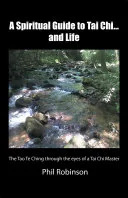
A Spiritual Guide to Tai Chi...And Life
 82
82

A Spiritual Guide to Tai Chi...And Life
Phil Robinson’s "A Spiritual Guide to Tai Chi...And Life" attempts a bridge between the somatic experience of Tai Chi and the philosophical depths of the Tao Te Ching. The book’s strength lies in its earnest attempt to make the esoteric accessible. Robinson’s interpretation of how the Tao Te Ching’s principles, such as the concept of yielding, can be embodied through Tai Chi movements is commendable, particularly when discussing the application of stillness within motion. However, the work occasionally feels more like an extended essay than a fully developed exposition. While the blurb promises a page-turner, the prose, though clear, sometimes lacks the sharp critical edge one might expect from a seasoned literary editor. A passage discussing the cultivation of 'Qi' could benefit from more nuanced exploration rather than a generalized affirmation. Overall, it serves as a gentle introduction, particularly for those new to the intersection of these disciplines.
📝 Description
82
Phil Robinson's 2007 book connects Tai Chi's movements to the Tao Te Ching's philosophy.
A Spiritual Guide to Tai Chi...And Life examines the ancient Chinese practice of Tai Chi not just as a physical exercise, but as a philosophical and spiritual path. Phil Robinson links the deliberate motions of Tai Chi to the wisdom found in classic texts, particularly the Tao Te Ching. He presents Tai Chi as a practical method for improving daily life, showing how martial arts principles can aid personal development.
The book aims for a wide readership. It welcomes those new to Tai Chi who want more than just the physical form. Experienced practitioners interested in the philosophy behind their art will also find it useful. Individuals drawn to Eastern philosophy, mindfulness, or self-improvement, even without martial arts experience, may benefit. The guide offers practical advice for enhancing life quality through conscious action.
This work is situated within the long history of interpreting the Tao Te Ching, a text central to Taoism dating back to the 6th century BCE. Robinson's book, published in the early 21st century, aligns with a period of increased Western interest in Eastern contemplative practices. It follows earlier attempts to bridge Eastern thought and Western audiences, from early European sinologists to figures like Alan Watts who introduced Eastern philosophy to a broader public.
💡 Why Read This Book?
• You will learn to see Tai Chi's movements as a physical manifestation of Taoist principles, directly referencing the Tao Te Ching's guidance on yielding, a concept explored throughout the book. • You can gain practical methods for enhancing daily life quality by applying the mindful approach inherent in Tai Chi practice, as detailed in the book's sections on integrating movement and philosophy. • You will understand the historical lineage of interpreting texts like the Tao Te Ching for contemporary self-improvement, benefiting from Robinson's synthesis of ancient wisdom and modern application, first published in 2014.
⭐ Reader Reviews
Honest opinions from readers who have explored this book.
❓ Frequently Asked Questions
What is the primary focus of A Spiritual Guide to Tai Chi...And Life?
The book focuses on integrating the physical practice of Tai Chi with the philosophical teachings of the Tao Te Ching, presenting Tai Chi as a path to improving life quality and spiritual understanding.
Who is the author, Phil Robinson, and what is his background?
Phil Robinson is the author of 'A Spiritual Guide to Tai Chi...And Life'. While his specific background isn't detailed in the original blurb, his writing suggests a deep engagement with both Tai Chi practice and classical Chinese philosophy.
Is this book only for experienced Tai Chi practitioners?
No, the book is written to be accessible to beginners in Tai Chi and also to those interested in Eastern philosophy and self-improvement who may have no prior experience with the practice.
What is the Tao Te Ching mentioned in the book?
The Tao Te Ching is a foundational text of Taoism, traditionally attributed to the sage Lao Tzu around the 6th century BCE. It explores concepts like the Tao, nature, and effortless action (Wu Wei).
When was A Spiritual Guide to Tai Chi...And Life first published?
The book was first published on April 27, 2014.
Does the book offer step-by-step Tai Chi instructions?
While it uses Tai Chi as a framework, the book emphasizes the philosophical and spiritual aspects more than detailed step-by-step physical instruction. It's more about the 'why' and 'how' of integrating the practice into life.
🔮 Key Themes & Symbolism
Tai Chi as Philosophy
The book posits that Tai Chi is more than a series of movements; it is a living philosophy. Robinson connects the physical postures and flow of Tai Chi to core Taoist concepts found in the Tao Te Ching. This theme explores how the deliberate, circular motions and emphasis on balance in Tai Chi serve as practical embodiments of principles like 'Wu Wei' (effortless action) and the harmonious interplay of Yin and Yang, offering a tangible way to engage with profound metaphysical ideas.
Life Quality Enhancement
A central aim of the book is to demonstrate how the principles derived from Tai Chi and the Tao Te Ching can directly improve the quality of one's everyday life. This involves cultivating mindfulness, reducing internal conflict, and fostering a sense of calm and centeredness. Robinson suggests that by internalizing the lessons of balance, yielding, and naturalness inherent in Tai Chi, individuals can navigate life's challenges with greater ease and effectiveness.
Ancient Wisdom for Modernity
The work bridges the gap between ancient Chinese texts, specifically the Tao Te Ching (dating to the 6th century BCE), and contemporary concerns. It argues for the enduring relevance of these classical teachings in a fast-paced, often chaotic modern world. Robinson presents the insights of ancient sages not as historical curiosities, but as vital, actionable guidance for personal growth and spiritual development today.
The Tao Te Ching Connection
This theme focuses on the explicit links drawn between Tai Chi practice and the verses of the Tao Te Ching. Robinson interprets passages from Lao Tzu's important work through the lens of Tai Chi movements and philosophy. The book aims to show how the text can serve as a guide for everyone, regardless of their familiarity with martial arts, by informative universal truths applicable to the human condition.
💬 Memorable Quotes
Direct passages from the work, attributed to the author.
“The Tao Te Ching can be a guide for everyone.”
— This statement expresses the book's core thesis: that the profound wisdom of Lao Tzu's text transcends specific practices and offers universal lessons applicable to any individual seeking a better way of living.
“We all would like something easy to follow that could make a difference in the quality of our lives.”
— This highlights the book's practical intention, positioning Tai Chi and Taoist philosophy not as abstract intellectual pursuits, but as accessible tools for tangible self-improvement and well-being.
“Mr. Robinson takes us on a journey back in time where we explore the minds of the wisest in ancient times.”
— This suggests the book's method involves drawing upon historical wisdom, specifically from ancient Chinese philosophy, to inform contemporary understanding and practice, framing the reading experience as an exploration of foundational thought.
“Although written for the Tai Chi student, Mr. Robinson makes it clear the Tao Te Ching can be a guide for everyone.”
— This emphasizes the book's broad appeal, indicating that while Tai Chi serves as a practical entry point, the underlying philosophical message is intended for a wider audience interested in personal development and wisdom.
“This is one of those books you can't put down and will find yourself referring to it for years to come.”
— This expresses the book's potential for lasting impact and utility, suggesting it offers insights that are both engaging during the initial read and valuable for ongoing reference and reflection.
🌙 Esoteric Significance
Tradition
This work engages with the Taoist tradition, a foundational element of East Asian philosophy and spirituality. While not strictly fitting into Western esoteric lineages like Hermeticism or Kabbalah, Taoism offers a parallel system of understanding the cosmos, the self, and the path to enlightenment or harmony. Robinson's approach aligns with the 'as above, so below' principle by seeking correspondences between the macrocosm (the Tao, nature) and the microcosm (the human body and mind through Tai Chi).
Symbolism
Key symbols include the Tai Chi symbol itself, representing the dynamic balance of Yin and Yang – complementary opposites in constant interaction and transformation. 'Qi' (or Chi) is another central symbol, representing vital life force or energy that flows through all things, cultivated and directed through Tai Chi practice. The concept of 'Wu Wei,' often translated as non-action or effortless action, symbolizes acting in accordance with the natural flow of the Tao, achieving results with minimal resistance.
Modern Relevance
Robinson's work speaks to contemporary movements focused on embodied cognition and mindfulness-based stress reduction. Thinkers and practitioners in fields ranging from somatic psychology to integrated wellness programs often draw parallels between ancient practices like Tai Chi and modern therapeutic techniques. The book's emphasis on finding balance and naturalness in daily life speaks to current concerns about burnout, anxiety, and the search for meaning in secularized societies.
👥 Who Should Read This Book
• Individuals new to Tai Chi who seek a philosophical framework beyond physical technique, offering a deeper appreciation of the practice's spiritual dimensions. • Practitioners of Tai Chi interested in enriching their understanding of its roots in Taoist philosophy, particularly the Tao Te Ching, as outlined by Robinson. • Seekers of personal growth and mindfulness who are drawn to Eastern wisdom traditions and wish to apply ancient principles to enhance their daily lives.
📜 Historical Context
Phil Robinson's 'A Spiritual Guide to Tai Chi...And Life,' first published in 2014, emerges in an era where Eastern contemplative practices have become increasingly integrated into Western wellness and self-help movements. The book's exploration of the Tao Te Ching, a text central to Taoism and dating back to the 6th century BCE, places it within a long tradition of cross-cultural philosophical engagement. This work follows in the wake of scholars and popularizers like Alan Watts, who in the mid-20th century, significantly introduced concepts of Zen Buddhism and Taoism to a Western audience. While Robinson's focus is specifically on Tai Chi's connection to Taoist philosophy, it exists alongside a broader resurgence of interest in mindfulness, martial arts as spiritual disciplines, and alternative paths to well-being, often contrasting with purely materialistic or Western philosophical approaches. The book taps into a contemporary desire for holistic self-understanding, building upon decades of accessibility for such ancient teachings.
📔 Journal Prompts
The embodiment of 'Wu Wei' through Tai Chi movements.
Reflecting on the balance of Yin and Yang in your daily activities.
How the principles of yielding, as discussed in the book, can be applied to a challenging situation.
Connecting the cultivation of 'Qi' to your personal energy levels and vitality.
The Tao Te Ching's guidance on naturalness and your own life.
🗂️ Glossary
Tai Chi
An ancient Chinese martial art practiced for defense, health, and meditation. It involves slow, flowing movements, deep breathing, and mental focus, often seen as a moving meditation.
Tao Te Ching
A foundational text of Taoism, traditionally attributed to Lao Tzu. It contains teachings on the nature of the Tao (the Way), virtue, and how to live in harmony with the natural order.
Qi (Chi)
The vital life force or energy believed to flow through all living beings and the universe. In Tai Chi, its cultivation and circulation are central to health and practice.
Yin and Yang
Two complementary, interconnected, and interdependent forces or principles in Chinese philosophy. Yin represents passive, dark, feminine qualities, while Yang represents active, light, masculine qualities.
Wu Wei
A central concept in Taoism, often translated as 'non-action,' 'effortless action,' or 'action without intention.' It signifies acting in accordance with the natural flow of the Tao, achieving results spontaneously and effectively.
Lao Tzu
An ancient Chinese philosopher and writer, traditionally regarded as the author of the Tao Te Ching and the founder of Taoism. His teachings emphasize simplicity, spontaneity, and living in harmony with nature.
Esoteric
Intended for or likely to be understood by only a small number of people with a specialized knowledge or interest. In literature, it often refers to mystical, spiritual, or occult subjects.