The Money Power

 76
76

The Money Power
William Guy Carr’s "The Money Power" presents a stark, if controversial, thesis that financial elites have long engineered global conflicts to consolidate their influence. The strength of this compilation lies in its directness; Carr does not mince words in laying out his interpretation of historical events, particularly the alleged role of a "Money Power" operating behind the scenes of institutions like the British throne and the U.S. government. His work on "Pawns in the Game" offers a compelling, if conspiratorial, narrative that challenges readers to consider alternative explanations for geopolitical shifts. However, a significant limitation is the lack of verifiable evidence presented within the text itself, relying heavily on assertion and interpretation rather than documented proof. Carr's assertion that "the Illuminati and the Committee of Three Hundred are actively working to bring about a One World Government" exemplifies this, presenting a core tenet of his theory without empirical substantiation. This compilation serves as a historical artifact of 20th-century geopolitical anxieties rather than objective analysis. The verdict is a potent, albeit unproven, exposé of alleged global manipulation.
📝 Description
76
William Guy Carr's "The Money Power" compiles "Pawns in the Game" and "Empire of the City" from the mid-20th century.
"The Money Power" collects two significant texts by William Guy Carr. The first, "Pawns in the Game," published around the mid-20th century, examines how international finance and select oligarchies allegedly control global events. Carr posits that wars and revolutions are orchestrated by a hidden hand manipulating political systems and societal structures. The book suggests a deliberate, long-term strategy by a select group to shape history according to their agenda, often working through democratic institutions and national governments. "Empire of the City," an earlier work, also critiques financial power, reinforcing the idea of concealed influences on world affairs. Together, these writings aim to expose what the authors describe as the machinations of powerful financial and political elites who allegedly steer historical movements.
This compilation is for readers interested in critical geopolitical analysis and the study of hidden influences on world affairs. It addresses those who question mainstream historical accounts and seek to understand the alleged operations of elite groups. Individuals interested in the historical roots of global conflict, secret societies, and occult influences on power structures will find these works particularly relevant. The book encourages readers to examine the purported architects of historical movements and the alleged concentration of power in unelected bodies.
William Guy Carr's writings emerged from a tradition of critical geopolitical analysis that questioned established power structures. His work reflects concerns about globalist agendas and the concentration of power, sentiments found in early 20th-century critiques of international finance and secret societies. These texts engage with ideas about hidden hands guiding historical events, a concept explored within certain circles interested in the interplay between secret organizations and global affairs. The focus is on uncovering alleged structures of control that operate outside of public view.
💡 Why Read This Book?
• Understand the core "Money Power" thesis, learning how Carr alleges an international oligarchy manipulates wars and revolutions to maintain global control. • Analyze "Pawns in the Game" and "Empire of the City" to grasp Carr's specific arguments about subversion and the engineered "balance of power" by elites. • Examine the historical context of mid-20th century geopolitical anxieties that fueled Carr's theories about hidden influences on governments and the "One World Government" agenda.
⭐ Reader Reviews
Honest opinions from readers who have explored this book.
❓ Frequently Asked Questions
When was "Pawns in the Game" originally published?
"Pawns in the Game" was first published in 1955. This edition of "The Money Power" compiles it with "Empire of the City" and was first published in December 2012.
What is the central claim of "Empire of the City"?
"Empire of the City" argues that a hidden financial oligarchy, centered in London, manipulates global events and seeks to establish a One World Government through subversive means.
Who are the alleged "Pawns in the Game"?
According to Carr, "Pawns in the Game" are individuals, nations, and institutions unwittingly serving the agenda of the "Money Power" by participating in conflicts or political movements that ultimately benefit this hidden elite.
Does "The Money Power" offer solutions or just analysis?
The book primarily focuses on analyzing and exposing what Carr perceives as the mechanisms of global control by the "Money Power." It aims to inform readers about these alleged machinations rather than prescribing specific solutions.
What is the significance of the "balance of power" in Carr's work?
Carr posits that the "balance of power" is not a natural geopolitical state but a deliberately engineered condition by the "Money Power" to perpetuate its dominance and prevent any single rival from rising.
Is "The Money Power" considered occult literature?
While "The Money Power" discusses alleged secret societies and hidden influences, its primary focus is geopolitical analysis and financial conspiracy theory. Its inclusion in esoteric libraries stems from its exploration of hidden power structures and potential occult influences.
🔮 Key Themes & Symbolism
The "Money Power" Oligarchy
This theme centers on the alleged existence of a clandestine financial oligarchy that wields immense power over global events. The work posits that this group, often referred to as the "Money Power," orchestrates wars, revolutions, and economic crises to further its own agenda. It suggests this power operates behind the scenes, manipulating governments and international institutions to maintain its dominance and steer the world towards a specific outcome, such as a One World Government.
Subversion and World Order
A core concept is the use of "subversion" as a primary tactic by the "Money Power." This involves the deliberate destruction of existing social, political, and economic structures to create a vacuum that can then be filled by their desired order. The work argues that this strategy aims to dismantle national sovereignty and traditional institutions, paving the way for a centralized global authority controlled by the elite.
Geopolitical Engineering
The books explore the idea that major historical events, including significant conflicts and societal upheavals, are not organic occurrences but are carefully engineered. The "balance of power" is presented as a tool used by the "Money Power" to manage rivalries and ensure its own perpetual control. This theme challenges the notion of natural historical progression, proposing instead a guided, manipulative historical trajectory dictated by financial interests.
The Mask of Democracy
Carr suggests that democratic systems often serve as a facade for the true power holders. Beneath the veneer of popular representation and liberal governance, the "Money Power" allegedly exerts control through financial leverage, media influence, and the manipulation of political figures. This theme highlights the perceived disconnect between the appearance of democratic freedom and the reality of elite control.
💬 Memorable Quotes
Direct passages from the work, attributed to the author.
“The object of the International and Revolutionary movements is to overthrow the present existing form of government and destroy private property.”
— This statement interprets international movements and revolutions not as genuine popular uprisings, but as calculated efforts by the "Money Power" to dismantle established systems, including private property rights, to pave the way for their own controlled order.
“The object of the war is to perpetuate the balance of power and to make the world safe for democracy.”
— Carr uses this to reveal what he sees as the manipulative rhetoric surrounding global conflicts. He suggests the stated aims of war, like 'making the world safe for democracy,' mask the true purpose: maintaining the "Money Power's" control and balance.
“The City of London is the centre of the Money Power.”
— This is a direct assertion identifying London, specifically its financial district, as the heart or nexus of the alleged global financial oligarchy. It points to a specific geographical and economic center of power.
“The International Bankers have declared war on the nations of the world.”
— This dramatic statement frames the conflict as a direct confrontation between global financiers and sovereign nations. It suggests the "Money Power" views nation-states as obstacles to its agenda and actively works against them.
💡 Key Ideas
Editorial paraphrase of the work's core concepts — not direct quotes.
The Illuminati and the Committee of Three Hundred are actively working to bring about a One World Government.
This quote captures the central conspiracy alleged by Carr. It identifies specific groups, the Illuminati and the Committee of Three Hundred, as the prime movers behind a globalist agenda, aiming to establish a singular world government.
🌙 Esoteric Significance
Tradition
Carr's work aligns with certain strands of esoteric thought that explore hidden hierarchies and cosmic battles between forces of control and liberation. While not explicitly Kabbalistic or Hermetic in its terminology, it shares a thematic kinship with traditions that posit secret societies or unseen powers influencing the material world. It can be seen as a modern, secularized interpretation of Gnostic ideas about demiurgic forces manipulating humanity, or Manichean struggles between light and shadow, albeit framed in geopolitical and financial terms.
Symbolism
The "Money Power" itself functions as a symbolic entity representing the corrupting influence of unchecked financial ambition and control. The "balance of power" is depicted not as a natural equilibrium but as a manipulated construct, symbolizing artificial order imposed by a hidden hand. The concept of "subversion" symbolizes the decay and destruction of established truths and structures, making way for a new, imposed reality. The "mask of liberal democracy" symbolizes deception and the hidden nature of true authority.
Modern Relevance
Carr's ideas continue to resonate in contemporary discourse on conspiracy theories, particularly those concerning global governance, central banking, and the influence of wealthy families or organizations like the Bilderberg Group. Thinkers and commentators within alternative media and certain geopolitical analysis circles still reference "Pawns in the Game" and "Empire of the City" when discussing perceived patterns of global manipulation and the push towards a centralized world order.
👥 Who Should Read This Book
['• Students of geopolitical conspiracy theories, seeking to understand foundational texts that posit hidden global control mechanisms.', '• Researchers of 20th-century historical narratives, interested in works that challenged mainstream interpretations of post-war events and power structures.', '• Individuals exploring the alleged influence of financial institutions and international banking on world affairs and political stability.']
📜 Historical Context
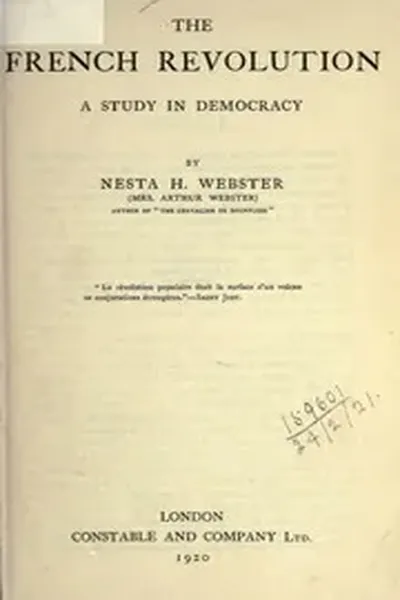
William Guy Carr's "Pawns in the Game" emerged in 1955, a period rife with Cold War tensions and a growing public discourse around espionage, covert operations, and the perceived threat of global communism. His work tapped into existing anxieties about secret societies and hidden influences, echoing earlier critiques like those found in Nesta Webster's studies of the French Revolution or the theories surrounding the Bavarian Illuminati. Carr’s thesis, that an international finance oligarchy orchestrated world events, found fertile ground amidst fears of a "One World Government." While not directly engaging with academic circles of the time, his work was part of a broader counter-narrative challenging official histories and mainstream geopolitical interpretations. The reception was primarily within circles interested in conspiracy theories and alternative history, rather than academic political science. His ideas circulated in a milieu concerned with figures like Winston Churchill and figures allegedly manipulating him, reflecting a post-war search for order and control amidst global instability.
📔 Journal Prompts
The "Money Power's" alleged use of "subversion" to dismantle existing world orders.
Analyze the concept of the "balance of power" as presented in "Pawns in the Game."
Reflect on the historical context of the mid-20th century and its influence on Carr's views.
Consider the "mask of liberal democracy" as a tool of alleged elite control.
Examine the role of "Pawns in the Game" as depicted in the book.
🗂️ Glossary
Money Power
The term used by Carr to describe a clandestine international oligarchy that allegedly controls global finance and manipulates political events to maintain its dominance.
Pawns in the Game
Individuals, nations, or organizations allegedly used unknowingly by the "Money Power" to further its agenda, often through participation in wars or revolutions.
Empire of the City
Refers to the alleged dominion of the financial oligarchy, with its center often identified as the City of London, seeking to establish global control.
Subversion
The deliberate tactic employed by the "Money Power" to destroy existing world orders, social structures, and governments to pave the way for their own controlled system.
Balance of Power
In Carr's thesis, this is not a natural geopolitical state but a condition deliberately engineered and maintained by the "Money Power" to perpetuate its control and manage rivalries.
One World Government
The alleged ultimate goal of the "Money Power" is to establish a single, centralized global government under their control, replacing sovereign nations.
Committee of Three Hundred
A group named by Carr as part of the alleged elite conspiracy working towards a One World Government, supposedly directing global affairs.
This book appears in 1 collection
🔮 Readers Also Liked
Browse all →




From the “Illuminati” Collection
View all →





More Free Freemasonry & Secret Societies Books
View all →