What are the Illuminati?
The Illuminati were a historical secret society founded in Bavaria in 1776 by Adam Weishaupt. Their stated goals involved opposing superstition, prejudice, and the influence of religion on public life, and supporting Enlightenment ideals. The group was suppressed and outlawed by the Bavarian government in the 1780s. Despite their short existence, the Illuminati have become a recurring subject in conspiracy theories, often depicted as a shadowy organization manipulating world events.
Best Books for Complete Beginners
For those new to the topic, start with foundational historical accounts. John Robison's 'Proofs of a Conspiracy against all the Religions and Governments of Europe' (1797) provides a contemporary, albeit biased, look at alleged secret society activities. Vernon Stauffer's 'New England and the Bavarian Illuminati' (1918) examines their influence in America. John Uri Lloyd's 'Etidorhpa; or, The End of Earth.' (1895) offers a fictionalized, allegorical journey that touches on hidden knowledge and esoteric themes, serving as an accessible entry point to related ideas.
Intermediate Reading
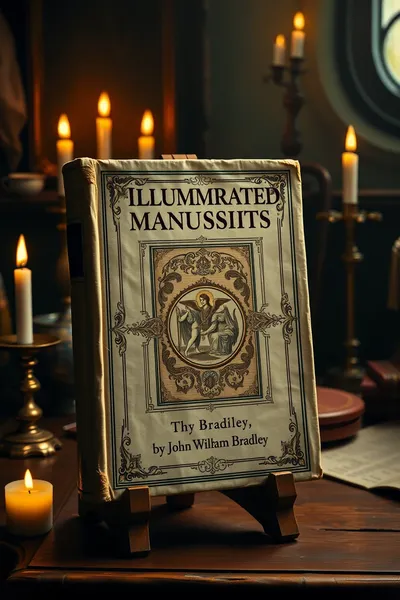
Intermediate readers can explore the intersection of art, craft, and esoteric symbolism. Works like J. H. Middleton's 'Illuminated manuscripts in classical and mediaeval times' (1895) and John William Bradley's 'Illuminated Manuscripts' (1905) detail the historical art of illumination, often linked to secretive monastic traditions. Edward Johnston's 'Writing & Useful, & Lettering' (1906) offers practical guidance on these ancient arts. M. Digby Wyatt's 'The History, Theory, and Practice of Useful' (1861) bridges historical practice with contemporary application.
Classical / Advanced Texts
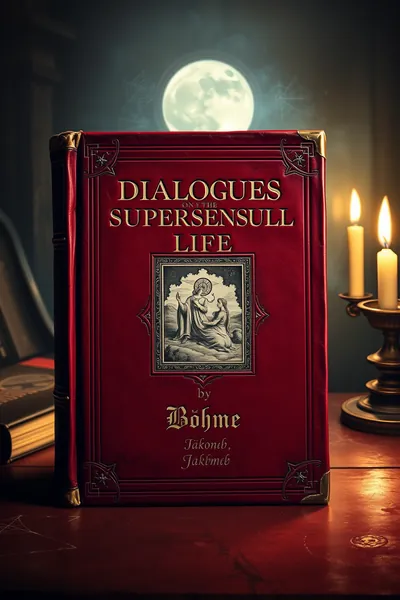
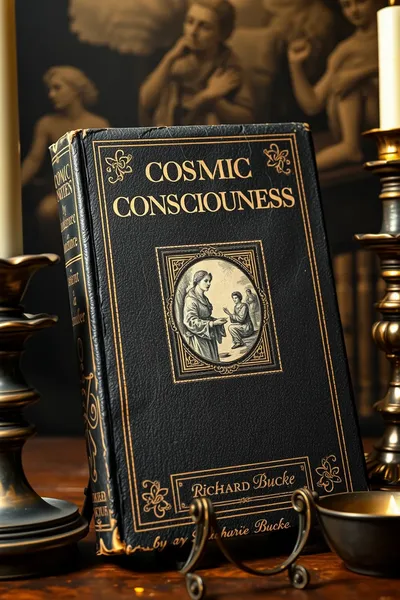
Advanced study involves examining primary philosophical and mystical sources that influenced or are associated with esoteric traditions. Jakob Böhme's 'Dialogues on the Supersensual Life' (1622) presents complex mystical philosophy. Richard Maurice Bucke's 'Cosmic Consciousness' (1901) explores altered states of awareness. Texe Marrs's 'Hidden Codes Of The Illuminati Codex Magica' and 'Texe Marrs books' represent modern, albeit controversial, interpretations and alleged revelations concerning secret societies and their symbols.
Reading Order — Step by Step
Begin with historical context: Month 1, Weeks 1-2, read John Robison's 'Proofs of a Conspiracy' and Vernon Stauffer's 'New England and the Bavarian Illuminati'. Month 1, Weeks 3-4, transition to the art of illumination with Edward Johnston's 'Writing & Useful, & Lettering' and J. H. Middleton's 'Illuminated manuscripts'. Month 2, explore esoteric philosophy with Jakob Böhme's 'Dialogues on the Supersensual Life' and Richard Maurice Bucke's 'Cosmic Consciousness'. Month 3, engage with modern interpretations and conspiracy narratives by examining Texe Marrs's works and 'Majestic Files'.
Frequently Asked Questions
Which Illuminati book should I read first?
For a historical perspective, begin with John Robison's 'Proofs of a Conspiracy against all the Religions and Governments of Europe' (1797). It offers an early, albeit critical, look at secret societies of the era.
Are the Illuminati still active today?
The historical Bavarian Illuminati were suppressed in the 1780s. Modern discussions often refer to them in the context of conspiracy theories about a hidden group controlling global events.
What is the difference between the historical Illuminati and modern conspiracy theories?
The historical group was a specific Enlightenment-era society. Modern theories often conflate them with other secret societies or attribute vast, ongoing global control to a shadowy 'Illuminati' organization.
Where can I learn about the art of illumination?
Edward Johnston's 'Writing & Useful, & Lettering' (1906) is a practical guide for beginners. For historical context, consult J. H. Middleton's 'Illuminated manuscripts in classical and mediaeval times' (1895).
Are Texe Marrs's books reliable sources on the Illuminati?
Texe Marrs's works present controversial interpretations and alleged revelations. While popular in conspiracy circles, they are generally considered speculative rather than historically or academically rigorous.
What philosophical ideas influenced groups like the Illuminati?
The Enlightenment emphasized reason, secularism, and individual liberty. Esoteric traditions and mystical philosophy, as seen in Jakob Böhme's work, also provided frameworks for secret knowledge and spiritual seeking.
How does 'Cosmic Consciousness' relate to the Illuminati?
While not directly about the Illuminati, Bucke's 'Cosmic Consciousness' (1901) explores profound states of awareness and spiritual evolution, themes often found in esoteric and mystical traditions associated with secret societies.