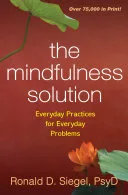
The Mindfulness Solution
 82
82

The Mindfulness Solution
Ronald D. Siegel's "The Mindfulness Solution" offers a pragmatic antidote to the often-intimidating mystique surrounding mindfulness. Unlike many texts that position mindfulness as a lofty spiritual pursuit, Siegel grounds it firmly in the reality of daily life. His strength lies in his ability to translate complex psychological principles into actionable advice, illustrated by the concept of "informal practice" – finding moments of awareness during mundane tasks. A limitation, however, is that for readers deeply entrenched in existing spiritual or philosophical frameworks, the purely functional presentation might feel somewhat sterile, lacking a richer theoretical or historical context. The discussion on attention regulation, particularly how it can be applied to manage intrusive thoughts, stands out as a clear, helpful passage. Ultimately, Siegel provides an accessible entry point for those seeking tangible benefits from mindful awareness without requiring a significant lifestyle overhaul.
📝 Description
82
Ronald D. Siegel's 2009 book argues mindfulness is accessible for everyday life, not just retreats.
Published in 2009, "The Mindfulness Solution" by Ronald D. Siegel presents mindfulness as a practical toolkit for daily living, rather than a discipline requiring extensive monastic dedication. Siegel, a therapist, breaks down the concept into manageable practices that can be woven into ordinary activities, from commutes to household chores. The book demonstrates that developing awareness is achievable for anyone, irrespective of their schedule or prior meditation experience. This guide is for individuals aiming to lower stress, sharpen focus, and improve their general well-being without strictly following a formal spiritual path. It is especially suited for busy professionals, parents, students, or anyone feeling overwhelmed. Those who have found traditional meditation challenging or intimidating will likely welcome Siegel's straightforward approach. The book also speaks to the skeptic seeking concrete, evidence-based methods and the seasoned practitioner wishing to deepen their mindful engagement.
Siegel's work emerged in 2009 amidst growing public interest in mindfulness, building on the secularization of contemplative practices pioneered by figures like Jon Kabat-Zinn and the Mindfulness-Based Stress Reduction movement. His contribution lies in framing mindfulness as a practical, secular skill applicable to modern life, distinct from more rarefied or religiously-bound contemplative traditions. The book's release coincided with increased scientific validation of mindfulness benefits, solidifying its place within wellness discourse as an accessible alternative to purely cognitive approaches.
💡 Why Read This Book?
• You will learn to integrate mindfulness into daily routines like commuting or household chores, drawing on Siegel's concept of "informal practice" as detailed in the book's early chapters, making mindfulness accessible even with limited time. • You will gain practical strategies for managing stress and improving focus by understanding attention regulation techniques, as presented in the book's practical application sections. • You will discover how to cultivate a non-judgmental awareness of thoughts and emotions, a core principle discussed throughout the text, offering a path to greater emotional balance.
⭐ Reader Reviews
Honest opinions from readers who have explored this book.
❓ Frequently Asked Questions
What is Ronald D. Siegel's definition of mindfulness in 'The Mindfulness Solution'?
Siegel defines mindfulness as the ability to pay attention to the present moment with intention and without judgment. He emphasizes cultivating this skill through both formal meditation and informal practices integrated into daily life, as detailed from the book's initial publication in 2009.
Can someone with a very busy schedule practice mindfulness according to this book?
Absolutely. Siegel's core argument in 'The Mindfulness Solution' is that mindfulness can be practiced during everyday activities like driving or washing dishes, making it adaptable for even the most demanding schedules.
Does 'The Mindfulness Solution' require any special equipment or beliefs?
No. The book is designed to be accessible to everyone, regardless of their background. It does not require special equipment or adherence to any particular spiritual or religious beliefs, focusing instead on practical psychological techniques.
What are the main benefits of practicing mindfulness as described by Siegel?
Siegel outlines benefits such as reduced stress, improved focus, greater emotional regulation, and an enhanced ability to cope with life's challenges. These are achieved by developing a more present and less reactive way of experiencing the world.
How does Siegel's approach differ from other mindfulness books published around 2009?
Siegel's approach distinguishes itself by its strong emphasis on practical, secular application and integration into everyday activities, rather than focusing solely on formal meditation retreats or spiritual contexts, making it highly accessible.
What is 'informal practice' as presented in 'The Mindfulness Solution'?
'Informal practice' refers to applying mindful awareness to activities already part of one's daily life, such as walking, eating, or listening. Siegel uses this concept extensively to show how mindfulness can be cultivated without needing dedicated time slots.
🔮 Key Themes & Symbolism
Everyday Mindfulness Integration
Siegel champions the integration of mindfulness into the fabric of daily existence, moving beyond traditional, time-intensive practices. The core idea is that moments of awareness can be found in mundane activities like commuting, cooking, or even waiting in line. This theme underscores that mindfulness is not an exclusive discipline but a skill accessible to all, regardless of their schedule or perceived spiritual inclination. By focusing on "informal practice," Siegel provides a framework for cultivating present-moment awareness that complements, rather than replaces, existing routines, making the path to well-being practical and sustainable.
Attention Regulation Skills
A central tenet of Siegel's work is the cultivation of attention regulation. The book elucidates how the mind naturally wanders and how this tendency can contribute to stress and dissatisfaction. Siegel offers concrete methods, derived from therapeutic practice, to train the mind to focus intentionally and to redirect attention when it drifts. This involves developing an awareness of mental patterns and learning to observe thoughts and feelings without immediate reaction. The emphasis is on building a more robust capacity for focused attention, which is presented as a foundational element for managing emotional responses and enhancing cognitive clarity.
Non-Judgmental Observation
The practice of non-judgmental observation is crucial in Siegel's approach to mindfulness. He guides readers to observe their thoughts, emotions, and bodily sensations as they are, without labeling them as 'good' or 'bad.' This acceptance fosters a more balanced relationship with one's inner experience, reducing the struggle against difficult feelings. By cultivating this stance, individuals can gain a clearer perspective on their mental landscape, leading to increased emotional resilience. The book illustrates how this practice can alleviate suffering by changing one's relationship to challenging internal states, rather than attempting to eliminate them.
Resilience Through Presence
Siegel posits mindfulness as a key tool for building psychological resilience in the face of life's inevitable difficulties. By learning to be present with experiences, both pleasant and unpleasant, individuals can develop a greater capacity to withstand adversity. The book suggests that a mindful approach allows one to engage with challenges more effectively, rather than being overwhelmed by them. This theme highlights how the practice of awareness, particularly the ability to observe without immediate reactivity, can foster a sense of calm and stability, enabling individuals to navigate stressful situations with greater composure and wisdom.
💬 Memorable Quotes
Direct passages from the work, attributed to the author.
“Mindfulness offers a path to well-being and tools for coping with life's inevitable hurdles.”
— This foundational statement from the original blurb sets the stage for Siegel's pragmatic approach. It frames mindfulness not as an escape from difficulty, but as an integrated set of skills for navigating challenges more effectively and fostering a state of general well-being.
“You can cultivate it--and reap its proven benefits--without special training or lots of spare time.”
— This highlights the accessibility of the practices described. It directly addresses potential barriers for busy individuals, assuring them that significant time commitments or formal instruction are not prerequisites for gaining the benefits of mindfulness.
“Trusted therapist and mindfulness expert Dr. Ronald Siegel shows exactly how in this inviting guide.”
— This emphasizes Siegel's credentials and the book's purpose: to provide clear, expert instruction. The word 'inviting' suggests a welcoming and non-intimidating tone, crucial for a topic that can sometimes feel complex or daunting.
“You'll get effective strategies to use while driving to work, walking the dog, or washing the dishes...”
— This concrete example illustrates the concept of 'informal practice.' It demonstrates how mindfulness techniques can be seamlessly woven into ordinary daily activities, making the practice highly practical and adaptable to individual lifestyles.
“...plus tips on creating a formal practice routine in as little as [time unspecified].”
— This acknowledges the value of dedicated practice while reassuring readers that even short, regular sessions can be beneficial. It balances the emphasis on informal methods with guidance for establishing a more structured, though still time-efficient, routine.
🌙 Esoteric Significance
Tradition
While "The Mindfulness Solution" is presented secularly, its techniques echo ancient contemplative practices found across various Eastern traditions, particularly Buddhism. Siegel draws upon concepts of focused attention, awareness, and non-attachment that have been central to Buddhist meditation for centuries. However, he deliberately strips away the religious and philosophical dogma, presenting mindfulness as a psychological skill rather than a spiritual path. This secularization aligns with a modern esoteric trend of extracting practical techniques from ancient wisdom traditions for personal development, divorcing them from their original cultural and religious contexts.
Symbolism
The book itself largely eschews overt symbolism, focusing instead on the direct experience of awareness. However, the implicit symbolism lies in the very act of mindful engagement with the mundane. Ordinary objects and activities—a cup of tea, a walk, the breath—become symbols of present-moment reality when observed with focused attention. The 'breath' itself functions as a primary anchor, symbolizing the continuous, fundamental rhythm of life and the ever-present opportunity to return to the here and now, a common motif in many contemplative systems.
Modern Relevance
Siegel's work remains highly relevant today, influencing countless modern wellness programs, corporate mindfulness initiatives, and therapeutic applications. Thinkers and practitioners in fields like positive psychology, neuroscience, and secular mindfulness continue to build upon his accessible framework. His emphasis on practical integration speaks to contemporary demands for evidence-based, time-efficient self-improvement strategies. The book serves as a foundational text for understanding how ancient contemplative insights can be effectively translated into tools for working through the complexities of 21st-century life without requiring adherence to traditional spiritual doctrines.
👥 Who Should Read This Book
• Individuals experiencing stress and seeking practical, secular coping mechanisms: Readers will learn concrete techniques for managing daily pressures by integrating mindfulness into activities like commuting or household chores. • Busy professionals and parents looking for time-efficient self-care: The book offers strategies for cultivating awareness in short, accessible bursts, making mindfulness achievable even with demanding schedules. • Skeptics interested in evidence-based approaches to well-being: Siegel's background as a therapist and the book's focus on practical application provide a grounded, non-dogmatic introduction to the benefits of mindful awareness.
📜 Historical Context
Published in 2009, "The Mindfulness Solution" arrived as mindfulness was transitioning from niche therapeutic circles into broader public consciousness. This period saw the widespread adoption of mindfulness-based interventions like Mindfulness-Based Cognitive Therapy (MBCT) and Mindfulness-Based Stress Reduction (MBSR), pioneered by figures such as Zindel Segal and Jon Kabat-Zinn, respectively. Siegel's work positioned itself within this burgeoning field by offering a highly accessible, secular framework, differentiating itself from more religiously-inflected contemplative traditions. It emerged during a time when scientific validation for mindfulness's psychological benefits was rapidly accumulating, making it appealing to a secular audience skeptical of purely spiritual claims. The book provided a practical counterpoint to some approaches that might have seemed overly demanding or esoteric, contributing to the popularization of mindfulness as a tool for everyday well-being.
📔 Journal Prompts
Mindful engagement with routine tasks: Reflect on incorporating non-judgmental observation during a specific chore like washing dishes.
Attention regulation during distraction: How can you practice redirecting your focus when your mind wanders during a simple activity?
The experience of informal practice: Describe a moment today where you consciously applied mindfulness while walking or eating.
Observing difficult emotions: Note a time you observed an unpleasant feeling without immediate reaction, as discussed in the book.
Cultivating presence: Identify one small, everyday moment where you can intentionally practice being fully present in the next 24 hours.
🗂️ Glossary
Mindfulness
The practice of paying attention to the present moment, intentionally and without judgment. It involves observing thoughts, feelings, and sensations as they arise.
Informal Practice
Integrating mindfulness techniques into everyday activities such as commuting, eating, or household chores, rather than relying solely on dedicated meditation time.
Formal Practice
Dedicated time set aside for mindfulness exercises, typically involving sitting meditation, focusing on the breath or bodily sensations.
Attention Regulation
The ability to direct and sustain attention, and to shift it appropriately. Mindfulness training aims to enhance this cognitive skill.
Non-Judgmental Observation
Observing one's thoughts, emotions, and experiences without labeling them as good or bad, right or wrong. It fosters acceptance and reduces internal conflict.
Resilience
The capacity to recover quickly from difficulties; toughness. Mindfulness contributes to resilience by helping individuals cope with stress and adversity.
Present Moment Awareness
Being fully conscious and engaged with what is happening right now, rather than dwelling on the past or worrying about the future.