Louis Bouyer
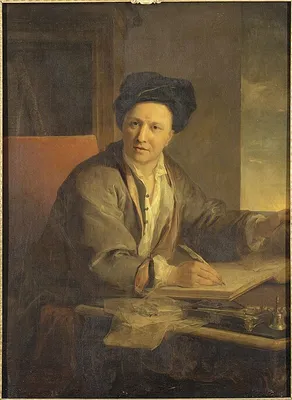
Bernard Le Bovier de Fontenelle was a French Enlightenment writer known for making science accessible and exploring philosophical ideas.
Bernard Le Bovier de Fontenelle, born in Rouen in 1657 and died in Paris in 1757, was a prominent French writer during the early Enlightenment. He was the nephew of the famous playwrights Pierre and Thomas Corneille. Though trained in law, Fontenelle dedicated his life to writing, particularly on scientific and philosophical subjects, often defending Cartesian viewpoints. He was a member of multiple French academies, including the Académie française and the Academy of Sciences, where he served as perpetual secretary for over four decades. Fontenelle was celebrated for his ability to explain complex scientific ideas in an accessible manner, bridging the gap between the scientific community and the general educated public. His literary career began with poetry and drama, but he gained significant recognition for his philosophical and scientific writings, which explored themes of cosmology, religion, and the nature of knowledge. He remained a respected figure throughout his long life, offering advice to younger writers and attributing his longevity to simple pleasures like eating strawberries.
Philosophical and Scientific Explication
Fontenelle distinguished himself as a commentator and explicator rather than an originator of scientific theories. He was a staunch defender of the Cartesian tradition, particularly concerning the concept of vortices in physics. His work 'Entretiens sur la pluralité des mondes' (Conversations on the Plurality of Worlds) was highly influential in popularizing the idea of multiple worlds, making complex astronomical theories understandable to a wider audience. This accessibility was a hallmark of his writing, encouraging literate society to engage with 'natural philosophy' and enriching the intellectual landscape of the early Enlightenment. Despite his advocacy for Descartes, he later supported modern scientific views over older ones in his 'Digression sur les anciens et les modernes' and questioned physical theories in 'Doutes sur le système physique des causes occasionnelles'.
Literary and Theological Engagement
While known for scientific exposition, Fontenelle also engaged with theological and philosophical debates. His 'Histoire des oracles' (History of the Oracles) caused a stir by arguing that oracles were not divinely inspired or demonically influenced, nor did they cease with the advent of Christianity. This work, though met with a refutation by a Jesuit, was left unanswered by Fontenelle due to his aversion to conflict. His 'Nouveaux Dialogues des morts' (New Dialogues of the Dead) showcased his wit and erudition through imagined conversations between historical and mythological figures, exploring philosophical questions about constancy in human nature and wisdom across ages. His 'Lettres galantes du chevalier d’Her***' portrayed contemporary society, and his allegory in 'Relation de l’île de Bornéo' subtly addressed religious matters.
Role in French Intellectual Life
Fontenelle occupied a unique position in French intellectual society, acting as a bridge between the classical era of Corneille and Racine and the burgeoning Enlightenment figures like Voltaire and Diderot. His membership in prestigious academies, including the Académie française and the Academy of Sciences, where he served as perpetual secretary for forty-two years, underscored his standing. In this capacity, he authored analyses of academy proceedings and 'éloges' (eulogies) of its members, written with notable simplicity and delicacy. He was known for his diplomatic approach to navigating intellectual and social circles, earning widespread esteem without making significant enemies, a contrast to figures like Voltaire. His longevity and continued intellectual vibrancy into his nineties made him a notable personality.
Key Ideas
- Accessibility of scientific knowledge for the general public
- Defense of Cartesian philosophy, particularly the theory of vortices
- Exploration of the plurality of worlds
- Critical examination of religious beliefs and historical oracles
- Philosophical dialogues on human nature and history
Notable Quotes
“Behold a universe so immense that I am lost in it. I no longer know where I am. I am just nothing at all. Our world is terrifying in its insignificance.”
“You must courageously offer your brow to laurel wreaths and your nose to blows.”
Books by Louis Bouyer
2 free public domain books · Read online or download