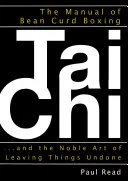
The Manual of Bean Curd Boxing: Tai Chi and the Noble Art of Leaving Things Undone
 74
74

The Manual of Bean Curd Boxing: Tai Chi and the Noble Art of Leaving Things Undone
Paul Read’s *The Manual of Bean Curd Boxing* attempts to distill the essence of Tai Chi and Taoism into a practical guide for 21st-century living. The central metaphor of "Bean Curd Boxing" – the idea of yielding and absorbing rather than confronting – is genuinely insightful, offering a refreshing perspective on overcoming obstacles. Read’s prose, particularly when describing the process of "getting out of our own way," avoids the usual platitudes, presenting a clear path toward less stressed engagement with life. However, the book occasionally falters in its execution; the "Step by Slow Step" methodology, while conceptually sound, can feel somewhat repetitive in places, slowing the momentum it seeks to build. A notable passage discussing how to "remain tranquil and calm under the stress of d[aily life]" vividly illustrates the book's potential, but the abbreviation hints at an unfinished quality that permeates certain sections. Ultimately, *The Manual of Bean Curd Boxing* offers valuable, if unevenly presented, wisdom for those seeking a gentler approach to existence.
📝 Description
74
Paul Read's 2012 book, The Manual of Bean Curd Boxing, suggests a method for engaging the world through effortless action.
Published in 2012, The Manual of Bean Curd Boxing proposes a way to interact with daily life by emphasizing minimal effort and strategic non-interference. The book guides readers through practical techniques to face everyday challenges with more energy, passion, and understanding. It argues that adopting the main ideas of Taoism and Tai Chi can lead to a life with less strain and more natural movement.
This guide is for people who want to connect philosophical ideas with their daily lives without adding more complexity. It will interest those drawn to Eastern thought, especially Taoism and Tai Chi, and seek a straightforward, usable manual. Readers aiming to overcome personal stagnation, decrease worry, and find inner quiet amidst external stress will find it useful. It is for anyone feeling burdened by modern demands and looking for a smoother, less taxing way to handle life's difficulties.
The Manual of Bean Curd Boxing appeared in the early 21st century, a period of continued Western interest in Eastern contemplative practices. Paul Read's work echoes earlier efforts to simplify Taoist concepts for a broader audience, similar to Alan Watts's approach in the mid-20th century. However, Read specifically uses Tai Chi as a central metaphor. The book's focus on 'leaving things undone' offers a contrast to more proactive self-help methods common at the time, suggesting a path of deliberate inaction.
💡 Why Read This Book?
• Learn to harness the Taoist principle of Wu Wei, understanding how "leaving things undone" can paradoxically achieve more, as explored through the "Bean Curd Boxing" metaphor. • Discover practical methods for integrating Tai Chi's yielding nature into daily activities, reducing stress and fostering a "no sweat and no stress" approach to challenges, as outlined in the manual's step-by-step guidance. • Cultivate the ability to "get out of our own way" by recognizing and releasing self-imposed obstacles, allowing life to "pursue its natural course" through the cultivation of tranquil awareness.
⭐ Reader Reviews
Honest opinions from readers who have explored this book.
❓ Frequently Asked Questions
What is "Bean Curd Boxing" in the context of this book?
"Bean Curd Boxing" is a central metaphor in Paul Read's book, representing the art of yielding, absorbing, and redirecting force, much like soft tofu absorbs impact, rather than confronting it directly. It embodies the Tai Chi principle of using softness to overcome hardness.
How does the book apply Tai Chi to daily life?
The book applies Tai Chi principles by illustrating how to approach daily activities with the same fluidity, balance, and yielding strength found in the martial art. It focuses on mindful engagement and responding naturally, rather than forcing outcomes.
What does "leaving things undone" mean according to this manual?
In the context of the book, "leaving things undone" refers to the Taoist concept of Wu Wei, or effortless action. It means refraining from unnecessary intervention and allowing situations to unfold naturally, intervening only when necessary and with minimal effort.
Is this book a practical guide to learning Tai Chi movements?
No, the book is not a technical manual for learning Tai Chi forms. Instead, it uses the philosophy and principles of Tai Chi as a metaphor and framework for understanding how to live more effectively and peacefully in the 21st century.
Who is the author, Paul Read?
Paul Read is the author of *The Manual of Bean Curd Boxing*. While details about his background are not extensively provided in the original blurb, the book positions him as an interpreter of Eastern philosophy for Western audiences.
When was The Manual of Bean Curd Boxing first published?
The book was first published on December 10, 2012. This places its emergence within a period of continued interest in practical applications of Eastern wisdom traditions.
🔮 Key Themes & Symbolism
Effortless Action (Wu Wei)
The central theme revolves around the Taoist concept of Wu Wei, or effortless action. The book posits that true efficacy comes not from forceful striving, but from yielding and aligning with natural forces. This is exemplified by the 'Bean Curd Boxing' metaphor, suggesting that absorbing and redirecting is more potent than direct confrontation. Readers are guided to identify and release unnecessary effort, allowing life's processes to unfold more smoothly and naturally.
Mindful Engagement
This theme emphasizes the importance of conscious awareness in daily activities. The manual encourages readers to approach life's challenges with a "tranquil and calm" state of mind, fostering a responsive rather than reactive mode of being. By observing the natural course of events and acting in accordance with them, individuals can achieve greater harmony and reduce internal friction, leading to a more passionate and wise engagement with the world.
Integration of Ancient Wisdom
The work seeks to bridge the gap between ancient philosophical traditions, specifically Taoism and Tai Chi, and the demands of contemporary existence. It presents these age-old practices not as abstract doctrines but as accessible tools for practical application. The goal is to absorb these lessons into daily routines "with no sweat and no stress," demonstrating that profound wisdom can enhance, rather than complicate, modern life.
Overcoming Inertia
A significant aspect of the manual addresses the human tendency to create obstacles through overthinking and resistance. The concept of "getting out of our own way" is paramount. By understanding the mechanics of how we impede our own progress, readers are offered techniques to dissolve these internal barriers, thereby unlocking greater energy and enabling life to move forward with greater ease and purpose.
💬 Memorable Quotes
Direct passages from the work, attributed to the author.
“How to absorb the simple lessons of Taoism and Tai Chi into your daily activities with no sweat and no stress.”
— This expresses the book's core promise: making profound philosophical concepts practically applicable to everyday life. It highlights the desire to reduce the burden of modern living by integrating ancient wisdom seamlessly.
“How to learn to get out of our own way, so that life can pursue its natural course.”
— This points to the central challenge the book aims to address – self-imposed limitations. It suggests that true progress often involves ceasing resistance and allowing natural processes to unfold, rather than forcing outcomes.
“How to remain tranquil and calm under the stress of d[aily life].”
— This phrase speaks to the cultivation of inner resilience. It suggests that the principles discussed can lead to a state of equanimity, enabling individuals to face the pressures of modern existence with greater composure and less agitation.
“Step by Slow Step, this manual shows: How to reach out and grasp life with more energy, with more passion and with more wisdom.”
— This indicates the book's pedagogical approach – gradual and deliberate. It promises tangible outcomes: enhanced vitality, deeper engagement, and increased insight, all achieved through a measured application of its teachings.
“The Manual of Bean Curd Boxing is a book that introduces us to a new perspective on Tai Chi and 21st Century Living.”
— This statement defines the book's unique contribution, positioning it as an innovative interpretation of Tai Chi's relevance in the modern world, offering a fresh viewpoint beyond traditional martial arts contexts.
🌙 Esoteric Significance
Tradition
The work draws heavily from Taoism, a philosophical and spiritual tradition originating in ancient China. While not strictly Hermetic or Kabbalistic, its emphasis on natural flow, yielding, and the power of emptiness aligns with certain esoteric currents that value intuition and alignment with cosmic principles over rigid dogma. It presents a practical, almost secularized, interpretation of Taoist tenets, making them accessible outside of traditional religious or martial arts contexts.
Symbolism
The primary symbol is "Bean Curd Boxing" itself, representing the paradoxical strength found in softness and yielding. This symbolizes the Taoist ideal of Wu Wei (effortless action), where force is met not with resistance but with absorption and redirection. Another motif is the "natural course" of life, symbolizing the underlying order and intelligence of the universe that humans often disrupt through excessive intervention. The "tranquil and calm" state signifies a mind aligned with this natural order.
Modern Relevance
Contemporary thinkers and practitioners in fields like somatic psychology, mindfulness-based stress reduction (MBSR), and even some coaching methodologies echo the book's core ideas. The emphasis on reducing internal friction and aligning with natural processes appeals to modern approaches to well-being that seek alternatives to high-stress, productivity-focused paradigms. Practitioners of modern Tai Chi, seeking deeper philosophical understanding beyond mere physical form, also find value in Read's interpretive approach.
👥 Who Should Read This Book
• Individuals interested in Taoism and Tai Chi who seek practical applications beyond physical practice, looking to "get out of our own way." • Busy professionals and students feeling overwhelmed by modern life, aiming to cultivate "tranquil and calm" awareness and reduce stress through effortless action. • Seekers of alternative self-help philosophies who are drawn to concepts of yielding, non-resistance, and allowing life to "pursue its natural course" with greater wisdom.
📜 Historical Context
Published in December 2012, *The Manual of Bean Curd Boxing* emerged during a period of sustained Western interest in mindfulness, Eastern philosophies, and practical self-improvement techniques. While the early 21st century saw numerous books attempting to translate concepts like Zen or Taoism into actionable advice, Paul Read's work distinguished itself by focusing specifically on Tai Chi's metaphorical application to everyday stress. This approach provided a counterpoint to more assertive or goal-oriented self-help literature popular at the time. Unlike contemporaries who might focus purely on meditation or philosophical discourse, Read grounds his exploration in the physical and philosophical language of Tai Chi. His work exists within the broader context of perennial philosophy movements, yet offers a specific, perhaps less overtly spiritual, interpretation tailored for a secular audience grappling with the pace of modern life.
📔 Journal Prompts
The "Bean Curd Boxing" metaphor: how does yielding protect or advance your goals?
Identifying instances where you "get out of your own way" to allow life's natural course.
Applying "no sweat and no stress" principles to a current daily activity.
Cultivating "tranquil and calm" awareness during moments of high pressure.
Exploring the energy and passion gained from "leaving things undone."
🗂️ Glossary
Bean Curd Boxing
A metaphorical concept representing the practice of yielding, absorbing, and redirecting force rather than confronting it directly, embodying the softness and adaptability of bean curd.
Wu Wei
A central Taoist concept often translated as "non-action" or "effortless action." It signifies acting in accordance with the natural flow of things, without unnecessary striving or force.
Leaving Things Undone
Related to Wu Wei, this phrase emphasizes the wisdom in refraining from excessive intervention, allowing natural processes to unfold and achieve their own results with minimal external push.
Getting Out of Our Own Way
The process of recognizing and releasing self-imposed obstacles, mental blocks, and unnecessary resistance that prevent progress and hinder the natural unfolding of life.
Natural Course
Refers to the inherent flow and order of existence, suggesting that by aligning with these natural processes, one can achieve greater harmony and effectiveness.
Tranquil and Calm
A state of inner peace and mental stillness, cultivated through mindful awareness and the application of Taoist principles, enabling clearer perception and less reactive responses.
21st Century Living
The contemporary context of modern life, characterized by its unique pressures, pace, and complexities, for which the book offers ancient wisdom as a guiding framework.