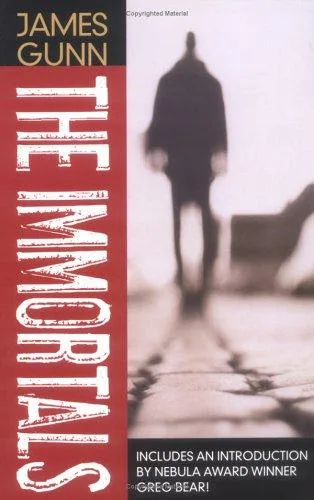
The Immortals
 76
76

The Immortals
James E. Gunn’s 1964 novel, *The Immortals*, presents a sober look at a future where death is optional, a premise that feels remarkably prescient. Unlike many genre explorations of longevity, Gunn grounds his narrative in plausible biological and sociological consequences, avoiding facile utopianism. The novel’s strength lies in its unflinching examination of the societal fractures that would inevitably occur. However, the characterizations, while serving the thematic purpose, can feel somewhat secondary to the grander societal questions being posed. A particularly striking aspect is the depiction of the 'immortals' struggling with existential boredom and the obsolescence of their own experiences, a concept that feels more relevant now than perhaps it did in the mid-20th century. The work offers a stark, intelligent contemplation on what it means to be human when the ultimate human experience—death—is removed. It is a significant piece of speculative fiction that rewards patient consideration.
📝 Description
76
James E. Gunn's 1964 novel, The Immortals, considers the societal impact of biological immortality.
Published in 1964, The Immortals moves past simple wish fulfillment to examine the biological, societal, and psychological strains of indefinite human life. The narrative questions how humanity might adapt to the presence of individuals who do not age or die, focusing on the complex challenges rather than easy solutions. It considers the potential for societal stratification, the psychological effects of infinite time, and the environmental pressures of a non-dying population.
The book engages with the implications of the pro-longevity condition, contemplating both the biological possibilities and the significant social and psychological fallout. Gunn addresses the risks of a permanent elite, the strain on resources from a growing population, and the existential weariness that could affect beings with limitless lifespans. The work probes deep questions about the human condition and the long-term consequences of scientific advancement on society and individual identity.
The Immortals emerged during a period of rapid scientific change and existential anxiety, mirroring broader cultural questions about humanity's future. While not strictly an occult text, its exploration of extended lifespans and the potential for a class of unchanging beings touches upon themes found in older esoteric traditions that contemplate transcendence and the alteration of natural life cycles. The book's focus on the social and psychological ramifications of defying natural death aligns with a strain of speculative fiction that uses scientific premises to examine enduring human desires and fears about mortality and permanence.
💡 Why Read This Book?
• Understand the societal stratification caused by indefinite lifespans, as explored through the distinct social tiers that emerge between the immortal beings and the mortal population. • Grasp the psychological toll of eternity, specifically the existential ennui and disconnect that the immortal characters experience over centuries. • Appreciate the speculative biological underpinnings of extended life, considering the novel's 1964 context and its exploration of advanced genetic or cellular therapies that enable immortality.
⭐ Reader Reviews
Honest opinions from readers who have explored this book.
❓ Frequently Asked Questions
When was James E. Gunn's The Immortals first published?
The Immortals by James E. Gunn was first published in 1964, placing it within the golden age of science fiction that was increasingly exploring complex societal and philosophical themes.
What is the primary subject matter of The Immortals?
The novel primarily addresses the societal, psychological, and biological consequences of human immortality, examining how humanity might cope with extended lifespans.
Does The Immortals offer a utopian vision of immortality?
No, The Immortals presents a more realistic and often bleak perspective, focusing on the potential for social division, existential boredom, and resource strain.
What makes The Immortals stand out among other immortality narratives?
Its strength lies in its detailed exploration of the *societal* impact and the psychological burden of eternal life, rather than just the scientific possibility.
Who was James E. Gunn?
James E. Gunn was an American science fiction writer and editor, known for his thoughtful and analytical approach to science fiction themes, and was a professor of English.
Is The Immortals based on any scientific theories from its publication era?
Published in 1964, the novel draws on contemporary speculative ideas about biology and genetics, envisioning advanced therapies that could halt or reverse aging processes.
🔮 Key Themes & Symbolism
Societal Stratification
The work meticulously details the emergence of distinct social classes predicated on the ability to achieve immortality. This division isn't merely economic but existential, creating a gulf between those who experience time linearly and those who perceive it as an unending expanse. The novel explores the inherent inequalities and potential conflicts arising from a permanent biological divide, a concept that critiques societal structures of the mid-20th century and remains relevant to discussions of longevity treatments today.
Existential Ennui
Beyond the physical benefits, The Immortals probes the psychological cost of unending existence. Characters grapple with profound boredom, a loss of purpose, and the detachment that comes from outliving generations and experiencing the stagnation of personal growth over vast timescales. This theme questions the desirability of immortality when it might lead to a loss of the very drive and meaning that mortality provides, a stark contrast to the era's fascination with progress.
Biological Determinism
The narrative posits that a biological mechanism for immortality could fundamentally alter human nature and societal organization. It examines how the removal of death, a universal human experience, reshapes motivations, relationships, and the very definition of what it means to be human. This biological determinism serves as a lens to critique societal assumptions about progress and the potential pitfalls of scientific overreach.
The Nature of Time
The Immortals contrasts the mortal perception of time as a finite resource with the immortal experience of it as an endless ocean. This divergence in temporal perception leads to fundamental differences in outlook, ambition, and the value placed on moments. The book uses this contrast to explore how our relationship with time shapes our lives and how an infinite relationship might lead to a profound disconnect from reality.
💬 Memorable Quotes
Direct passages from the work, attributed to the author.
“Centuries could erase the urgency of years.”
— This interpretation suggests that with an infinite lifespan, the perceived value of individual moments diminishes, leading to a loss of drive and a sense of perpetual present.
“They were relics of a past the world had outgrown.”
— This captures the feeling of obsolescence experienced by immortal characters, who find their skills, knowledge, and very existence irrelevant in a constantly evolving mortal world.
“Immortality was a biological state, but society remained mortal.”
— This highlights the fundamental conflict in the book: the tension between individuals who no longer die and the social structures and biological realities of a world still bound by mortality.
💡 Key Ideas
Editorial paraphrase of the work's core concepts — not direct quotes.
The problem was not how to live forever, but how to live when you did.
This paraphrased concept highlights the novel's central thesis: immortality's true challenge lies not in achieving it, but in managing the existential and societal consequences of an unending life.
The greatest fear was not death, but the absence of change.
This paraphrased concept points to the psychological stagnation that immortality might bring, where the lack of new experiences and the unchanging self become more terrifying than mortality.
🌙 Esoteric Significance
Tradition
While not explicitly rooted in a single esoteric tradition, *The Immortals* engages with themes common in Hermetic and Gnostic thought concerning the nature of existence, mortality, and the potential for transcending natural limitations. It explores a form of artificial apotheosis, a concept that echoes ancient desires for eternal life, but grounds it in speculative biology rather than divine intervention or spiritual attainment. The work can be seen as a secularized exploration of the 'immortal soul' or 'eternal life' concepts, re-imagined through a scientific lens.
Symbolism
The central symbol is the 'immortal' state itself, representing the ultimate decoupling from natural cycles and the existential burden this imposes. Another motif is the concept of 'stagnation,' symbolizing the psychological and societal decay that can result from the absence of death's urgency and the cessation of personal evolution. The stark contrast between the 'immortals' and the 'mortals' can symbolize the Gnostic division between the enlightened and the unenlightened, or the Hermetic pursuit of perfection versus the material world's limitations.
Modern Relevance
Contemporary discussions surrounding life extension, biohacking, and the ethics of advanced medical technologies directly echo the concerns raised in *The Immortals*. Thinkers and researchers in fields like transhumanism, longevity science, and bioethics often revisit narratives that critically examine the societal and psychological impacts of significantly extended lifespans. The novel's prescient portrayal of existential ennui and social division among the long-lived remains a touchstone for evaluating the desirability and feasibility of achieving biological immortality.
👥 Who Should Read This Book
• Speculative fiction enthusiasts interested in the long-term consequences of scientific advancement, particularly those focused on biological immortality. • Readers exploring philosophical science fiction that examines existential themes, societal structures, and the human condition through a hypothetical future. • Individuals interested in the history of science fiction's engagement with themes of longevity and eternity, specifically works from the mid-20th century that moved beyond simple adventure.
📜 Historical Context
James E. Gunn's *The Immortals*, published in 1964, emerged during a period of intense scientific optimism and societal reevaluation. The mid-20th century was captivated by advancements in genetics, medicine, and space exploration, fueling speculative fiction's engagement with humanity's future. Works like this grappled with the potential outcomes of conquering biological limitations, a theme explored concurrently by authors like Robert Heinlein in his later works and by the burgeoning field of bioethics. The novel’s exploration of biological determinism and societal impact reflects a broader intellectual current that questioned the uncritical embrace of technological progress, a sentiment shared by critics of the era who were wary of unchecked scientific ambition. The book’s reception was part of a larger conversation within science fiction about the ethical and social ramifications of scientific possibility, particularly as the genre matured beyond pulp adventure into more serious philosophical inquiry.
📔 Journal Prompts
The concept of societal stratification between immortals and mortals.
The psychological toll of centuries of existence on an immortal being.
The biological mechanisms proposed in 1964 for achieving immortality.
The divergence in the perception of time between mortal and immortal characters.
The potential for stagnation versus progress in a society with indefinite lifespans.
🗂️ Glossary
Pro-longevity
Referring to conditions or technologies that significantly extend lifespan, often to the point of biological immortality, as explored in the novel.
Existential Ennui
A profound sense of boredom and lack of purpose arising from the perceived meaninglessness of existence, particularly relevant to immortal characters in the book.
Societal Stratification
The division of society into distinct hierarchical layers or classes, in this context, based on the biological capacity for immortality.
Biological Determinism
The theory that human behavior and societal organization are primarily determined by biological factors, such as the presence or absence of aging and death.
Temporal Perception
The way individuals or groups perceive and experience the passage of time; contrasted between mortals with finite lifespans and immortals with infinite ones.
Mortal vs. Immortal
The fundamental distinction drawn in the novel between those subject to death and those who have overcome it, highlighting the resultant societal and psychological differences.
The Problem of Immortality
The core philosophical and practical challenge addressed by the book: not achieving immortality, but living with its consequences.
🔮 Readers Also Liked
Browse all →







More Free Occult Philosophy Books
View all →