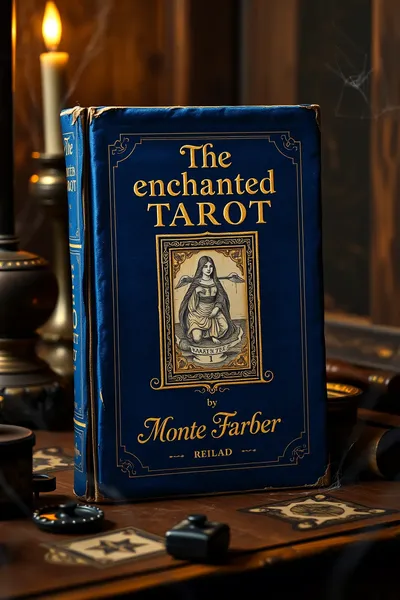
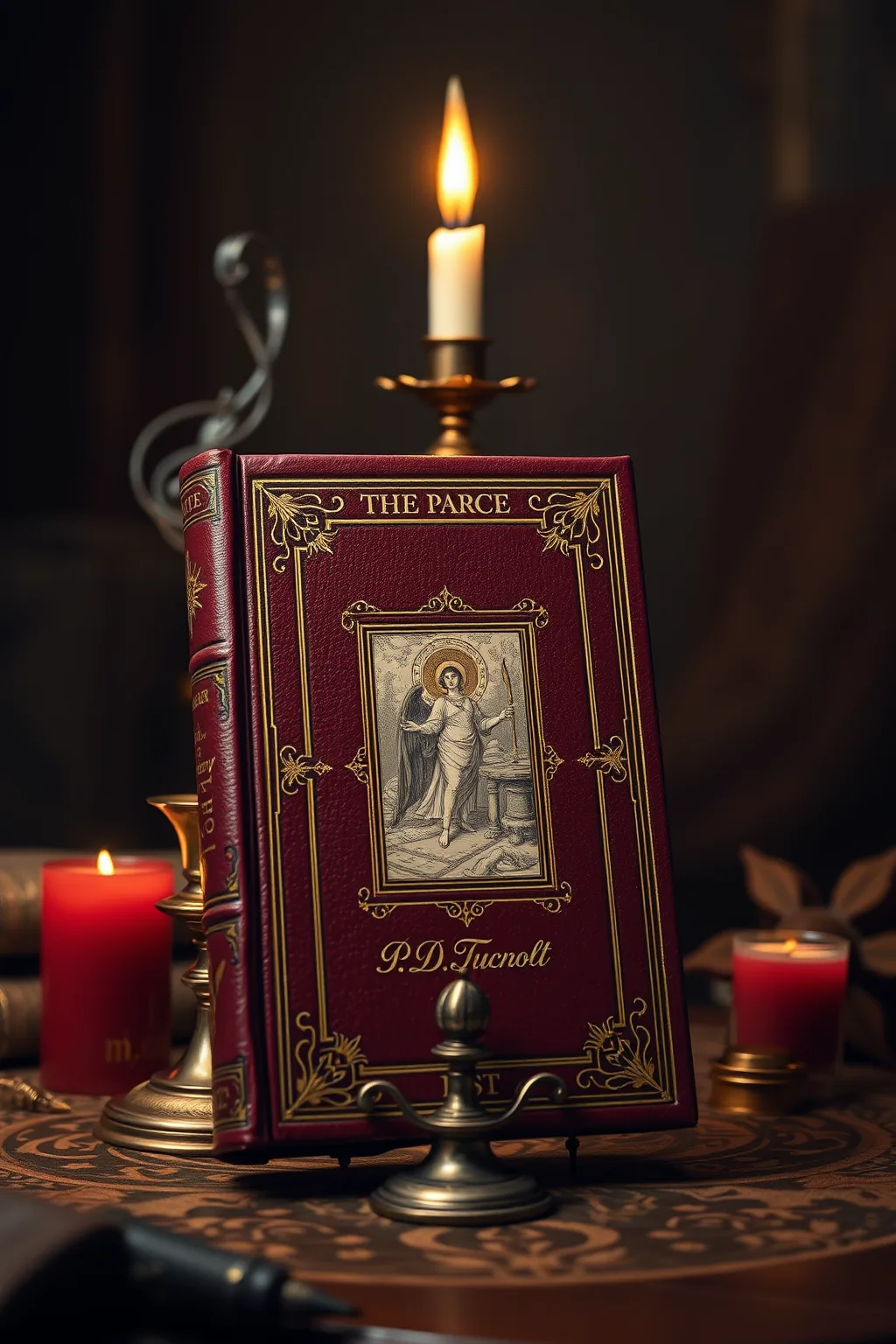
The major arcana of the Tarot as described by P. D. Ouspensky, St. Petersburg, Russia, 1913
 61
61

The major arcana of the Tarot as described by P. D. Ouspensky, St. Petersburg, Russia, 1913



Isolde Whitaker, Sacred Texts Editor: Ouspensky's "The Major Arcana of the Tarot" is a cornerstone for serious students of esoteric symbolism. Published in 1913, it offers a rigorous, philosophical interpretation of the Major Arcana, moving beyond superficial cartomancy to reveal their profound role in spiritual development. Ouspensky masterfully connects these ancient images to universal laws and the inner work of transformation. Its strength lies in its intellectual depth and its unwavering focus on the Major Arcana as a system of spiritual instruction. Essential reading for those familiar with Ouspensky's broader work or seeking a deeply insightful, non-divinatory approach to Tarot.
📝 Description
61
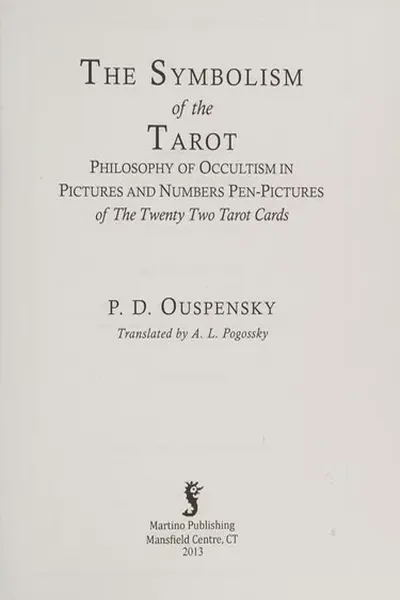
Published in St. Petersburg in 1913, P. D. Ouspensky's "The Major Arcana of the Tarot" examines the cards' symbolic meaning.
This 1913 work by P. D. Ouspensky focuses on the Major Arcana of the Tarot. Ouspensky does not present the cards as tools for fortune telling. Instead, he views them as symbolic keys to understanding fundamental principles. These principles concern existence, consciousness, and spiritual development. The book emerges from early 20th-century mystical thought. It connects the Tarot's symbolism to Gurdjieffian ideas and older esoteric traditions. Ouspensky's analysis aims to reveal the underlying structure of the soul and the cosmos through these archetypes.
He treats each card as a representation of cosmic law and a stage in an initiatory process. The goal is not prediction, but a deeper comprehension of life's mechanisms. This approach offers a philosophical interpretation of the Tarot, distinct from common divinatory practices. The text draws on a particular moment in Russian esoteric circles.
P. D. Ouspensky's 1913 study places the Major Arcana within the context of early 20th-century Russian esoteric thought. It aligns with a period where thinkers like G. I. Gurdjieff were developing systems that integrated various spiritual traditions. Ouspensky's interpretation emphasizes the Tarot's potential as a system for understanding universal laws and human psychology, moving beyond simple fortune telling. This perspective connects it to broader Western esoteric movements that sought to synthesize ancient wisdom with contemporary philosophical and psychological inquiry.
💡 Why Read This Book?
Unlock the profound spiritual teachings embedded within the Major Arcana. This book offers a unique, philosophical lens on Tarot, revealing its potential as a map for inner transformation and understanding cosmic principles. Ideal for seekers of hidden knowledge, students of esoteric philosophy, and practitioners who wish to deepen their grasp of Tarot's archetypal power beyond mere prediction.
⭐ Reader Reviews
Honest opinions from readers who have explored this book.
❓ Frequently Asked Questions
What is the primary focus of Ouspensky's interpretation?
Ouspensky focuses on the Major Arcana as keys to understanding cosmic laws, spiritual evolution, and the structure of consciousness, rather than as tools for fortune-telling.
What makes this book different from other Tarot books?
Its distinction lies in its rigorous philosophical and psychological approach, rooted in early 20th-century esoteric thought, emphasizing symbolic meaning and initiatory pathways.
Is this book suitable for absolute beginners in Tarot?
While valuable, its depth may be more accessible to those with some foundational knowledge of Tarot or an interest in esoteric philosophy. It's not a 'how-to' guide for beginners.
What is the historical significance of this 1913 edition?
This edition represents a pivotal moment in the early 20th-century esoteric revival, offering one of the first systematic, non-occultist interpretations of the Tarot's spiritual potential.
Does Ouspensky discuss the minor arcana?
No, this specific work is dedicated solely to an in-depth analysis of the 22 Major Arcana cards and their inherent symbolic meanings.
🔮 Key Themes & Symbolism
The Tarot as a Cosmic Map
Ouspensky presents the Major Arcana not as random symbols, but as a meticulously designed map of the universe and the human psyche. Each card is a stepping stone on the path of spiritual awakening, illustrating fundamental laws of existence and consciousness. He reveals how these archetypal images serve as a profound system for understanding the interconnectedness of all things and the journey of the soul towards higher states of being. This perspective elevates the Tarot from a mere divinatory tool to a sacred text for self-discovery and universal comprehension.
Symbolism as a Language of the Soul
This work studies the deep, often hidden language of symbols, asserting that the Major Arcana are imbued with potent, universal meanings that resonate directly with the soul. Ouspensky dissects the visual and conceptual symbolism of each card, revealing how these archetypes communicate profound truths about human nature, destiny, and the spiritual journey. He encourages readers to engage with this symbolic language on an intuitive and intellectual level, unlocking layers of meaning that transcend ordinary understanding and facilitate inner transformation.
The Initiatory Pathway
Ouspensky views the sequence of the Major Arcana as a narrative of initiation, mirroring the stages of spiritual development and enlightenment. He outlines how each card represents a challenge, a lesson, or a realization that the seeker must undergo to progress on their path. This interpretation transforms the Tarot into a practical guide for inner work, offering insights into overcoming obstacles, cultivating virtues, and ultimately achieving a higher consciousness. It’s a blueprint for the soul's ascent, laid out in powerful, symbolic imagery.
💬 Memorable Quotes
Direct passages from the work, attributed to the author.
“The Tarot is a language of symbols.”
— This highlights the book's core premise: Tarot's true value lies in its symbolic communication, offering profound truths beyond literal interpretation.
“Each card is a step on the path.”
— This speaks to the initiatory aspect, framing the Major Arcana as a progressive journey of spiritual development and self-discovery.
“Understanding symbols leads to understanding ourselves.”
— Emphasizes the introspective power of Tarot, suggesting that deciphering its archetypes unlocks deeper insights into the human psyche and consciousness.
“The universe speaks through these images.”
— Positions the Tarot as a divine or cosmic text, a medium through which universal laws and truths are revealed to the receptive mind.
“It is a book of knowledge, not of fate.”
— Differentiates Ouspensky's approach from fortune-telling, stressing the Tarot's role in providing wisdom and understanding for conscious living.
🌙 Esoteric Significance
Tradition
Ouspensky's interpretation is deeply rooted in the Western Esoteric Tradition, particularly influenced by G.I. Gurdjieff's system of spiritual development and the Fourth Way. It draws upon Hermeticism, Kabbalah, and ancient mystery schools, viewing the Tarot as a symbolic representation of cosmic laws and the human journey of awakening. The emphasis is on the Tarot as a 'book of knowledge' for understanding oneself and the universe, aligning with the broader goal of conscious evolution.
Symbolism
The Major Arcana are presented as potent archetypes embodying universal principles and stages of consciousness. Key symbols such as The Fool's leap into the unknown, The Magician's mastery of forces, The High Priestess's inner wisdom, and The World's completion of a cycle are dissected. Ouspensky reveals how these visual narratives illustrate the interplay of divine and human will, the challenges of material existence, and the ultimate attainment of spiritual enlightenment through conscious effort and understanding.
Modern Relevance
In an age often characterized by superficiality and distraction, Ouspensky's profound exploration of the Major Arcana offers a vital anchor to timeless wisdom. His emphasis on the Tarot as a tool for self-understanding and spiritual growth remains profoundly relevant for contemporary seekers. The archetypal energies he describes continue to resonate, providing a framework for navigating personal challenges, fostering self-awareness, and pursuing a more meaningful existence in a complex world.
👥 Who Should Read This Book
This important work is indispensable for serious students of esotericism, philosophy, and comparative religion. Scholars of mysticism and symbolism will find Ouspensky's unique perspective invaluable. Dedicated Tarot practitioners seeking to transcend predictive interpretations and look at the deeper, philosophical underpinnings of the Major Arcana will be richly rewarded. While not a beginner's guide, earnest seekers of hidden knowledge and those interested in the psychological and spiritual dimensions of archetypes will discover useful insights and a transformative lens through which to view life.
📜 Historical Context
Published in 1913, "The Major Arcana of the Tarot" emerged during a fervent period of esoteric revival in Europe. St. Petersburg, a hub of intellectual and spiritual exploration, provided fertile ground for Ouspensky's groundbreaking work. The early 20th century saw a burgeoning interest in ancient wisdom, mysticism, and psychological theories that sought to explain the human condition beyond purely materialist frameworks. Ouspensky, deeply influenced by G.I. Gurdjieff, sought to integrate Tarot symbolism with his own developing teachings on consciousness and spiritual evolution. This era was marked by figures like Aleister Crowley, A.E. Waite, and others who were also reinterpreting the Tarot, but Ouspensky's approach stood out for its philosophical rigor and its focus on the cards as keys to inner transformation rather than mere divination.
📔 Journal Prompts
Reflect on The Fool's journey: What 'leap of faith' are you currently contemplating or undertaking in your life?
Consider The Magician's tools: What inner 'forces' or talents do you possess that you could consciously employ to manifest your intentions?
Meditate on The High Priestess: What inner intuition or unspoken knowledge is she urging you to acknowledge and trust?
Analyze The Emperor's structure: What forms of order, discipline, or authority are necessary in your life right now, and which might be limiting?
Explore The Hermit's introspection: What inner guidance or wisdom are you seeking through periods of solitude and contemplation?
🗂️ Glossary
Major Arcana
The set of 22 trump cards in a Tarot deck, representing archetypal figures, spiritual lessons, and significant life events or stages of development.
Archetype
A universal, inherited pattern of thought or imagery derived from the experiences of the human race, present in the collective unconscious, and manifesting in symbols and myths.
Esotericism
Teachings or knowledge that are restricted to a select group of people who are thought to be especially qualified to understand them, often concerning spiritual or mystical matters.
Initiation
A ritual or experience marking a person's transition from one stage of life or spiritual understanding to another, often involving symbolic death and rebirth.
Consciousness
The state of being aware of and responsive to one's surroundings; in esoteric contexts, often refers to multiple or higher levels of awareness beyond the ordinary waking state.
This book appears in 3 collections
🔮 Readers Also Liked
Browse all →
More by Uspenskiĭ Petr Demʹi͡anovich
All books →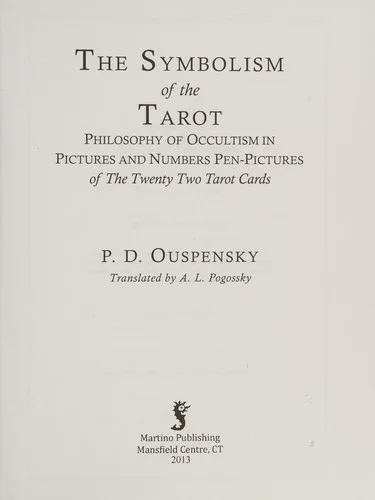
From the “Tarot” Collection
View all →
More Free Divination & Tarot Books
View all →