✍️ Author Biography
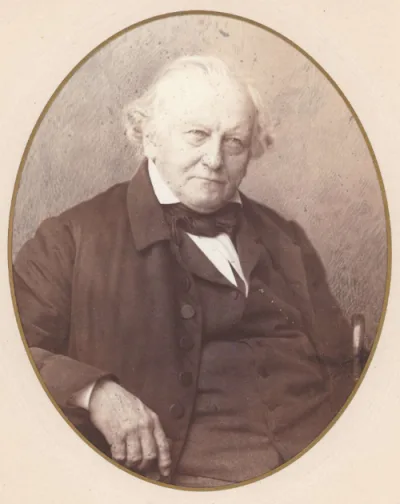
Uspenskiĭ Petr Demʹi͡anovich
📅 1878 – 1947
🌍 Russian
📚 3 free books
⭐ Known for: The Fourth Dimension (1909)
Pyotr Uspensky was a Russian philosopher and esotericist known for his teachings on Gurdjieff's system and his own 'Fourth Way'.
Pyotr Demyanovich Uspensky (1878–1947) was a Russian philosopher and esotericist who became widely known for his interpretations and dissemination of the teachings of George Gurdjieff. He first encountered Gurdjieff in Moscow in 1915 and subsequently dedicated himself to studying and teaching the Gurdjieff system for over two decades. Although he formally separated from Gurdjieff in 1924, Uspensky continued to teach the principles he had learned, adapting them into his own unique approach known as the 'Fourth Way'.
Uspensky's early life in Moscow saw him expelled from school and later working as a journalist. His intellectual journey led him to explore concepts like the fourth dimension and theosophy. His travels in search of knowledge took him to India and other Eastern countries. After meeting Gurdjieff, his focus shifted significantly towards the esoteric teachings. He later traveled extensively in Europe and the United States, establishing groups to teach his understanding of the Gurdjieff system and the Fourth Way, attracting notable intellectuals and writers.
Philosophical and Esoteric Contributions
Uspensky's philosophical explorations began with an interest in the fourth dimension, leading to his early works like "The Fourth Dimension" (1909) and "Tertium Organum" (1912). In "Tertium Organum," he challenged fundamental concepts of reality, including space and time, and proposed a "higher logic" where a thing could be both itself and not itself. His later major work, "A New Model of the Universe" (1917), sought to harmonize scientific and religious thought with esoteric teachings, drawing influence from thinkers like Francis Bacon and Max Müller. He introduced his "psychological method" as a means to understand reality more directly and proposed that many current ideas are degenerated forms of older, purer concepts. Uspensky also distinguished between erotica and pornography in his writings on sexuality.
Association with Gurdjieff and the Fourth Way
Uspensky met George Gurdjieff in Moscow in 1915, marking a pivotal point in his life. He studied directly under Gurdjieff for ten years, detailing his experiences in "In Search of the Miraculous." This period was dedicated to understanding and practicing Gurdjieff's system, which aimed at the harmonious development of the physical, emotional, and mental aspects of a person. After separating from Gurdjieff in 1924, Uspensky began teaching independently, developing his concept of the 'Fourth Way.' This approach, unlike Gurdjieff's three other ways (Fakir, Monk, Yogi), allowed individuals to pursue self-development while remaining engaged in ordinary life, integrating work, family, and social responsibilities into their spiritual practice.
Later Life and Independent Teaching
Following the Russian Revolution, Uspensky moved to London, where his ideas gained traction among intellectuals, including figures like A. R. Orage. He established his own organization, eventually known as The Study Society, to continue teaching his interpretation of the Gurdjieff system and the Fourth Way. During World War II, he relocated to the United States with his wife, settling on a farm in New Jersey. He later returned to England, where he died in 1947. Posthumous publications of his work include "The Psychology of Man's Possible Evolution" and "In Search of the Miraculous," along with lecture transcripts published as "The Fourth Way."
Key Ideas
- The Fourth Way: A path of self-development that integrates spiritual work into ordinary daily life, unlike traditional ascetic paths.
- Higher Logic: A concept challenging Aristotelian logic, suggesting that a thing can be both 'A' and 'not-A'.
- Psychological Method: A method for calibrating human understanding to derive the true meaning of things.
- Degeneration of Ideas: The belief that many contemporary ideas are degraded forms of more complete, original concepts.
Notable Quotes
“The idea of esotericism ... holds that the very great majority of our ideas are not the product of evolution but the product of the degeneration of ideas which existed at some time or are still existing somewhere in much higher, purer and more complete forms”