The Major Arcana Magic and Myth
 78
78

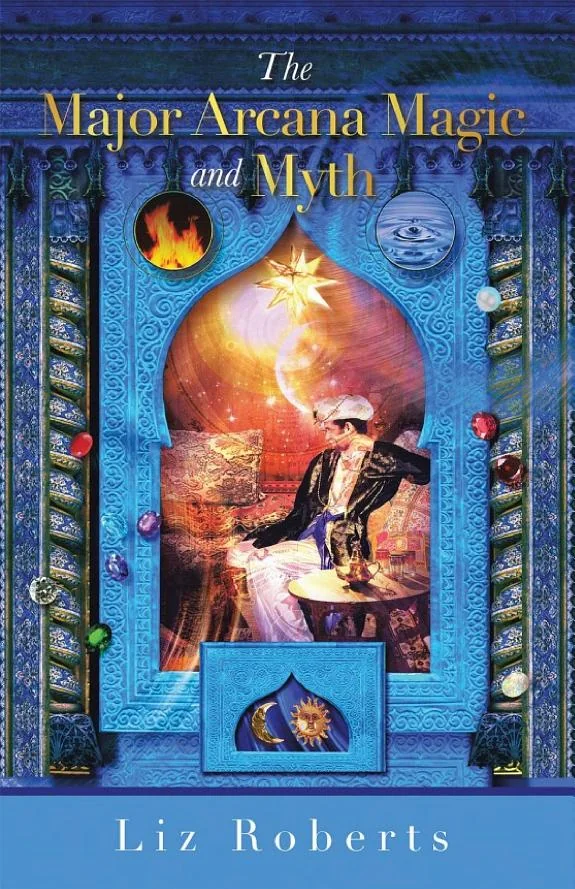
The Major Arcana Magic and Myth
Liz Roberts’ *The Major Arcana Magic and Myth* eschews the common tendency to rehash familiar Tarot lore. Instead, it offers a compelling argument for the Major Arcana as a coherent mythological and psychological framework. Roberts demonstrates a keen eye for the inherent narrative within the 22 cards, particularly in her analysis of The Fool as an allegory for the entirety of human experience, a concept also explored by Carl Jung in his writings on archetypes. The book’s strength lies in its ability to connect these ancient symbols to modern lived realities, avoiding esoteric jargon for accessible yet profound commentary. However, the work occasionally feels constrained by its singular focus on the Major Arcana, leaving the reader to wonder how the Minor Arcana might interact with these grand narratives. Despite this, Roberts provides a valuable perspective for serious students of the Tarot, particularly those interested in its philosophical underpinnings, making it a worthwhile addition to any serious occult library.
📝 Description
78
Liz Roberts' *The Major Arcana Magic and Myth* examines the 22 trump cards of the Tarot.
This book goes beyond basic divinatory meanings to analyze the archetypal narratives and symbolic depth of the Tarot's 22 trump cards. Roberts views the Major Arcana as more than predictive tools; she sees them as a cycle that reflects human experience and spiritual progress. The work is for those who seek a deeper understanding of the Tarot, looking past surface interpretations. It appeals to readers interested in the mythic foundations and philosophical aspects of cartomancy. Those wishing to connect ancient symbolism with modern life will find Roberts' perspective especially useful, whether for personal practice or academic study of esoteric subjects.
Roberts' study connects with a significant tradition of Tarot scholarship that developed in the late 19th and early 20th centuries. Influential figures like Arthur Edward Waite and Pamela Colman Smith, creators of the Rider-Waite deck, aimed to give the Tarot greater mystical meaning. This book follows that path, linking Tarot concepts to Jungian archetypes and psychological theories from the mid-20th century. It offers a new perspective on these enduring symbols.
Roberts' work engages with the tradition of Tarot interpretation that flourished in the late 19th and early 20th centuries. This period saw figures like Arthur Edward Waite and Pamela Colman Smith imbue the cards with deeper mystical significance, a lineage Roberts continues. Her approach also draws from mid-20th century psychological thought, particularly Jungian archetypes, to understand the symbolic power of the Major Arcana. This places the book within a modern esoteric framework that uses Tarot as a mirror for personal growth and spiritual development.
💡 Why Read This Book?
• Understand the archetypal journey of The Fool, as presented in the book, to gain a profound perspective on personal growth cycles and the initiation into new phases of life. • Explore the concept of karmic implications within cards like The Wheel of Fortune, as examined by Roberts, to better interpret life's turning points and cycles of fate. • Grasp the modern application of The Magician's symbolism, as detailed in Roberts' analysis, to consciously harness creative power and manifest intentions in daily life.
⭐ Reader Reviews
Honest opinions from readers who have explored this book.
❓ Frequently Asked Questions
When was *The Major Arcana Magic and Myth* first published?
The book was first published on August 3, 2025, positioning it as a recent contribution to esoteric literature on the Tarot.
What specific aspect of The Fool does Liz Roberts focus on?
Roberts emphasizes The Fool's innocence as an allegory for the entirety of life's journey, exploring its spiritual and psychological implications.
Does the book cover the Minor Arcana of the Tarot?
The book primarily focuses on the 22 Major Arcana cards, exploring their foundational magic and mythic narratives.
What is the author's perspective on Tarot readings?
Roberts advocates for a fresh approach to Tarot learning and reading, integrating ancient wisdom with modern, real-world experiences.
Who would benefit most from reading *The Major Arcana Magic and Myth*?
Seekers interested in the deeper, karmic, and enigmatic aspects of the Tarot, as well as those looking to connect esoteric principles with contemporary life.
What is the core aim of Roberts' exploration of the Major Arcana?
The aim is to illuminate the foundational role of these 22 cards in all Tarot readings, examining their mythic and magical significance.
🔮 Key Themes & Symbolism
Archetypal Journey
The work examines the 22 Major Arcana cards as stages in a universal human journey. It interprets The Fool's progression not just as a series of symbolic steps, but as an allegory for the entirety of existence, from initiation to culmination. This perspective frames the Tarot as a map of consciousness and spiritual development, where each card represents a distinct archetypal encounter or lesson.
Karmic Significance
Roberts examines the concept of karma as it relates to the Major Arcana, particularly cards like The Wheel of Fortune and The Hanged Man. The book suggests these cards represent central moments of destiny, consequence, and the unfolding of spiritual lessons across lifetimes. This approach imbues the readings with a sense of profound interconnectedness and the cyclical nature of cause and effect.
Mythic Foundations
The book traces the mythic roots and esoteric meanings embedded within the Major Arcana. It explores how these archetypes draw from ancient wisdom traditions, presenting them as enduring symbols of fundamental human experiences and spiritual truths. This theme emphasizes the Tarot's role as a repository of collective unconscious imagery and narrative.
Modern Integration
A central tenet is the application of Major Arcana symbolism to contemporary life. Roberts bridges the gap between ancient esoteric knowledge and present-day realities, offering practical insights for self-understanding and personal growth. This theme highlights how timeless archetypes can inform modern decisions and spiritual practices.
💬 Memorable Quotes
Direct passages from the work, attributed to the author.
“The Fool’s innocence is an allegory for life itself.”
— This concise statement captures the book's view of The Fool, not as a simple beginner, but as a symbol for the complete cycle of existence and the inherent lessons within every stage.
“These twenty-two cards tie a wide range that is the foundation of all readings.”
— This highlights the book's core premise: the Major Arcana are not just powerful cards, but the essential structure upon which all Tarot interpretations are built, carrying immense symbolic weight.
“Offering a fresh perspective on how to approach learning and reading by incorporating ancient wisdom with real-world, modern experiences.”
— This emphasizes the book's pedagogical approach, aiming to make esoteric Tarot knowledge accessible and applicable to contemporary practitioners and seekers.
“The work examines how The Fool’s innocence is an allegory for life itself.”
— A restatement of the central thesis regarding The Fool, this highlights the book's philosophical depth in interpreting this key archetype as a representation of the entire human lifespan.
“The book serves as a guide to various aspects of the cards.”
— This indicates the book's functional purpose: to provide comprehensive instruction and exploration of the 22 Major Arcana, covering their diverse meanings and applications.
🌙 Esoteric Significance
Tradition
This work fits within the Western Esoteric tradition, specifically its branch dedicated to the study and application of the Tarot. It draws heavily from the symbolic interpretations popularized by the Hermetic Order of the Golden Dawn and later articulated by Arthur Edward Waite. While rooted in these lineages, Roberts' approach seeks to synthesize this historical esoteric understanding with modern psychological concepts and practical life application, offering a bridge between traditional occultism and contemporary self-awareness practices.
Symbolism
Key symbols explored include The Fool, representing pure potential and the initiation into the journey of consciousness, and The Magician, symbolizing the conscious will and the power of manifestation. The High Priestess is examined as the guardian of hidden knowledge and intuition, while The Wheel of Fortune signifies the cyclical nature of destiny and karmic unfolding. These archetypes are presented not as static images, but as dynamic forces within the psyche and the cosmos.
Modern Relevance
Contemporary practitioners of Tarot, Jungian analysts, and seekers interested in archetypal psychology find resonance in Roberts' work. Her integration of ancient symbolism with modern lived experience appeals to those exploring mindfulness, personal development, and spiritual growth outside of traditional religious structures. Thinkers exploring the intersection of mythology, psychology, and consciousness often reference the enduring power of the Major Arcana as illuminated by works like this.
👥 Who Should Read This Book
• Students of Western Esotericism seeking a structured understanding of the Major Arcana's historical and symbolic significance, particularly their connection to Hermeticism. • Tarot practitioners aiming to deepen their interpretive skills beyond divination, focusing on the archetypal and psychological dimensions of the cards. • Individuals interested in mythology and comparative religion who wish to explore how ancient archetypes manifest in symbolic systems like the Tarot.
📜 Historical Context
The late 19th and early 20th centuries saw a resurgence of interest in occultism and esoteric traditions, profoundly influencing the interpretation of the Tarot. Figures like Eliphas Lévi, and later Arthur Edward Waite and Pamela Colman Smith with their iconic 1909 deck, sought to imbue the Tarot with Kabbalistic, Hermetic, and Gnostic symbolism, moving it beyond fortune-telling into a system of spiritual and psychological insight. This period was marked by intellectual currents influenced by Theosophy and the burgeoning field of depth psychology, with Carl Jung’s work on archetypes, beginning in the 1920s, offering a powerful framework for understanding the Tarot's symbolic language. Roberts' work, published in 2025, engages with this rich historical discourse, building upon the foundations laid by these earlier scholars and practitioners. It emerges in an era where esoteric studies are increasingly integrated with psychological and philosophical inquiry, offering a contemporary voice within this ongoing tradition.
📔 Journal Prompts
The Fool's journey: Reflect on your own initiation into a significant life path, mirroring The Fool's initial steps.
The Magician's manifestation: Consider a time you consciously utilized your will and resources to create a desired outcome.
The High Priestess' intuition: How has your inner knowing guided you through a complex situation?
The Wheel of Fortune's cycles: Identify a recent turning point in your life and its potential karmic implications.
The Hanged Man's surrender: Explore a moment where acceptance of a difficult situation led to unexpected clarity or growth.
🗂️ Glossary
Major Arcana
The set of 22 trump cards in a Tarot deck, representing significant life events, archetypal figures, and spiritual lessons. They form the core narrative of the Tarot.
Archetype
A universal, inherited pattern of thought or imagery derived from the collective unconscious, as proposed by Carl Jung. These figures and symbols represent fundamental human experiences.
Allegory
A story, poem, or picture that can be interpreted to reveal a hidden meaning, typically a moral or political one. The book uses this to describe The Fool's journey.
Karmic
Relating to karma, the spiritual principle of cause and effect where intent and actions of an individual influence their future. In Tarot, certain cards are seen as carrying karmic weight.
Esoteric
Intended for or likely to be understood by only a small number of people with a specialized knowledge or interest. This applies to the deeper meanings within the Tarot.
Cartomancy
The practice of divining or fortune-telling using a deck of cards. It is often associated with Tarot but can include other card types.
Manifestation
The act of bringing something into physical reality through thought, belief, and action. The Magician card is often associated with this concept.
This book appears in 1 collection
🔮 Readers Also Liked
Browse all →
From the “Major Arcana” Collection
View all →
More Free Occult Philosophy Books
View all →