The Magical Life of Berber Women in Kabylia (Francophone Cultures and Literatures)

 84
84

The Magical Life of Berber Women in Kabylia (Francophone Cultures and Literatures)
Makilam's study of Berber women's magical life in Kabylia offers a valuable, if sometimes challenging, window into a world rarely explored with such academic rigor. The author's meticulous attention to the specific rituals and cosmological underpinnings of Kabyle magic is commendable. One particularly striking section details the symbolic language embedded in traditional weaving patterns, linking them to protective charms and fertility rites. However, the dense academic prose, while precise, occasionally hinders accessibility for a broader audience interested in esoteric traditions. The lack of extensive visual aids or a glossary of specialized terms further compounds this. Despite these limitations, the book provides a crucial, grounded account of a vital, living tradition that predates and coexists with major world religions in the region.
📝 Description
84
Makilam's 2007 book examines the magical life of Berber women in Kabylia.
Published in 2007, The Magical Life of Berber Women in Kabylia details the esoteric practices and spiritual beliefs of women in the Kabylia region of Algeria. This study goes beyond surface descriptions to investigate the deep magical traditions that shaped daily life, social structures, and personal identities. It offers a scholarly yet approachable account of a rich cultural heritage, focusing on how knowledge was passed down and the distinct worldview formed by these practices.
The book is aimed at scholars of anthropology, religious studies, and North African cultures, as well as those interested in comparative mythology and folk magic. It is for readers who want to understand magic as an integrated system within a community, not an isolated element. Individuals curious about matrilineal influences on spiritual practices and the connection between gender, belief, and power will find this study valuable.
The research within this volume arises from a context where indigenous traditions often coexist with or are challenged by dominant religious and colonial influences. The Kabyle people, an ethnic group native to Algeria, have preserved distinct cultural and linguistic practices. This study situates itself within current academic discussions on cultural preservation and the ethnographic study of North African societies, especially in post-colonial academic discourse.
This work contributes to the study of indigenous spiritual systems and the role of women within them. It examines a specific form of folk magic and belief rooted in North African traditions, particularly those of the Kabyle people. By focusing on practices passed through generations, it highlights how these beliefs formed a coherent worldview and social structure, existing within a broader cultural and historical context that includes both indigenous customs and external influences.
💡 Why Read This Book?
• Gain insight into the specific cosmological frameworks that underpin Kabyle magical practices, understanding how elements like weaving and herbalism are imbued with spiritual significance, a detail explored extensively in the text. • Learn about the distinct roles and authority held by women in transmitting and enacting magical traditions within the Kabylia region, a focus established from the book's premise. • Discover the symbolic language of Berber culture, including the Tifinagh script's potential esoteric connections, as presented in the work's examination of cultural heritage.
⭐ Reader Reviews
Honest opinions from readers who have explored this book.
❓ Frequently Asked Questions
What is the primary focus of 'The Magical Life of Berber Women in Kabylia'?
The book focuses on the spiritual and magical practices of Berber women in the Kabylia region of Algeria, examining how these traditions are integrated into daily life, social structures, and belief systems.
When was 'The Magical Life of Berber Women in Kabylia' first published?
The book was first published in 2007.
Who is the author of this book?
The author is Makilam.
What academic fields does this book contribute to?
It contributes to anthropology, religious studies, North African cultural studies, and the academic exploration of esoteric traditions and comparative mythology.
Does the book discuss the Berber alphabet?
Yes, the work explores the Berber alphabet, Tifinagh, as a potential carrier of esoteric knowledge and symbolic meaning within Kabyle culture.
Is this book suitable for general readers interested in magic?
While academically rigorous, the book offers valuable insights for those interested in the practical and integrated nature of magic in specific cultural contexts, moving beyond sensationalized portrayals.
🔮 Key Themes & Symbolism
Integrated Esotericism
This study moves beyond viewing magic as separate from everyday life, instead demonstrating its deep integration within the social, economic, and spiritual fabric of Kabyle society. It highlights how practices related to healing, divination, and protection were not fringe activities but central to community well-being and individual identity, particularly for women who often served as primary custodians of this knowledge.
Symbolic Language and Ritual
The work meticulously decodes the symbolic language prevalent in Kabyle magic, from the patterns woven into textiles to the specific properties attributed to plants and natural phenomena. Rituals are presented not as mere superstition, but as structured performances with cosmological significance, designed to maintain balance, foster fertility, and ward off malevolent forces.
Gender and Spiritual Authority
A significant focus is placed on the role of women as practitioners and transmitters of magical knowledge. The book examines the specific forms of authority women held within this domain, how their spiritual roles were shaped by cultural norms, and how their practices contributed to social cohesion and the perpetuation of Berber traditions.
Cultural Resilience
Makilam's research underscores the resilience of indigenous Berber traditions in the face of external influences. By detailing the continuity of magical practices, the study illustrates the enduring power of cultural heritage and the ways in which communities preserve and adapt their esoteric systems across generations.
💬 Memorable Quotes
Direct passages from the work, attributed to the author.
“The Tifinagh script, beyond its communicative function, carried symbolic weight in esoteric practices.”
— This interpretation suggests that the Berber alphabet was more than just a writing system; it was potentially used in magical contexts, perhaps for amulets, incantations, or divination, reflecting a deeper layer of meaning.
“Tying patterns served as protective charms and expressions of fertility desires.”
— This highlights the practical application of symbolism in daily crafts. The designs on textiles were not merely decorative but actively intended to provide defense or manifest abundance.
“Female healers derived efficacy from established cosmological frameworks.”
— This points to the systematic nature of Kabyle magic, where the power of practitioners was recognized and understood within a coherent worldview, rather than being seen as arbitrary.
“Oral transmission was crucial for the continuity of magical knowledge.”
— This emphasizes the importance of spoken word, stories, and familial instruction in passing down complex esoteric traditions, underscoring the cultural value placed on elders and lineage.
“Rituals aimed at maintaining community balance and warding off negative influences.”
— This frames ritual action as a form of social and spiritual maintenance, essential for the health and harmony of the collective, connecting individual practices to the greater good.
🌙 Esoteric Significance
Tradition
This work fits within the broad study of indigenous spiritual systems and folk magic, often intersecting with anthropological and comparative religion studies. While not directly adhering to a specific Western esoteric lineage like Hermeticism or Kabbalah, it explores a parallel form of esoteric practice deeply embedded in a specific cultural context, revealing universal patterns in how humans interact with unseen forces and seek meaning.
Symbolism
Key symbols include the intricate patterns in Berber carpets, often imbued with protective meanings or representations of fertility, and the symbolic use of natural elements like specific plants or stones in healing and divination. The Tifinagh script itself is presented as potentially holding deeper, esoteric meanings beyond its literal linguistic function, connecting written form to spiritual power.
Modern Relevance
Contemporary scholars of North African culture, diaspora studies, and critical heritage studies draw upon this work to understand the resilience of indigenous traditions. Practitioners of comparative magic and those interested in matriarchal spiritual systems may find its detailed ethnography informative for understanding diverse forms of earth-based and community-focused magic.
👥 Who Should Read This Book
• Anthropologists and cultural historians: To gain a detailed ethnographic account of Kabyle magical traditions and their social integration. • Students of comparative religion: To understand how indigenous spiritual systems function alongside or independently of major world religions. • Practitioners of folk magic and esoteric studies: To explore diverse, culturally specific forms of magic and their underlying belief systems.
📜 Historical Context
Published in 2007, Makilam's work emerges from the field of Francophone post-colonial studies, a space where scholars critically examine the cultural legacies of French colonialism in North Africa. The research engages with the long history of ethnographic interest in Berber (Amazigh) cultures, a field that has seen significant contributions since the late 19th century. This period also saw a resurgence of interest in indigenous identities and languages across North Africa. While earlier ethnographic accounts sometimes exoticized or simplified Berber practices, Makilam's approach aims for a more nuanced understanding of their internal logic and social function. The book contributes to ongoing debates within anthropology regarding the persistence of pre-Islamic belief systems and their syncretism with Islam, particularly in regions like Kabylia, known for its strong cultural particularism.
📔 Journal Prompts
The symbolic language of Berber tying patterns.
Women's authority in transmitting magical knowledge.
The role of natural elements in Kabyle healing rituals.
The Tifinagh script's potential esoteric dimensions.
Personal reflections on the integration of magic into daily life.
🗂️ Glossary
Kabylia
A mountainous region in northern Algeria, home to the Kabyle people, a Berber ethnic group.
Berber (Amazigh)
The indigenous ethnic group of North Africa, with distinct languages and cultures predating Arab conquest.
Tifinagh
The script used to write the Berber languages, with ancient origins and potential symbolic significance.
Esotericism
Belief systems and practices concerned with hidden knowledge or spiritual truths, often accessible only to initiates or through specific disciplines.
Cosmology
A system of belief that explains the origin and structure of the universe, including the relationship between the divine, humanity, and the natural world.
Divination
The practice of seeking knowledge of the future or the unknown by supernatural means.
Ritual
A sequence of activities involving gestures, words, actions, or objects, performed according to a set sequence, often for religious or magical purposes.
🔮 Readers Also Liked
Browse all →







More by Makilam.
All books →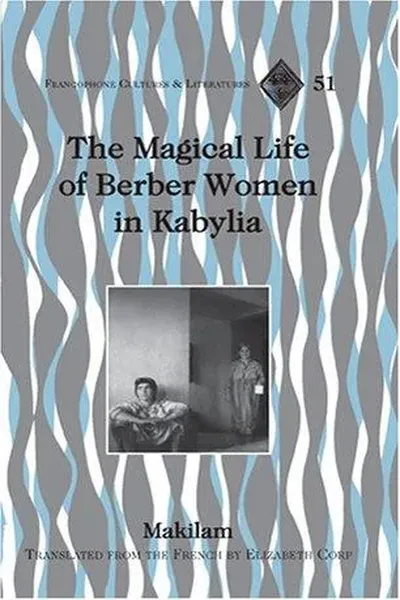

More Free Magic & Ritual Books
View all →