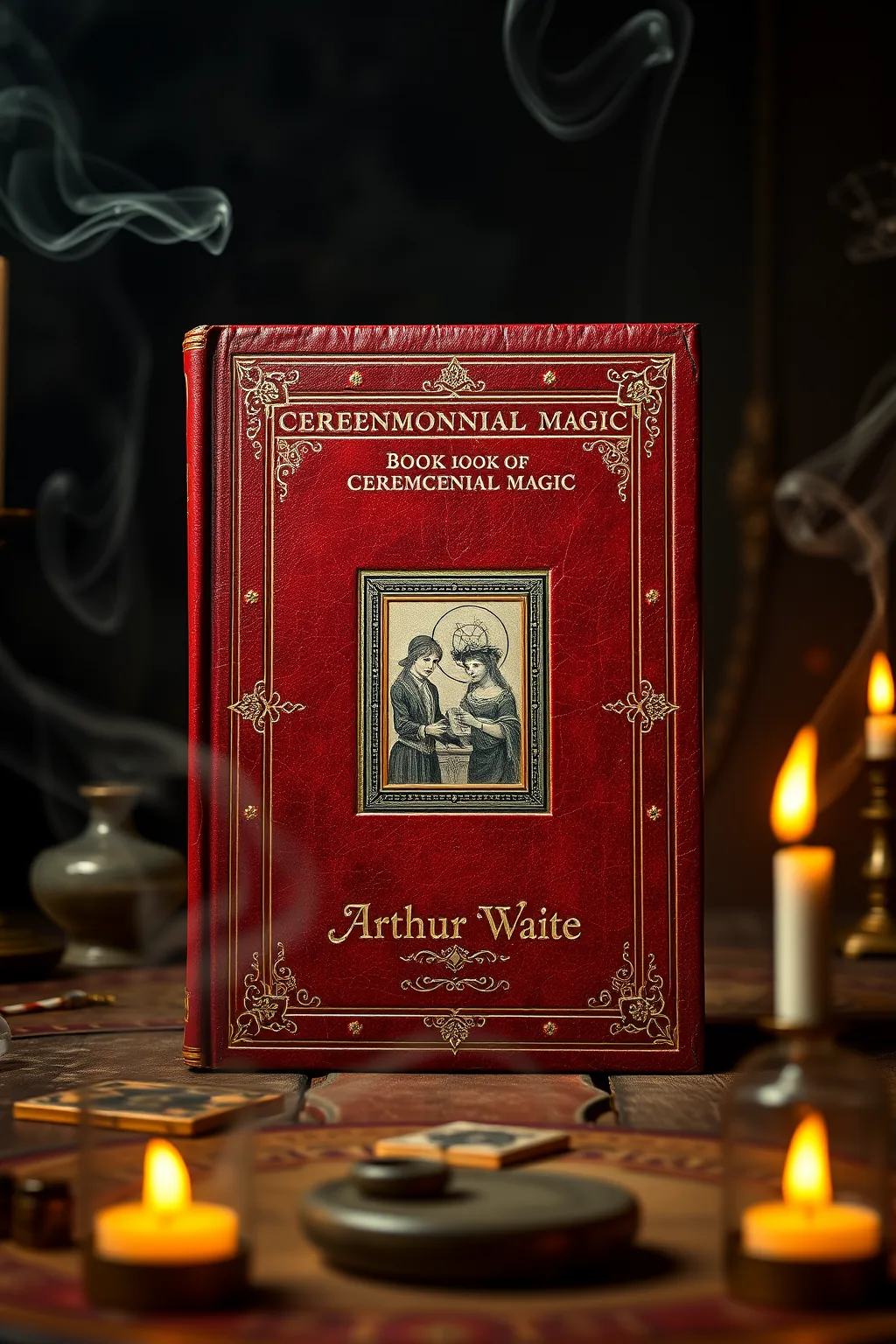
Book of Ceremonial Magic
 61
61

Book of Ceremonial Magic



Lorelei Sage (Contemplative Literature Editor) — Arthur Waite's 'Book of Ceremonial Magic' stands as a monumental achievement in occult bibliography, a testament to rigorous scholarship and profound esoteric insight. Waite dissects the mechanics and philosophy of ceremonial magic with unparalleled clarity, offering practitioners and scholars alike a deep dive into the historical evolution and symbolic underpinnings of these ancient arts. Its strength lies in its comprehensive scope and authoritative voice, guiding the reader through complex concepts with a steady hand. This is not a handbook for the superficial dabbler, but a weighty text for the dedicated student of the hidden traditions.
📝 Description
61
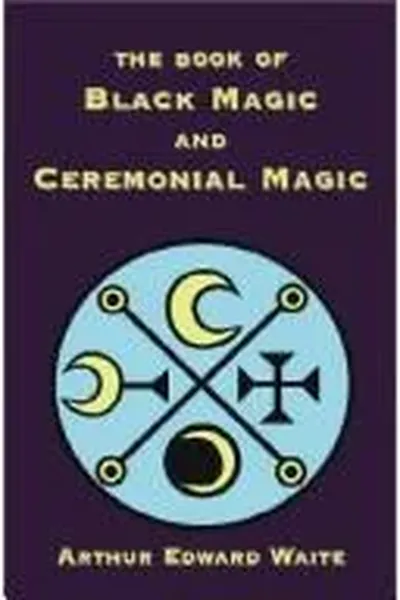
Arthur Edward Waite published 'The Book of Ceremonial Magic' in 1911, detailing historical rites and magical theory.
Arthur Edward Waite's 1911 work, 'The Book of Ceremonial Magic,' examines historical Western magical practices. Waite, a prominent figure in occult studies, structures the book around descriptions of various magical systems, including those attributed to figures like Solomon, Agrippa, and Paracelsus. He discusses the theoretical underpinnings of ceremonial magic, including the nature of spirits, divine names, and the construction of magical implements. The book also addresses the ethical and philosophical dimensions of ritual work, emphasizing the importance of the magician's internal state and intention. Waite's approach is critical and analytical, seeking to understand the historical context and symbolic meaning of these traditions rather than presenting a practical grimoire for immediate use. It is a scholarly survey of a complex field. The text covers the preparation of the magician, the consecration of tools, and the invocation of celestial intelligences.
Waite's analysis extends to the various grades of magical attainment and the different classes of spirits described in occult literature. He contrasts genuine magical practice with what he considers superstition or fraud. The book is a deep dive into the historical development and conceptual framework of Western ceremonial traditions. It aims to provide a comprehensive overview of the subject as understood at the turn of the 20th century, drawing on a wide range of historical texts and occult philosophies.
Published in 1911, 'The Book of Ceremonial Magic' emerged from a period of intense interest in Western esotericism. Arthur Edward Waite was a key figure in the Hermetic Order of the Golden Dawn and a prolific writer on occult subjects. This book fits within the scholarly tradition of analyzing magical systems, situating it alongside works that sought to codify, explain, and contextualize the history of Western magic. It reflects a transition from purely practical grimoires to more philosophical and historical examinations of the occult, influenced by the rise of academic study and a growing public fascination with hidden knowledge.
💡 Why Read This Book?
Embark on a profound journey into the heart of Western esotericism. This book offers unparalleled access to the historical and philosophical foundations of ceremonial magic, revealing its intricate symbolism and transformative potential. Ideal for serious students, occult scholars, and dedicated practitioners seeking a deep understanding of arcane practices and their place within the Great Work.
⭐ Reader Reviews
Honest opinions from readers who have explored this book.
❓ Frequently Asked Questions
What is ceremonial magic as defined by Waite?
Waite defines ceremonial magic as a disciplined and structured approach to invoking spiritual forces and achieving altered states of consciousness through elaborate rituals, symbolic gestures, and focused intent.
Is this book suitable for beginners?
While comprehensive, the book's depth and historical context may present a challenge for absolute beginners. It is best approached by those with some foundational knowledge or a strong academic interest in occultism.
What are the primary sources Waite draws from?
Waite draws extensively from grimoires, medieval magical texts, Kabbalistic literature, and the works of earlier occultists, providing a rich historical and textual foundation.
Does the book provide practical instructions for performing rituals?
Yes, the book details various rituals, their components, and their intended purposes, offering insights into the practical application of ceremonial magic, albeit within its historical context.
What is the 'Great Work' in the context of this book?
The 'Great Work' refers to the ultimate goal of magical and spiritual development, often interpreted as spiritual enlightenment, self-mastery, or union with the divine, achieved through dedicated practice.
🔮 Key Themes & Symbolism
The Architecture of Ritual
Waite meticulously dissects the structural elements of ceremonial magic, revealing how specific gestures, incantations, and symbolic objects coalesce to create a potent energetic matrix. He emphasizes the importance of precise execution and the underlying psychological and spiritual principles that imbue these actions with power, transforming the mundane into the sacred space of operation.
Symbolism and Correspondences
At the heart of ceremonial magic lies a wide range of symbolism, wherein each element, color, and planetary influence carries profound meaning. Waite illuminates these intricate correspondences, drawing connections between the microcosm of the ritual and the macrocosm of the universe, demonstrating how understanding these links is crucial for effective invocation and manifestation.
The Magician's Inner Discipline
Beyond external performance, Waite underscores the critical role of the magician's inner state. He posits that true ceremonial magic is inextricably linked to personal purification, mental discipline, and the cultivation of unwavering will. The book stresses that the external ritual is a mirror and amplifier of internal transformation, essential for reading through the subtle realms safely and effectively.
💬 Memorable Quotes
Direct passages from the work, attributed to the author.
“The Will is the Altar of the Soul.”
— This profound statement underscores the centrality of focused intention and inner resolve as the primary tool and sacred space for spiritual work and magical operation.
“The Path of the Magician is a Path of Solitude.”
— This suggests that while magic can be studied and practiced, the deepest transformative work often requires introspection and internal exploration, a journey taken primarily within oneself.
💡 Key Ideas
Editorial paraphrase of the work's core concepts — not direct quotes.
The Art of Magic is the Art of the Possible.
This quote highlights the practical and achievable nature of magic when approached with knowledge and discipline, emphasizing that it is not mere fantasy but a tangible force.
Knowledge is the Light, and Will is the Flame.
This quote beautifully expresses the relationship between understanding (knowledge) and action (will) in magic, portraying knowledge as the illumination and will as the driving force that ignites potential.
To know, to dare, to will, and to keep silent.
Echoing the famous 'four powers of the sphinx,' this quote emphasizes the essential virtues of a magician: acquiring knowledge, having the courage to act, possessing the unwavering will to achieve, and maintaining discretion about one's practices.
🌙 Esoteric Significance
Tradition
This work is deeply rooted in the Western Esoteric Tradition, drawing heavily from Kabbalah, Hermeticism, Neoplatonism, and Christian mysticism. Waite synthesizes elements from various grimoires and magical systems, presenting a comprehensive, albeit critical, overview of the practices developed within these rich, interwoven lineages of occult thought.
Symbolism
The book is a valuable collection of esoteric symbolism, exploring the meaning behind divine names, angelic hierarchies, planetary correspondences, alchemical symbols, and the intricate designs of magical circles and talismans. Waite meticulously deciphers these visual and conceptual languages, revealing how they serve as keys to unlocking spiritual forces and understanding the interconnectedness of the cosmos.
Modern Relevance
In an age often perceived as overly materialistic, Waite's work remains profoundly relevant for its exploration of consciousness, intent, and the power of focused ritual. It offers a framework for understanding the subtle energies that influence our reality and provides tools for personal transformation, self-discovery, and the cultivation of inner authority for those seeking meaning beyond the conventional.
👥 Who Should Read This Book
This important work is indispensable for serious students of Western Esotericism and occult history. Occult scholars will find Waite's rigorous research and historical analysis invaluable. Dedicated practitioners of magic, particularly those interested in ceremonial and high magic, will benefit from the detailed descriptions and philosophical underpinnings. Seekers of hidden knowledge and those drawn to the profound questions of consciousness and spiritual power will find this book a challenging yet rewarding guide.
📜 Historical Context
Published in 1913, Arthur Edward Waite's 'Book of Ceremonial Magic' emerged during a period of intense resurgence and scholarly interest in occultism, spiritualism, and esoteric traditions across Europe and America. This era, often termed the 'occult revival,' saw a burgeoning fascination with ancient wisdom, medieval grimoires, and mystical philosophies, fueled by figures like Helena Blavatsky and the Hermetic Order of the Golden Dawn, of which Waite was a prominent, albeit later, member. The book reflects a desire to move beyond sensationalism and present a more academic, historically grounded understanding of magic, situating it within its complex religious and philosophical lineage. It sought to provide a coherent, authoritative overview for a public increasingly drawn to the hidden.
📔 Journal Prompts
Reflect on the concept of the 'Will' as the 'Altar of the Soul.' How does this resonate with your personal understanding of intention and inner power?
Waite emphasizes the importance of symbolic language in magic. Choose one symbol discussed in the book and explore its potential meanings and applications in your own life.
Consider the blend of knowledge and will presented as 'Light' and 'Flame.' How do you cultivate both in your pursuit of esoteric understanding or personal goals?
The book highlights the 'Path of Solitude' in magic. What does this solitude mean to you, and how can it be a source of strength rather than isolation?
Waite critiques certain magical practices. How do you approach the discernment of reliable esoteric knowledge versus potentially misleading information?
🗂️ Glossary
Grimoire
A textbook of magic, typically containing instructions for invoking spirits, casting spells, and creating magical tools and talismans, often dating from the medieval and early modern periods.
Kabbalah
A system of Jewish mysticism that explores the nature of God and the universe through a complex symbolic and allegorical interpretation of scripture, often involving the Tree of Life.
Hermeticism
A religious, philosophical, and esoteric tradition based on the legendary writings attributed to Hermes Trismegistus, emphasizing the unity of all things and the power of divine knowledge.
Invocation
The act of calling upon a divine being, spirit, or force, often through prayer, ritual, or meditation, with the intention of receiving guidance, power, or assistance.
Talismans
Objects, often inscribed with symbols or sigils, believed to possess magical properties and to confer protection, luck, or other benefits upon their bearer.
This book appears in 3 collections
🔮 Readers Also Liked
Browse all →







More by Arthur Waite
All books →

From the “Ritual Magic” Collection
View all →








More Free Magic & Ritual Books
View all →