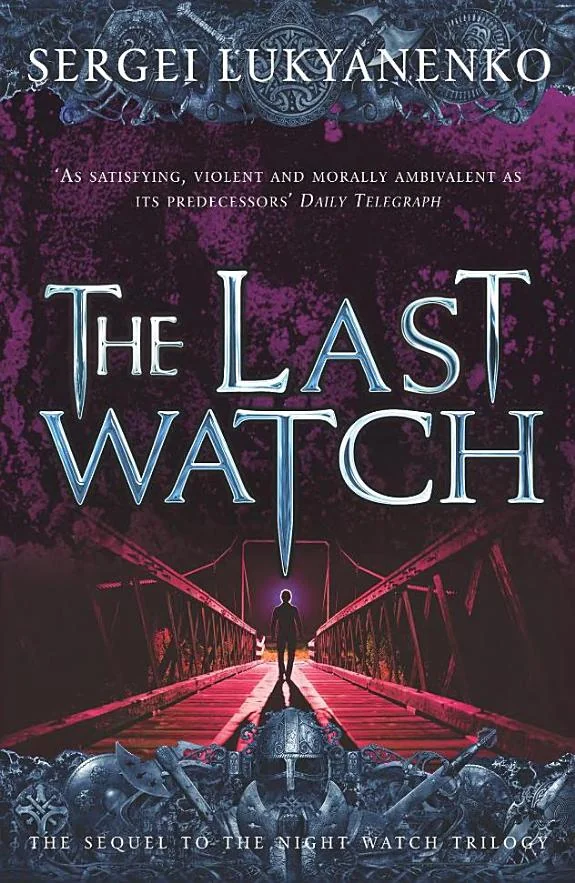
The Last Watch
 78
78

The Last Watch
Lukyanenko's "The Last Watch" offers a fittingly sprawling conclusion to the saga initiated with "Twilight Watch." The sheer ambition in connecting disparate locations like Edinburgh and Uzbekistan to a central Moscow-based threat is commendable, highlighting the global reach of the Others' machinations. Anton's continued struggle with the ethical compromises inherent in his role as an agent of the Night Watch remains the narrative's strongest anchor. However, the sheer density of plot threads, while aiming for complexity, occasionally leads to a sense of narrative diffusion, making the intricate threat feel less immediate than it could. The resolution of the central murder investigation, while surprising, relies on a series of intricate revelations that can feel somewhat contrived. Ultimately, "The Last Watch" provides a comprehensive, albeit dense, finale that satisfies the series' core premise.
📝 Description
78
Published in 2009, "The Last Watch" concludes Sergei Lukyanenko's supernatural thriller series.
"The Last Watch," the final installment of Sergei Lukyanenko's "Watch" series, was published in 2009. The book brings Agent Anton back for a complex murder mystery that sends him across continents, from Edinburgh's old streets to Uzbekistan and Moscow. This novel aims to resolve ongoing plotlines and depict the growing intensity of supernatural conflicts.
This book is for readers already familiar with the "Watch" series, especially those who have followed Anton's story. It will appeal to urban fantasy fans who enjoy detailed plots, the mix of magic and modern settings, and characters facing difficult moral choices as they police the boundary between supernatural and human worlds. Readers interested in how the series' lore developed will find this installment significant.
The story centers on the "Others," individuals with supernatural powers who live among humans. A "Treaty" governs them, maintaining a delicate balance between Light and Dark forces. The plot examines the intricate power struggles, the repercussions of violating the Treaty, and the personal costs for those who defend it. Anton's investigation serves as a way to explore serious threats to the magical status quo.
Lukyanenko's series, with its roots in Russian literature, offers a unique Eastern European perspective on occult themes. Unlike many Western urban fantasies, it presents a specific view of the supernatural world, informed by Slavic folklore and a distinct cultural context. The narrative explores the established order of magic and the threats that challenge it, focusing on the consequences of transgressing the boundaries between different planes of existence.
💡 Why Read This Book?
• Gain insight into the resolution of complex supernatural conflicts, specifically how the murder investigation in "The Last Watch" escalates beyond initial expectations. • Experience the culmination of Anton's moral quandaries as he navigates the consequences of the Treaty in diverse locales like Edinburgh and Uzbekistan. • Understand the deeper, more intricate threats to the balance of Light and Dark, as explored in the Moscow-centric climax of the "Watch" series.
⭐ Reader Reviews
Honest opinions from readers who have explored this book.
❓ Frequently Asked Questions
When was 'The Last Watch' by Sergei Lukyanenko originally published?
Sergei Lukyanenko's "The Last Watch" was first published in 2009, serving as the concluding volume to the widely recognized "Watch" series.
What is the main premise of 'The Last Watch'?
The book follows Night Watch agent Anton as he investigates a murder that reveals a more complex threat posed by the Others, spanning locations from Edinburgh to Moscow.
Does 'The Last Watch' require knowledge of previous books in the series?
Yes, it is the final installment and heavily relies on the established lore and character arcs from preceding books like "Twilight Watch" and "Day Watch" for full comprehension.
What are some key locations featured in 'The Last Watch'?
The investigation takes readers through significant locations including Edinburgh, Uzbekistan, and Moscow, highlighting the global nature of the supernatural conflict.
What is the overarching theme of the 'Watch' series that 'The Last Watch' concludes?
The series explores the fragile balance between Light and Dark supernatural forces, the moral compromises of their agents, and the complex rules governing their interaction with humanity.
Who are the 'Others' in Sergei Lukyanenko's 'Watch' series?
The 'Others' are individuals with innate supernatural abilities, belonging to either the forces of Light or Dark, who are bound by a specific Treaty to maintain peace with humanity.
🔮 Key Themes & Symbolism
The Treaty's Fragility
The narrative consistently underscores the precarious nature of the Treaty governing the Others. In "The Last Watch," this fragility is tested by a murder investigation that unearths deeper conspiracies. Anton's actions constantly push the boundaries, forcing him to weigh the immediate need for justice against the potential for escalating inter-factional conflict. The book demonstrates how even seemingly isolated incidents can threaten the centuries-old balance between Light and Dark, impacting both the magical world and mundane society.
Moral Ambiguity of Agents
Central to the series, and particularly in this final installment, is the ethical tightrope walked by agents like Anton. Tasked with enforcing a complex set of rules, they frequently find themselves making difficult choices with far-reaching consequences. "The Last Watch" explores how maintaining order requires actions that blur the lines between right and wrong, forcing characters to confront their own humanity amidst supernatural duties. The investigation itself becomes a crucible for these moral dilemmas.
Global Supernatural Network
This installment significantly expands the scope of the "Watch" universe, revealing the interconnectedness of supernatural affairs across diverse geographical locations. From the historical context of Edinburgh to the specific cultural range of Uzbekistan and the political center of Moscow, the book illustrates that the threat posed by the Others is not localized. This global perspective emphasizes the universal challenges faced by those policing the supernatural, regardless of their specific setting or faction.
Escalating Threats
Lukyanenko uses the murder investigation as a catalyst to expose a threat more complex than previously understood. "The Last Watch" moves beyond simple skirmishes between Light and Dark agents, examining a conspiracy that challenges the fundamental structures of the supernatural world. This escalation forces Anton and his allies to confront new types of magic and entities, pushing the boundaries of their knowledge and capabilities as they race to prevent a larger catastrophe.
💬 Memorable Quotes
Direct passages from the work, attributed to the author.
“The Treaty had always been a fragile thing, easily broken.”
— This interpretation points to a central theme of the series. The rules governing the Others are not absolute but constantly under pressure, and this book explores the severe consequences when those boundaries are pushed too far.
“Uzbekistan's vastness mirrored the unknown scale of the conspiracy.”
— This conceptual quote emphasizes how the novel uses diverse geographical settings to reflect the magnitude of the plot. The expansive nature of Uzbekistan serves as a metaphor for the far-reaching and perhaps overwhelming scope of the supernatural threat Anton is investigating.
“Moscow became the focal point for the final confrontation.”
— This statement underlines the narrative's climax. After traversing various locations, the ultimate resolution and confrontation with the primary threat occur in the capital city, Moscow, bringing the series' conflicts to a head.
💡 Key Ideas
Editorial paraphrase of the work's core concepts — not direct quotes.
The threat was more complex than they had ever realized.
This paraphrased concept highlights the core narrative arc of "The Last Watch." The murder investigation serves as a gateway to uncovering a deeper, more insidious danger that goes beyond the typical conflicts between Light and Dark factions, challenging the established order.
Anton found himself in Edinburgh, the ancient stones whispering secrets.
This passage signifies the novel's international scope and its grounding in atmospheric settings. It suggests that the supernatural lore is deeply embedded in historical locations, with places like Edinburgh holding their own arcane significance.
🌙 Esoteric Significance
Tradition
The "Watch" series draws loosely from Gnostic and dualistic philosophical traditions, positing a fundamental conflict between opposing forces (Light and Dark) that mirrors Gnostic cosmology. However, Lukyanenko subverts strict dualism by emphasizing the moral compromises and shared humanity of individuals on both sides, a departure from more rigid Gnostic systems. The concept of "Others" with innate powers and a governing "Treaty" can be seen as a modern, secularized interpretation of ancient archetypes of hidden spiritual hierarchies and cosmic laws.
Symbolism
The series frequently employs the symbolism of duality, represented by Light and Dark, which are not merely good and evil but opposing forces with their own internal logics and necessities. The "Treaty" itself functions as a symbol of order and the attempt to impose human-like structure upon inherently chaotic or transcendent powers. Anton, as a Night Watch agent, embodies the archetype of the guardian or liminal figure, one who operates in the "twilight" between worlds, constantly negotiating the boundaries of existence and morality.
Modern Relevance
Contemporary urban fantasy authors and readers continue to find resonance in Lukyanenko's exploration of the "Others" and the complex rules governing their interaction with the mundane world. Thinkers and practitioners interested in comparative mythology and the evolution of folklore into modern narrative structures often cite the series. Its depiction of hidden societies and the ethical dilemmas faced by those who police them remains relevant for discussions on power, control, and the nature of hidden realities in the 21st century.
👥 Who Should Read This Book
• Established fans of the "Watch" series seeking the narrative conclusion to Agent Anton's story and the overarching supernatural conflict. • Readers of urban fantasy who appreciate intricate plots involving supernatural beings, moral ambiguity, and a blend of international settings like Edinburgh and Moscow. • Those interested in comparative literature and the evolution of fantasy tropes, particularly looking for Eastern European perspectives on magical world-building.
📜 Historical Context
Published in 2009, "The Last Watch" arrived during a period when urban fantasy had cemented its place in the global literary market, partly thanks to the success of series like its predecessor, "Twilight Watch." Lukyanenko's work offered a distinct Slavic perspective, contrasting with the more Western-centric narratives that often dominated the genre. The series, which began with "Night Watch" in 1998, gained international traction with its film adaptations, placing it in conversation with other contemporary explorations of supernatural societies, such as those found in Laurell K. Hamilton's Anita Blake novels or Jim Butcher's Dresden Files. While not a direct engagement, the series' success indicated a growing appetite for international authors who could reframe familiar tropes. The book navigated themes of power, morality, and the consequences of unchecked supernatural influence, resonating with readers seeking darker, more complex takes on magic in modern settings.
📔 Journal Prompts
The Treaty's enforcement and Anton's compromises.
The symbolic weight of locations like Edinburgh and Uzbekistan.
The nature of the escalating threat in "The Last Watch."
Reflecting on the moral tightrope walked by the Night Watch agents.
The balance between Light and Dark forces as depicted in the novel.
🗂️ Glossary
Others
Individuals possessing innate supernatural abilities, existing in a hidden world alongside humanity. They are divided into forces of Light and Dark.
Treaty
A set of rules and agreements established to govern the interactions between the forces of Light and Dark and their impact on the human world, maintained by organizations like the Night Watch.
Night Watch
An organization dedicated to upholding the Treaty and maintaining the balance between Light and Dark, operating primarily in secret within the human world.
Twilight Watch
The book that precedes "The Last Watch," further developing the series' lore and characters, particularly Agent Anton's investigations.
Light
One of the two primary opposing forces in the supernatural world, possessing its own set of agents and agenda, often associated with protective or healing powers but not necessarily 'good'.
Dark
The opposing force to Light, also comprising supernatural beings with their own objectives. Not inherently 'evil,' but representing a different fundamental aspect of existence.
Agent Anton
The central protagonist of the "Watch" series, a member of the Night Watch tasked with investigating supernatural disturbances and enforcing the Treaty.
This book appears in 1 collection
🔮 Readers Also Liked
Browse all →








From the “Secret Societies” Collection
View all →





More Free Occult Philosophy Books
View all →