T'ai Chi Ch'uan and I Ching

 76
76

T'ai Chi Ch'uan and I Ching
Liu Da's 2022 publication, T'ai Chi Ch'uan and I Ching, offers a compelling, if occasionally dense, exploration of the martial art through the lens of the ancient oracle. The author successfully demonstrates how the trigrams and hexagrams of the I Ching can provide a structural and philosophical framework for understanding T'ai Chi's movements, moving beyond rote memorization to a deeper conceptual grasp. A particular strength lies in the detailed exegesis of specific T'ai Chi forms, linking them to hexagrammatic principles. However, the work's primary limitation is its assumed prior knowledge of both disciplines; a more extensive glossary or introductory primer on I Ching basics might have broadened its accessibility. The section discussing the concept of 'Push Hands' in relation to the hexagram 'Kun' (The Receptive) is especially insightful, revealing subtle energetic dynamics. This book serves as a valuable, if specialized, bridge between physical practice and esoteric thought. It offers a focused scholarly examination of a specific martial art's philosophical underpinnings.
📝 Description
76
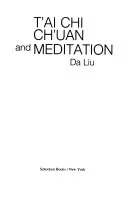
Liu Da's 2022 book connects the physical art of T'ai Chi Ch'uan with the principles of the I Ching.
Published in 2022, T'ai Chi Ch'uan and I Ching by Liu Da offers a connection between the internal martial art and the ancient Chinese text. The author seeks to bridge the gap between physical discipline and metaphysical understanding for those interested in Eastern philosophies. This work is for practitioners of T'ai Chi Ch'uan who want to understand the deeper philosophical ideas behind their practice. It also appeals to students of Chinese philosophy looking for practical ways to use the I Ching.
The core of the book illustrates how the concepts found in the I Ching's hexagrams can influence the movements and flow of T'ai Chi. Conversely, it shows how the principles of T'ai Chi can be applied to interpreting the I Ching. This synthesis aims to provide a richer understanding of both traditions by showing their interconnectedness.
This book sits within the tradition of Chinese internal arts and philosophical interpretation. It draws upon the I Ching, a foundational text for understanding change and cosmic order, and T'ai Chi Ch'uan, a practice that embodies philosophical principles through movement. The synthesis presented by Liu Da aligns with historical approaches that sought to unify mind, body, and spirit, viewing martial arts not just as combat techniques but as methods for self cultivation and alignment with natural principles.
💡 Why Read This Book?
• Understand the philosophical architecture of T'ai Chi Ch'uan by examining its connection to the I Ching's 64 hexagrams, gaining insights beyond mere physical execution. • Explore the practical application of specific I Ching concepts, such as the trigram Kan (Water), to refine your understanding of T'ai Chi's flowing movements and defensive strategies. • Appreciate the historical and esoteric lineage of Chinese internal arts by engaging with Liu Da's synthesis, first published in 2022, which bridges ancient wisdom and modern practice.
⭐ Reader Reviews
Honest opinions from readers who have explored this book.
❓ Frequently Asked Questions
What is the primary goal of T'ai Chi Ch'uan and I Ching?
The book aims to elucidate the profound philosophical and energetic connections between the practice of T'ai Chi Ch'uan and the principles of the I Ching, offering a deeper understanding of both systems.
Is this book suitable for beginners in T'ai Chi?
While it offers valuable insights, the book assumes a foundational understanding of T'ai Chi Ch'uan. Beginners might benefit from supplementary resources on the martial art itself before diving into this text.
What are the main esoteric traditions discussed?
The primary traditions explored are T'ai Chi Ch'uan, a Chinese internal martial art, and the I Ching, an ancient Chinese divination text and philosophical system.
Does Liu Da offer practical exercises?
Yes, the work often connects theoretical concepts to the practical execution of T'ai Chi movements, providing a framework for practitioners to deepen their physical practice through philosophical study.
When was T'ai Chi Ch'uan and I Ching first published?
The book was first published in 2022, placing it within contemporary scholarship on Chinese philosophy and martial arts.
Can I learn I Ching from this book?
While it uses I Ching principles extensively, the book is not a standalone primer on I Ching divination. It assumes some familiarity or a willingness to engage with its core concepts as applied to T'ai Chi.
🔮 Key Themes & Symbolism
Hexagrammatic Framework
The work meticulously maps the 64 hexagrams of the I Ching onto the movements and principles of T'ai Chi Ch'uan. Each hexagram, with its constituent trigrams (e.g., Qian - Heaven, Kun - Earth), is presented not just as a symbolic representation but as a dynamic blueprint for understanding posture, intention, and energetic flow within the martial art. This approach offers practitioners a systematic method to deepen their comprehension of advanced techniques and subtle internal dynamics.
Movement as Divination
Liu Da posits that the practice of T'ai Chi Ch'uan can itself be a form of active divination, mirroring the shifts and changes described in the I Ching. The transitions between stances, the yielding and asserting in combat applications, and the cultivation of internal energy are interpreted as manifestations of the cosmic principles encoded in the oracle. This perspective elevates the physical practice to a profound metaphysical dialogue.
Energetic Correspondence
The book emphasizes the correspondence between the energetic qualities of the I Ching's trigrams and the internal 'Qi' cultivated in T'ai Chi. For instance, the stability associated with the Earth trigram (Kun) might inform rooted stances, while the dynamism of Heaven (Qian) could relate to expansive movements. This exploration bridges the gap between abstract philosophical concepts and tangible somatic experience.
Synthesis of Opposites
A central theme is the harmonious integration of seemingly opposing forces, a core tenet in both T'ai Chi and the I Ching. Concepts like yin and yang, hardness and softness, stillness and motion are examined not as conflicts but as interdependent elements essential for balance and efficacy. The book illustrates how achieving this synthesis in practice leads to greater mastery and deeper self-understanding.
💬 Memorable Quotes
Direct passages from the work, attributed to the author.
“The sequence of movements in the Yang style form mirrors the progression of hexagrams.”
— This interpretation suggests that the choreography of T'ai Chi is not arbitrary but follows a deliberate, symbolic order akin to the wisdom encoded in the I Ching's hexagrammatic transformations.
“Understanding the trigram 'Li' (Fire) illuminates the principle of clarity in defensive redirection.”
— This highlights how specific I Ching trigrams can offer practical guidance for martial arts techniques, linking abstract symbolic meaning to concrete actions and energetic qualities.
“Push Hands becomes a dialogue with the hexagrammatic forces.”
— This suggests that the practice of cooperative pushing and yielding in T'ai Chi can be seen as an embodied exploration of the principles represented by the I Ching's hexagrams.
“Rootedness in the stance corresponds to the stability of the hexagram 'Gen' (Mountain).”
— This interpretation links a fundamental T'ai Chi posture to a specific I Ching symbol, demonstrating how ancient wisdom can inform and deepen the physical practice.
💡 Key Ideas
Editorial paraphrase of the work's core concepts — not direct quotes.
The practitioner's intent shapes the energetic outcome, much like the lines of a hexagram define its meaning.
This paraphrased concept emphasizes the crucial role of mental focus and conscious will in martial arts practice, aligning it with the interpretive nature of the I Ching.
🌙 Esoteric Significance
Tradition
This work is situated within the broader context of Chinese esoteric traditions, specifically Taoism and its influence on internal martial arts. It bridges the practical, somatic discipline of T'ai Chi Ch'uan with the philosophical and divinatory system of the I Ching, both of which are deeply rooted in Taoist principles of balance, change, and the interplay of yin and yang. The book departs from purely secular interpretations by highlighting the energetic and metaphysical dimensions inherent in these practices.
Symbolism
Key symbols include the trigrams (e.g., Qian representing Heaven, Kun representing Earth) and the 64 hexagrams of the I Ching. These are interpreted not merely as abstract signs but as dynamic forces that correspond to specific postures, movements, and energetic states within T'ai Chi. For instance, the hexagram 'Li' (Fire) might symbolize clarity and illumination in defensive actions, while 'Kan' (Water) represents yielding and adaptability.
Modern Relevance
Contemporary practitioners of T'ai Chi, Qigong, and other internal arts, as well as scholars of comparative mysticism and embodied cognition, draw on Liu Da's work. It speaks to a modern desire to integrate physical practice with deeper philosophical understanding, resonating with movements exploring mindfulness, somatic psychology, and the application of ancient wisdom to contemporary life challenges.
👥 Who Should Read This Book
• Advanced T'ai Chi Ch'uan practitioners seeking to deepen their understanding of the art's philosophical and energetic foundations. • Students of Chinese philosophy and comparative religion interested in the practical application of I Ching principles beyond divination. • Scholars of esoteric traditions and martial arts history looking for a systematic synthesis of two major Chinese cultural systems.
📜 Historical Context
First published in 2022, Liu Da's T'ai Chi Ch'uan and I Ching emerged during a period of significant global interest in Eastern philosophies and traditional martial arts. The work arrives in conversation with decades of scholarship that have sought to contextualize and disseminate these practices in the West, often initiated by figures like Lin Yutang in the mid-20th century. While earlier works might have focused on either T'ai Chi or the I Ching in isolation, Liu Da's contribution lies in its direct, systematic synthesis. This approach engages with a lineage of comparative studies, differentiating itself from purely technical manuals. It implicitly addresses the ongoing academic and practitioner discourse concerning the metaphysical underpinnings of martial arts, a field that saw thinkers like D.T. Suzuki popularize Zen Buddhism's influence on Japanese martial arts, paving the way for similar explorations in Chinese traditions.
📔 Journal Prompts
The correspondence between the hexagram 'Song' (Conflict) and T'ai Chi's application principles.
Reflecting on the balance of stillness and motion as described by the hexagram 'Jing' (The Well).
How the concept of 'yielding' in T'ai Chi relates to the hexagram 'Kun' (The Receptive).
The practical implications of the trigram 'Zhen' (Thunder) for explosive power in T'ai Chi.
Interpreting the movement sequence associated with hexagram 'Tai' (Peace) within your practice.
🗂️ Glossary
T'ai Chi Ch'uan
A Chinese internal martial art practiced for both self-defense and health benefits, emphasizing slow, flowing movements, deep breathing, and cultivation of internal energy (Qi).
I Ching
An ancient Chinese divination text and wisdom book, also known as the Book of Changes, which uses hexagrams to offer insights into the nature of change and universal principles.
Hexagram
A symbol composed of six stacked horizontal lines, each line being either solid (yang) or broken (yin), used in the I Ching to represent a specific situation or principle.
Trigram
A symbol composed of three stacked horizontal lines, either solid or broken, which form the building blocks of the I Ching's 64 hexagrams. There are eight basic trigrams.
Qi (Chi)
The vital life force or energy believed to flow through all living things in Chinese philosophy and traditional medicine, cultivated in practices like T'ai Chi.
Yang Style
One of the major styles of T'ai Chi Ch'uan, known for its larger, more expansive movements compared to some other styles.
Push Hands (Tui Shou)
A T'ai Chi training exercise where two partners practice sensitivity, balance, and yielding by pushing against each other's arms and bodies.
🔮 Readers Also Liked
Browse all →









More by Liu Da
All books →


More Free Occult Philosophy Books
View all →