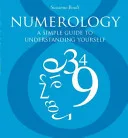
Numerology
 76
76

Numerology
Suzanne Boult's *Numerology* offers a straightforward entry into the practice, bypassing the more convoluted theoretical underpinnings that can sometimes bog down similar texts. Its primary strength lies in its direct, instructional approach, making the calculation of personal numerology charts accessible even to complete novices. The chapter detailing the interpretation of the Life Path Number, for example, provides clear, actionable descriptions for each digit from 1 to 9. However, the work's limitation is its relative lack of historical or comparative depth. While it mentions the utility of numbers, it doesn't deeply engage with the historical lineage of numerological thought, nor does it offer extensive comparative analysis with other esoteric systems that also employ numerical symbolism. The practical focus, while a boon for beginners, might leave more advanced practitioners wanting greater theoretical exploration. Nevertheless, for anyone seeking to quickly understand their own numerological blueprint, Boult's 2007 guide serves as a functional and uncomplicated primer.
📝 Description
76
Suzanne Boult's 2007 book, Numerology, presents a structured method for understanding personal purpose through numbers.
This book introduces numerology as a system for self-understanding, using numerical correspondences derived from birthdates and names. Suzanne Boult, a writer from New Zealand, details how these numbers reveal an individual's innate characteristics, talents, and life path. The text functions as a practical manual for mapping and interpreting these numerical energies.
It is written for those interested in self-discovery within esoteric frameworks. The book offers a structured approach for individuals to understand their personality traits, potential abilities, and life's direction. Readers can also use its methods to gain insights into friends and family, fostering interpersonal connection.
Boult's 2007 publication appeared during a period of renewed interest in esoteric practices like numerology, often coinciding with online spiritual communities. This resurgence was partly a reaction against purely materialistic views. The book followed traditions established by figures such as Pythagoras and later popularizers like Cheiro, who brought numerology to wider Western audiences in the late 19th and early 20th centuries. Boult's work contributed to a growing collection of accessible guides that aimed to explain older, symbolic systems.
💡 Why Read This Book?
• Gain practical skills for self-analysis by learning to calculate your Life Path Number, a core concept introduced in Boult's work, allowing you to understand your inherent predispositions. • Discover concrete interpretations of your Destiny Number, derived from your full name, offering specific insights into your life's purpose as detailed in the book's calculations. • Obtain a foundational understanding of numerology's application to interpersonal dynamics by learning to create charts for friends and family, a key feature highlighted in the 2007 publication.
⭐ Reader Reviews
Honest opinions from readers who have explored this book.
❓ Frequently Asked Questions
What is the core purpose of numerology according to Suzanne Boult's book?
Suzanne Boult's book explains numerology as a system that uses numbers derived from personal details to practically reveal who individuals are and their life's purpose, highlighting characteristics and abilities.
When was Suzanne Boult's book 'Numerology' first published?
The book 'Numerology' by Suzanne Boult was first published in 2007, positioning it within the early 21st-century interest in esoteric studies.
Can I use this book to create numerology charts for others?
Yes, the book explicitly shows readers how to create numerology charts for themselves, family, and friends, making it a practical tool for interpersonal insight.
What kind of numbers does Boult's numerology system focus on?
Boult's system focuses on numbers derived from birth dates and full names, commonly calculating Life Path Numbers, Destiny Numbers, and Personality Numbers for interpretation.
Is prior knowledge of esoteric systems required to read this book?
No, the book is designed to be accessible and practical, guiding readers through the process of creating and understanding their own numerology charts without assuming prior esoteric knowledge.
What are the main benefits of understanding my Life Path Number?
Understanding your Life Path Number, as explained by Boult, helps in discovering your inherent characteristics, abilities, and the general direction or purpose of your life's journey.
🔮 Key Themes & Symbolism
Life Path & Purpose
The central theme is the revelation of an individual's life path and inherent purpose through numerical analysis. Boult's work posits that the numbers derived from a birth date (Life Path Number) and full name (Destiny Number) act as a blueprint, outlining the journey one is here to undertake and the potential they possess. This provides a structured framework for understanding personal motivations and inherent talents, moving beyond superficial traits to deeper existential questions about one's role and direction.
Self-Discovery Through Numbers
This book frames numerology as a practical tool for profound self-discovery. By engaging with the calculations and interpretations presented, readers are encouraged to identify their unique characteristics, abilities, and challenges. The numerical system serves as a mirror, reflecting back aspects of the self that may be unconscious or unrecognized, thereby facilitating personal growth and acceptance.
Interpersonal Numerological Mapping
Beyond individual analysis, Boult's 'Numerology' emphasizes the application of the system to understand relationships. The ability to create numerology charts for family and friends is presented as a means to foster deeper empathy and understanding within personal connections. This theme highlights how numerical insights can bridge gaps in communication and perception, offering a unique lens through which to view the dynamics between people.
Practical Application of Esotericism
The work distinguishes itself by focusing on the tangible, everyday utility of numerological principles. It moves away from abstract metaphysical discussions to offer a step-by-step guide for practical application. This theme underscores the idea that esoteric knowledge, like numerology, can be integrated into daily life to provide concrete guidance and actionable insights for personal development and understanding.
💬 Memorable Quotes
Direct passages from the work, attributed to the author.
“Numerology can show in a practical way who we are and what we are here to do.”
— This captures the book's core promise: that numerical patterns are not abstract but offer tangible insights into identity and life's purpose, making esoteric concepts accessible.
“Discover your characteristics and abilities.”
— This highlights the self-exploratory benefit, positioning numerology as a method for uncovering latent potentials and inherent traits that define an individual's unique makeup.
“Shows how to create numerology charts for yourself, family and friends.”
— This emphasizes the practical, instructional nature of the book, extending its utility beyond personal insight to relational understanding and application within social circles.
“A system of numbers that can show...”
— This foundational statement underscores the belief that numerical relationships hold significant, observable meaning about the human condition and individual destiny.
💡 Key Ideas
Editorial paraphrase of the work's core concepts — not direct quotes.
The work explores how numerology can help you understand your life's direction.
This paraphrased concept points to the predictive or guiding aspect of numerology, suggesting it offers a map or framework for navigating life's journey.
🌙 Esoteric Significance
Tradition
Boult's work aligns with the Western esoteric tradition of practical numerology, often associated with Pythagoreanism. It departs from purely Kabbalistic or Gnostic numerical systems by focusing on personal attributes derived from names and birth dates, rather than complex divine emanations or textual interpretations. Its lineage can be traced through modern New Age interpretations that prioritize individual empowerment and accessible self-analysis.
Symbolism
The primary symbols are the digits 1 through 9, and the Master Numbers 11, 22, and 33. Each number carries symbolic weight representing archetypal energies, personality traits, and life challenges. For instance, the number 1 symbolizes leadership and independence, while the number 9 represents humanitarianism and completion. These numbers function as core glyphs, translating abstract personal data into understandable symbolic meanings.
Modern Relevance
Boult's approach remains relevant today for contemporary practitioners of New Age spirituality and self-help seekers. Its clear methodology is echoed in countless online numerology calculators and personal development courses. Thinkers and practitioners focusing on intuitive development and practical spiritual application find value in its straightforward application of numerical symbolism to everyday life.
👥 Who Should Read This Book
• Individuals new to esoteric studies seeking a practical entry point into understanding personal potential and life direction. • Those interested in self-discovery who prefer structured, number-based systems over more abstract or intuitive methods. • Readers who wish to learn a tangible skill for providing insights to friends and family, moving beyond theory to practical application.
📜 Historical Context
Suzanne Boult's *Numerology*, published in 2007, emerged during a period of renewed global interest in self-help and esoteric practices, often facilitated by the burgeoning internet. This era saw a democratization of spiritual and metaphysical teachings, with many authors offering accessible guides to systems like astrology, tarot, and numerology. Boult’s work contributed to this trend, providing a straightforward manual for a practice with roots stretching back to ancient Greece, often attributed to Pythagoras, and later popularized in the West by figures such as L. Dow Balliett and Cheiro in the late 19th and early 20th centuries. While not explicitly engaging with academic occult scholarship, Boult's book operated within a broader cultural milieu that sought alternative frameworks for meaning and self-understanding, distinguishing itself from the more academic or theosophical approaches prevalent in earlier decades.
📔 Journal Prompts
Your Life Path Number and its primary characteristics.
The significance of your Destiny Number in relation to your personal goals.
How your Personality Numbers influence your daily interactions.
A specific challenge indicated by your numerology chart and how you might address it.
The potential benefits of applying numerology to understanding family dynamics.
🗂️ Glossary
Life Path Number
A core numerological calculation derived from a person's birth date, believed to represent their life's purpose, opportunities, and challenges.
Destiny Number
A numerological calculation derived from the letters of a person's full birth name, thought to reveal their potential, talents, and life's ultimate direction.
Personality Numbers
Numerical values derived from specific parts of a person's name, which are interpreted to represent their outward persona and how they present themselves to the world.
Master Numbers
In numerology, the numbers 11, 22, and sometimes 33, which are considered to possess a higher vibrational potential and greater challenges than single-digit numbers.
Numerical Correspondences
The system of assigning specific meanings, traits, or energies to individual numbers, forming the basis of numerological interpretation.
Birth Date Calculation
The process of reducing a person's birth date (month, day, year) to a single digit or Master Number to determine their Life Path Number.
Name Calculation
The method used to convert the letters in a person's full birth name into numerical values, which are then summed and reduced to determine Destiny and other name-based numbers.