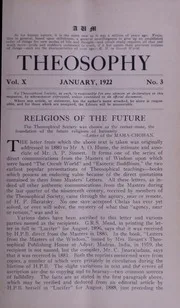
Theosophy Vol-X,No-3,January 1922
 71
71

Theosophy Vol-X,No-3,January 1922

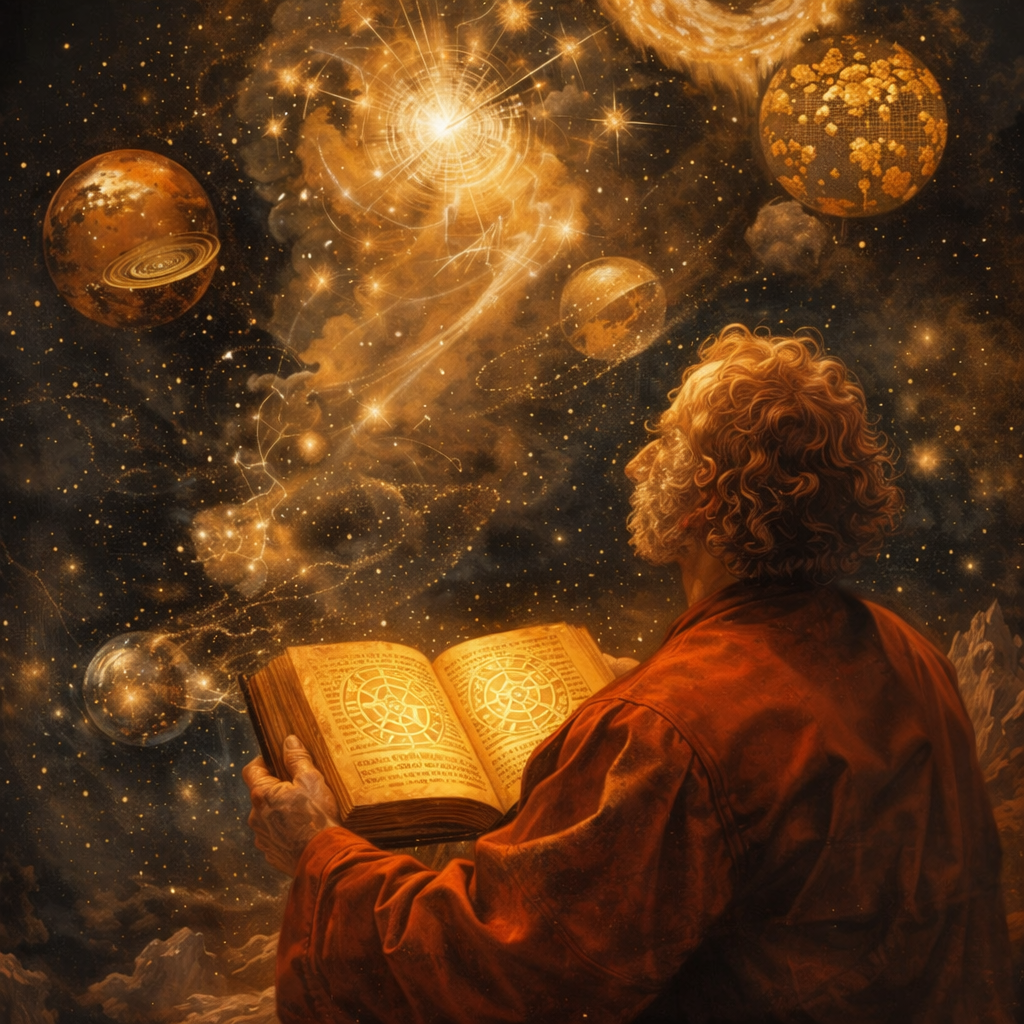

By Aurelia Blackwood (Occult Philosophy Critic) — This January 1922 issue of *Theosophy* stands as a testament to the enduring power of foundational esoteric thought. The 'Unknown' authorship belies the profound clarity and depth of the contributions, which delve into the intricate architecture of the spiritual planes and the cyclical nature of existence. Its strength lies in its ability to articulate complex metaphysical concepts with an accessible, yet deeply resonant, prose. The articles offer invaluable insights for students of comparative religion, ancient wisdom traditions, and those actively engaged in spiritual self-development. This volume is essential reading for anyone seeking to understand the underpinnings of modern spiritual movements.
📝 Description
71
Published in January 1922, Theosophy Vol-X, No-3 presents esoteric articles on cosmic laws.
This issue of Theosophy, dated January 1922, contains articles reflecting the spiritual interests of the early 20th century. It discusses abstract principles related to the cosmos and humanity's position within it, using symbolic language. The content aims to guide readers toward a deeper understanding of consciousness and spiritual evolution, moving beyond purely empirical knowledge. The writing encourages introspection and a connection to a universal life force. The publication is intended for those seeking philosophical underpinnings for spiritual growth and a sense of a larger reality.
The articles within this issue examine concepts relevant to the Theosophical movement of the time. They focus on the interpretation of symbols and abstract ideas, suggesting a path for personal spiritual development. The goal is to foster contemplation and a connection to underlying universal principles. Readers will find discussions that aim to reveal hidden structures of existence and the human place within them.
This 1922 issue of Theosophy appears within the context of the broader Theosophical movement, founded by Helena Blavatsky. The movement sought to synthesize Western occultism and Eastern philosophies, emphasizing universal brotherhood and the study of comparative religion, philosophy, and science. Publications like this often addressed subjects such as reincarnation, karma, hidden spiritual hierarchies, and the nature of consciousness, aiming to provide a framework for understanding the universe beyond conventional scientific or religious paradigms.
💡 Why Read This Book?
Uncover the foundational tenets of Theosophy, explore the profound symbolism embedded in ancient cosmologies, and connect with the spiritual currents of the early 20th century. This issue is ideal for seekers of hidden knowledge, scholars of esoteric traditions, and practitioners aiming to deepen their understanding of universal laws and consciousness. It offers a unique glimpse into a pivotal era of spiritual inquiry.
⭐ Reader Reviews
Honest opinions from readers who have explored this book.
❓ Frequently Asked Questions
What is Theosophy?
Theosophy is a spiritual philosophy that seeks to understand the underlying unity of all religions and sciences, exploring the hidden spiritual laws of the universe and the nature of human consciousness. It posits a universal brotherhood of humanity and the study of comparative religion, philosophy, and science.
Who is the author of this issue?
The author is listed as 'Unknown.' This reflects a common practice in early Theosophical publications, where the focus was on the transmission of knowledge rather than individual attribution, emphasizing the collective wisdom.
What kind of topics are covered in this issue?
This issue likely delves into topics such as the nature of the soul, karma, reincarnation, spiritual evolution, cosmic cycles, the interpretation of ancient myths and symbols, and the relationship between the physical and spiritual realms.
Is this suitable for beginners in esoteric studies?
While the language can be profound, the foundational nature of Theosophy makes it accessible to sincere beginners. It serves as an excellent starting point for understanding broader esoteric concepts, though deeper study may be required.
What is the historical significance of this publication?
Published in January 1922, this issue represents a vital contribution to the burgeoning Theosophical movement and the broader spiritual awakening of the early 20th century, reflecting ongoing discourse on ancient wisdom and human potential.
🔮 Key Themes & Symbolism
The Unveiling of Cosmic Laws
This issue looks at the intricate, often unseen, laws that govern the universe and the unfolding of consciousness. It explores concepts such as karma, reincarnation, and the subtle energies that bind all existence. The articles aim to illuminate the grand design, encouraging readers to perceive the interconnectedness of all things and to understand their role within the cosmic symphony. It's an invitation to look beyond the material veil and grasp the deeper principles that orchestrate reality, fostering a sense of awe and profound respect for the universal order.
The Symbolism of Ancient Wisdom
Central to this publication is the interpretation of symbols found in ancient scriptures, myths, and traditions. It reveals how these symbols are not mere decorative elements but potent keys to unlocking profound spiritual truths and psychological insights. The texts explore the allegorical language of the ancients, demonstrating their universal relevance and their capacity to communicate complex metaphysical ideas across time and cultures. Readers are guided to decipher these symbolic narratives, transforming abstract concepts into tangible wisdom applicable to their own inner journey.
The Evolution of Human Consciousness
A core theme resonating through this issue is the journey of human evolution, not merely in a physical sense, but as a progressive unfolding of consciousness. It addresses the stages of spiritual development, the challenges and opportunities inherent in this process, and the potential for humanity to attain higher states of awareness. The writings offer a framework for understanding personal growth within a grander evolutionary scheme, inspiring readers to actively participate in their own spiritual ascension and to contribute to the collective awakening of mankind.
💬 Memorable Quotes
Direct passages from the work, attributed to the author.
“The universe is a thought expressed.”
— This aphorism suggests that reality is fundamentally spiritual or mental in origin, implying that the material world is a manifestation of a divine or cosmic consciousness.
“Every effect has its cause, seen or unseen.”
— This highlights the principle of causality, a core part of many esoteric traditions, asserting that all occurrences are linked by chains of cause and effect, often extending into subtle or hidden realms.
“The path of knowledge is the path of liberation.”
— This suggests that true freedom and enlightenment are attained through the acquisition of spiritual and esoteric understanding, transcending ignorance and illusion.
“We are all threads in the cosmic collection.”
— This metaphor illustrates the profound interconnectedness of all beings and phenomena, emphasizing unity and the idea that each individual plays a vital role in the grand design of existence.
💡 Key Ideas
Editorial paraphrase of the work's core concepts — not direct quotes.
Seek not without, but within.
This quote emphasizes the internal nature of spiritual truth and wisdom, directing the seeker's focus away from external phenomena and towards introspection and self-discovery.
🌙 Esoteric Significance
Tradition
This volume is deeply rooted in the Theosophical tradition, founded by Helena Blavatsky. It draws upon ancient Eastern religions (Hinduism, Buddhism) and Western esoteric schools (Gnosticism, Hermeticism, Kabbalah) to present a comprehensive worldview. Theosophy aims to reveal the underlying unity of all religions and sciences, offering a framework for understanding the universe as a spiritual organism and humanity's role in its evolution.
Symbolism
The issue likely employs detailed symbolism drawn from universal archetypes and ancient traditions. Key symbols may include the serpent (wisdom, eternity), the lotus (spiritual unfolding, purity), the eye (divine omniscience, inner vision), and geometric forms (representing cosmic order and structure). These symbols are not merely decorative but serve as mnemonic devices and conceptual keys to unlock deeper metaphysical truths about consciousness, creation, and spiritual progression.
Modern Relevance
The themes explored in this 1922 issue remain remarkably relevant today. In a world often dominated by materialism and rapid technological change, the emphasis on inner exploration, spiritual evolution, and the interconnectedness of all life offers a vital counterbalance. The pursuit of wisdom, understanding karma, and recognizing universal brotherhood are timeless principles that continue to resonate with individuals seeking deeper meaning, personal growth, and a more harmonious existence in the 21st century.
👥 Who Should Read This Book
This issue is a rich source for dedicated seekers of esoteric knowledge, particularly those drawn to the foundational principles of Theosophy and Anthroposophy. Scholars of comparative religion, ancient philosophy, and occult history will find invaluable primary source material here, offering insights into the intellectual currents of the early 20th century. Practitioners of meditation and spiritual disciplines will discover profound conceptual frameworks that can deepen their practice and understanding. Even those new to spiritual inquiry, but possessing an open mind and a thirst for deeper truths, will find much to ponder and explore within its pages.
📜 Historical Context
The January 1922 issue of *Theosophy* emerges from a vibrant period of intellectual and spiritual exploration in the early 20th century. This era witnessed a burgeoning interest in Eastern philosophies, mysticism, and the occult sciences, largely fueled by movements like Theosophy itself, which sought to synthesize ancient wisdom with modern scientific and philosophical thought. The post-World War I landscape was ripe for introspection and a search for meaning beyond material concerns. Publications like this served as vital conduits for disseminating esoteric ideas, fostering communities of like-minded individuals, and challenging conventional paradigms. They provided a space for discourse on reincarnation, karma, spiritual evolution, and the hidden nature of reality, influencing subsequent New Age movements and spiritual philosophies.
📔 Journal Prompts
Reflect on a time you felt a profound sense of interconnectedness with nature or other beings. What might this suggest about the 'cosmic collection' mentioned in the texts?
Consider a significant 'effect' in your life. Trace its potential 'causes,' both obvious and subtle. How does this exercise align with the principle of karma?
Identify a symbol from your personal life or a shared cultural symbol. What deeper meanings or spiritual truths might it represent beyond its literal form?
If the universe is a 'thought expressed,' what kind of thoughts do you believe are shaping your personal reality?
How can the concept of 'liberation through knowledge' be applied to a specific challenge or limitation you are currently facing?
🗂️ Glossary
Theosophy
A spiritual philosophy seeking to understand the underlying unity of all religions and sciences, exploring the hidden spiritual laws of the universe and the nature of human consciousness. It emphasizes universal brotherhood and the study of comparative religion, philosophy, and science.
Karma
The spiritual principle of cause and effect, where an individual's intentional actions (karma) influence their future experiences. It is a fundamental concept in many Eastern religions, governing the cycle of birth, death, and rebirth.
Reincarnation
The belief that the soul or spirit, after biological death, begins a new life in a new body. It is often seen as a process through which the soul learns and evolves over multiple lifetimes.
Gnosis
Spiritual knowledge or insight, often considered direct and intuitive, leading to enlightenment or salvation. It is a central concept in Gnosticism and other esoteric traditions.
Esoteric
Intended for or likely to be understood by only a small number of people with a specialized knowledge or interest. It refers to hidden or secret knowledge, often of a spiritual or mystical nature.
This book appears in 2 collections
🔮 Readers Also Liked
Browse all →






From the “Theosophy” Collection
View all →



More Free Theosophy & Anthroposophy Books
View all →